


Rediscovering Simplicity: The Heartfelt Call For Trust In Farming’s Past
By Tom Seest
At ClassicTractorNews, we help tractor lovers keep up with the latest news for classic and vintage tractors.
Please share this post with your friends, family, or business associates who may like old classic or vintage tractors.
Why Farmers Miss the Days When Tractors Had Fewer Parts
Why Farmers Miss the Days When Tractors Had Fewer Parts
In the heart of America’s farmland, there lies a nostalgia both palpable and poignant, evoked by the simple sound of a tractor humming steadily across the fields. It’s not just machinery; it’s a symbol of hard work, heritage, and resilience. Farmers often reflect on the days when tractors had fewer parts, simpler designs that didn’t require an engineering degree to operate—machines that could be fixed with a few wrenches and a good dose of elbow grease.
There was a time when a trusty tractor was more than just a tool; it was a companion in the field. Stories abound of farmers who could diagnose a problem with an experienced eye and a few choice tools, often before the sun had fully risen. These tractors, with their fewer parts, symbolized not just efficiency, but a deep connection to the land and to the cycles of life that defined rural existence. When something broke, it didn’t necessitate a call to a technician hundreds of miles away; it just required the farmer to roll up their sleeves and get to work.
The modern day has ushered in a new era, filled with sophisticated technology and precision farming. While there’s undeniable merit in advancements—the potential for increased yields and improved sustainability—there’s also a yearning for the simplicity and understandability of those classic machines. In a world where every gadget seems intertwined with complex algorithms and proprietary software, the old tractors represent something refreshingly straightforward. They foster a sense of competence that today’s farmers, despite their expertise, sometimes miss.
Imagine a farmer standing in their field, dirt under their nails, recalling a time when their relationship with their tractor was one of trust built over years of shared labor. Each scrape, dent, and rust spot tells a story—stories that feel increasingly lost in the intricate machinery of today. The shift towards high-tech farming might promise efficiency, but it also distances the farmer from their work, creating an invisible barrier that can feel isolating.
At the core of this nostalgia lies a deeper question of identity and resourcefulness. It’s not just about missing the past; it’s about longing for a tangible connection to the earth, a connection that comes from knowing your tools inside and out. It’s about community, too—stories shared over coffee in a diner, where older farmers reminisce about the simplicity of life when each piece of equipment was as familiar as a neighbor. This longing roots us not just in tradition, but also in the authentic relationships that constitute the backbone of rural life.
The appeal is in the grit and the grind, a reminder that amidst all the advancements, the essence of farming remains unchanged: a bond to the land and a commitment to doing the hard work, one vibration at a time, on a trusty tractor.

Why Farmers Miss the Days When Tractors Had Fewer Parts
Why Farmers Miss the Days When Tractors Had Fewer Parts
- Nostalgia for tractors with fewer parts symbolizes hard work, heritage, and resilience.
- Older tractors were simpler to operate and repair, allowing farmers to fix issues themselves.
- These machines fostered a deep connection to the land and rural life cycles.
- Modern technology and precision farming provide efficiency but create a disconnect for farmers.
- Farmers long for a tangible connection with their tools and their environment.
- The shift towards high-tech farming has led to feelings of isolation among some farmers.
- This longing for simpler times emphasizes the importance of community and shared experiences in rural life.

Why Farmers Miss the Days When Tractors Had Fewer Parts
Table Of Contents
- Why Farmers Miss the Days When Tractors Had Fewer Parts
- Why Do We Romanticize Simpler Farming Technology?
- How Did Fewer Parts Affect Reliability?
- What Emotional Ties Do Farmers Have to Older Tractors?
- Can Modern Farming Benefit From Simpler Designs?
- What Lessons Can We Learn From the Past About Farming Tools?
- How Does Nostalgia Shape Our Views on Agricultural Progress?
- Conclusion
- Other Resources
- Glossary Of Terms
- Other Questions
- Haiku
- Poem
- Checklist
Why Do We Romanticize Simpler Farming Technology?
In a world racing toward automation, it’s easy to look back at simpler farming technology with nostalgia, like an old tractor quietly grinding away in a sun-soaked field. This tractor, a symbol of human ingenuity, is more than just a machine; it represents a connection to the land that many feel is slipping away. The hum of its engine is a call to a time when farming was not just a business but a way of life—a rhythm of seasons, toil, and triumph.
Our romanticization of simpler technology often springs from a deep-seated yearning for authenticity. We crave a world where human hands shape the earth, where farmers are more than operators of a machine and instead are stewards of the land, intimately aware of every inch they work. This connection is what we love about those old tractors and hand-turned plows—it speaks to a narrative of hard-earned progress and deep-rooted knowledge passed down through generations.
Consider the farmer who wakes before dawn, brews a pot of coffee in a modest kitchen, and heads out into the stillness of the morning, greeted only by the sound of crickets and the whir of that trusty tractor. It’s a scene that evokes a sense of purpose, communal effort, and visceral connection. In an age burdened with screens and the clamor of urban life, this image resonates. It reminds us of who we are at our core—creators, nurturers, and builders connected to something larger than ourselves.
Yet, this affection for simpler tools isn’t just sentimental. Rationally, as we grapple with the ethical implications of modern farming practices—chemical runoff, habitat destruction, and corporate consolidation—many see the return to old ways as a moral imperative. Simpler methods can yield richer soils, promote biodiversity, and ensure deeply rooted sustainability. They stand as testaments to a more harmonious relationship with nature, arguing that sometimes less truly is more.
Moreover, in sharing stories of farms revitalized by vintage tractors, we spark a sense of community. These tales inspire action and encourage individuals to take pride in their local agriculture. When we gather around that old machinery—its paint faded, its parts well-loved—we foster connections that transcend centuries and invite the next generation to honor those traditions, transforming nostalgia into a pathway for future innovation.
In a world of quick fixes and fleeting trends, perhaps the most radical idea is to cherish the lessons embodied in simpler farming technology, restructuring how we view productivity and success in agriculture. The more we embrace and advocate for this philosophy, the more we can cultivate a sustainable future rooted in authenticity.

Why Do We Romanticize Simpler Farming Technology?
Why Do We Romanticize Simpler Farming Technology?
- Amid automation, there’s nostalgia for simpler farming technology like old tractors.
- Old tractors symbolize human ingenuity and connection to the land.
- Romanticization stems from a desire for authenticity and stewardship in farming.
- A morning scene of a farmer brings a sense of purpose and communal effort.
- Return to simpler methods addresses ethical issues in modern farming practices.
- Stories of vintage tractors foster community pride and honor agricultural traditions.
- Embracing simpler technology can reshape views on productivity and promote sustainability.

Why Do We Romanticize Simpler Farming Technology?
How Did Fewer Parts Affect Reliability?
In the world of machinery, fewer parts often mean fewer problems. Think about it: a trusty old tractor, rumbling along the fields, is often lauded for its reliability. It’s not just the steel or the horsepower; it’s the simplicity. When engineers design machines with fewer components, they are not merely stripping down complexity; they are striking at the very heart of dependability.
Consider that aged farm tractor—perhaps it’s a family heirloom passed down from your grandfather. There’s a certain beauty in its simplicity. It’s a machine built to last, where every piece has a purpose, and every function is essential. Fewer parts mean less room for failure. When you have fewer components, there’s less that can go wrong. It’s the age-old tale of less being more, a principle that resonates through generations.
Relying on fewer parts isn’t just about maintenance; it’s about trust. When that tractor starts up on a chilly morning, you know it’ll do its job, rain or shine. This trust extends beyond mechanics into the realm of values. We cherish reliability not because machines are flawless, but because they reflect our expectations—an ethic of hard work and commitment. We want tools that uphold our dedication to the land and our families. It’s a symbiotic relationship built on a foundation of simplicity.
Picture a harried farmer, up before dawn, racing against the sun. They don’t have time for breakdowns or complicated repairs. Every minute matters when the season is short. Fewer parts translate to peace of mind. It’s that gut feeling that it will perform, day in and day out. This emotional connection to reliability is as profound as any bond we form with loved ones. It’s about progress grounded in trust and authenticity.
The reliability of machines with fewer parts also stimulates a broader conversation about innovation. It’s a call to manufacturers and consumers alike to appreciate engineering that prioritizes durability over gimmicks. We have the chance to create a culture that favors thoughtful design and practical solutions. The more we embrace this mindset, the more we can build systems—whether on the farm or in our lives—that function smoothly and efficiently, granting us peace of mind amidst the chaos of the modern world. Reliability, then, isn’t merely about machines; it’s a reflection of our values, inviting us to strive for simplicity in an increasingly complex world.

How Did Fewer Parts Affect Reliability?
How Did Fewer Parts Affect Reliability?
- Fewer parts in machinery often lead to greater reliability and fewer problems.
- Old tractors exemplify simplicity and dependability, with each component serving a clear purpose.
- Machines with fewer parts have less room for failure, reinforcing the principle of “less is more.”.
- Trust in machinery extends beyond function; it reflects values of hard work and commitment.
- Farmers require reliable machines for efficiency, especially during short seasons.
- This reliability fosters an emotional connection akin to bonds with loved ones, emphasizing trust and authenticity.
- The conversation around fewer components encourages a focus on durability and thoughtful engineering in innovation.

How Did Fewer Parts Affect Reliability?
What Emotional Ties Do Farmers Have to Older Tractors?
Every farmer knows that a tractor isn’t just a machine; it’s a lifeline, an enduring relationship that stretches back through generations. When you sit behind the wheel of an older tractor, you’re not merely driving a robust piece of machinery; you’re steering through the annals of your family’s history. Picture it: that rusty old beauty, faded paint peeling yet still imposing, has seen the sweat and toil of your forebears, each dent a testament to the challenges overcome in the fields.
These tractors are woven into the fabric of a farmer’s life, standing as symbols of resilience and continuity. They embody raw power, but they also evoke nostalgia. Farmers often share stories where these machines were the unsung heroes, helping during a storm to harvest a crop, or the trusty companion that never failed a farmer at dawn. The sound of its engine rumbling to life is like a heartbeat, a rhythm that echoes with the promise of a new day’s work.
The emotional connection runs deep. Older tractors often serve as reminders of simpler times, when farming was more about the land and less about technology. Farmers reminisce about the lessons learned while riding alongside their parents or grandparents, the smell of diesel mixed with fresh soil. Those moments are etched in memory, creating a tapestry of experiences that shape their identities.
Rationally, it’s easy to understand why many farmers resist the urge to upgrade. Older tractors are built to last. They are straightforward in design and can often be repaired with basic tools, not requiring a degree in advanced engineering. This practicality gives farmers a sense of control and confidence that’s crucial in an unpredictable business. In a world chasing the next shiny gadget, these durable machines remind them of the value of perseverance, teaching that the real value lies not in novelty but in reliability.
Moreover, the ethical appeal of preserving these tractors cannot be overstated. By choosing to restore and maintain them, farmers contribute to a sustainable future, harkening back to a time of fewer chemicals and less reliance on disposable equipment. In a world that’s racing toward obsolescence, they are standing firm, honoring their roots and embracing a kind of stewardship that values history over haste.
Ultimately, older tractors are more than just tools; they are harbingers of legacy, carrying with them the soul of agriculture. When you see a farmer brush off the dust from their beloved machine, it’s not just a task—it’s an affirmation of identity, a celebration of tenacity, and a continuation of a story that deserves to be told.

What Emotional Ties Do Farmers Have to Older Tractors?
What Emotional Ties Do Farmers Have to Older Tractors?
- Tractors represent a vital connection between farmers and their heritage.
- Older tractors symbolize resilience and continuity in farming traditions.
- They evoke nostalgia through shared stories and memories of past experiences.
- Older tractors are built for longevity and are easily repairable with simple tools.
- Preserving tractors promotes sustainability and a return to simpler farming methods.
- Farmers find value in reliability over novelty in their equipment choices.
- Tractors embody a legacy, representing the essence of agricultural identity and perseverance.

What Emotional Ties Do Farmers Have to Older Tractors?
Can Modern Farming Benefit From Simpler Designs?
In today’s fast-paced, technology-driven world, it’s easy to forget that farming, at its core, is about connection—connection to the land, to the food we eat, and to each other. The shiny tractors and advanced machinery can dazzle anyone, but beneath that complexity, one has to wonder: Could simpler designs meet our agricultural needs more effectively?
Take a moment to picture a farmer in a sprawling field, their hands submerged in rich soil, a tractor humming gently in the background. This image isn’t just picturesque; it embodies the essence of farming. While cutting-edge technology can enhance efficiency, an over-reliance on machines can disrupt the very harmony that makes farming so vital. Simpler designs, like regenerative farming practices, often yield as much, if not more, than their high-tech counterparts, while nurturing the ecosystem and preserving the integrity of the land.
For instance, consider the story of a neighbor who faced diminishing returns on his high-tech farm. Despite his new equipment, he was in debt, barely scraping by. After reflecting on his roots—how his grandparents farmed without the frills of modern machinery—he decided to switch to a simpler, more sustainable method. Through crop rotation and companion planting, he revived his land and, miraculously, his bank account. The tractor—while an essential tool—became just that: a tool, not a crutch.
Moreover, simpler designs can reshape our ethical responsibilities as consumers. We often ask, “Where does my food come from?” Sourcing food from farms that prioritize these practices can strengthen community relationships. Ultimately, we’re not just buying produce; we’re investing in the labor and dedication of the farmers who toil away, hands in the soil.
This return to simpler designs in farming is not just about practicality; it’s about reconnecting with our roots and recentering our agricultural identity. It’s about fostering communities that support local farmers and, in turn, benefiting from the nutrient-rich food that arises from sustainable practices.
In a world that’s perpetually racing toward the next big thing, perhaps it’s time to take a step back and consider that sometimes, less really is more. Embracing the philosophy behind simplicity could help pave the way for a more sustainable agricultural future, one where the tractor is a means of support, not the sole focus of our endeavors. Let’s invite this shift back into farming, encouraging others to discover the profound connection waiting right beneath our feet.

Can Modern Farming Benefit From Simpler Designs?
Can Modern Farming Benefit From Simpler Designs?
- Farming is fundamentally about connection to the land, food, and community.
- Advanced machinery enhances efficiency but can disrupt farming harmony.
- Simpler designs, such as regenerative practices, often yield comparable or better results.
- A neighbor transitioned from high-tech methods to sustainable practices like crop rotation and companion planting.
- Simpler farming methods can enhance consumer ethical responsibilities and strengthen community ties.
- Returning to simpler designs in farming reconnects with roots and fosters local support.
- Embracing simplicity may lead to a more sustainable agricultural future.

Can Modern Farming Benefit From Simpler Designs?
What Lessons Can We Learn From the Past About Farming Tools?
Farming is more than just a trade; it’s a way of life rooted in history, determination, and community. Look at the humble tractor—an iconic symbol of agricultural advancement. Once, every plow and harrow required sheer muscle and unyielding grit; farmers relied on their horses and hands, forging a deep connection to the land. Today, the tractor represents not just efficiency, but also a legacy of innovation, a lifeline that has transformed how we cultivate our food.
The journey of farming tools reminds us that progress is often paved with perseverance. Reflect on the stories of family farms, often passed down through generations. Each tractor, with its creaking engine and worn seats, carries memories of early mornings, long days, and the relentless battle against the elements. Think of Grandpa, guiding the tractor through the fields, the sun setting behind him, and the land whispering tales of abundance. Those moments screamed of hard work and sacrifice, but they also spoke of hope and legacy. It’s a poignant reminder that our tools don’t just serve us; they shape our very stories and identities.
Rationally, we must acknowledge that while technology has propelled farming forward, there’s wisdom in the timeless principles of managing our resources. The tractor may be a marvel, but it represents a responsibility. With great power comes the need for stewardship; we must care for the soil, preserve the ecosystems, and honor the friendships formed in the fields. This balance is crucial if we are to sustain our farms and communities for future generations. Let’s not overlook the ethical dimension here: what we choose to invest in today affects tomorrow’s farmers and eaters alike.
As we navigate our modern agricultural landscape, let’s recall the lessons from the past. Consider the role of collaboration—neighbors lending tools, sharing harvests, or simply offering a helping hand. This spirit of community reminds us that farming isn’t just an isolated endeavor; it’s a collective journey. So, when you step into a field, or climb onto that tractor, understand that you’re part of something bigger, a lineage of adaptability and resilience.
In embracing both tradition and innovation, we empower ourselves to face the challenges ahead, fostering a farming culture that honors the past while nurturing the future. As we till the soil and plant seeds, let’s remember to cultivate not just crops, but relationships, stewardship, and a profound respect for the land that sustains us.

What Lessons Can We Learn From the Past About Farming Tools?
What Lessons Can We Learn From the Past About Farming Tools?
- Farming is a way of life steeped in history, determination, and community.
- The tractor symbolizes agricultural advancement and a connection to the land.
- Family farms and farming tools reflect perseverance and legacy across generations.
- Responsible stewardship of resources is imperative for sustainable farming.
- Community collaboration, such as sharing tools and harvests, is vital for farming.
- Embracing both tradition and innovation equips farmers to face future challenges.
- Farming is about cultivating crops, relationships, and respect for the land.

What Lessons Can We Learn From the Past About Farming Tools?
How Does Nostalgia Shape Our Views on Agricultural Progress?
Nostalgia has a remarkable ability to shape our perceptions, especially when it comes to the evolution of agriculture. Picture a farmer standing beside a trusty tractor, the engine humming softly as the sun sets over endless fields. This machine, a symbol of both labor and love, evokes memories of simpler times — a time when farming was synonymous with family, community, and perseverance. Yet, as we rush into the future with cutting-edge technologies, we might overlook what our past teaches us about sustainable progress.
In our pursuit of innovation, we often find ourselves reminiscing about the days when things came slower, perhaps reminding us of our roots. Those images of dirt roads and golden crops stand in stark contrast to today’s high-tech farming methods and industrial scale. This nostalgia isn’t just sentimental; it challenges us to consider the balance between modern efficiency and the ethical implications of our changing landscape. It encourages us to ask: Are we paying homage to the dedication and craftsmanship of our predecessors, or are we merely chasing productivity at the expense of soul?
Consider the stories of farmers from generations past, battling the elements with little more than grit and a faithful tractor. Their determination taught us the value of patience and the intimacy of land stewardship. It’s that connection — the one that triggers our gut instincts — that drives us to support local farmers and embrace sustainable practices. When we purchase from farmer’s markets or advocate for local agriculture, we honor their legacy. Each purchase becomes a memory, a nod to the stories that shaped our communities.
Moreover, there’s an authority in these narratives. They come from those who’ve walked the challenging paths of toil and triumph. We trust the wisdom of those who tended to the earth with care, instilling in us a sense of ethical responsibility toward our food sources. As we innovate, let’s not forget to cultivate stories that reflect our values. This engagement requires understanding the impact of mass agriculture versus small farms, fostering connections that bridge generational gaps.
Ultimately, nostalgia isn’t an anchor keeping us stuck in the past; it’s a bridge leading us toward an ethically sound future, reminding us to weave the lessons of yesterday into the fabric of tomorrow. As we stand at the crossroads of tradition and technology, let’s harness that feeling of nostalgia as a call to action — to shape agricultural progress that honors both innovation and our vital connection to the earth.

How Does Nostalgia Shape Our Views on Agricultural Progress?
How Does Nostalgia Shape Our Views on Agricultural Progress?
- Nostalgia shapes perceptions of agricultural evolution and evokes memories of simpler farming times.
- Modern high-tech farming contrasts with traditional methods, prompting reflection on sustainable progress.
- Nostalgia challenges the balance between productivity and ethical implications in agriculture.
- Stories of past farmers highlight determination, patience, and land stewardship.
- Supporting local farmers and purchasing from farmer’s markets honors the legacy of agriculture.
- Engaging with agricultural narratives fosters ethical responsibility towards food sources.
- Nostalgia serves as a bridge to an ethically sound future, promoting a balance between tradition and innovation.

How Does Nostalgia Shape Our Views on Agricultural Progress?
Conclusion
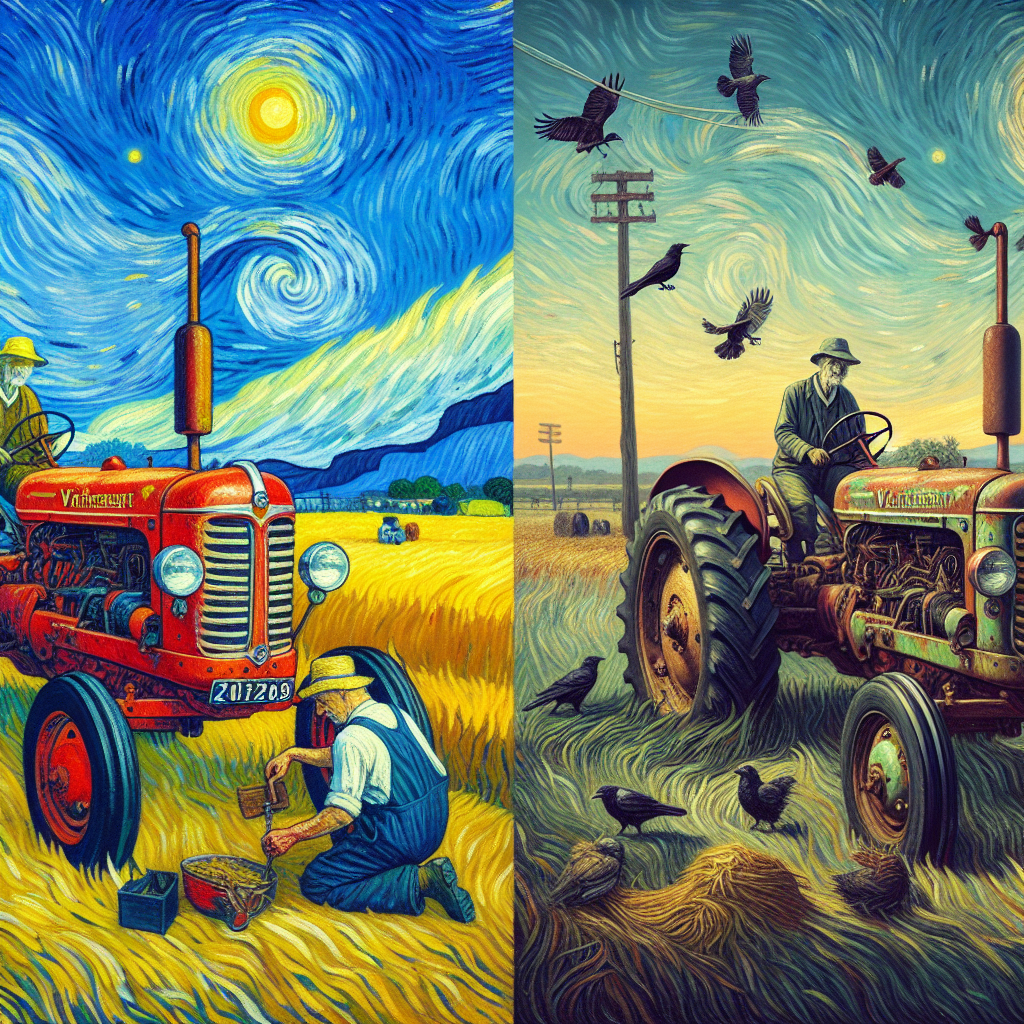
In the heart of America’s farms, nostalgia flows like the rivers that nourish the fields. Farmers reminisce about simpler times, when tractors had fewer parts, reflecting a relationship built on trust and perseverance. These machines weren’t mere tools; they were steadfast companions, fostering a deep connection to the earth and the seasons. The stories of these tractors—each dent and rust spot a badge of honor—echo through generations, serving as reminders of hard work and community ties.
As technology has advanced, the allure of precision farming and sophisticated machinery has taken center stage. While efficiency and sustainability have their merits, many farmers find themselves yearning for the straightforwardness of older tractors that could be repaired with basic tools and a bit of know-how. This longing isn’t just about nostalgia; it pinpoints a yearning for competence, a sense of familiarity with one’s equipment that is increasingly absent today. In a world dominated by complicated technology, that simplicity serves as a balm—a foundation of reliability that cultivates peace of mind.
This emotional attachment extends beyond machinery. It speaks to an identity rooted in environmental stewardship and community connection. Farmers share tales over coffee, recounting how these old tractors not only helped them cultivate their crops but also fostered relationships within their communities. They appreciate the practicality these machines offer, understanding that the older designs can yield benefits both economically and ethically. There’s a call here for deeper reflection on sustainable practices and a push against the fleeting nature of modern conveniences.
Consider the farmer who chooses to cherish vintage equipment, embracing the lessons of yesterday to inform a sustainable future. This isn’t about resisting progress but about redirecting focus back to the fundamental aspects of farming that matter most—integrity, community, and a solid connection to the land. In revisiting these roots, we cultivate not just crop yield but a grounded sense of identity, staying committed to approaches that respect both past and present.
As we contemplate the evolution of farming, let’s honor the stories that shape our agricultural identity. The ethos of less truly being more resonates today more than ever. By appreciating and advocating for simpler designs, a pathway emerges—one that reconnects us to the heart of farming and to each other, embodying a commitment to producing both food and relationships rooted in care and tradition. Let us stand firm in our resolve: in a world craving connection, it’s time we celebrated the beauty of simplicity and the rich legacy of those who toiled before us.

Conclusion
Conclusion:
- Nostalgia for simpler farming times highlights the connection between farmers and their old tractors.
- Older tractors fostered trust and perseverance, symbolizing hard work and community ties.
- The modern shift to precision farming contrasts with the simplicity of vintage equipment that can be easily repaired.
- This yearning for older machines signifies a desire for competence and familiarity in farming tools.
- Emotional attachments to tractors reflect an identity tied to environmental stewardship and community bonding.
- Choosing vintage equipment encourages mindful practices that honor farming’s fundamental values of integrity and community.
- Celebrating simplicity in agriculture cultivates connections and honors the legacy of those who came before us.
Conclusion
Other Resources

Other Resources
Here is a list of other resources you can review online to learn more:
- FTMTA
- Farm Collector
- Fortuna Redwood Auto Xpo Antique Tractors
- Ranch Hand
- Sonalika Tractor
- American Tractor Museum
- International Harvestor
- Branson
- Volvo
- Escorts
- Muir-Hill
- Arma Trac
- SOMECA
- Old Tractors
- Bombardier
- Tytan
- Fairfield County Antique Tractor Club
- Force Motors
- ATC
- YTO
Use This Prompt To Get More Resources With Your Favorite Online AI Tool: Please provide me with a list of online articles with their URLs in a bulleted list that I can read regarding Why Farmers Miss the Days When Tractors Had Fewer Parts

Other Resources
Glossary Terms
Why Farmers Miss the Days When Tractors Had Fewer Parts – Glossary Of Terms
1. Simplicity — Fewer systems and straightforward mechanics that are easy to understand, diagnose, and fix in the field. Glossary Of Terms
2. Mechanical Linkage — Physical rods, levers, and cables that directly transmit control movements without electronic intermediaries.
3. Carburetor — Older fuel-delivery device that can be cleaned, adjusted, or rebuilt by hand rather than requiring electronic calibration.
4. Magneto — Self-contained ignition unit independent of battery power, valued for reliability and ease of service.
5. Belt Drive — Simple, accessible power-transmission method where belts are easy to inspect and replace.
6. Gearbox — Purely mechanical transmission with manual repair options and predictable failure modes.
7. Clutch — Mechanically actuated power-disconnect component that farmers could adjust or replace in the yard.
8. PTO (Power Take-Off) — Direct mechanical interface to implements that simplifies hookup and troubleshooting.
9. Basic Hydraulics — Simple hydraulic pumps and valves with visible leaks and accessible fittings versus electronically controlled systems.
10. Non-Integrated Implements — Attachments that operate independently of tractor electronics, making swaps and repairs simpler.
11. Field Repairability — The capacity to perform meaningful repairs on-site using basic tools and parts.
12. Parts Count — Total number of components; fewer parts generally mean fewer failure points and simpler maintenance.
13. Mean Time to Repair (MTTR) — The average time required to fix a fault, typically shorter on less complex machines.
14. Diagnostic Complexity — Level of effort and equipment required to find faults; low on mechanical tractors.
15. Electronic Control Unit (ECU) — Central computer controlling engine/tractor functions that raises troubleshooting complexity.
16. CAN Bus — In-vehicle communication network that requires specialized knowledge and tools to diagnose.
17. Proprietary Software — Manufacturer-specific code and tools that can restrict independent repair and modification.
18. Telemetry/Connectivity — Remote data systems that add dependencies on networks, subscriptions, and vendors.
19. Modularity — Degree to which components are independently removable and replaceable; older tractors often more modular mechanically.
20. Aftermarket Parts — Third-party replacement components that are more plentiful and affordable for simpler designs.
21. Obsolescence — The state of parts or systems no longer produced; paradoxically easier to work around when systems are simple and generic.
22. Standardization — Use of common fasteners, bore sizes, and fittings that make maintenance and parts sourcing easier.
23. Skillset Shift — Movement from hands-on mechanical skills to electronic diagnostics and software updates required for modern machines.
24. Dealer Dependence — Increased need to rely on authorized service centers and technicians for complex electronic or software issues.
25. Tooling Requirements — Contrast between basic hand tools for old tractors and specialized diagnostic hardware/software for new ones.
26. Reliability Perception — The belief that simpler machines fail less often or fail in more manageable ways.
27. Longevity — The ability to keep a machine operational for decades through basic repairs and parts swaps.
28. Cost of Ownership — Aggregate expenses over time; simpler tractors often have lower ongoing maintenance and repair costs.
29. Retrofitability — Ease of modifying or upgrading older tractors with custom solutions because of open, mechanical architectures.
30. Repair Knowledge Transfer — Cultural continuity of mechanical know-how passed through generations, easier to apply on less complex equipment.
Other Questions
Why Farmers Miss the Days When Tractors Had Fewer Parts – Other Questions
If you wish to explore and discover more, consider looking for answers to these questions:
- Are older tractors truly more reliable than modern ones under real working conditions?
- Which vintage tractor models are best known for their simplicity and durability?
- How do maintenance and operating costs compare between older and modern tractors?
- Where can I find spare parts, schematics, and repair manuals for older tractors?
- Is it legal to operate restored or antique tractors on public roads and for commercial work?
- How do emissions and fuel efficiency of old tractors compare to current machines?
- Can older tractors be retrofitted with modern safety features or simple electronics?
- What skills, tools, and training are needed to maintain and repair vintage tractors?
- How does using simpler equipment affect farm productivity and crop yields?
- Are there government grants, tax incentives, or programs for restoring older farm equipment?
- How can farmers balance the benefits of precision agriculture with the appeal of simpler designs?
- What are the primary risks of relying on older machinery during critical seasons?
- How do insurance policies and liability coverage differ for vintage versus modern tractors?
- Can older tractors accommodate modern implements and attachments, and what adapters are needed?
- What is the resale value trend for restored vintage tractors compared with newer used machines?
- Do simpler tractor designs have measurable benefits for soil health and sustainability?
- Are there active communities, clubs, or networks for exchanging knowledge about old tractors?
- How can older farmers pass mechanical knowledge about vintage machines to the next generation?
- What are the most common mechanical failures on older tractors and typical DIY fixes?
- Where are reputable sellers or auctions for restored tractors and quality parts?
- When did tractors begin to increase in complexity, and what drove that evolution?
- What are the economic trade-offs of reverting to simpler farming methods at scale?
- How are manufacturers responding to farmer demand for more durable, repairable machinery?
- Are there documented case studies of farms that improved resilience by using simpler equipment?
- What safety precautions and maintenance routines should owners of old tractors follow?
- How does part standardization (or lack thereof) affect the repairability of vintage tractors?
- Can using older, non-proprietary tractors reduce dependence on corporate service and software lock-in?
- What policies or regulations most influence a farmer’s choice between vintage and modern equipment?
- How should a farmer evaluate whether to maintain older tractors or invest in modern replacements?

Other Questions
Haiku
Why Farmers Miss the Days When Tractors Had Fewer Parts – A Haiku
Old tractors whisper,
Stories of toil and earth’s bond,
Simplicity thrives.

Haiku
Poem
Why Farmers Miss the Days When Tractors Had Fewer Parts – A Poem
In fields where tractors once roamed free,
Lives a nostalgia, simple as can be.
Machines that hummed with a gentle grace,
Symbols of labor, roots interlaced.
Fewer parts meant fewer woes,
The farmers hand, in soil, knows.
Each dent a tale, each scratch a sign,
Of trust built through seasons, a bond divine.
Modern tech, with its flashing lights,
Promises yield but obscures the sights—
Of community, of grit and sweat,
In every pulse, our past is met.
Turn back the clock, to hands that toil,
Where legacy lives, and souls grow from soil.
A neighbors nod, a cup of morning brew,
In shared stories, identity grew.
Yet as we march toward the new and bright,
Let us not forget the heart’s soft light;
Embrace the lessons from times gone by,
For in simplicity, the richest truths lie.
As tractors sing through dusk-touched fields,
Their whispers echo what the heart yields;
A call to arms, for all to see,
That farmings soul is simplicity.

Poem
Checklist
Why Farmers Miss the Days When Tractors Had Fewer Parts – A Checklist
Emotional Appeals
✅______ Reflect on your earliest memories with farming tools and their significance.
✅______ Share stories with others about your experiences on the farm.
✅______ Create a visual representation of your connection to farming (e.g., a photo collage).
Rational Appeals
✅______ Evaluate the efficiency of modern farming equipment versus older designs.
✅______ Consider the cost-effectiveness of simpler machinery in maintenance and repairs.
✅______ Research sustainable farming practices that prioritize soil health and ecosystem balance.
Ethical Appeals
✅______ Assess the environmental impact of current farming technologies.
✅______ Engage in conversations about preserving traditional farming methods.
✅______ Opt to support local farms that employ sustainable practices.
Authority Appeals
✅______ Seek insights from experienced farmers about the reliability of older tractors.
✅______ Attend workshops or talks about the history of farming technology.
✅______ Read books or articles by experts in agricultural sustainability.
Narrative Appeals
✅______ Write a personal narrative about your connection to farming or a specific tool.
✅______ Collect stories from family members or neighbors about their farming experiences.
✅______ Develop a community blog sharing stories of traditional farming methods.
Social Appeals
✅______ Join local farming groups to discuss the value of simplicity in agriculture.
✅______ Organize community events that celebrate traditional farming techniques.
✅______ Advocate for local producers at farmer’s markets to reinforce community bonds.

Checklist
At ClassicTractorNews, we help tractor lovers keep up with the latest news for classic and vintage tractors.
Please share this post with your friends, family, or business associates who may like old classic or vintage tractors.