


Embracing Simplicity: Revolutionizing Farming For A Sustainable Future
By Tom Seest
At ClassicTractorNews, we help tractor lovers keep up with the latest news for classic and vintage tractors.
Please share this post with your friends, family, or business associates who may like old classic or vintage tractors.
Why Complexity Is Overrated In Modern Farming Equipment
Why Complexity Is Overrated In Modern Farming Equipment
In an era where technology reigns supreme, the allure of complexity has seeped into every corner of our lives, including farming equipment. While innovation can lead to impressive advancements, the truth is that we often overlook the fundamental value of simplicity. Take, for instance, the timeless tractor, a symbol of the farming lifestyle that embodies both grace and grit. It’s not the bells and whistles that make a tractor effective; it’s the sheer power it delivers, the reliability it offers, and the connection it fosters between the farmer and the land.
Consider the story of a third-generation farmer grappling with a mountain of high-tech machinery—a cornucopia of buttons, screens, and programs. He spends more time reading manuals than actually farming. In pursuit of efficiency, he’s lost touch with the soil beneath his feet and the rhythm of the planting season. His grandfather’s trusty, no-frills tractor, on the other hand, could plow the fields without a moment’s hesitation. It didn’t require an IT specialist or three hours of troubleshooting; it just needed fuel, a skilled operator, and the will to get the job done.
This is where the heart of the argument lies: complexity can lead to disconnect. As farmers, we are not just operators of machines; we are stewards of the earth. The truth is, when our equipment overwhelms rather than empowers us, we risk eroding our connection not only with our land but also with the community that sustains us. Farming should bring us together in shared purpose, not isolate us in a web of screens and gadgets.
Moreover, simplicity fosters creativity. When a farmer isn’t bogged down by a high-tech dashboard, they can think outside the box, experimenting with different crops or sustainable practices that could enrich their soil. They can spend less time troubleshooting a malfunction and more time nurturing their land, engaging with their community, and sharing their experiences—true values of agriculture that resonate on both a personal and societal level.
Embracing simplicity doesn’t mean resisting progress; it means prioritizing what truly matters. In a world dazzled by complexity, let’s recognize the powerful lessons embedded in straightforward, reliable machines like the trusty tractor. To thrive, we must remember that the essence of farming lies not in technology but in the human spirit that drives it. By cutting through the noise, we can cultivate a future that honors both our roots and our innovation.

Why Complexity Is Overrated In Modern Farming Equipment
Why Complexity Is Overrated In Modern Farming Equipment
- Emphasis on simplicity in modern farming equipment over complexity.
- The timeless tractor symbolizes effective farming through power and reliability.
- High-tech machinery can hinder farmers’ connection to the land and their craft.
- Complex equipment may lead to a disconnect between farmers and their communities.
- Simplicity encourages creativity in farming practices and community engagement.
- Embracing straightforward machines prioritizes essential farming values.
- The essence of farming lies in the human spirit, not just technology.
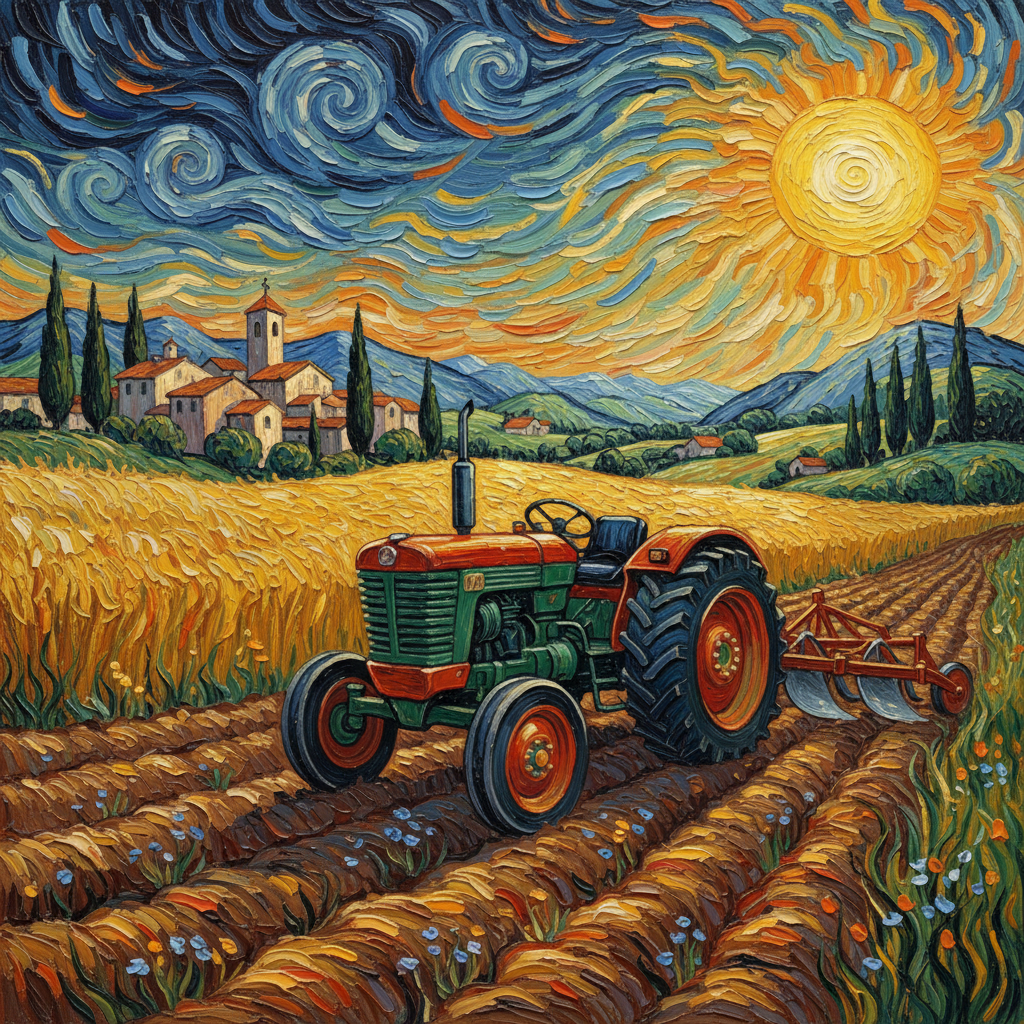
Why Complexity Is Overrated In Modern Farming Equipment
Table Of Contents
- Why Complexity Is Overrated In Modern Farming Equipment
- Why Do We Overestimate the Benefits Of Complex Farming Gear?
- How Can Simplicity Enhance Our Farming Efficiency and Yields?
- What Emotional Struggles Do Farmers Face with Complicated Equipment?
- Is It Ethical to Push Farmers Towards Overly Complex Technology?
- How Does the Complexity Of Equipment Affect Farm Profitability?
- What Stories Highlight the Pain Of Farmers Using Complicated Tools?
- Conclusion
- Other Resources
- Glossary Of Terms
- Other Questions
- Haiku
- Poem
- Checklist
Why Do We Overestimate the Benefits Of Complex Farming Gear?
Why Do We Overestimate the Benefits of Complex Farming Gear?
In the heart of America’s farmland, you’ll find a world where age-old traditions clash with the relentless march of technology. Picture a farmer standing beside a gleaming new tractor, boasting the latest bells and whistles. The allure of sophisticated gear is undeniable. It promises efficiency, precision, and an increase in yields. Yet, beneath the shiny exterior lies a web of overestimations that deserve scrutiny.
Take a moment to imagine the farmer who inherited a modest plot of land, thriving with hard work and experience rather than complex machinery. For generations, these individuals relied on intuition and a deep understanding of their soil, crops, and the ever-changing climate. Yet, the narrative has shifted. Today, we frequently hear that success depends on the latest tractor or the most advanced irrigation system, as if our reliance on technology somehow legitimizes our efforts. The truth? Complexity doesn’t always equal capability.
The problem is not just technical; it’s emotional. Farmers often feel an unspoken pressure to keep up with advancements. That gleaming tractor, with its numerous buttons and screens, becomes more than a tool; it’s a status symbol. In a world that values innovation, there’s an instinctive fear of being left behind, of being the last to adopt. Yet, this mindset can lead to a neglect of the very principles that have stood the test of time: hard work, patience, and the wisdom gained through seasons past.
Rationally, we must consider that simple solutions can still yield spectacular results. Farmer Rick, who resides three fields over, swears by his old, reliable tractor. As he spins stories about it ramming through mud season after season, his neighbors nod with admiration. His success comes not from gadgets, but from his shrewd understanding of principles that can’t be quantified.
There’s an ethical appeal in recognizing that over-reliance on complex gear can alienate new farmers. The entry barrier grows higher when perceived necessity warps reality. We need to cultivate a community where wisdom, collaboration, and shared experiences empower everyone—not just those who can afford the cutting-edge tools.
The next time you hear about a groundbreaking tractor or a high-tech gadget, pause and reflect. Acknowledge the innovative spirits behind advanced gear, but also honor those simple machines and timeless methods that have forged strong connections with the earth. Let’s not lose sight of what truly drives success: knowledge, resilience, and community. In embracing both old and new, perhaps we can redefine what it means to thrive in agriculture today.

Why Do We Overestimate the Benefits Of Complex Farming Gear?
Why Do We Overestimate the Benefits Of Complex Farming Gear?
- The clash of age-old farming traditions and modern technology is evident in American agriculture.
- Farmers often overestimate the benefits of advanced machinery, believing it guarantees success.
- Many successful farmers rely on experience and a deep understanding of their land over complex gear.
- Emotional pressure can lead farmers to prioritize status symbols like high-tech tractors.
- Simple farming solutions can yield great results, as demonstrated by traditional farmers.
- Over-reliance on sophisticated equipment may alienate new farmers and increase barriers to entry.
- A balance of traditional and modern practices is essential for sustainable agricultural success.

Why Do We Overestimate the Benefits Of Complex Farming Gear?
How Can Simplicity Enhance Our Farming Efficiency and Yields?
Simplicity is like a well-tuned tractor, powering through the complex landscape of modern agriculture. When farmers reduce the clutter—whether it’s in their processes, equipment, or mindset—they create space for what truly matters: productivity and sustainability. Imagine pulling into a field, your trusted tractor behind you, its engine humming a familiar tune, ready to do the heavy lifting. This machinery embodies the essence of simplicity; it’s straightforward, efficient, and clear in its purpose.
In a world where technology often complicates rather than clarifies, stripping back to the basics can spark a profound transformation in our farming practices. Consider the story of a small family farm that decided to forgo the latest automated gadgets in favor of traditional methods. They focused on crop rotation, soil health, and nutrient management, reaping not only a bountiful harvest but also reconnecting with their roots. This simplicity not only enhanced their yields but solidified their bond with the land and community. They realized that efficiency is not solely about speed but about making thoughtful choices that nurture rather than drain their resources.
Simplicity also paves the way for mental clarity. When we reduce complexity, we set ourselves free from the noise of overthinking. Imagine standing in your field, the sun setting slowly in the distance, with clear decisions waiting to be made about crop selection and pest management. It feels empowering, doesn’t it? This clarity breeds confidence and allows farmers to act decisively, trusting their instincts—and that’s where innovation springs from.
Moreover, the ethical implications of simplicity resonate deeply in today’s agricultural dialogues. By minimizing our inputs and maximizing our outcomes, we foster a sense of responsibility toward our environment and community. When farmers come together to share stories of what works—what’s simple and effective—they create a sense of authority rooted in experience. This collective knowledge becomes a guiding light in an industry challenged by climate change and resource scarcity.
Ultimately, embracing simplicity invites connection—among farmers, with the land, and within our communities. Everyone can relate to the farmer who wakes up at dawn, toiling away with a vision. By investing in simpler, more sustainable practices, we aren’t just improving yields; we are cultivating a legacy for generations to come. It’s this return to our roots that can revolutionize farming, optimizing both our output and our impact.

How Can Simplicity Enhance Our Farming Efficiency and Yields?
How Can Simplicity Enhance Our Farming Efficiency and Yields?
- Simplicity acts as a powerful tool in modern agriculture, enhancing productivity and sustainability.
- Reducing clutter in farming practices, equipment, and mindset allows for a focus on essential elements.
- Traditional farming methods, like crop rotation and soil health, can yield bountiful results and strengthen community ties.
- Mental clarity is achieved through simplification, empowering farmers to make confident, instinct-driven decisions.
- Minimizing inputs while maximizing outcomes promotes environmental responsibility and community engagement.
- A collective sharing of simple, effective practices fosters experience-based authority in addressing industry challenges.
- Embracing simplicity helps cultivate a legacy of sustainable practices and optimizes agricultural impact for future generations.

How Can Simplicity Enhance Our Farming Efficiency and Yields?
What Emotional Struggles Do Farmers Face with Complicated Equipment?
Farming is an age-old profession, but in the modern age, the blend of tradition and technology can create emotional turbulence for those who toil the land. Complicated equipment, like tractors that seem more like spaceship controls than farming essentials, can be a double-edged sword. On one hand, these machines boast efficiency and precision; on the other, they wield the power to drive a wedge between a farmer and their craft.
Consider the unspoken bond between a farmer and their tractor. It’s not just a machine; it’s a lifeline, a partner in the struggle against nature’s unpredictable temperament. When a tractor malfunctions, it can evoke feelings of helplessness, an emotional blow that transcends mere inconvenience. In moments like these, farmers often wrestle with self-doubt, questioning their competence, their choices, and even their passion for the land. A farmer’s identity is woven with the cycles of planting and harvest; when the tools of that trade falter, so too can their spirit.
Moreover, the stakes are sky-high—the emotional pressure mounts when the survival of a family farm relies on machines that can be finicky, or worse, break down during critical moments. Imagine waiting for a part to arrive amidst a looming harvest. The clock ticks, worry mounts, and with each passing hour, the potential loss isn’t just financial; it’s a haunting echo of dreams deferred and futures uncertain. Here lies the heart of the struggle—an innate connection to the land that is challenged by the very tools designed to nurture it.
Engagement with farming technology often comes with its own culture, where younger farmers wield techniques that their forebears can find bewildering. The generational divide may lead to feelings of isolation, where one feels like an outsider in their own family legacy. It’s essential to bridge this gap, fostering environments where wisdom merges with innovation to cultivate not just crops but understanding.
However, amidst these struggles, there’s a profound resilience that defines the farming community. The same hands that grapple with daunting technology also possess the power to adapt and overcome. Rather than shying away from these emotional challenges, many farmers harness them, allowing vulnerability to pave the way for growth. Those moments of struggle become a part of their narrative—a testament to their commitment, transforming machinery from a source of anxiety into a bridge that connects generations, echoing a profound truth: farming is as much about heart as it is about hard work, and together, both are essential for the thriving soul of agriculture.

What Emotional Struggles Do Farmers Face with Complicated Equipment?
What Emotional Struggles Do Farmers Face with Complicated Equipment?
- Modern farming blends tradition and technology, creating emotional challenges for farmers.
- Complex machinery, while efficient, can disconnect farmers from their craft.
- Malfunctions evoke feelings of helplessness and self-doubt in farmers.
- The survival of family farms relies on reliable machinery during critical times.
- Younger farmers often face isolation from older generations due to different technological approaches.
- Bridging the generational gap is essential for fostering understanding within farming communities.
- Resilience defines farmers, who use struggles to grow and adapt, maintaining a deep connection to their work.

What Emotional Struggles Do Farmers Face with Complicated Equipment?
Is It Ethical to Push Farmers Towards Overly Complex Technology?
Picture a farmer, hands worn and calloused, standing beside a gleaming new tractor. This machine isn’t just a piece of equipment; it’s a symbol of the high-tech revolution sweeping through agriculture. On one end, it offers the allure of efficiency and increased yield. On the other, it comes with a hefty price tag and a steep learning curve that can leave seasoned farmers feeling vulnerable and overwhelmed. This tension invites a deeper conversation about the implications of pushing technology into their hands.
It’s easy to argue from a distance that modernizing farming practices is essential. Economic theories and agricultural statistics tout the advantages of automation: increased precision, reduced labor costs, and higher profits. But how often do those theories consider the very real cultures, traditions, and lives behind the tractors and tillers? The trust that farmers have built in their techniques, honed over generations, doesn’t disappear overnight. When faced with the pressure to adopt complex technologies, many worry they might lose their identity along with their autonomy.
Yet, let’s consider a story about a neighbor with years of experience. He initially resisted the allure of high-tech tools, cemented in his ways. However, one harvest season, he experienced devastating crop losses due to unpredictable weather patterns. Hesitantly, he decided to invest in a precision agricultural system. The result was transformative—not just for his yields but for his approach to farming itself. While the initial learning curve was steep, the tools allowed him to reconnect with nature and manage risks more effectively.
The emotional heart of this situation revolves around choice and dignity. Farmers should not be pushed; they should be invited to explore these innovations at their own pace, armed with information and support. Ethical considerations must prioritize their autonomy while addressing their fears. They need to feel that adopting such technology is a decision made in partnership, not compulsion, preserving the sacred relationship with the land through which their livelihood flows.
In this rapidly changing landscape, cultivating a community that supports farmers in mastering new tools is vital. By fostering relationships filled with trust, we can help bridge the gap between tradition and innovation. Technology, when approached thoughtfully, becomes an ally—empowering farmers rather than intimidating them. This blend of heart, head, and gut, grounded in respect and understanding, can lead to a future where farmers wield technology like seasoned craftsmen, honoring their past while confidently embracing the possibilities ahead.

Is It Ethical to Push Farmers Towards Overly Complex Technology?
Is It Ethical to Push Farmers Towards Overly Complex Technology?
- Farmers face a high-tech revolution in agriculture, represented by new machinery like tractors.
- The introduction of technology offers efficiency but also poses challenges like costs and a learning curve.
- Modernization theories often overlook the cultural and traditional bonds farmers have with their practices.
- A neighbor’s story illustrates the potential benefits of adopting technology after experiencing crop losses.
- Farmers should be encouraged to explore technology at their own pace, preserving their autonomy and dignity.
- Supportive communities can help farmers adapt to new tools, bridging the gap between tradition and innovation.
- When approached thoughtfully, technology can empower farmers, allowing them to maintain their identity while progressing.

Is It Ethical to Push Farmers Towards Overly Complex Technology?
How Does the Complexity Of Equipment Affect Farm Profitability?
How Does the Complexity of Equipment Affect Farm Profitability?
In the world of farming, equipment stands as the backbone of productivity, but as technology evolves, so does the complexity of this equipment. Imagine a sturdy tractor, once a simple and reliable ally in the fields, now transformed into a sophisticated machine capable of precision planting and data collection. This shift raises an important question: does complexity enhance our farming capabilities or serve as a double-edged sword?
Picture a farmer, seasoned by years of experience, who relies on that trusty tractor to haul in the harvest. Each season brings challenges, yet that familiar engine hum brings comfort. But now, with the rise of advanced machinery equipped with GPS and automation features, the farmer finds himself grappling with a steep learning curve. This transition often demands not just financial investment but also time and patience.
On the surface, these modern complexities promise improved efficiency and higher yields, ultimately implying greater profits. However, they require a level of expertise that many farmers might not possess. This complexity can foster anxiety, as even the most skilled hands might feel daunted by technology that seems to operate on a different wavelength.
The truth is, this rapid evolution can create a divide in the farming community. While some farmers embrace the new tools and reap the benefits, others may struggle, feeling left behind in a world that now prioritizes tech-savvy operations over traditional methodologies. The ethical narrative emerges: how do we ensure that advancements in agricultural technology don’t alienate the very people who feed us?
Let’s consider an original perspective. Instead of solely measuring profitability through immediate financial returns, what if we expanded our definition to include the holistic health of the farming community? A farmer who invests in education or collaborates with tech providers not only enhances their operating capacity but also uplifts their community. By sharing stories, resources, and knowledge, farmers can turn the complexity of equipment into a bridge rather than a barrier.
In this evolving landscape, it’s crucial to recognize that while complexity can seem overwhelming, it also opens doors to new opportunities and connections. With intentional support systems, farmers can adapt, ensuring that their personal narratives and the stories of their communities remain at the heart of agricultural progress. Farming isn’t just about profit margins; it’s about resilience, relationships, and the rich heritage woven into the fabric of our fields.

How Does the Complexity Of Equipment Affect Farm Profitability?
How Does the Complexity Of Equipment Affect Farm Profitability?
- Modern farming equipment, while enhancing productivity, has become increasingly complex.
- This complexity requires farmers to invest time and money, often leading to a steep learning curve.
- Advanced machinery promises improved efficiency and higher yields, but may also induce anxiety among farmers unfamiliar with technology.
- A divide exists within the farming community, with some embracing new technologies while others feel left behind.
- Profitability should be redefined to include the holistic health of the farming community, not just financial returns.
- Collaboration and education can help farmers leverage equipment complexity as a bridge to community upliftment.
- Complexity in farming opens opportunities for adaptation and connection, emphasizing resilience and relationships.

How Does the Complexity Of Equipment Affect Farm Profitability?
What Stories Highlight the Pain Of Farmers Using Complicated Tools?
What Stories Highlight the Pain of Farmers Using Complicated Tools?
In the heart of rural America, the sound of a tractor is more than just machinery; it’s a melody of toil, tradition, and resilience. Yet, behind that familiar hum lies a labyrinth of complex tools that can transform a farmer’s life from hopeful to harrowing. Picture a fifth-generation farmer, boots caked in dirt, staring at a brand-new tractor adorned with screens and buttons more suited for a spaceship than a field. This isn’t just a tool; it’s a symbol of progress. But progress comes at a price.
Sam, a seasoned farmer, recalls the day he upgraded his gear. What’s supposed to herald a new era of efficiency quickly spiraled into frustration as he struggled to navigate an array of digital controls. The once-simple act of plowing became a battle of will. His hands, once confident on the worn handles of a classic tractor, now trembled at the thought of pressing the wrong button. It’s in these moments that the comfort of familiarity clashes with the demands of innovation, leading to stress that weighs heavier than a load of hay.
As farmers adapt to these high-tech tools, they often find themselves not only battling the elements but also grappling with feelings of inadequacy when they can’t keep pace with evolving technologies. This emotional struggle is profound. The farmer, a self-sufficient creature, now feels vulnerable. The anxiety associated with operating unfamiliar machinery can erode confidence, making it harder to serve the land they cherish.
Furthermore, while each button press is a step toward efficiency, it also distances farmers from their craft, creating a chasm between them and the soil that sustains them. The ethical dilemma looms large: should they embrace technology that may undermine their connection to the land? This dynamic weighs on the collective conscience of the agricultural community.
But within this narrative lies an opportunity for change. Training programs and community workshops can bridge the gap between tradition and technology. These initiatives remind us that embracing progress doesn’t mean abandoning our roots. By sharing stories of struggle and success, we can cultivate a support system where old and new methods coexist, nurturing trust among farmers facing the relentless march of technology.
Ultimately, the narrative of the complicated tools isn’t just about machines; it’s a reflection of the heart, head, and gut of every farmer working tirelessly to provide for their families and communities. Let’s foster a dialogue that values their struggles, celebrates their achievements, and empowers them to reclaim their agency in a world that seems increasingly automated.

What Stories Highlight the Pain Of Farmers Using Complicated Tools?
What Stories Highlight the Pain Of Farmers Using Complicated Tools?
- The sound of tractors symbolizes toil, tradition, and resilience in rural America.
- Complex machinery intended for efficiency can lead to frustration and anxiety among farmers.
- Farmers often feel vulnerable and inadequate when unable to navigate high-tech tools.
- The mechanization can create a disconnect between farmers and their land.
- There is an ethical dilemma regarding the embrace of technology versus maintaining a connection to the soil.
- Training programs and community workshops can help bridge the gap between tradition and technology.
- The narrative reflects the emotional and practical struggles of farmers adapting to an increasingly automated world.

What Stories Highlight the Pain Of Farmers Using Complicated Tools?
Conclusion
Farming has a storied history, deeply rooted in tradition and resilience. Yet, in today’s high-tech world, many farmers find themselves standing at a crossroads, burdened by the complexity of modern agricultural equipment. This complexity, often promised as a path to greater efficiency and yield, can instead forge a disconnect between farmers and their craft. Imagine a hardworking farmer, battling the elements with a gleaming, intricate tractor, feeling overwhelmed by the array of buttons and screens. What was once a straightforward task now invokes anxiety and self-doubt, threatening the deep-seated connection to their land.
The stories that emerge from this struggle reflect emotional truths; farmers, steeped in legacy, find themselves wrestling with feelings of inadequacy when faced with technologies that seem foreign. Yet, these stories also highlight the inherent resilience of farming communities—individuals who have weathered storms and adapted to challenges, often creating a rich tapestry of knowledge and experience that transcends mere machinery.
The ethical implications of pushing farmers into a world dominated by complexity cannot be overlooked. As new technologies emerge, they risk sidelining those who are unable or unwilling to navigate the technological labyrinth, thereby increasing barriers for new and seasoned farmers alike. This raises a crucial question: are we prioritizing machines over the very spirit of farming that has sustained communities for generations?
In embracing simplicity, we tap into the potential for creativity and connection. Simpler tools allow farmers to focus more on nurturing their crops and engaging with their communities rather than becoming ensnared in tomes of technical manuals. It’s about rediscovering the synergy between man and machine—finding comfort in reliability over the lure of sophistication.
Cultivating a sustainable future in farming doesn’t hinge on complex equipment, but rather on the heartfelt dedication of those who till the soil. It’s vital to remember that productivity comes not just from advanced technology, but from age-old techniques grounded in experience and collaboration. By preserving this essential relationship with the land, we empower farmers to reclaim their connection, allowing them to innovate without losing sight of their roots.
In the end, the heart of farming lies not in the gadgets it employs, but in the passion that drives each farmer to cultivate the earth, to nurture community, and to celebrate life’s cycle. Let’s champion simplicity in agriculture, fostering an environment where every individual, regardless of technological prowess, can thrive and contribute to a shared legacy of sustainability and hope.

Conclusion
Conclusion:
- Farming has a rich history rooted in tradition and resilience.
- Modern agricultural equipment adds complexity that may disconnect farmers from their craft.
- Farmers struggle with feelings of inadequacy when facing unfamiliar technologies.
- New technologies risk sidelining those unable to navigate them, increasing barriers for all farmers.
- Embracing simplicity can enhance creativity and connection in farming.
- Sustainable farming relies on dedication and age-old techniques, rather than just advanced technology.
- The essence of farming is in the passion for cultivation and community, not just in machinery.

Conclusion
Other Resources

Other Resources
Here is a list of other resources you can review online to learn more:
- Fiat
- Massey Ferguson
- Suzue
- Stihl
- J & MManufacturing
- Holder
- Buhler Versatile
- MX
- Agri-Power
- Kartar Tractors
- Schwanke Car, Tractor and Truck Museum
- AGCO
- Fahr
- Woods & Copeland
- SAME Tractors
- Somerset Vintage & Classic Tractor Show
- Ohio Crawford County Antique Farm Equipment Museum
- Agrico
- Monarch Tractor
- Oliver
Use This Prompt To Get More Resources With Your Favorite Online AI Tool: Please provide me with a list of online articles with their URLs in a bulleted list that I can read regarding Why Complexity Is Overrated In Modern Farming Equipment

Other Resources
Glossary Terms
Why Complexity Is Overrated In Modern Farming Equipment – Glossary Of Terms
1. Complexity tax — Hidden costs (maintenance, training, downtime) imposed by unnecessary system complexity that erode overall value.
2. Total cost of ownership (TCO) — Full lifetime cost of equipment; complexity often inflates TCO through repairs, parts, and expertise needs.
3. Mean time between failures (MTBF) — Average operational interval before failure; more components and interactions typically shorten MTBF.
4. Maintainability — Ease and speed of repair; high complexity reduces maintainability and raises service time and expense.
5. Field serviceability — Ability to repair equipment on-site; simpler designs improve on-farm fixes and reduce transport downtime.
6. Modularity — Design approach with replaceable modules; increases practical simplicity by isolating faults and reducing full-system repairs.
7. Overengineering — Adding features or tolerances beyond necessity; creates cost, weight, and failure vectors with little practical benefit.
8. Vendor lock-in — Dependence on proprietary, complex systems that force ongoing purchases, subscriptions, or specialized service.
9. Interoperability — Equipment’s ability to work with other systems; excessive complexity often prevents seamless integration across brands or generations.
10. ISOBUS — Industry standard for tractor–implement communication; a simplicity enabler that reduces bespoke control complexity.
11. Black box — Opaque systems that prevent user diagnosis or repair, turning minor issues into major service events.
12. Firmware bloat — Excessive embedded software features that slow performance, complicate updates, and introduce bugs.
13. Telematics overload — Volume of remote data and alerts from complex systems that can obscure actionable insight and burden operators.
14. Diagnostics complexity — Intricate fault-reporting schemes that require specialist tools or obscure root causes, delaying fixes.
15. User interface (UI) clutter — Crowded screens and controls that increase operator errors and lengthen training times.
16. Cognitive load — Mental effort required to operate machinery; higher load reduces productivity and increases mistakes.
17. Training burden — Time and cost to teach operators and technicians; complexity multiplies training requirements across generations.
18. Spare-parts logistics — Complexity increases the variety and scarcity of parts, raising inventory costs and repair lead times.
19. Parts commonality — Use of shared, simple components to lower inventory, speed repairs, and improve reliability.
20. Downtime cost — Economic loss from inoperable equipment; complexity frequently converts small faults into long outages.
21. Preventive maintenance overhead — More complex systems need more frequent and specialized upkeep, increasing labor and scheduling strain.
22. Reliability-centered maintenance (RCM) — Prioritizing maintenance by criticality; simpler systems reduce the number of high-priority failure modes.
23. Ruggedization — Robust, simple construction that tolerates real-field conditions better than delicate, feature-heavy designs.
24. Retrofitability — Ease of upgrading older machines; overly complex or proprietary architectures block affordable retrofits.
25. Scalability — Capacity to grow fleet capability without disproportionate cost; simplicity enables incremental, affordable scaling.
26. Lean design — Eliminating unnecessary parts and features to cut cost, weight, failure points, and maintenance complexity.
27. Human-centered design — Designing for typical operators reduces error, training time, and the need for complex compensating features.
28. Opacity risk — Hidden interactions in complex systems that create unpredictable failure modes and maintenance surprises.
29. Secondary-market value — Resale and used-equipment demand; simpler, documented machines generally retain value better and sell faster.
30. Resilience — Ability to sustain operation under stress or partial failure; simplicity increases redundancy of essential functions and operational continuity. Glossary Of Terms
Other Questions
Why Complexity Is Overrated In Modern Farming Equipment – Other Questions
If you wish to explore and discover more, consider looking for answers to these questions:
- How much does complex farming equipment cost compared with simpler alternatives?
- What is the typical return on investment (ROI) for high-tech vs. low-tech equipment?
- How do maintenance and repair costs compare between simple and complex machines?
- How long does it take to train a farmer or worker to use advanced equipment effectively?
- Are there financing, leasing, or subsidy options that make complex equipment more accessible?
- How does equipment complexity affect downtime during critical planting or harvest windows?
- What are common failure modes for high-tech machinery in field conditions?
- How available are replacement parts and service technicians in rural areas?
- What support and training do manufacturers provide after purchase?
- How does complexity affect the resale value of equipment?
- Can older, simpler tractors or implements be retrofitted with selective modern features?
- Which simple technologies deliver the biggest practical benefits with minimal complexity?
- How do complex systems impact small-scale and beginning farmers differently than large operations?
- What measurable yield or efficiency gains can precision agriculture realistically deliver?
- How should a farmer decide between adopting complexity and sticking with tried-and-true methods?
- What metrics should farmers use to evaluate whether new equipment is worthwhile?
- How does equipment complexity influence farm labor needs and skills requirements?
- What are the mental-health impacts on farmers forced to learn or rely on complicated tools?
- How does complexity affect farm autonomy and dependence on manufacturers or consultants?
- Who owns and controls the data generated by advanced farming equipment?
- What are the cybersecurity and privacy risks associated with connected agricultural machinery?
- How do complex systems affect environmental outcomes like soil health, water use, and emissions?
- Are there case studies showing long-term benefits or harms from heavy reliance on high-tech gear?
- What policy or industry changes could lower barriers to adopting appropriate technology?
- How can communities and cooperatives help farmers share knowledge and equipment?
- What ethical considerations should guide tech companies when designing farm equipment?
- How do generational attitudes toward technology shape adoption on family farms?
- What design features make technology genuinely user-friendly for farmers?
- How can farmers evaluate vendor claims and marketing hype about new equipment?
- What steps should a farmer take to pilot new technology with minimal risk?

Other Questions
Haiku
Why Complexity Is Overrated In Modern Farming Equipment – A Haiku
Old tractors still hum,
Simplicity in fields thrives—
Hearts, soil, hands unite.
Haiku
Poem
Why Complexity Is Overrated In Modern Farming Equipment – A Poem
In fields where tractors hum a familiar tune,
Lies a clash of progress, simplicity forgotten too.
Amidst buttons and screens, the farmer becomes lost,
In search of efficiency, a heavy emotional cost.
The weight of high-tech dreams can burden the soul,
As nature’s rhythm fades, the heart yearns for control.
Old machines whisper stories of toil and of grace,
While modern complexity leads to an anxious race.
A third-generation hand, once confident, now frail,
Navigates manuals and glitches, feels the weight of the scale.
Yet in simplicity lies strength—the reliable embrace,
Of tools that connect us, grounding us to place.
Farmers toil with their hands, hearts intertwined with the land,
Creativity flourishes where burdensome gadgets stand.
Each seed sown with wisdom, traditions enduring voice,
Invites us to remember—the art of mindful choice.
Together, let’s bridge the gaps, nurture communitys flow,
Fostering resilience through stories we sow.
In a world of advances, let us not forget,
The power of simplicity—the true farmers debt.
From harvests to heartbeats, may we find a way,
To honor our connection, in work and in play.
As we embrace both the old and the new,
Let farming be a dance, where each step rings true.

Poem
Checklist
Why Complexity Is Overrated In Modern Farming Equipment – A Checklist
Checklist for Embracing Simplicity in Farming Equipment
✅______ Reflect on your connection to the land and the role your equipment plays in that relationship.
✅______ Consider sharing stories or experiences that highlight the emotional toll of complicated machinery.
✅______ Recognize the importance of community support during times of technological change.
Rational Appeals
✅______ Evaluate the actual benefits of advanced technology versus the potential advantages of simpler equipment.
✅______ Assess the time and resources required to learn and maintain complex farming tools.
✅______ Analyze personal experiences and data that demonstrate success through simplicity.
Ethical Considerations
✅______ Discuss the accessibility of farming technology and its impact on new farmers or those with fewer resources.
✅______ Reflect on how the push for new technology might overshadow traditional farming values.
✅______ Encourage collaboration and knowledge-sharing within the farming community.
Authority and Expertise
✅______ Seek advice from seasoned farmers who embrace simplicity and understand its value.
✅______ Learn about best practices from agricultural extension services or local farming cooperatives.
✅______ Share insights from experts who advocate for a balanced approach to technology and tradition.
Narrative Approach
✅______ Create and share stories that illustrate the contrast between success with simple equipment and frustration with complex machinery.
✅______ Encourage farmers to document their farming journeys, focusing on experiences with equipment that either fostered connection or created barriers.
Social Appeals
✅______ Foster a sense of community by organizing training sessions focusing on simpler farming practices and equipment.
✅______ Share achievements and challenges within local agricultural networks to build solidarity.
✅______ Participate in discussions that highlight the importance of farmer collaboration for promoting sustainable methods.

Checklist
At ClassicTractorNews, we help tractor lovers keep up with the latest news for classic and vintage tractors.
Please share this post with your friends, family, or business associates who may like old classic or vintage tractors.