

Uncovering the History Of the Tractor
By Tom Seest
What Year Were Tractors Invented?
At ClassicTractorNews, we help classic tractor lovers keep up with the latest news for classic and vintage tractors.
Tractors are large vehicles used to haul or pull implements like plows. Their simple open design features two very large driving wheels on an axle beneath a single seat for easy transport of implements. Modern tractors often include enclosed cabs to enhance operator safety and comfort.
Charles Hart and Charles Parr made history when they created the first gas-powered traction engine in 1903. Their model weighed 14,000 pounds; following its success, competitors developed lighter general-purpose tractors for everyday tasks that were easier to use.
What Year Were Tractors Invented?
Table Of Contents
John Froelich: The Father of the Tractor?
John Froelich is widely acknowledged as the inventor of the first gasoline engine tractor. His 1892 invention became the first successful gas-powered traction engine and laid the groundwork for modern farm tractors. Froelich’s invention also served as the impetus behind his founding of Waterloo Gasoline Traction Engine Company – later rebranded John Deere.
Henry Ford may be one of the most controversial figures on this list. His passion for tractors was legendary, and he wasn’t shy about going after smaller competitors or large manufacturers’ leaders who did not abide by his demands for better machines than the Fordson which were cumbersome and cost prohibitive compared to what other machines could provide – not too mention the technical skills required to use them effectively.
Ford pioneered four-wheel drive systems on tractors during the 1920s. These innovations greatly increased the traction capabilities of heavy vehicles and allowed for tasks previously impossible or impractical with older single and two-wheel drive tractors to be completed more easily and more cost-effectively.
Theophilus Brown deserves recognition for his contributions to tractor engineering. His name appears on over 150 patents, and he played an essential part in developing early John Deere tractors. Some of his notable achievements included power lift (operating off of PTO), adjustable rear-wheel width, cultivation, manure spreader and cultivation tools – which also led to Model GP, A and B models!
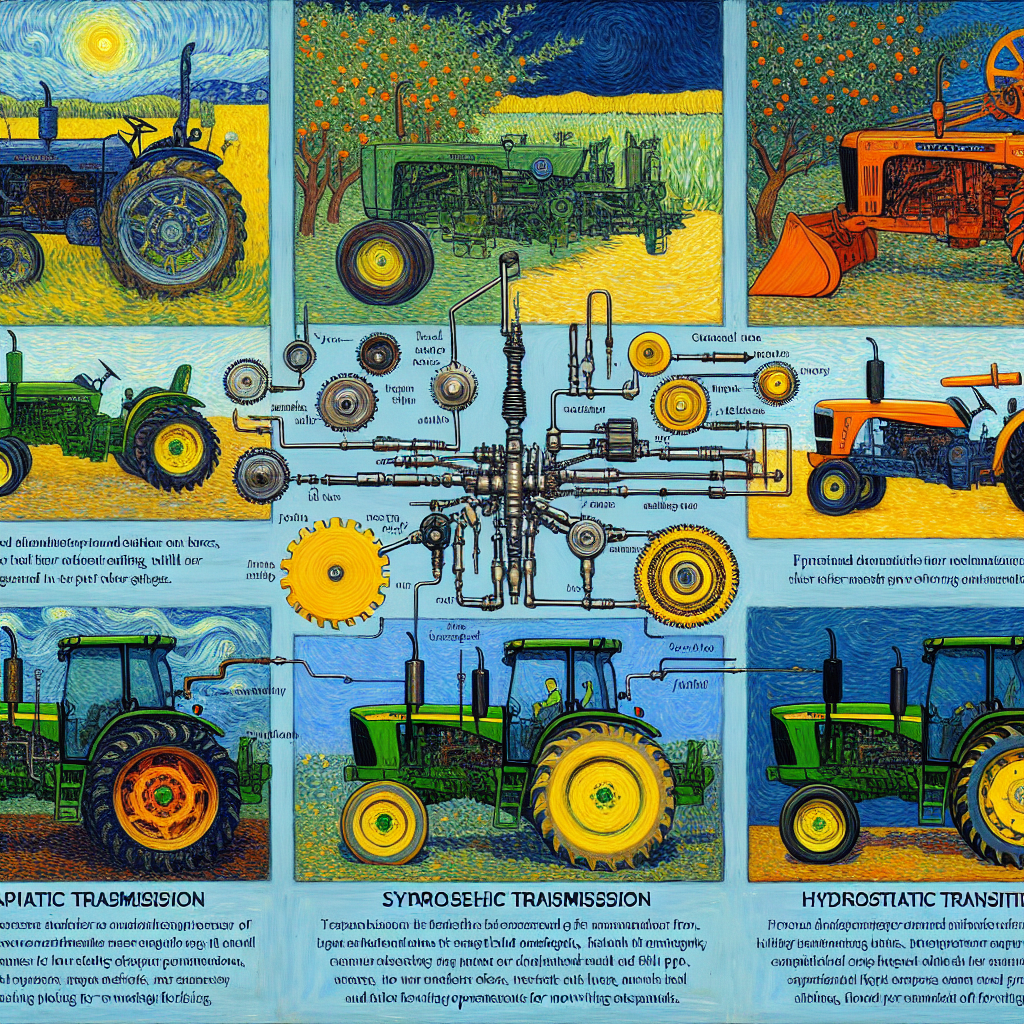
Today’s tractors come packed with sophisticated features such as hydraulically driven powershift transmissions and advanced engines; yet it is essential to remember that their core function remains mechanical.
As demand for durable machinery increased during the 1910s, farmers sought out more effective and user-friendly tractors. As internal combustion engines became more commonplace, tractor manufacturers multiplied dramatically. By 1916, nearly 100 firms sold lightweight tractors; however, only three firms – International Harvester, John Deere and Allis-Chalmers – managed to dominate this industry through high volume production coupled with price wars.
John Froelich: The Father of the Tractor?
Revolutionizing Farming: How Did International Harvester Change Tractors?
As the tractor became more affordable, farmers started adopting it to replace horses and mules. Manufacturers made refinements such as three-point hitches and power take offs (for powering auxiliary equipment), as well as exploring some alternatives to internal combustion engines; eventually diesel tractors proved superior. Tractor popularity skyrocketed during World War II due to increased demands for farming equipment from this wartime period; manufacturers responded by creating more models tailored specifically to this need.
By the end of World War II, tractors had almost completely replaced mules and horses on farms across America. While some older machines remained in service, newer ones offered greater efficiency, helping lower labor costs while increasing output daily.
Ford and International Harvester competed to gain market share during the 1920s by offering lower-cost tractors. This competition caused prices to decline and sales to surge; however, due to the Depression in 1922, sales began falling rapidly again.
After the depression, tractors continued to gain popularity. By the 1950s, tractors had become staples on farms across many operations. Manufacturers developed innovations like four-wheel drive to make tractors more versatile for operating in wet or muddy conditions; attachment solutions like buckets, plows and other implements made them even more so.
Manufacturers introduced more sophisticated tractors with electronic controls that provided more precise operation than their mechanical predecessors. Furthermore, modern tractors could also be driven on tracks rather than wheels for enhanced traction and flotation in wet or sandy soils.
Modern tractors often utilize an internal combustion engine, while their predecessors were powered by steam or external sources like kerosene or paraffin. Prior to the 1930s, most wheel-type tractors relied upon deep tapering lugs on steel tires with deep treads to grab onto the ground for grip and provide traction; today, most use pneumatic rubber tires for greater traction.
Revolutionizing Farming: How Did International Harvester Change Tractors?
How Did Ford Revolutionize Tractor Technology?
Farm tractors are wheeled vehicles used to power or pull agricultural machinery for tasks such as plowing, disking, tilling, planting, harrowing and similar agricultural tasks. Most commonly powered by an internal combustion engine but others may use gas turbines or other means; most feature manual transmission with several gear ratios from three to six that enable the operator to select between operating implements at various speeds as well as driving on roads; modern models also utilize liquid fuels such as diesel or gasoline but most farmers prefer using LPG or propane as this provides greater efficiency with lower emissions levels than either option would allow them.
Early in tractor’s development, many firms produced and promoted these machines. Over time, however, seven firms emerged to become dominant producers throughout the 1920s and 1930s – not only financially sound companies but also innovators in terms of design and marketing of these tractors.
These seven firms, all major automobile manufacturers as well, were responsible for popularizing car-driven tractors worldwide and its various forms. Furthermore, their manufacturing process enabled a single machine to serve multiple purposes simultaneously – not only farming but also small businesses and public parks found the tractors useful as multipurpose tools.
The Fordson was the first successful tractor designed as a single-purpose tractor and intended to replace teams of horses or mules on small farms. Its success inspired a wave of similar tractors that allowed operators to plow, cultivate, and harvest more land with reduced effort than was possible when working animal-drawn teams.
Although the Fordson was an important breakthrough, Irish inventor Harry Ferguson made further advancements with his three-point hitch invention in 1937. This revolutionary system allowed tractors to draw implements more safely across uneven ground; thus improving plowing performance and speed of work.
How Did Ford Revolutionize Tractor Technology?
John Deere: Pioneer of the Tractor Revolution?
John Deere took a gamble on the future of the tractor when he left his blacksmith shop to form a new company and start manufacturing improved steel plows in 1838, at just 10 units; by 1839 production had doubled enabling him to sell them at reasonable prices.
When the first tractors came onto the scene, they were huge machines with steel wheels and long tracks – perfect for plowing but unsuited to cultivating corn or other crops. However, their main value lay in pulling mowers and reapers, which resulted in their rapid rise to popularity within markets worldwide.
Next came the development of gasoline engines capable of powering these large vehicles, a significant advancement over their predecessors, steam engines. Gasoline engines proved much more fuel-efficient, as they didn’t require coal or wood as fuel sources; furthermore, gas-powered tractors proved faster and could handle larger implements than steam-powered ones, which offered numerous advantages over wooden plows.
Early 1900s engineers learned from automobile engineers to improve basic tractor designs by using more powerful engines, adding lights, rubber tires, and lights – improvements which made tractors more useful on farms while also permitting more complex implements such as three-point hitches to be utilized.
John Deere pioneered several innovations that other manufacturers later copied, such as its first power lift – this device replaced time-consuming manual lifting of implements before every turn, which could become exhausting for farmers and time consuming to maintain. Furthermore, John Deere introduced rear power takeoff shafts which enabled powered implements.
John Deere dominated the tractor industry for decades. As it evolved, Deere continued to innovate by adding features such as lights and rubber tires that did not damage fields. Furthermore, Deere simplified his company by consolidating factories and sales organizations while introducing an easier-to-use and less costly tractor model.
John Deere: Pioneer of the Tractor Revolution?
Please share this post with your friends, family, or business associates who may like old classic or vintage tractors.