


Uncovering the History Of the First Tractor
By Tom Seest
What Was the First Tractor Ever Made?
At ClassicTractorNews, we help classic tractor lovers keep up with the latest news for classic and vintage tractors.
Tractors have transformed the way farming is accomplished, providing less manual work while offering greater strength, power, and efficiency to farmers.
John Froelich was living in a small village in Northeast Iowa when he invented the first gasoline tractor. Prior to this invention, he had relied on steam-powered engines for wheat threshing but found them cumbersome and difficult to operate.

What Was the First Tractor Ever Made?
Table Of Contents
- John Froelich: Who Invented the First Tractor?
- What Changed in 1892 with the Invention of the First Tractor?
- The Revolutionary Gasoline Engine: How Did It Change Farming?
- John Deere: How Did He Revolutionize Farming?
- Who Invented the First Tractor in 1903?
- The Fordson Tractor: How Did It Revolutionize Farming?
John Froelich: Who Invented the First Tractor?
John Froelich revolutionized gasoline-powered traction engines when, in 1892 in northeast Iowa and named after his father’s village, he created the first stable gasoline-powered traction engine capable of moving forward or backward. Although steam-powered engines existed prior to this momentous moment, they were far too cumbersome and hazardous for maneuvering around obstacles, not to mention potentially explosive.
Froelich was familiar with steam-powered engines used for harvesting crops at the turn of the 19th century, as he operated both a grain elevator and threshing service operator. He realized there had to be an easier way of handling this process as the threshing machine needed to be transported across long fields by wagon pulled by oxen.
After testing various engines, Froelich eventually settled on gasoline as his preferred choice. With help from blacksmith Will Mann and modification to an existing steam engine running gear, he mounted a vertical one-cylinder gasoline engine for testing purposes on an existing running gear he modified further with one cylinder of vertical gasoline engine mounted vertically atop it for further modification and took their finished equipment into the field to try it out for real. They connected it to their threshing machine in South Dakota to successfully harvest wheat during the fall harvest season – proving it worked successfully!
Charles Hart and Charles Parr further enhanced Froelich’s design of his tractor, known at that time as a gasoline-powered traction engine. They formed the Waterloo Gasoline Traction Engine Company in 1900 and gave rise to what came to be known as “tractors.” Their business venture eventually produced farm machinery which they sold successfully enough to farmers; today John Deere’s factory in Waterloo continues manufacturing them as one of its main operations.

John Froelich: Who Invented the First Tractor?
What Changed in 1892 with the Invention of the First Tractor?
John Froelich built the first gasoline engine tractor in Clayton County, Iowa in 1892. Although he did not refer to his creation as a tractor at first, it was nonetheless capable of forward and reverse movement – one of the fundamental functions of modern engines. Froelich’s engine was connected to a threshing machine for use during harvest runs in both Iowa and South Dakota over 50 days.
Froelich’s invention catalyzed many companies to develop similar vehicles. Charles Hart and Charles Parr, engineering students from the University of Wisconsin, were particularly notable: they created a 2-cylinder gasoline engine which weighed 14,000 pounds, could plow fields as well as operate threshing machines; eventually this company would merge with Oliver Corporation in 1929.
John Deere was an important force in the tractor industry. His simple open vehicle model became the template for future models; today’s classic tractor still adheres to this design; enclosed cabs have become common for safety and comfort purposes. Additionally, Deere invented the three-point hitch system, which makes plowing easier by continually leveling implements – this device is used by most tractor manufacturers today and received the National Medal of Technology, America’s highest scientific honor award; later on he was inducted into the Hall of Fame of the American Institute of Electrical Engineers.

What Changed in 1892 with the Invention of the First Tractor?
The Revolutionary Gasoline Engine: How Did It Change Farming?
Dan Albone of Britain created the very first tractor powered by a gas engine in 1902. His groundbreaking invention allowed implements to be connected via its rear Power Take Off (PTO) shaft for powering purposes; making farming less laborious while increasing efficiency and productivity. This revolutionary invention helped farmers decrease work requirements as well as boost efficiency and productivity levels.
The initial use of tractors on farms involved replacing hard labor with manual work and decreasing animal use – particularly mules and horses. Over time, however, tractors continued to evolve into more advanced machines; International Harvester unveiled the Model 8-16 tractor with PTO that revolutionized how farmers worked.
Rubber tires on tractors were another significant advancement. This allowed faster tractor speeds while simultaneously decreasing damage to fields and permitting a variety of implements to be attached to each tractor.
Charles Parr and Charles Hart, two engineering students at the University of Wisconsin-Madison, constructed a prototype for a gasoline-powered traction engine in 1899. As they tested it on local farms they soon realized their new invention could be used for numerous tasks – hence giving rise to Hart-Parr Gasoline Engine Company in 1903.

The Revolutionary Gasoline Engine: How Did It Change Farming?
John Deere: How Did He Revolutionize Farming?
John Deere may be best known for its iconic green and yellow tractors, but it didn’t break into the tractor industry until 1918. Instead, they first started as a blacksmith shop in Grand Detour, Illinois with a goal to make farmers’ lives simpler; today the company boasts multiple departments as well as an inclusive culture dedicated to improving lives all around the globe.
Deere dealers were demanding a tractor in order to keep up with the demand of selling both tractors and plows together at that time. So Deere’s board asked Joseph Dain, of the water engine industry and a known tinkerer Joseph Dain to design something. Dain came up with an innovative three-wheeled design featuring a high-speed four-cylinder engine powering it and forced lubrication as part of his breakthrough product, and launched what has since been known as Deere’s long green line of successful products.
At its heart, however, was its price: at a time when most people still used horses and mules for transportation purposes, its $1,200 asking price proved hard to justify; consequently only 90 All-Wheel Drives were sold before Fordson entered the market with its smaller and more cost-effective tractor; its arrival proved effective against Deere’s lumbering Goliath status; Deere management quickly put out of mind the All-Wheel Drive. Eventually, Deere would reinvent itself through a partnership with Irish engineer Harry Ferguson, who created his three-point hitch system that made modern plowing possible.
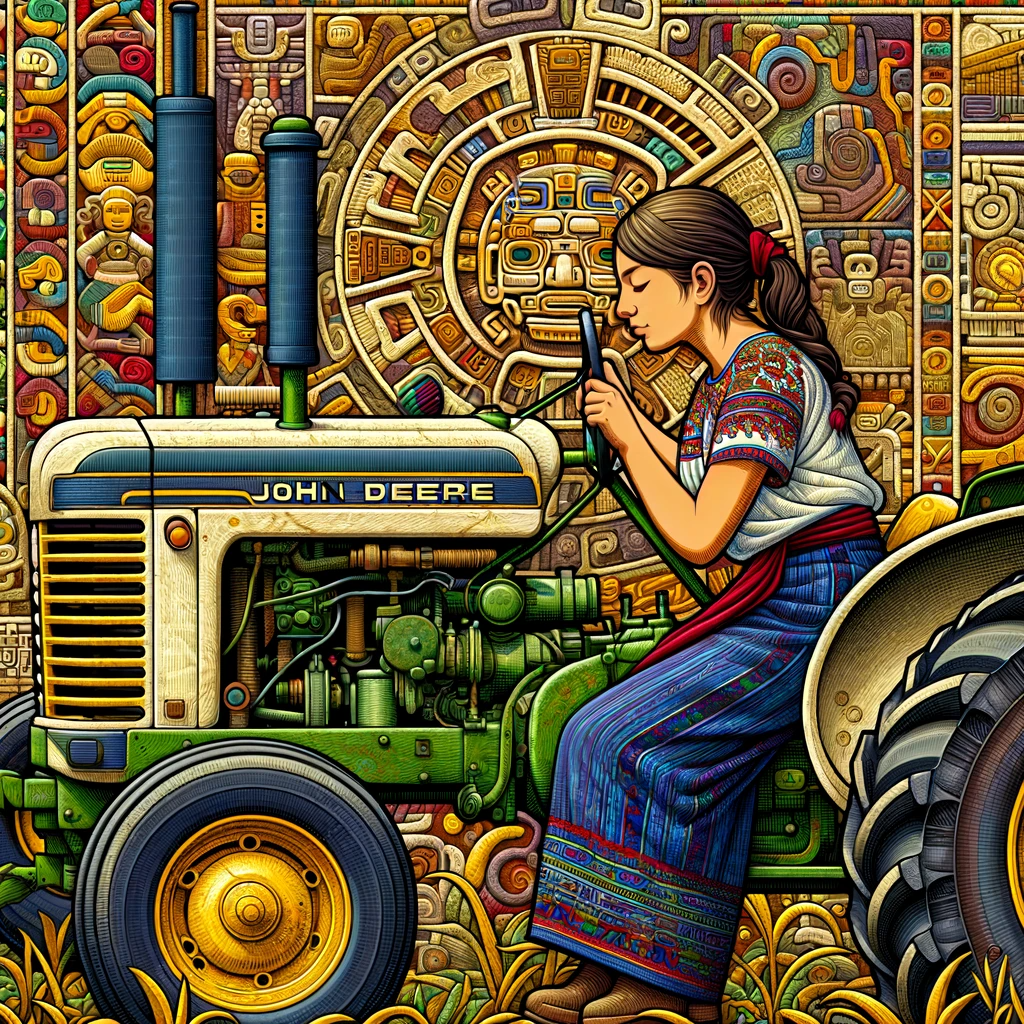
John Deere: How Did He Revolutionize Farming?
Who Invented the First Tractor in 1903?
The tractor has become an indispensable tool in modern society, helping increase food production by replacing mules and horses used for farm work with light engines that produce greater output. Over the years, numerous innovations have enhanced tractors, such as improved engine technology and attractive styling features. One of the earliest general-purpose tractors ever created was built by Dan Albone in 1902, who filed a patent and established Ivel Agricultural Motors Limited with his light yet powerful engine design; his model included rubber pneumatic tires on one front wheel as part of its original concept.
Charles Hart and Charles Parr, American entrepreneurs from Charles City, Iowa, developed a two-cylinder gasoline engine and established their firm there. Soon thereafter they started marketing self-propelled traction engines called “tractors.” Although these 14,000-pound machines produced 30 horsepower each, not enough farmers bought into them to sustain the business.
Ford, another early manufacturer of tractors, abandoned its tractor line in 1928 and focused solely on automotive. Ford drivers ultimately welcomed this change; as it allowed them to focus more fully on developing the Model T car. By the 1950s, large four-wheel drive tractors began emerging thanks to various innovations and upgrades implemented by various manufacturers: in 1954 Wagner introduced a breakthrough tractor, followed by Steiger in 1959 and John Deere later that same year.

Who Invented the First Tractor in 1903?
The Fordson Tractor: How Did It Revolutionize Farming?
John Froelich is widely recognized for creating the first gasoline-powered tractor in 1892; this machine was much easier and more efficient than its steam counterparts to use and maneuver around obstacles. Additionally, they often exploded due to being so unwieldy. Many farmers could not afford these expensive machines. John was instrumental in pioneering these machines that became available only through subscription services.
Early tractors were far too complex for everyday use, featuring numerous levers to control various functions. Today’s modern tractors, however, feature much more efficient controls; most levers have been replaced with electric switches; more forward/reverse gears have been added as well as wider speeds range for different tasks; plus these tractors can now even be controlled using a central computer rather than multiple levers.
International Harvester launched the Farmall tractor, and its success led other manufacturers to create similar models of their own. However, International Harvester was most renowned for the Fordson model – an exceptionally versatile tractor suitable for many tasks and widely adopted across industries. It became so admired that other companies began manufacturing similar versions. Today, tractors remain an indispensable tool in agriculture and other industries. Their power and versatility allow them to replace manual labor while significantly shortening job completion timeframes. These changes to farming have allowed many more people to live more comfortably than they ever could before tractors came along, and allowed more crops to be planted in less time, improving food production quality for farmers.

The Fordson Tractor: How Did It Revolutionize Farming?
Please share this post with your friends, family, or business associates who may like old classic or vintage tractors.