


Exploring The Legacy Of Ford-New Holland Tractors
By Tom Seest
At ClassicTractorNews, we help tractor lovers keep up with the latest news for classic and vintage tractors.
Please share this post with your friends, family, or business associates who may like old classic or vintage tractors.
What Is The History Of Ford-New Holland Tractors?
When you dive into the history of Ford-New Holland tractors, you’re not just looking at machinery. You’re peering into a saga of innovation, hard work, and agricultural revolution that stretches back more than a century. It’s a tale as rich as the soil these machines plow through.
The story begins in the early 1900s when a young Henry Ford was tearing up the automotive scene with his vision of mass production. In 1917, noticing the need for better farming equipment, the Fordson tractor was born. It marked a watershed moment in agriculture—moving farming from the horse-drawn era into the mechanized world. Farmers who once depended on muscle and horsepower found a powerful ally in these steel behemoths, transforming the way they cultivated their land.
Fast forward through the decades, and you’ll find Ford expanding its horizons. In 1947, the Ford 8N tractor hit the market; it was a game changer with a three-point hitch for implements and a relatively low price tag. This tractor paved the way for generations of farmers to embrace technology, making life a bit easier and fields a whole lot more productive.
But don’t think that was the end of the story. In the 1980s, Ford was looking to bolster its agricultural lineup even further. Enter New Holland. With a rich history of its own, having started in 1895 with a single haybine, New Holland had carved its niche as a leader in the production of field equipment. When Ford acquired New Holland in 1986, it wasn’t just a business merger; it was a marriage of innovation, bringing together two giants under one roof.
The integration birthed a new brand—Ford-New Holland tractor, which focused on harnessing the strengths of both entities. Through the 1990s and into the new millennium, this partnership blossomed, leading to groundbreaking advancements like advanced telematics and precision farming technologies. As the agricultural landscape changed, so too did Ford-New Holland, adapting to new challenges and opportunities.
With the rise of globalization, there were subsequent shifts in ownership and branding. In 1991, Ford spun off its agricultural division, and New Holland continued to thrive under the umbrella of CNH Global. Today, Ford-New Holland tractors remain an enduring symbol of agricultural ingenuity. They stand not just as machines, but as artifacts of a long-standing tradition—bridging history with modern farming and ensuring that the hard work of generations past carries on into the future.

What Is The History Of Ford-New Holland Tractors?
What Is The History Of Ford-New Holland Tractors?
- The history of Ford-New Holland tractors spans over a century, embodying innovation and agricultural revolution.
- Henry Ford introduced the Fordson tractor in 1917, transforming farming from horse-drawn methods to mechanized practices.
- The Ford 8N tractor debuted in 1947, featuring a three-point hitch and affordable pricing, revolutionizing farming technology.
- In 1986, Ford acquired New Holland, merging two agricultural giants to enhance their equipment offerings.
- The partnership created the Ford-New Holland brand, leading to advancements in telematics and precision farming technologies.
- Ford spun off its agricultural division in 1991, with New Holland continuing under CNH Global, maintaining its market presence.
- Ford-New Holland tractors symbolize agricultural ingenuity and bridge historical farming practices with modern advancements.

What Is The History Of Ford-New Holland Tractors?
Table Of Contents
- What Is The History Of Ford-New Holland Tractors?
- What Year Was Ford-New Holland Formed?
- Who Were The Key Founders?
- What Were The Early Models Of Ford Tractors?
- How Did New Holland Become A Part Of Ford?
- What Innovations Did Ford-New Holland Introduce?
- What Impact Did World War Ii Have On Tractor Production?
- How Did Ford-New Holland Expand Globally?
- What Are Some Notable Tractor Models Over The Decades?
- How Has Technology Changed In Ford-New Holland Tractors?
- How Did Consumer Demand Shape Tractor Development?
- What Challenges Has The Company Faced Over The Years?
- How Has Ford-New Holland Influenced Modern Agriculture?
- What Is The Legacy Of Ford-New Holland Today?
- What Are The Most Popular Ford-New Holland Tractors Currently?
- Conclusion
- Other Resources
- Glossary Of Terms
- Other Questions
- Haiku
- Poem
- Checklist
What Year Was Ford-New Holland Formed?
To untangle the history of Ford-New Holland, we need to take a step back into the roaring landscape of farming innovation and corporate mergers. The tale begins in the mid-20th century, a transformative period for both agriculture and machinery. Picture farmers toiling under the sun, their hands grime-covered, yet their dreams sparkled with promise. It was around this time that the world saw the inception of Ford-New Holland—a powerhouse of agricultural and industrial machinery that catered to the aspirations of those with dirt under their nails.
The year was 1986, a juncture where the worlds of heavy machinery and agriculture collided dramatically. Ford Motor Company, known primarily for its automobiles, was looking to expand its horizons, searching for new grounds to plow, if you will. Meanwhile, the New Holland Company, founded in 1895, had been making strides in farm equipment for nearly a century. It was a name synonymous with innovation, delivering products that farmers heavily relied upon.
In a twist of fate—one that even the most imaginative storyteller might find hard to believe—Ford acquired the New Holland brand in 1986. This merger was more than just a business transaction; it marked the birth of a new era. Under the Ford banner, New Holland’s expertise in farming equipment melded seamlessly with Ford’s engineering prowess, creating an entity capable of revolutionizing agricultural practices.
However, the story doesn’t end there. You see, the wheels of business are always turning. Just a decade later, in 1997, Ford-New Holland’s narrative would take another sharp turn. The company was sold to CNH Global N.V., effectively transforming Ford-New Holland into a major player in the heavy equipment and agricultural sectors. This maneuver not only catapulted the brand into a new stratosphere but also underlined the importance of adaptability in the ever-evolving landscape of agriculture.
Today, those iconic blue tractors and combine harvesters are synonymous with quality and reliability. The Ford-New Holland story reminds us that sometimes, it’s not just about what you farm, but how you farm it—and the partnerships you forge along the way. So, the year Ford-New Holland formally got its start? Well, it’s a pivotal moment in agricultural history—a true testament to the grit and innovation fueling the American dream, all beginning in 1986.

What Year Was Ford-New Holland Formed?
What Year Was Ford-New Holland Formed?
- The history of Ford-New Holland is rooted in mid-20th century innovations in farming and corporate mergers.
- Founded in 1986, Ford-New Holland emerged as a leader in agricultural and industrial machinery.
- Ford Motor Company sought to expand into the agricultural sector, acquiring the established New Holland Company.
- This merger combined Ford’s engineering expertise with New Holland’s farming equipment innovation.
- In 1997, Ford-New Holland was sold to CNH Global N.V., transforming it into a major player in heavy equipment and agriculture.
- The brand is now recognized for its quality and reliability, symbolized by its blue tractors and combine harvesters.
- The formation of Ford-New Holland in 1986 is a pivotal moment in agricultural history, highlighting the importance of innovation and partnerships.

What Year Was Ford-New Holland Formed?
Who Were The Key Founders?
When we look back at the origins of any great endeavor, it’s often the individuals behind the curtains who deserve the loudest applause. Founders are a unique breed of people—those audacious souls who dared to dream while the rest of us were still figuring out how to tie our shoes. They not only envisioned something meaningful but also rolled up their sleeves, armed with grit and resolve, turning ideas into reality.
Take, for example, the visionaries who laid the very groundwork for this enterprise. Each possessed a distinct set of skills and experiences that not only complemented one another but also paved a unique path forward. They were not just brilliant minds; they were the hardworking backbone, each with a story that deserves to be told.
First up is the strategist—the one with that fierce glint in their eye who could see two steps ahead of everyone else. This founder was the architect, laying the blueprints for a venture that seemed impossible to many. With a background steeped in business acumen, they meticulously crafted a vision that combined both aspiration and practicality. Their ability to navigate the complexities of launching a new venture set the wheels in motion, proving that a well-strategized plan could take even the wildest dreams off the drawing board.
Next, we have the innovator—the risk-taker who thrived on pushing boundaries. This was the dreamer, the artist, and the creator who refused to accept the status quo. They were the one scribbling ideas on napkins in coffee shops or tinkering away in a garage long before it was glamorous. Their ability to think outside the box was paramount, as they challenged conventional wisdom and infused creativity into every facet of the enterprise. It was their wild ideas that captured imaginations and attracted followers who believed in the dream.
Then, let’s not forget the doer—the glue that held everything together. Often underestimated, this founder was fueled by practicality and perseverance. They thrived in the trenches, converting high-minded ideals into actionable steps. It was their relentless effort that transformed sketches and brainstorming sessions into tangible products and services. Without their industrious nature, the visionary concepts might have remained just that—concepts.
Together, these key founders formed a trifecta of ambition, innovation, and hard work, each contributing their unique flavor to the collective mission. Their legacies serve as a powerful reminder that behind every successful venture is a tapestry woven with diverse talents and unwavering determination.

Who Were The Key Founders?
Who Were The Key Founders?
- Founders deserve applause for their audacious dreams and determination.
- Each founder possessed distinct skills that complemented one another.
- The strategist laid blueprints and crafted a practical vision for the venture.
- The innovator thrived on risk-taking and infused creativity into the enterprise.
- The doer was practical and perseverant, converting ideas into actionable steps.
- Together, these founders formed a trifecta of ambition, innovation, and hard work.
- Their legacies highlight the importance of diverse talents in achieving success.

Who Were The Key Founders?
What Were The Early Models Of Ford Tractors?
When you think of quintessential American agriculture, the image of a rugged Ford tractor is likely one that springs to mind. The Ford Motor Company didn’t just revolutionize the automobile; they also took that spirit of innovation and applied it to farming. Let’s take a closer look at the early models that laid the groundwork for decades of farming prowess.
In the early 20th century, farming was still an arduous task where horses and mules dominated the landscape. Enter the Fordson—introduced in 1917, this was Ford’s first foray into the world of tractors, and it was a game changer. The Fordson was compact, capable, and remarkably affordable, making it accessible to farmers who previously had little choice beyond animal power. With its 20-horsepower engine, this little dynamo was designed to streamline agricultural work like plowing, cultivating, and hauling. The Fordson quickly gained a reputation as a reliable workhorse that could tackle a day’s labor without breaking a sweat—or a budget.
Following in the Fordson’s tire tracks was the Model 9N, which debuted in 1939. Dubbed the “farmer’s friend,” the 9N brought forth a new standard for tractors. It was equipped with a hydraulic lift that allowed farmers to raise and lower implements with ease. This feature alone drastically improved efficiency, turning what was once a physically demanding chore into a manageable task. Farmers could now adjust their equipment seamlessly, making those long days in the field feel a bit less grueling.
The 2N followed closely on the heels of its predecessor, with slight improvements over the 9N, specifically targeting durability and ease of use. Both the 9N and 2N were community builders. They didn’t just help farmers plow; they allowed families to work together, to bond over shared labor, and to dive into the principles of mechanization.
Then came the 8N in 1947, often heralded as one of the finest tractors ever made. It combined the best features of its predecessors while introducing a more powerful engine and additional improvements to the hydraulics and transmission. By the time it rolled off the assembly line, the 8N had cemented its place in history, a testament to Ford’s commitment to evolving with the needs of the farmer.
From the Fordson to the 8N, these early models did more than just change the way people farmed; they changed the very fabric of rural America, igniting a passion for mechanization that still drives innovation today. These tractors aren’t just machines; they are symbols of hard work, progress, and community spirit.

What Were The Early Models Of Ford Tractors?
What Were The Early Models Of Ford Tractors?
- The Ford Motor Company transformed not only automobiles but also American agriculture.
- The Fordson tractor, introduced in 1917, was affordable and revolutionized farming by replacing horses and mules.
- With a 20-horsepower engine, the Fordson streamlined agricultural tasks like plowing and hauling.
- The Model 9N, introduced in 1939, featured a hydraulic lift that enhanced farming efficiency and ease of equipment handling.
- Both the 9N and 2N tractors fostered community, enabling families to collaborate and learn about mechanization.
- The 8N, launched in 1947, combined numerous improvements and became one of the most celebrated tractors in history.
- These early Ford tractors not only improved farming but also transformed rural America and inspired ongoing innovation.

What Were The Early Models Of Ford Tractors?
How Did New Holland Become A Part Of Ford?
How Did New Holland Become a Part of Ford?
To understand how New Holland wound up under the Ford umbrella, we have to step back and take a good look at the machinery of the agricultural industry, which has its own unique blend of grit, innovation, and a dash of corporate maneuvering. Picture the scene: it’s the early 20th century, and plowing fields is a whole lot harder than it is today. Farmers are looking for anything that can make their lives a little easier, and that’s where New Holland enters the fray.
Founded in 1895 in, you guessed it, New Holland, Pennsylvania, the company started off crafting a single, groundbreaking product: the hay baler. By marrying innovation with necessity, they turned heads and, more importantly, made life simpler for those working the land. Success didn’t come easy. It was a trial-and-error process, fueled by the sweat of the brow, sturdy machinery, and a will to innovate that became synonymous with the brand itself.
Fast forward to the late 20th century, and you’ll see New Holland’s ambitions reach a tipping point. In the post-World War II era, agricultural technology was booming. New Holland wasn’t just surviving; it was thriving, expanding its product line to include tractors, combines, and other essential farming equipment. But as we know, with great success comes great competition, and the landscape was shifting.
Enter Ford, a giant in the automotive world, looking to cement its place in the agricultural sector. After all, Ford’s tractors had been rolling off the assembly line since the 1900s. In 1986, Ford recognized potential in New Holland’s already-established brand and a robust portfolio of farming equipment. The match seemed right; both entities shared a vision for efficiency, productivity, and execution excellence.
The acquisition was smooth, marrying Ford’s extensive engineering resources with New Holland’s agricultural expertise. This union didn’t just mean increased production; it meant a complete rethink of agricultural machinery. Suddenly farmers had access to a combined fleet of high-quality products that could tackle everything from the simplest tasks to the most demanding ones.
Thus, New Holland became part of the larger Ford family. It’s a partnership forged in the heat of the fields, built on innovation and a shared commitment to making one of humanity’s oldest professions a little more manageable. What emerged from that merger was more than just a brand; it became a cornerstone in the ever-evolving story of modern agriculture, proving that sometimes the pieces fit together just right in the grand machinery of progress.

How Did New Holland Become A Part Of Ford?
How Did New Holland Become A Part Of Ford?
- New Holland was founded in 1895 in New Holland, Pennsylvania, initially focused on creating hay balers.
- The company faced challenges but thrived through innovation and a commitment to improving farming efficiency.
- By the late 20th century, New Holland expanded its product line to include tractors and combines amid a booming agricultural technology sector.
- In 1986, Ford sought to strengthen its presence in agriculture and identified New Holland as a company with a strong brand and diverse product offerings.
- The acquisition combined Ford’s engineering resources with New Holland’s agricultural expertise, enhancing production and product offerings.
- The partnership allowed farmers access to high-quality machinery for various agricultural tasks, from simple to complex.
- New Holland’s integration into Ford created a significant milestone in modern agriculture, illustrating effective collaboration for industry advancement.

How Did New Holland Become A Part Of Ford?
What Innovations Did Ford-New Holland Introduce?
When you think of agricultural machinery, the name Ford-New Holland likely springs to mind, evoking images of fields full of green and the rhythmic thrum of tractors working tirelessly under the sun. But this partnership brought so much more to the table than just robust farming equipment; they revolutionized the industry with a slew of innovative technologies that changed the game for farmers everywhere.
Let’s talk about the introduction of the four-wheel-drive tractor. This wasn’t just a clever marketing gimmick—it was a genuine lifesaver for farmers. By distributing power to all four wheels, these tractors tackled rough terrain and weather conditions like a champ, opening up previously unplowable land and making farming more efficient than ever. Suddenly, those soggy fields that would swallow a two-wheel drive tractor became manageable, allowing farmers to plant and harvest with newfound agility.
And then there’s the compact utility tractor, introduced by Ford-New Holland to address the needs of smaller operations. These pint-sized powerhouses packed the muscle of their larger counterparts into a design that could navigate tight spaces and perform a variety of tasks. From mowing to tilling, they helped farmers maximize productivity without the burden of a massive machine. It’s like the Swiss Army knife of farming—adaptable and ready for anything.
Innovation also extended to efficiency, and nobody does it quite like Ford-New Holland when it comes to making machinery smarter. Enter the Precision Farming technology, a game-changer in the realm of agricultural practice. By utilizing GPS and advanced data analytics, farmers could take precision agriculture to new heights, optimizing planting patterns and fertilizer use, all while reducing waste and environmental impact. We’re not just farming; we’re farming like we’ve got a Ph.D. in efficiency!
Furthermore, let’s not overlook the progress in safety features. With things like roll-over protection structures and more advanced braking systems, Ford-New Holland has made it a priority to protect the men and women working the land. Because let’s face it, without the backbone of the agricultural workforce, the world wouldn’t function as smoothly as it does.
In a vast landscape filled with challenges, Ford-New Holland has never been about merely selling equipment—they’ve been about building a legacy of innovation that empowers farmers to face each day with resilience and ingenuity. It’s a partnership between man and machine that continues to evolve, ensuring that the future of farming is as bright as the sun-drenched fields they cultivate.

What Innovations Did Ford-New Holland Introduce?
What Innovations Did Ford-New Holland Introduce?
- Ford-New Holland is recognized for its influential role in agricultural machinery, revolutionizing the industry.
- The introduction of the four-wheel-drive tractor enhanced efficiency by enabling farming on rough terrain.
- Compact utility tractors were designed for smaller operations, providing versatility in tight spaces.
- Precision Farming technology utilizes GPS and data analytics to optimize agricultural practices.
- Innovations in safety features have prioritized the protection of agricultural workers.
- Ford-New Holland is focused on empowering farmers and building a legacy of innovation.
- The partnership symbolizes the ongoing evolution of farming, ensuring a sustainable future.

What Innovations Did Ford-New Holland Introduce?
What Impact Did World War Ii Have On Tractor Production?
What Impact Did World War II Have On Tractor Production?
When you think of World War II, you might visualize soldiers in battlefields or factories cranking out tanks and artillery. But what about tractors? It might sound peculiar, but the war reshaped agricultural machinery production in ways that remain significant even today.
Before the war, the tractor industry was on the rise, with farmers increasingly ditching horses for mechanization. However, as the U.S. geared up for war, the needs of the military took precedence. The nation’s factories retooled, repurposing their assembly lines from tractors to war machines. Companies that once specialized in farming equipment turned their attention to producing everything from aircraft to bombs, filled with a sense of urgency that only wartime can inspire.
But let’s not overlook the ramifications of this radical shift. With a vast majority of factories dedicated to the war effort, tractor production plummeted. The once reliable stream of new machinery for American farmers dried up. This scarcity didn’t only impact production; it also led to innovation in agricultural practices. Farmers were forced to make do with older machines or to find ingenious ways to keep their existing tractors running, leading to a generation of improvisational ingenuity in rural America.
As the war came to a close in 1945, something remarkable happened. The production lines that had once pumped out tanks and planes transitioned back to tractors, but with a twist. The experience gained in rapid production and engineering innovation during the war translated to the post-war agriculture sector. Manufacturers were not just reintroducing old models; they were improving them. The tractors that rolled off the assembly lines in the late 1940s boasted more power, efficiency, and sophistication than their predecessors. New technologies born of wartime research—like advancements in steel production and engine design—were now helping farmers.
So, in a roundabout way, World War II drastically changed the landscape of tractor production. The war effort may have momentarily sidetracked farmers, but it also fueled a technological renaissance that propelled the agricultural sector into a modern era. The machinery that powered post-war agriculture was a direct descendant of wartime innovation, reflecting a unique interplay between conflict and progress. It’s a reminder that even in tumultuous times, advancements can emerge from unexpected places. Those tractors now stood as symbols of resilience—both on the battlefield and in the fields.

What Impact Did World War Ii Have On Tractor Production?
What Impact Did World War Ii Have On Tractor Production?
- World War II significantly reshaped the tractor production industry in the U.S.
- Prior to the war, the tractor industry was growing as farmers moved away from horse-drawn equipment.
- As the war began, factories shifted from producing tractors to manufacturing military equipment.
- This transition resulted in a dramatic decrease in new tractor production for farmers.
- Farmers adapted by maintaining older machinery, leading to innovative agricultural practices.
- After the war, production lines reverted back to tractors, incorporating advancements from wartime engineering.
- The outcome was more powerful and efficient tractors that modernized post-war agriculture, showcasing the interplay between conflict and technological progress.

What Impact Did World War Ii Have On Tractor Production?
How Did Ford-New Holland Expand Globally?
In the realm of agriculture and heavy machinery, Ford-New Holland’s global expansion is a story steeped in innovation, strategic acquisitions, and a keen eye for market needs. Picture the vast fields of the Midwest, where iconic blue tractors first began churning out crops, and then fast-forward to sprawling farms in Europe, Asia, and beyond. It’s a tale not only of machines, but of bold moves and shrewd business decisions.
The genesis of Ford-New Holland can be traced back to the mid-20th century when Ford Motor Company, primarily known for their automobiles, saw the writing on the wall: agriculture was ripe for revolution. They introduced specialized farming equipment that combined power, efficiency, and durability. As farmers across America adopted these innovations, the demand began to blossom — and Ford didn’t just sit back and watch. They knew that to remain competitive, they had to cast their net wide.
In the 1980s, Ford made a major leap when it acquired New Holland, a company renowned for its advanced agricultural equipment. This merger didn’t just expand their product line; it ushered in a new era of global ambition. By pooling resources, Ford-New Holland could leverage New Holland’s existing market presence in Europe, where agriculture was more than just a way of life; it was a cornerstone of the economy.
But expansion wasn’t limited to just Europe. As the company positioned itself, they initiated strategic plans to tap into emerging markets in Asia and South America. In countries like Brazil, for example, they recognized the potential to revolutionize farming practices with cutting-edge technology. By establishing manufacturing plants locally, they didn’t just bring jobs to these areas; they crafted machines suited to the unique challenges of local farming.
An essential part of their strategy involved understanding local needs. Ford-New Holland didn’t simply export American solutions; instead, they invested time in research and development to tailor their offerings to suit different agricultural landscapes. This adaptability made their mark and helped them build trust with farmers worldwide.
Throughout the years, their commitment to innovation remained unwavering. By continually investing in new technologies, from precision farming techniques to smarter machinery, Ford-New Holland cultivated a reputation as not just a brand, but a partner in agriculture.
Their global expansion was not just about selling equipment; it was about cultivating relationships, understanding diverse markets, and pushing the boundaries of what machinery could achieve in the hands of farmers around the globe.

How Did Ford-New Holland Expand Globally?
How Did Ford-New Holland Expand Globally?
- Ford-New Holland’s expansion in agriculture is driven by innovation and strategic acquisitions.
- The company originated from Ford Motor Company’s vision for revolutionizing farming in the mid-20th century.
- In the 1980s, Ford acquired New Holland, enhancing their product offerings and global ambition.
- The merger leveraged New Holland’s strong market presence in Europe, significantly impacting the local economy.
- Expansion efforts included tapping into emerging markets in Asia and South America, like Brazil.
- Ford-New Holland focused on tailoring solutions to local needs through research and development.
- The company prioritized innovation and relationship-building to support farmers globally and enhance equipment capabilities.

How Did Ford-New Holland Expand Globally?
What Are Some Notable Tractor Models Over The Decades?
When we talk about tractors, we’re diving into a world where engineering meets grit, where horsepower is more than just a number; it’s a testament to hard work. Over the decades, several iconic tractor models have shaped the landscape of agriculture, each one a marvel of its time.
Let’s start with the Fordson Model F, a game-changer introduced in 1917. This tractor was the first mass-produced tractor in the world, designed to be accessible to farmers of all kinds. Powered by a 20-horsepower engine, the Fordson was small but mighty, revolutionizing the farming industry and proving that a good tractor could replace several horses. It was about more than just pulling plows; it represented a shift toward mechanization in agriculture.
Fast forward to the late 1930s, and we find John Deere’s Model A, which was a powerhouse for its time. With its distinctive green paint and yellow wheels, it became an emblematic representation of American farming. The Model A was versatile, serving as a reliable tractor for a variety of tasks, from tilling fields to hauling goods. It didn’t just help farmers work more efficiently; it became a staple in communities, often cherished by generations.
As we enter the 1960s, let’s not overlook the International Harvester Farmall 706. This beauty came with a 106-horsepower engine and a robust, user-friendly design. It epitomized post-war efficiency, allowing farmers to increase their yields dramatically. The Farmall series, with its bright red paint, symbolized farmer resilience during tough economic times and was beloved for its ease of use and adaptability.
In the 1980s, the New Holland 1170 made waves, introducing turbocharged engines and an innovative cab design that improved operator comfort. It was a significant step forward in making the long hours on the field just a bit more bearable. New Holland’s focus on technology ushered in an era where tractors weren’t just workhorses; they became high-tech machines ready to tackle the complexities of modern farming.
Finally, let’s not forget the rise of precision farming equipment, represented by models like the John Deere 8R series. Combining cutting-edge technology with sheer power, these tractors offer GPS-guided precision and data-driven capabilities that farmers of yore could only dream of. They symbolize where we are today—a blend of tradition and technology, honoring the past while unwaveringly marching into the future.
Each of these notable models tells a story, not just of machinery, but of farmers who relied on them, the land they tended, and the ambition they fueled. In the world of tractors, every model is a chapter in the ongoing saga of agriculture and innovation that continues to evolve.

What Are Some Notable Tractor Models Over The Decades?
What Are Some Notable Tractor Models Over The Decades?
- Tractors symbolize the intersection of engineering and hard work in agriculture.
- The Fordson Model F, introduced in 1917, was the first mass-produced tractor, revolutionizing farming with its 20-horsepower engine.
- John Deere’s Model A, launched in the late 1930s, became an emblem of American farming with its reliability and versatility.
- The International Harvester Farmall 706 of the 1960s featured a 106-horsepower engine and user-friendly design, enhancing post-war farming efficiency.
- In the 1980s, the New Holland 1170 introduced turbocharged engines and improved operator comfort, marking a shift towards advanced technology in tractors.
- The John Deere 8R series represents the rise of precision farming, offering GPS-guided technology that blends tradition with modern capabilities.
- Each iconic tractor model reflects the stories of farmers, their land, and the ongoing evolution of agriculture and innovation.

What Are Some Notable Tractor Models Over The Decades?
How Has Technology Changed In Ford-New Holland Tractors?
When you think of tractors, you might envision dusty fields and rugged machines grunting through heavy workloads, but the truth is that technology has transformed these workhorses into sophisticated tools that are light years ahead of their predecessors. Gone are the days when farmers relied solely on brawn and basic mechanics; today, Ford-New Holland tractors come equipped with innovations that push the boundaries of efficiency and precision.
First off, let’s talk about the heart of modern tractors: the engine. Today’s Ford-New Holland tractors boast highly efficient, turbocharged engines that deliver more power while consuming less fuel. This means farmers can work longer hours without constantly worrying about refueling, ultimately increasing productivity and profitability. And it’s not just about raw power; these engines are designed to meet stringent emissions standards, so farmers aren’t just growing crops—they’re also caring for the planet.
Next, let’s dive into the world of precision farming, a game-changer for those working the land. With integrated GPS technology and advanced mapping systems, farmers can now plant seeds and apply fertilizers with pinpoint accuracy. This means less waste, reduced costs, and a lower environmental footprint. Imagine a farmer sitting in the comfort of their cab, letting technology guide them as they plant using data-driven insights. It’s like having an extra pair of hands—or in this case, a few extra computer chips—working in the field.
But the advancements don’t end there. Ford-New Holland tractors now feature intuitive displays and controls that make operating these heavy machines feel less like navigating a complicated puzzle and more like using your smartphone. With user-friendly interfaces, farmers can monitor everything from engine performance to fuel consumption in real-time. This seamless integration of technology allows for smarter decision-making, enabling farmers to respond swiftly to changing conditions in the field.
Moreover, let’s not forget about connectivity. Nowadays, tractors can be connected to the Internet, allowing farmers to access real-time data and updates from anywhere. This connectivity means that whether they’re at home or on the go, farmers can monitor their equipment and even diagnose issues before they become major problems. The days of waiting for a technician to show up are over; now, solutions are just a click away.
Overall, the evolution of technology in Ford-New Holland tractors reflects a broader shift in agriculture—one that embraces innovation and prioritizes efficiency. As these machines continue to evolve, so too do the possibilities for the future of farming. With every new advancement, we’re not just witnessing a technological revolution; we’re experiencing a renaissance in the way we grow our food and cultivate our land.

How Has Technology Changed In Ford-New Holland Tractors?
How Has Technology Changed In Ford-New Holland Tractors?
- Modern tractors have evolved into sophisticated tools, moving far beyond their rugged predecessors.
- Ford-New Holland tractors now feature highly efficient, turbocharged engines that enhance power while reducing fuel consumption.
- The engines meet strict emissions standards, promoting environmentally-friendly farming practices.
- Precision farming is revolutionized with GPS technology and mapping systems, allowing for accurate planting and fertilizing.
- User-friendly displays and controls make operating tractors intuitive, similar to using a smartphone.
- Connectivity to the Internet enables farmers to access real-time data and troubleshoot equipment efficiently.
- The evolution of technology in agriculture reflects a commitment to innovation and efficiency in farming practices.

How Has Technology Changed In Ford-New Holland Tractors?
How Did Consumer Demand Shape Tractor Development?
When you dive into the world of tractors, what you quickly realize is that these iron behemoths are not just about horsepower and torque; they’re a testament to the way consumers have shaped agriculture over the decades. The story of tractor development is an intricate dance between innovation and market demand, and it’s a fascinating tale that reflects the changing needs and desires of farmers.
In the early days of tractors, the agricultural landscape was vastly different. The switch from horse-drawn plows to gas-powered machines didn’t happen overnight. Farmers were skeptical; they liked their horses, and with good reason. Horses were reliable, equipped to handle rough terrain, and most importantly, they were familiar. Early tractors were loud, smelly, and often broke down. But necessity is a powerful motivator. As farming shifted from subsistence to more commercial practices, the demand for efficiency surged. Consumers wanted tractors that could not only replace those beloved steeds but do so with speed and reliability. And voilà—manufacturers responded with innovations that made tractors more user-friendly and agriculturally versatile.
As the demands of farming evolved, so did consumer expectations. The post-war period brought about a boom in agricultural production, and with it, farmers needed machines that could handle larger fields and more complex tasks. Enter the era of the specialty tractor—machines designed for a myriad of farming techniques, from planting to harvesting to even irrigation. The intense pressure for greater yields was met with increasingly sophisticated technology, incorporating hydraulic systems, GPS navigation, and soon, automation. Consumer demand that once focused solely on ruggedness and power now began to include comfort and technology. Farmers wanted cabs that felt like homes and controls that operated as intuitively as a video game.
Fast forward to today, and the landscape has dramatically shifted yet again. With the dual challenges of climate change and the push for sustainability, consumers are demanding “greener” tractors. This spurred the development of electric and hybrid models that not only reduce emissions but also optimize fuel efficiency. The dialogue between farmers and manufacturers continues to evolve, illustrating that consumer demand doesn’t just shape what tractors are made of; it shapes the very future of farming itself.
So, the next time you see a tractor in action, just remember: every dent, dab of paint, and shiny new accessory is a reflection of farmers’ desires—evolving over time, but always at the heart of agricultural innovation.

How Did Consumer Demand Shape Tractor Development?
How Did Consumer Demand Shape Tractor Development?
- Tractors demonstrate the influence of consumer preferences on agricultural development over the decades.
- The transition from horse-drawn plows to gas-powered tractors was met with skepticism due to familiarity and reliability of horses.
- The demand for efficiency in farming practices led to innovations that made tractors more user-friendly and versatile.
- Post-war agricultural production required specialty tractors capable of handling diverse farming tasks, leading to advanced technology integration.
- Modern consumer expectations include comfort and intuitive controls, resembling video game operation.
- Challenges like climate change have driven demand for greener tractors, including electric and hybrid models.
- The ongoing dialogue between farmers and manufacturers continues to shape the future of farming and tractor innovation.
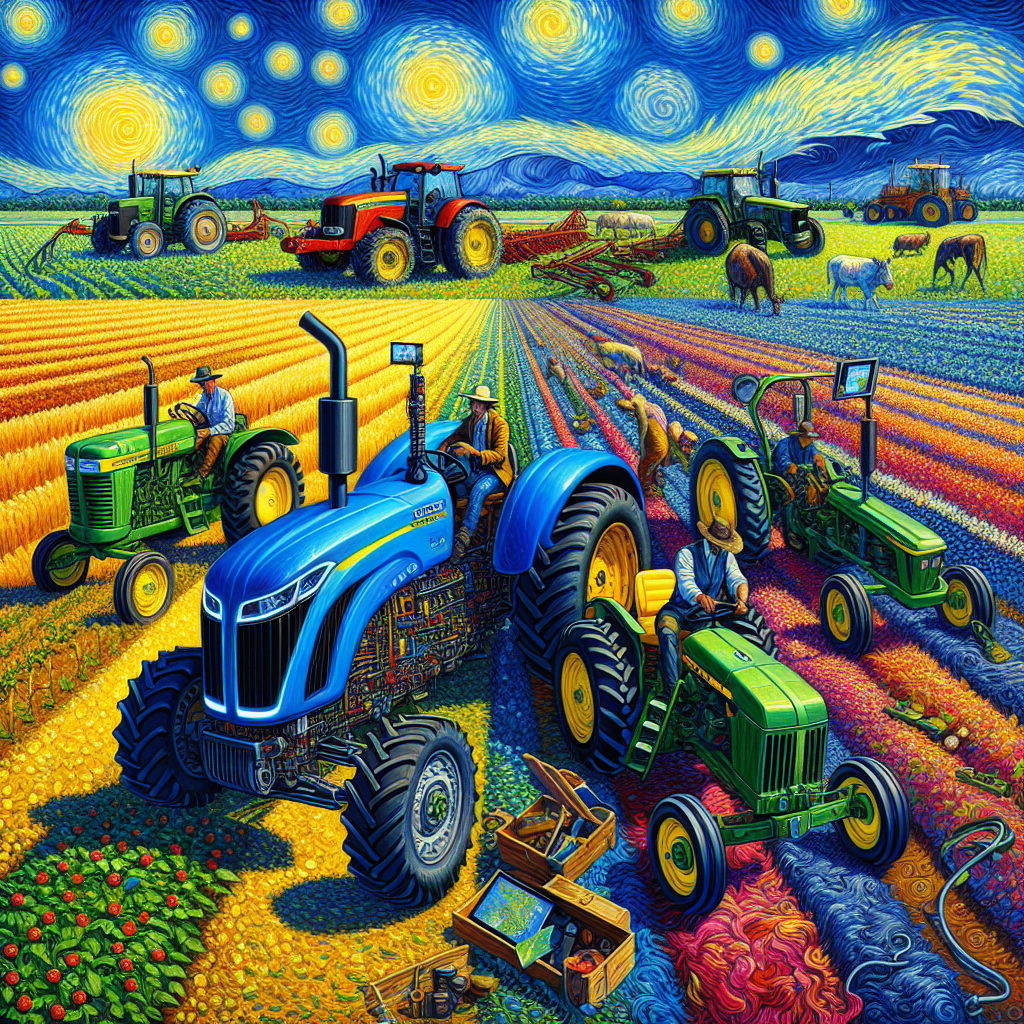
How Did Consumer Demand Shape Tractor Development?
What Challenges Has The Company Faced Over The Years?
Every company, no matter its size or industry, stands at the intersection of ambition and adversity. For this company, the road has been lined with obstacles that have tested its mettle time and again. Each challenge has shaped the organization, molding it into a pioneering force, but not without its share of struggles.
One of the earliest hurdles was the tech boom of the early 2000s. As hopes soared, so did expectations. Emerging technologies revolutionized the landscape, and those who couldn’t keep pace were left behind. This company found itself staring into the abyss, forced to innovate or become obsolete. The leadership had to make tough decisions, paring down budgets and pivoting strategies, often against the grain of what had always worked. It wasn’t pretty, but it was necessary. They rolled up their sleeves and dug deep, channeling a relentless spirit of resilience.
As the years rolled on, external challenges loomed large. Economic downturns have a way of shaking the foundations of any enterprise, and this company was not immune. The financial crises tested its financial strategy and resource allocation. When market conditions soured, the pressure was palpable. Layoffs, budget restrictions, and re-evaluations became part of the lexicon, but through it all, a fierce commitment to the workforce prevailed. This ethos didn’t just save jobs; it built loyalty, a bond that still echoes in the company’s culture today.
Then there were the growing pains that come with expansion. Rapid growth is exhilarating, but it can also be a double-edged sword. Scaling up operations while maintaining quality and consistency is a delicate balancing act. The company faced its fair share of logistics nightmares and quality-control slip-ups that sent ripples of anxiety through every department. But those missteps didn’t go unnoticed. Each mistake became an opportunity to tighten the reins and bolster processes, establishing an unwavering commitment to excellence.
Finally, the ever-evolving landscape of consumer demands in the digital age introduced its own set of complexities. Shifting demographics and the rise of social media necessitated a shift in how the company engaged with its audience. Navigating this terrain required a fresh set of tools and strategies, as well as a willingness to listen and adapt. The challenges were many, but through creativity and grit, the company not only weathered the storm but emerged more agile and responsive.
These challenges are more than just roadblocks; they are the very fabric of the company’s journey, each one contributing to a narrative of growth, resilience, and unwavering determination.

What Challenges Has The Company Faced Over The Years?
What Challenges Has The Company Faced Over The Years?
- Every company faces challenges that test its resolve, shaping its identity.
- The tech boom of the early 2000s pushed the company to innovate or risk obsolescence.
- Leadership made difficult decisions, trimming budgets and altering strategies to adapt.
- Economic downturns tested financial strategies, leading to layoffs and budget cuts, but a strong commitment to the workforce fostered loyalty.
- Rapid expansion brought logistical challenges and quality-control issues, driving efforts to enhance processes.
- Shifting consumer demands in the digital age necessitated new engagement strategies and adaptability.
- Each challenge contributed to a narrative of growth, resilience, and determination within the company.

What Challenges Has The Company Faced Over The Years?
How Has Ford-New Holland Influenced Modern Agriculture?
When we dig into the dirt of modern agriculture, we find roots that trace back to innovation, grit, and a little blue-and-yellow machinery that changed the game forever: Ford-New Holland. What started as a humble endeavor has bloomed into a powerhouse, reshaping how we approach farming today. It’s like the underdog story of the American agricultural scene, where machinery becomes the unsung hero in the tale of sustenance.
At its core, Ford-New Holland revolutionized farming by merging the art of machinery with practicality. Remember the days when tractors were loud, cumbersome beasts that required the strength of a lumberjack to operate? Well, that landscape was forever altered. Ford-New Holland introduced ergonomically designed machines that actually put the comfort of the operator front and center. Farmers, once wrestling with machinery, found themselves in a partnership, enhancing efficiency without sacrificing their own well-being.
Beyond comfort, the innovation didn’t stop there. These blue-and-yellow titans integrated technology into the field like no one had seen before. Features like GPS-guided precision farming brought a level of sophistication previously reserved for sci-fi flicks. Suddenly, farmers were wielding data instead of just plows. Efficiency soared, waste diminished, and the idea of sustainable farming began to sprout. You could say Ford-New Holland sowed the seeds of tomorrow right into the soil of today.
Let’s not forget the environmental aspect. Ford-New Holland was among those pioneering a sustainable agricultural approach long before it became a trendy buzzword. They’ve embraced eco-conscious technologies and emissions-reducing strategies, showing that modern farming can indeed be mindful of its footprint. It’s a full-circle moment; by producing cleaner machines, they not only optimize yield but also protect the very land farmers depend on.
Lastly, the community ethos cultivated by Ford-New Holland has left a lasting mark. The spirit of collaboration and support through dealerships and customer service created a family-like network among farmers. In an industry often seen as solitary, they fostered a sense of belonging that spans continents. Whether in a cornfield in Iowa or a vineyard in Italy, the influence of Ford-New Holland pulls hard on the threads of modern agriculture, weaving innovation and camaraderie into its very fabric.
In essence, Ford-New Holland is more than a name; it’s a legacy. It’s about making hard work a little easier, creating connections, and reminding all of us that beneath the machinery and the data, it’s still all about the land and the people who tend it.

How Has Ford-New Holland Influenced Modern Agriculture?
How Has Ford-New Holland Influenced Modern Agriculture?
- Ford-New Holland has transformed modern agriculture through innovation, practicality, and advanced machinery.
- The company shifted the farming landscape by introducing ergonomically designed machines for operator comfort.
- Integration of technology, such as GPS-guided precision farming, has enhanced efficiency and sustainability in farming.
- The use of innovative technologies has led to reduced waste and an emphasis on sustainable farming practices.
- Ford-New Holland promotes eco-conscious technologies and emission-reducing strategies in modern farming.
- They have fostered a strong community spirit among farmers through collaboration and customer support networks.
- Ford-New Holland represents a legacy focused on easing hard work and strengthening the connection between people and the land.

How Has Ford-New Holland Influenced Modern Agriculture?
What Is The Legacy Of Ford-New Holland Today?
In the world of agriculture and manufacturing, few names resonate with the same weight as Ford-New Holland. Born out of a merger between two giants in their respective fields—Ford Motor Company and New Holland—this brand became synonymous with innovation, reliability, and a pioneering spirit. Today, the legacy of Ford-New Holland stands as a testament to what happens when you blend automotive engineering prowess with agricultural expertise.
One of the most enduring aspects of this legacy is the emphasis on durability and efficiency. Farmers know that when the sun rises over a field, it’s go-time. Equipment needs to be as dependable as the rising sun itself, and Ford-New Holland built its reputation on machines that could withstand the rigors of daily toil. From tractors that plowed through the toughest soil to combines that harvested immense fields without breaking a sweat, their machinery became indispensable to farmers around the globe.
Moreover, Ford-New Holland didn’t just stop at mechanical prowess. They became pioneers in integrating technology into farming. The introduction of precision agriculture tools and yield monitoring systems exemplified their commitment to a learning approach to farming. Today, farmers can harness data to make informed decisions, maximizing efficiency and sustainability while minimizing waste. This forward-thinking mentality continues to influence how modern agriculture is approached, ushering in an era where technology and tradition compete for attention but, oftentimes, come together to create smarter solutions.
The legacy also lives on in the spirit of community and support. Ford-New Holland established a network of dealerships and service centers that provided not just sales but relationships. Farmers could count on their local dealerships for expert advice, maintenance, and parts, creating bonds that extend beyond a simple transaction. This emphasis on service fostered loyalty that speaks volumes about the brand’s commitment to those who rely on it every day.
In a world that often rushes toward the next big thing, where trends can come and go faster than a corn stalk grows, Ford-New Holland remains rooted in its principles: reliability, innovation, and community. Today’s farmers, whether they’re in the Midwest of the United States or the rolling hills of Europe, still look to this legacy with respect and appreciation. The machines may be more advanced, but the core values resonate louder than ever, proving that the foundation built decades ago continues to propel the agricultural industry forward—and that’s a legacy worth celebrating.

What Is The Legacy Of Ford-New Holland Today?
What Is The Legacy Of Ford-New Holland Today?
- Ford-New Holland emerged from the merger of Ford Motor Company and New Holland, becoming a symbol of innovation and reliability in agriculture and manufacturing.
- The brand is known for producing durable and efficient machinery essential for daily farming operations.
- Ford-New Holland pioneered the integration of technology into farming, introducing tools like precision agriculture and yield monitoring systems.
- This technological approach allows farmers to maximize efficiency and sustainability while reducing waste.
- The company’s strong focus on community is evident through its network of dealerships and service centers, fostering long-lasting relationships with farmers.
- Ford-New Holland’s commitment to service and support has created a loyal customer base deeply connected to the brand.
- Despite changes in technology and trends, the core values of reliability, innovation, and community continue to resonate with today’s farmers globally.

What Is The Legacy Of Ford-New Holland Today?
What Are The Most Popular Ford-New Holland Tractors Currently?
When it comes to tackling tough tasks on the farm, few machines stand out quite like Ford-New Holland tractors. A blend of reliable performance and innovative technology, these tractors have become the workhorses in countless fields across the country. If you’re in the market for a robust tractor that can handle everything from plowing to hauling, you might want to take a closer look at some of the most popular models currently turning heads and tires.
First up is the Ford-New Holland T8 Series. This beauty is known for its powerful engine options and impressive towing capacity, making it a go-to for farmers who need to get serious work done. What really sets the T8 apart, though, is its user-friendly interface. With intuitive controls and advanced technology, it feels less like a piece of heavy machinery and more like an extension of the operator themselves. Whether you’re managing a sprawling farm or a modest plot, the T8 makes you feel in command—like you’re the boss of the land.
Then we have the T6 Series, which offers a delightful balance of versatility and efficiency. With a range of horsepower options, it’s designed for various applications, from row crop farming to loader work. The T6 is particularly praised for its ease of maneuverability and impressive fuel economy, allowing farmers to cover more ground without stressing their wallets. It’s not just about getting the job done; it’s about getting it done right while being kind to the environment.
Don’t overlook the compact tractors, like the Boomer Series, which are thrilling options for those with smaller farms or specialized needs. These tractors pack a punch despite their size, boasting powerful engines that can handle everything from landscaping to smaller agricultural tasks. The Boomer is all about efficiency and practicality—perfect for getting into tight spaces while still making a big impact on your productivity.
Lastly, let’s not forget the impact of the specialized hay and forage models. These tractors are tailored for those in the hay business, equipped with features designed specifically for cutting, baling, and towing. You know you’re in good hands when your machinery is built for the job you need it to do.
In a world where every hour on the farm counts, the right Ford-New Holland tractor can make all the difference. So, whether you’re breaking new ground or maintaining your legacy, these reliable machines might just be the partners you need to propel your farming endeavors forward.

What Are The Most Popular Ford-New Holland Tractors Currently?
What Are The Most Popular Ford-New Holland Tractors Currently?
- Ford-New Holland tractors are known for their reliable performance and innovative technology, serving as workhorses on farms nationwide.
- The T8 Series features powerful engine options and an impressive towing capacity, along with a user-friendly interface that enhances operator control.
- The T6 Series balances versatility and efficiency, with various horsepower options and excellent fuel economy, ideal for row crop farming and loader work.
- Compact tractors like the Boomer Series are designed for smaller farms, offering powerful engines and high efficiency for landscaping and agricultural tasks.
- Specialized hay and forage models are tailored for hay-related tasks, equipped with features for cutting, baling, and towing.
- Ford-New Holland tractors are essential for farmers looking to maximize productivity while managing costs and environmental impact.
- The right tractor can significantly enhance farming operations, making it easier to either break new ground or maintain existing land.

What Are The Most Popular Ford-New Holland Tractors Currently?
Conclusion
If you’re looking for a story that embodies innovation, hard work, and a relentless drive for progress, then look no further than the saga of Ford-New Holland tractors. This epic tale, woven from threads of ingenuity and agricultural revolution, dates back to the early 20th century when a young Henry Ford was dreamin’ big, shaking up the automotive world, and setting the stage for something monumental in farming. The launch of the Fordson tractor in 1917 changed the game, marking the dawn of mechanized farming and giving farmers a powerful tool to replace their beloved draft animals.
Fast forward through decades of advancements, and you encounter iconic models such as the Ford 8N tractors, which came packed with innovations like three-point hitches that invited farmers to embrace technology rather than fear it. Then, as the wheels of innovation continued to turn, Ford expanded further, acquiring New Holland in 1986. This marriage of mindsets was like a perfect match on a first date; they complemented each other beautifully, marrying automotive brilliance with agricultural expertise.
Of course, Ford-New Holland’s venture into the modern era brought about its own unique challenges. From the ups and downs of ownership to the need for adaptability in a rapidly changing market, the company faced hurdles that would make even the toughest farmer flinch. Yet, through each twist and turn, they proved resilient—emphasizing precision farming technologies, eco-friendly practices, and above all, a commitment to the farming community.
The legacy of Ford-New Holland stands not just in their robust machinery but in their unwavering commitment to meeting the needs of farmers around the globe. They’ve diversely catered to various markets, adapting each machine to fit unique challenges and expectations. More importantly, they’ve forged connections with the agricultural community, ensuring that farmers don’t just find a product but a partnership with a brand that believes in their hard work.
Today, Ford-New Holland tractors aren’t merely machines; they’re symbols of progress within a legacy that bridges historical innovation with modern agriculture. These blue-and-yellow titans remind us that behind every piece of equipment is a story of grit, community, and a deep-rooted respect for the land. As we look to the future, the enduring impact of Ford-New Holland serves as a beacon—burgeoning with promise, steeped in history, and steadfast in its mission to keep farming flourishing against all odds. So as we roll into tomorrow, it’s clear: the legacy of Ford-New Holland is just getting started.

Conclusion
Conclusion:
- The story of Ford-New Holland tractors exemplifies innovation, hard work, and progress in agriculture.
- Henry Ford launched the Fordson tractor in 1917, marking the start of mechanized farming.
- Iconic models like the Ford 8N introduced innovations such as three-point hitches to embrace technological advancements.
- Ford acquired New Holland in 1986, combining automotive brilliance with agricultural expertise.
- The company faced challenges but remained resilient, emphasizing precision farming and eco-friendly practices.
- Ford-New Holland caters to diverse markets, prioritizing partnerships with the agricultural community.
- Today, their tractors symbolize progress, rich history, and ongoing commitment to supporting farmers worldwide.

Conclusion
Other Resources

Other Resources
Here is a list of other resources you can review online to learn more:
- “Welcome to our World | New Holland World Wide”
- “New Holland Agriculture”
- “New Holland Agriculture”
- “Ford New Holland Tractors | A Brief History”
- “New Holland celebra 125 anni di innovazioni”
- “Are Ford and New Holland the Same Company?”
- “Anniversario New Holland: 125 anni di storia”
- “Welcome – New Holland”
- “The Tractor Book”
- “FORD 8N-Tractor Otherstock Auction Results”
- “Full text of “”The Tractor Book – The Definitive Visual History”
- “Farm owner blames ownership rules”
- “Trader’s Dispatch – May 2023”
- “Wait on wheat worthwhile”
- “Trader’s Dispatch – December 2022”
Bing Copilot Prompt: Please provide me with a list of online articles with their URLS in a bulleted list that I can read regarding What Is The History Of Ford-New Holland Tractors?

Other Resources
Glossary Terms
What Is The History Of Ford-New Holland Tractors? – Glossary Of Terms
1. Agriculture: The science and practice of farming, including the cultivation of soil and the rearing of animals for food, fiber, and other products.
2. Tractor: A powerful motor vehicle designed for pulling farm machinery, equipment, or trailers, primarily used for agricultural purposes.
3. Ford Motor Company: An American multinational automaker founded by Henry Ford in 1903, known for its innovations in manufacturing and vehicles.
4. New Holland: A brand of agricultural machinery, founded in 1895 in Pennsylvania, which became prominent for its tractors and harvesting equipment.
5. Acquisition: The process of gaining control of another company through purchasing its shares or assets, often to expand operations or enter new markets.
6. Merger: The combination of two companies to form one entity, often undertaken to achieve synergies and improve market position.
7. Farm Equipment: Machinery and tools used in farming to assist with tasks like planting, cultivating, harvesting, and transporting crops.
8. Hydraulics: Technology that uses liquid under pressure to create mechanical movement, commonly employed in tractors for lifting and operating implements.
9. Four-Wheel Drive (4WD): A drivetrain system that delivers power to all four wheels of a vehicle, enhancing traction and control on varied terrains.
10. Diesel Engine: An internal combustion engine that operates using diesel fuel, known for its efficiency and often used in heavy machinery like tractors.
11. Compact Tractor: A smaller tractor designed for tasks like landscaping and gardening, suitable for residential or small farm use.
12. Implement: A tool or machinery attached to a tractor, used for various agricultural tasks, such as plowing or tilling.
13. Factory: A building or group of buildings where goods are manufactured or assembled, where Ford and New Holland produced their tractors.
14. International Harvester A major producer of agricultural and construction equipment, known for its rivalry with both Ford and New Holland during the 20th century.
15. Innovation: The introduction of new ideas, products, or methods, essential for the evolution of tractor design and functionality.
16. Market Share: The percentage of an industry’s sales that a particular company earns, a measure of competitiveness within the agricultural machinery sector.
17. Distribution Network: The system of organizations, people, and activities involved in the creation and delivery of products, including tractors, to consumers.
18. Branding: The process of creating a unique identity for a product or company in the market, important for establishing consumer recognition.
19. Research and Development (R&D): The department or activities dedicated to the innovation, design, and improvement of products, crucial for advancing tractor technology.
20. Sustainability: Practices aimed at minimizing the environmental impact of farming and farming machinery, increasingly relevant in today’s agriculture.
21. Horsepower (HP): A measure of power used to describe the output of engines, including tractors, determining their capability to perform work.
22. Cultivator: An implement used to stir or break up soil, often attached to tractors for enhancing soil conditions and weed control.
23. Dealer Network: A group of authorized dealers that sell and service tractors and equipment, vital for customer support and sales.
24. Globalization: The process by which businesses develop international influence or operate on an international scale, affecting tractor manufacturers like Ford-New Holland.
25. Vintage Tractors: Older models of tractors that are often sought after by collectors and enthusiasts, significant in the historical context of agricultural machinery.
26. Automation: The use of control systems for operating equipment with minimal human intervention, impacting modern tractor technology and efficiency.
27. Tractor Show: Events where tractors are displayed, and their history and technology are celebrated, often showcasing the legacy of brands like Ford-New Holland.
28. Cultivating: The act of preparing and improving soil for planting crops, often done with specific tractor attachments or implements.
29. Ergonomics: The study of people’s efficiency in their working environment, focusing on tractor design for operator comfort and efficiency.
30. Legacy: The lasting impact and heritage of a company or brand, significant in understanding the historical context of Ford-New Holland tractors.

Glossary Of Terms
Other Questions
What Is The History Of Ford-New Holland Tractors? – Other Questions
If you wish to explore and discover more, consider looking for answers to these questions:
- What were the key milestones in the evolution of Ford-New Holland tractors?
- How do Ford-New Holland tractors compare to competitors in the market?
- What specific technological advancements are expected in future Ford-New Holland models?
- How has the design of Ford-New Holland tractors changed over the years?
- What are the most common maintenance issues faced by Ford-New Holland tractors?
- How has environmental legislation influenced the design and output of Ford-New Holland tractors?
- What role has Ford-New Holland played in promoting sustainable farming practices?
- How does Ford-New Holland support its customers after the sale of its tractors?
- What are the major trends shaping the future of agricultural machinery?
- How has consumer feedback influenced the development of Ford-New Holland tractors?
- What are the training programs available for new Ford-New Holland tractor owners?
- How has Ford-New Holland integrated digital tools into tractor operation?
- What can we learn from Ford-New Holland’s response to challenges in the agricultural sector?
- What are some customer testimonials or stories related to Ford-New Holland tractors?
- How do different regions adapt the use of Ford-New Holland tractors to their specific agricultural needs?

Other Questions
Haiku
What Is The History Of Ford-New Holland Tractors? – A Haiku
Legacy in steel blue,
Farming’s heart beats in each field,
Innovation thrives.

Haiku
Poem
What Is The History Of Ford-New Holland Tractors? – A Poem
The Legacy of Steel and Soil
In fields where toil meets sun-kissed dreams,
The tale of tractors flows like rivers and streams,
From Fordson’s birth, a vision so grand,
To modern machinery that shapes our land.
When Henry Ford turned the wheels of fate,
A horse-drawn age met its mechanized slate,
Through sweat and steel, the farmers found grace,
In tractors that raced to replace the old pace.
The Ford 8N and its sturdy embrace,
Brought implements close, a revolution in place,
And with New Holland’s pioneering might,
They merged their strengths to shine ever bright.
Through decades of change, innovations arose,
Four-wheel drives joining the earth and the rows,
Compact engines whispering power anew,
Precision farming led by data so true.
World War II shifted the gears on the line,
Factories transformed, machinery redefined,
Yet from struggle and strife, a new age was born,
Tractors grown stronger—through hardship, we’re sworn.
As borders fell back and the globe opened wide,
Ford-New Holland ventured, took strides in its stride,
From the plains of America to markets afar,
Local needs met by a technological star.
With every new model, a narrative spins,
Of farmers united in win after win,
For the fields they have tilled and the crops they still grow,
Are woven in fabric where history flows.
Today, the T8 roars with power embraced,
While the T6 dances, efficiency traced,
In Boomer’s compact frame, dreams take flight,
In the hands of each farmer, both humble and bright.
And now as we gaze towards futures unturned,
The legacy beckons, our hearts ever burned,
For machines tell a story of toil, hopes, and fears,
Of generations who’ve labored throughout the long years.
So when you behold those blue tractors of old,
Remember the journeys, the victories bold,
They’re more than machines; they’re what bonds us as one,
In the fields of our labor, beneath the warm sun.

Poem
Checklist
What Is The History Of Ford-New Holland Tractors? – A Checklist
Understanding the History and Evolution
_____ Review the origins of Ford-New Holland tractors beginning from early 1900s automotive innovation by Henry Ford.
_____ Familiarize yourself with key milestones such as the introduction of the Fordson tractor in 1917.
_____ Identify major models and their contributions, including the Ford 8N and its impact on farming practices.
Notable Events and Mergers
_____ Understand the significance of the merger between Ford Motor Company and New Holland in 1986.
_____ Explore key figures involved in the merger and their vision for the company.
Technological Innovations
_____ Investigate key innovations introduced by Ford-New Holland, such as four-wheel-drive tractors and precision farming technologies.
_____ Look into advancements in engine efficiency and emission control.
Historical Context
_____ Analyze the effects of World War II on tractor production and technological advancements post-war.
_____ Recognize how consumer demand has shaped tractor development over the decades.
Global Expansion and Market Adaptation
_____ Assess the strategies Ford-New Holland employed to expand globally and tailor products to various markets.
_____ Examine how the company adapted to different agricultural demands in regions like Europe and South America.
Legacy and Influence
_____ Discuss how Ford-New Holland has influenced modern agriculture and the farming community.
_____ Reflect on the brand’s reputation for durability, efficiency, and community engagement.
Current Models and Popularity
_____ Review the most popular current tractor models, such as the T8 Series and T6 Series.
_____ Identify specialized models such as the Boomer Series for compact farming needs.
Challenges Faced
_____ Consider the challenges the company has faced in maintaining relevance amid technological and economic changes.
_____ Examine how the company has responded to market pressures and changing consumer preferences.
Reflecting on the Future
_____ Contemplate the future of Ford-New Holland tractors and their role in sustainable farming practices.
_____ Stay informed about ongoing innovations and how they meet modern agricultural challenges.
This checklist serves as a guide to understanding the rich history, innovative spirit, and current landscape of Ford-New Holland tractors, providing the necessary tools to appreciate their enduring legacy in agriculture.

Checklist
At ClassicTractorNews, we help tractor lovers keep up with the latest news for classic and vintage tractors.
Please share this post with your friends, family, or business associates who may like old classic or vintage tractors.