


Uncovering The Timeless Wisdom Of Classic Tractors
By Tom Seest
At ClassicTractorNews, we help tractor lovers keep up with the latest news for classic and vintage tractors.
Please share this post with your friends, family, or business associates who may like old classic or vintage tractors.
What If Classic Tractors Hold The Key to Farming Happiness
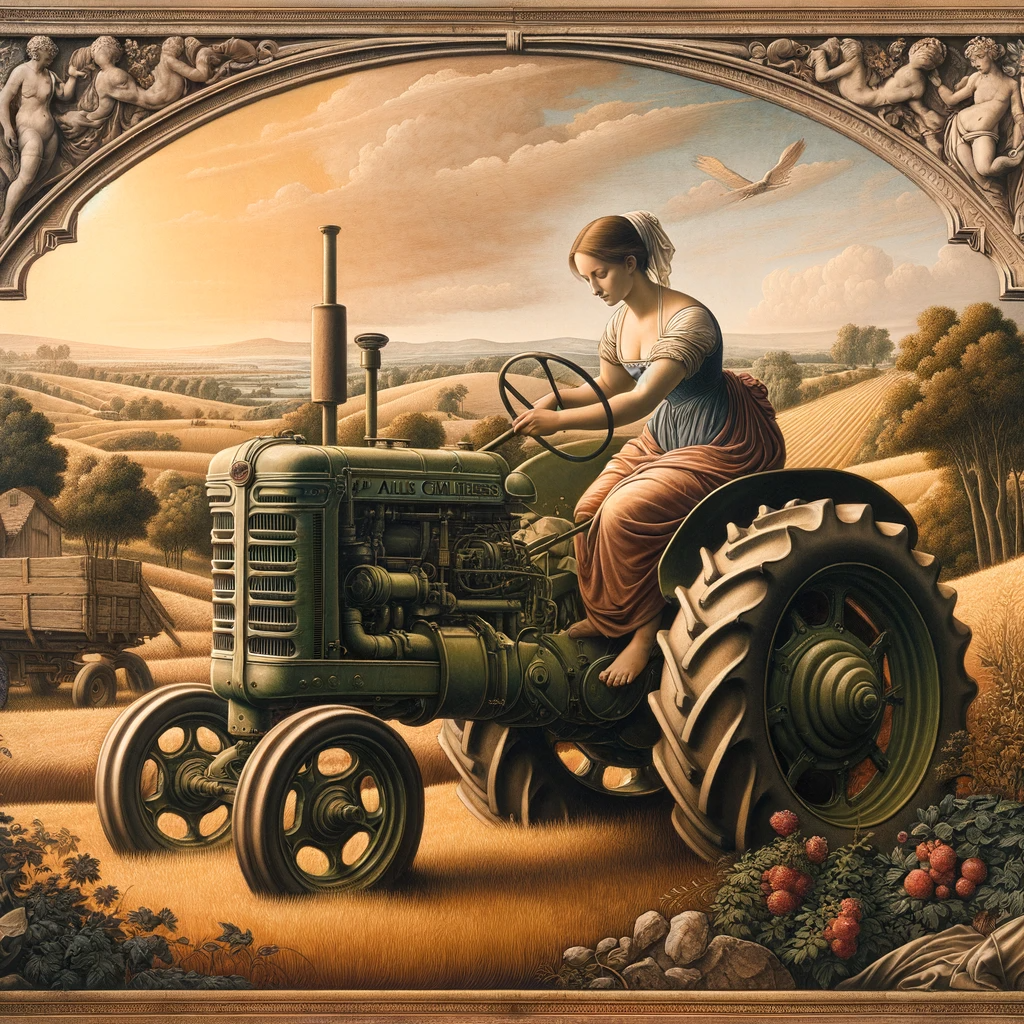
Picture a sun-drenched field, the air thick with the smell of rich earth and hay. There, amid the yellow wildflowers and bending stalks of wheat, sits a classic tractor—a gleaming example of resilience and nostalgia. For generations, these machines haven’t just powered farms; they’ve shaped families and communities. They are, in many ways, tangible expressions of a life well lived. Could it be that these humble giants hold the key to our farming happiness?
When we step into the worn seat of a vintage tractor, we’re not just reviving an engine; we’re reigniting a bond with our past. These tractors are more than metal and grease; they’re the storytellers of our heritage, whispering tales of hard work, determination, and connection. Each scratch and dent carries a memory—perhaps a father’s lessons on the land or a mother’s laughter echoing as she taught us to drive. Isn’t there a comfort in knowing that we’re part of something larger? Generations before us have harnessed these machines to cultivate life, and we have that very same power in our hands.
But there’s more to it than mere sentimentality. The act of farming is deeply rooted in our sense of purpose. In a world racing toward automation, don’t we owe it to ourselves to reconnect with the tactile joys of agriculture? The rhythmic thrum of a tractor in motion anchors us in the present moment. It forces us to slow down, to take a breath, to appreciate the art of growing and nurturing. We aren’t just sustaining our livelihoods; we’re participating in something vital, ethical, and crucial.
And let’s not overlook the social aspect. There’s a unique camaraderie among farmers that transcends boundaries. Sharing tips about restoring an old tractor, exchanging heirloom seeds, even gathering for a community harvest fosters friendship and trust. Together, we can build a network that supports not only our farms but our very souls.
So, as you rev up that classic tractor and feel the engine rumble to life, remember this: it’s not just a machine. It’s a symbol of connection, purpose, and grit. It’s an invitation to rediscover farming happiness in an increasingly disconnected world. Embrace it, and watch as the fields—and your heart—begin to flourish anew.

What If Classic Tractors Hold The Key to Farming Happiness
What If Classic Tractors Hold The Key to Farming Happiness
- Picture a sun-drenched field featuring a classic tractor, a symbol of resilience and nostalgia.
- Vintage tractors connect us to our agricultural past, representing hard work and family legacies.
- Farming instills a sense of purpose, encouraging a reconnection with the manual joys of agriculture.
- The rhythmic operation of a tractor helps ground us in the present and promotes appreciation for farming.
- Community bonds among farmers foster friendships and support networks through shared experiences.
- Classic tractors are more than machines; they embody connection, purpose, and perseverance.
- Reviving farming through vintage tractors offers a pathway to rediscover happiness amidst modern disconnection.

What If Classic Tractors Hold The Key to Farming Happiness
Table Of Contents
- What If Classic Tractors Hold The Key to Farming Happiness
- What Memories Do Classic Tractors Evoke From Your Childhood?
- How Do Classic Tractors Enhance The Farming Experience Today?
- Can Restoring A Classic Tractor Bring Joy And Satisfaction?
- What Environmental Benefits Do Older Tractors Offer Farmers?
- How Do Classic Tractors Connect Us To Our Farming Heritage?
- Are We Losing Valuable Farming Wisdom By Neglecting Classic Tractors?
- Conclusion
- Other Resources
- Glossary Of Terms
- Other Questions
- Haiku
- Poem
- Checklist
What Memories Do Classic Tractors Evoke From Your Childhood?
When you hear the rumble of a classic tractor, a symphony of nostalgia ignites within you. It’s not just a machine; it’s a time capsule that’s packed with memories waiting to be unearthed. You might remember running through golden fields as your grandfather chased you with that rusty old beauty, its engine roaring like a lion. The scent of freshly cut hay, mingled with the engine’s oil like an aromatic paintbrush on a canvas of youthful freedom—it’s a recipe for cherished tales.
In the world of modern farming, tractors have evolved into sleek, efficient machines, but there’s something purely visceral about the old iron—the creaks, the clanks, the raw power that wraps around you like your favorite childhood blanket. It’s a tangible connection to generations that came before, a rallying flag of labor and love. These tractors weren’t just pieces of equipment; they were the beating heart of farms, a source of pride, family bonding, and the simple stitch of community.
Think of the laughter that echoed as friends jumped onto that rusty seat, eager to join the ride. Picture the shared moments of toil as you often caught your father or mother in the glow of sunset, repairing the old machine, imbibing the unwritten lessons of perseverance and hard work. Each scratch on that paint tells a story—of triumphs, of lessons learned, of days where the sun seemed to rise and set solely for the casual dance between man and machine. The commitment of maintaining those tractors—a labor of love that taught you responsibility beyond measure—fostered a deep respect for the land and the mechanics that supported our way of life.
Moreover, as the world spins faster, these classic tractors become a touchstone for understanding where we come from. As they roll down old dirt roads, they silently remind us to pause, breathe, and appreciate the journey. They invite us to celebrate our roots and recognize our role in a larger tapestry of tradition and community. It’s a call to action to preserve what matters—a reminder that the past isn’t meant to be left behind, but rather cherished and passed down, just like the invaluable life lessons from those timeless rides.
So, the next time you see or hear a classic tractor, let it take you back. Explore those visceral emotions, indulge in the memories, and breathe life into the stories that shaped not just who we are, but also how we relate to the world and each other.

What Memories Do Classic Tractors Evoke From Your Childhood?
What Memories Do Classic Tractors Evoke From Your Childhood?
- Classic tractors evoke nostalgia and act as time capsules filled with memories.
- The roar of an engine and the scent of hay can bring back cherished childhood moments.
- Old tractors symbolize a visceral connection to farming traditions and family heritage.
- They serve as sources of pride and community bonding among family and friends.
- The upkeep of these machines teaches responsibility and respect for the land.
- Classic tractors remind us to appreciate our roots and the journey of life.
- They call for the preservation of traditions and the sharing of invaluable life lessons.

What Memories Do Classic Tractors Evoke From Your Childhood?
How Do Classic Tractors Enhance The Farming Experience Today?
In an era where technology races ahead at breakneck speed, the sight of a classic tractor rumbling across a sun-drenched field carries with it a deep sense of nostalgia and authenticity. There’s something inherently beautiful about those sturdy machines, hand-crafted for a purpose that resonates with farmers today just as it did decades ago. The unmistakable thrum of a vintage tractor is like a heartbeat—a rhythmic reminder that farming is a timeless dance between man, machine, and Mother Nature.
Heartfelt Connection: For many farmers, a classic tractor isn’t just a piece of equipment; it’s a cherished family heirloom, passed down through generations. Picture a father teaching his daughter how to plow the land on that very same tractor he learned on as a boy. Each rusted bolt tells a story, carrying the weight of memories, laughter, and hard lessons learned. It’s an invitation to connect with the past while planting seeds for the future.
Rational Appeal: Beyond sentimentality, there’s a compelling argument for choosing classics in a high-tech world. Many of these tractors are built to last—not just in terms of durability, but also in their simplicity. With fewer mechanical complexities, they are often easier to maintain and repair. Plus, they create a lower barrier to entry for young farmers looking to break into the industry, teaching invaluable skills in an approachable way. When a tractor is reliable, it allows the farmer to focus on what truly matters: the land and the crop.
Ethical Consideration: Using classic tractors can also foster a sense of community. When you choose to restore an old machine rather than opting for the latest model, you’re making a conscious choice to honor the craftsmanship of the past and minimize waste. It’s a nod to sustainability, reminding us that farming isn’t just about productivity; it’s about stewardship of the earth.
Narrative Power: Think of the stories woven into those dirt tracks—the triumphs over failed crops, the thrill of the first harvest, the sweat and camaraderie shared among neighbors. A classic tractor transforms the mundane into the extraordinary, and it instills a profound respect for the land.
Social Connection: In today’s fast-paced world, we long for connection. A classic tractor on the field not only symbolizes a legacy but also serves as a conversation starter, drawing in fellow farmers and curious onlookers alike. It creates a communal space where ideas are exchanged, and friendships are forged.
So, whether you’re a seasoned farmer or a novice stepping into the field for the first time, consider the classic tractor. It’s more than machinery; it’s a lifeline to the past, a tool for the present, and a promise to the future. Embrace that legacy, and let it enhance your farming experience today and for generations to come.

How Do Classic Tractors Enhance The Farming Experience Today?
How Do Classic Tractors Enhance The Farming Experience Today?
- Classic tractors evoke nostalgia and authenticity, representing timeless farming traditions.
- They serve as cherished family heirlooms, passing down memories and skills through generations.
- These machines are built for durability and simplicity, making them easier to maintain and repair.
- Classic tractors help young farmers enter the industry by teaching practical skills in an approachable manner.
- Restoring old tractors promotes sustainability and minimizes waste, honoring past craftsmanship.
- They foster social connections, acting as conversation starters among farmers and the community.
- Classic tractors embody a link between the past, present, and future of farming, enhancing the overall experience.

How Do Classic Tractors Enhance The Farming Experience Today?
Can Restoring A Classic Tractor Bring Joy And Satisfaction?
Imagine standing in a sun-drenched field, surrounded by the soothing hum of nature, and the distant echoes of days gone by. There it sits—your classic tractor, a time-worn symbol of hard work and the pulse of rural life. The paint is chipped, and the engine doesn’t start on command, but within its rusty frame lies a treasure trove of stories, resilience, and—most importantly—a journey waiting to unfold.
Restoring a classic tractor is more than just a mechanical endeavor; it’s a heartfelt odyssey. Each bolt you turn, each piece you clean speaks to your patience and tenacity. As you delve into this project, you’re not merely wrestling with old parts; you’re sparking a connection to the ghosts of farmers, the pioneers who poured their sweat into the soil, who understood the very essence of toil. With every ounce of effort you invest, you’re honoring those who came before, and reclaiming your own piece of that proud legacy.
From a rational standpoint, the benefits are tangible. Engaging with a classic tractor rebuild cultivates a unique set of skills. You gain hands-on experience, understanding how machines operate and learning valuable life lessons about perseverance and problem-solving. As you wrestle with the complexities of the engine’s innards, you’re also sharpening your mind, honing your ability to troubleshoot with creativity and resourcefulness.
Ethically, there’s a profound satisfaction in breathing new life into something that was once deemed obsolete. In a world characterized by disposable everything, restoring a classic tractor sends a ripple effect of sustainability. You’re choosing to preserve a piece of history instead of casting it aside, embodying a commitment to craftsmanship and lasting values.
Moreover, let’s talk about community. Restorations often spark connections with fellow enthusiasts—a network of individuals who appreciate that same thrill to revive and restore. They become a part of your story, sharing tips and encouragement, reveling in the joy of creation.
As you approach that finish line, gripping the steering wheel of your revitalized classic tractor, that hum of the engine resonates deeply within you. It becomes more than a machine; it transforms into a testament of your hard work, a celebration of dedication. And as you roar to life, you’ll find yourself steering not just through fields, but through memories, pride, and an overwhelming sense of achievement. So, roll up those sleeves, grab the tools, and embark on that journey. Because joy and satisfaction are waiting, just beyond that rusted hood.

Can Restoring A Classic Tractor Bring Joy And Satisfaction?
Can Restoring A Classic Tractor Bring Joy And Satisfaction?
- Classic tractors symbolize hard work and rural heritage, embodying stories and resilience.
- Restoring a tractor is a heartfelt journey that connects you to the legacy of past farmers.
- The project cultivates valuable skills, enhancing problem-solving and mechanical understanding.
- Restoration promotes sustainability by preserving history rather than contributing to disposability.
- Engaging with fellow enthusiasts creates a community, fostering connections and shared experiences.
- The restoration process transforms the tractor into a symbol of dedication and achievement.
- Embarking on this journey promises joy and satisfaction through hard work and creativity.

Can Restoring A Classic Tractor Bring Joy And Satisfaction?
What Environmental Benefits Do Older Tractors Offer Farmers?
When you think of farming, it’s easy to picture shiny, new tractors gleaming in the sun, but there’s something special about the older models that demands our attention. These machines, often the unsung heroes of the agricultural world, have been hard at work for decades, quietly supporting sustainable practices that may have been forgotten in today’s fast-paced farming revolution.
Older tractors boast simplicity, built with fewer moving parts and a design philosophy that places durability front and center. This means they consume less fuel while providing the same muscle when it comes to fieldwork. Farmers who harness the power of these vintage tractors are often rewarded with significant savings at the pump—not just a financial boon, but an environmental one, as reduced fuel consumption leads to lower carbon emissions. That’s less pollution in the air we breathe, less strain on the planet, and more hope for future generations.
Moreover, the stories behind these tractors connect us with our roots—literally. Many farmers utilize older models to practice conservation tillage, a method that not only preserves soil health but fosters biodiversity. With their larger, gentler tires, these tractors minimize soil compaction, protecting precious farmland from erosion. When farmers choose to revive these machines, they delve into a narrative that emphasizes stewardship over exploitation, an ethos that resonates deeply in our current environmental discourse. It’s a testament to our ability to honor the past while cultivating a sustainable future.
Then there’s the community aspect. Older tractors often symbolize local craftsmanship and bygone eras, uniting farmers around shared experiences and memories. Why not gather with neighbors to restore a classic? It’s a chance to swap stories, share expertise, and strengthen communal ties—all while slashing your carbon footprint.
As stewards of the land, farmers must consider their legacy not only in the crops they produce but also in the choices they make today. Embracing older tractors is a step towards a greener path: reducing waste, promoting reuse, and connecting back to the soil in a meaningful way. When the dust settles, the environmental benefits are clear—it’s not just about turning soil; it’s about turning the tide towards a more sustainable future. So, let’s rev up those classics and buck the trend; the earth will thank us for it.

What Environmental Benefits Do Older Tractors Offer Farmers?
What Environmental Benefits Do Older Tractors Offer Farmers?
- Older tractors, often overlooked, have played a crucial role in sustainable farming practices.
- They feature simple designs with fewer moving parts, leading to lower fuel consumption and emissions.
- Using vintage tractors can result in significant cost savings for farmers, promoting financial and environmental benefits.
- These machines enable conservation tillage, preserving soil health and enhancing biodiversity.
- Older tractors help minimize soil compaction, protecting farmland from erosion.
- They foster community connections through shared restoration projects and storytelling among farmers.
- Embracing older tractors represents a commitment to sustainability and a greener farming legacy.

What Environmental Benefits Do Older Tractors Offer Farmers?
How Do Classic Tractors Connect Us To Our Farming Heritage?
There’s something undeniably magical about a classic tractor, isn’t there? With its worn-out fenders and faded paint, it tells a story—a story of grit, determination, and a deep-rooted connection to the land. These tractors are not just machines; they are vessels of memory, bridges that link us to our farming heritage. When you hop onto the seat of a vintage tractor, you’re not merely operating a piece of equipment; you’re stepping into the very shoes of those who plowed the fields before you, who toiled under the sun and weathered every storm for the sake of sustenance and survival.
Rationally speaking, classic tractors represent the evolution of agriculture. They embody technological advancement, from the early steam-powered behemoths to the nimble diesel models that transformed farming dynamics. Each turn of the wheel signifies years of innovation, and those who operate these machines are ambassadors of a proud tradition. By preserving these historical vehicles, we honor our ancestors—not as ghosts of the past but as the architects of our modern agricultural landscape.
But it’s not all about logic; there’s an emotional resonance here too. Picture a father teaching his son how to operate an old John Deere, their laughter mingling with the rumble of the engine. This isn’t just a lesson in mechanics; it’s a rite of passage that reflects love, trust, and an unbroken line of family history. The nostalgia rekindled by these classic tractors goes beyond their chrome and steel; it’s about the values they represent: hard work, resilience, and humility—the very virtues that shape our communities and lives.
On an ethical front, engaging with these machines fosters a sense of responsibility. When we preserve the legacy of classic tractors, we commit to educating future generations about sustainable farming forms and the importance of respecting the land that nurtures us. We create a community that values our roots, ensuring that modern advancements don’t come at the cost of memories and practices that matter.
Moreover, classic tractors symbolize societal connection. They remind us that farming isn’t an individual sport. It’s a collaborative effort—communities coming together, sharing knowledge, and perpetuating a way of life that’s as rich as the soil beneath our feet. So, as you pull the throttle on that time-honored machine, know that you’re becoming part of a grand narrative, a tapestry woven with stories, challenges, and triumphs. Your hands connect with the past while nurturing the future, making each ride an homage to heritage and a promise to carry it forward.

How Do Classic Tractors Connect Us To Our Farming Heritage?
How Do Classic Tractors Connect Us To Our Farming Heritage?
- Classic tractors embody a deep-rooted connection to farming heritage and community values.
- They serve as vessels of memory, connecting us to the determination and grit of previous generations.
- Historically, classic tractors reflect the evolution of agricultural technology, showcasing years of innovation.
- Operating a vintage tractor is both a mechanical skill and a rite of passage, infused with family traditions.
- Preserving these tractors fosters responsibility and educates future generations about sustainable farming practices.
- Classic tractors symbolize community collaboration, highlighting that farming is a collective effort.
- Each experience with a classic tractor enriches our connection to the past while nurturing a promise for the future.

How Do Classic Tractors Connect Us To Our Farming Heritage?
Are We Losing Valuable Farming Wisdom By Neglecting Classic Tractors?
The Heart of Farming: Preserving the Legacy of Classic Tractors
In a world driven by technology and efficiency, we often forget that the heart of farming beats in the metal and grit of classic tractors. These machines are more than just steel and gears; they are the vessels of countless stories, each one an echo of hard work, sweat, and determination. As we pivot towards sleek automation and endless screens, we risk neglecting the wisdom embedded in these vintage relics.
Think about it: every time a farmer climbed aboard that trusty tractor, there was a dance of intention and intuition—a connection to the land that can’t be replicated in a computer-generated algorithm. The roar of a classic tractor in the field is a melody of resilience, a testament to generations who nurtured the earth before us. These machines were designed not only to cultivate the soil but to cultivate a sense of purpose, a feeling that our work matters.
Rationally speaking, the technology of today may promise efficiency, but at what cost? We’re losing valuable farming practices and techniques that have weathered the storms—literally and figuratively—of countless growing seasons. Classic tractors taught us patience, the rhythm of the seasons, and the critical relationship with nature. As we jump on the tech bandwagon, we may inadvertently abandon those time-honored lessons that remind us why farming and nature are partners in survival.
Ethically, we have a responsibility to safeguard this farming heritage. Each classic tractor is like a pillar of our agricultural history, a silent witness to triumphs and tribulations on the farm. By neglecting these machines, we overlook the ethical implications of our choices, discrediting the struggles faced by farmers who came before us. Preserving these tractors is preserving the soul of agriculture.
Moreover, the narrative woven through each classic tractor is one of community. Farmers who maintain and restore these machines are not only cultivating the fields; they are cultivating connections, sharing knowledge, and fostering relationships that last across generations. It is a nod to an era that emphasized not just the “how” of farming, but the “why.”
So let’s inspire action to protect this invaluable wisdom. Let’s raise the hood on those old machines and discover the lessons they still have to teach us. By valuing and preserving classic tractors, we honor a legacy that’s as alive today as it was when those engines first roared to life. Let’s steer our farming future with respect for our past, ensuring that the heart of agriculture continues to beat strong.

Are We Losing Valuable Farming Wisdom By Neglecting Classic Tractors?
Are We Losing Valuable Farming Wisdom By Neglecting Classic Tractors?
- Classic tractors represent the heart of farming, embodying stories of hard work and determination.
- They create a unique connection to the land, emphasizing intention and intuition over technology.
- Neglecting classic tractors risks losing valuable farming techniques developed over generations.
- These machines symbolize patience and the importance of understanding the natural rhythms of agriculture.
- Preserving classic tractors is an ethical responsibility, honoring the struggles of past farmers.
- Maintaining these tractors fosters community connections and shares valuable knowledge among farmers.
- By valuing classic tractors, we ensure that the agricultural legacy remains strong and relevant.

Are We Losing Valuable Farming Wisdom By Neglecting Classic Tractors?
Conclusion
As we draw the curtain on this exploration of classic tractors and their undeniable impact on farming happiness, let’s remember the heartbeat that pulses through every rusted bolt and worn-out seat. Picture it: a sun-soaked field, where the scent of earth and hay wraps around you like an old friend. That classic tractor, more than just machinery, is a doorway to a heritage rich in stories—stories of resilience, tenacity, and connection that bind us to our agricultural roots.
These machines may be old, but they offer an emotional anchor in a world that often spins too fast. With each turn of the ignition, we’re not merely revving up an engine; we’re reigniting the bonds of family and community forged over generations—a father teaching his child, neighbors gathering to restore an old model. It’s that fabric of shared experience that strengthens our ties and cultivates a sense of belonging. When a farmer climbs aboard a classic tractor, it’s a rite of passage filled with lessons about responsibility, patience, and the intrinsic relationship we share with our land.
Rationally speaking, let’s not overlook the practicality of these beloved machines in today’s farming landscape. Classic tractors, for all their simplicity, are often easier to maintain and repair than their modern counterparts, presenting an accessible entry point for budding farmers. They remind us of our ability to work with our hands, to fix what’s broken, and to appreciate the straightforward joys of agriculture—all while reducing our environmental impact through sustainable practices. Choosing to restore and revitalize these machines over splurging on the latest tech is a conscious pledge to honor craftsmanship, minimize waste, and embrace stewardship over exploitation.
Ethically, there’s a profound narrative woven through every classic tractor that calls us to action. By valuing the legacy they represent, we commit to preserving not just machinery, but the ethics of hard work and community we cherish. These tractors stand as testament to a farming culture that is rich, shared, and supportive.
So here’s the rallying cry: Let’s rekindle our love for the classic tractor. It’s more than a tool; it’s a testament to a life well-lived, a legacy we owe to our ancestors, and a vital connection to a future where agriculture can thrive amidst technology. Hop into that seat, feel the rumble beneath you, and remember—this is where happiness grows. It’s up to each of us to keep those stories alive, inviting future generations to join us in this timeless dance between man, machine, and Mother Nature. Let’s grab the reins and keep steering forward, knowing full well that in doing so, we’re nurturing not just our fields, but our hearts, our communities, and our very essence as stewards of the land.

Conclusion
Conclusion:
- Classic tractors symbolize a rich agricultural heritage, embodying stories of resilience and connection.
- They serve as emotional anchors, fostering family and community bonds through shared experiences.
- Climbing aboard a classic tractor represents a rite of passage that teaches responsibility and patience.
- Classic tractors are often easier to maintain and repair, making them accessible for new farmers.
- Restoring these machines supports sustainable practices and minimizes waste compared to modern technology.
- Valuing classic tractors helps preserve the ethics of hard work and community spirit in farming culture.
- Embracing classic tractors connects us to both our past and a sustainable future in agriculture.

Conclusion
Other Resources

Other Resources
Here is a list of other resources you can review online to learn more:
- Terrion
- Heartland Acres Agribition Center
- Nuffield
- Interstate Tractor
- Agrinar
- CO-OP
- Jeep
- Cub Cadet
- Fiber Max Center for Discovery
Use This Prompt To Get More Resources With Your Favorite Online AI Tool: Please provide me with a list of online articles with their URLs in a bulleted list that I can read regarding What If Classic Tractors Hold The Key to Farming Happiness

Other Resources
Glossary Terms
What If Classic Tractors Hold The Key to Farming Happiness – Glossary Of Terms
1. Classic Tractors: Older models of tractors, often seen as symbols of traditional farming practices, known for their durability and simplicity.
2. Farming Happiness: A state of contentment and fulfillment that farmers experience when engaging in agricultural activities that resonate with their values and passions.
3. Sustainability: Farming practices that maintain ecological balance, ensuring that farming can continue without depleting resources or harming the environment.
4. Heritage: The traditions and values passed down through generations of farmers, often embodied in classic farming equipment.
5. Nostalgia: A sentimental longing for the past, often evoked by classic tractors and traditional farming methods.
6. Community: The social networks and relationships built among farmers, which contribute to a sense of belonging and shared purpose in agricultural life.
7. Mechanization: The use of machinery in farming to increase efficiency and productivity, such as tractors that replace manual labor.
8. Restoration: The process of repairing and refurbishing classic tractors to their original condition, often pursued as a hobby by farming enthusiasts.
9. Agri-Tourism: A sector of tourism focused on visiting farms and rural areas, where classic tractors may play a role in enhancing visitor enjoyment and education.
10. Work-Life Balance: The equilibrium between work obligations and personal happiness; classic tractors may symbolize a more simplified, fulfilling farming lifestyle.
11. Tradition: Practices, customs, and beliefs that are passed down through time, often reflected in the use of classic farming equipment.
12. Genetic Diversity: The variety of plants and animals within farming, which can be supported by smaller, traditional farms utilizing classic tractors.
13. Crop Yield: The total quantity of crop products harvested from a specific area, which can be influenced by the farming methods and equipment used.
14. Agroecology: An approach to agriculture that integrates ecological principles into farming, promoting a sustainable relationship with the land.
15. Farmers’ Markets: Local markets where farmers sell their products directly to consumers, fostering community connections, often supported by traditional farming methods.
16. Soil Health: The condition of soil, determined by its ability to support plant life; traditional farming practices often contribute to better soil management.
17. Harvesting: The process of gathering mature crops; classic tractors may play a vital role in making this task efficient and enjoyable.
18. Farming Innovations: New techniques or technologies introduced to enhance farming practices, sometimes blending traditional wisdom with modern advancements.
19. Rural Lifestyle: A way of living characterized by agricultural work, community ties, and a close connection to nature, often associated with classic tractors.
20. Celebration of Legacy: Acknowledging and honoring the history of farming practices, often through events that feature classic tractors and their stories.
21. Farm Equipment Collecting: The practice of acquiring and preserving vintage farm equipment, including classic tractors, as a hobby or investment.
22. Permaculture: A sustainable farming method that mimics natural ecosystems and can be practiced alongside traditional farming methods.
23. Live Events: Gatherings such as tractor shows or farming fairs where classic tractors are showcased, promoting community and appreciation for agricultural traditions.
24. Shared Knowledge: Exchange of farming insights, skills, and techniques among farmers, often facilitated through community events celebrating classic farming tools.
25. Biodiversity: The varied life forms within agricultural systems that enhance resilience and productivity; traditional farming can promote this through diverse planting.
26. Retro Farming: A movement that romanticizes and utilizes older farming methods and equipment, finding joy in simplicity and tradition.
27. Ranching: A form of agriculture that focuses on raising livestock, often employing classic tractors to manage large expanses of land.
28. Mechanical Simplicity: The characteristic of classic tractors which often feature straightforward, easy-to-repair systems compared to modern machinery.
29. Family Farms: Farms operated by families that often rely on time-honored methods and equipment, including classic tractors, promoting a strong family bond.
30. Farming Education: Programs or courses designed to teach agricultural practices, often highlighting the significance of classic tractors and traditional farming techniques.

Glossary Of Terms
Other Questions
What If Classic Tractors Hold The Key to Farming Happiness – Other Questions
If you wish to explore and discover more, consider looking for answers to these questions:
- What specific qualities make classic tractors a source of happiness for farmers?
- How can modern farmers integrate classic tractors into their farming practices?
- What are some popular models of classic tractors and their unique features?
- Are there communities or clubs dedicated to classic tractor enthusiasts?
- What restoration projects have been particularly impactful for farmers?
- How does farming with classic tractors differ from using modern machinery?
- What skills can one gain from restoring a classic tractor?
- What stories or traditions are passed down through generations regarding classic tractors?
- How do classic tractors contribute to sustainable farming practices?
- What are the challenges of maintaining or restoring a vintage tractor?
- How can classic tractors enhance community relationships among farmers?
- What role do classic tractors play in farming education for younger generations?
- Are there environmental regulations related to using older tractors in agriculture?
- How does the nostalgia associated with classic tractors impact farming culture?
- What are the economic benefits of restoring and using classic tractors?

Other Questions
Haiku
What If Classic Tractors Hold The Key to Farming Happiness – A Haiku
Classic tractors hum,
Echoes of a vibrant past—
Farming’s heart revived.

Haiku
Poem
What If Classic Tractors Hold The Key to Farming Happiness – A Poem
Farmers and Their Classics: A Heartfelt Ode
In fields sun-drenched, where memories play,
Classic tractors hum, their stories sway,
With rusted frames and paint that chips,
They hold our past in their sturdy grips.
Whispers of laughter, of toil, of sweat,
Each scratch a memory we can’t forget,
They speak of lessons from mothers and fathers,
Of bonds we build, where connection gathers.
In a world that races towards sleek design,
These majestic giants ask us to find,
The joy in the rhythm, the pulse of the land,
To slow down and cherish what’s been lovingly planned.
They’re not just machines, devoid of a heart,
They’re the lifeblood of farming, a vital part,
Each engine that rumbles, each tire that rolls,
Connects us to ancestors, the essence of souls.
Let’s not forget the wisdom they share,
In simplicity lies the beauty laid bare,
For navigating fields with fewer demands,
Teaches young farmers the strength of their hands.
When we restore these relics, we honor the past,
Choosing sustainability; our legacies last,
A nod to the earth, a reminder so clear,
That our stewardship matters, our duty is here.
Together we connect, with smiles and with tips,
Sharing a journey, trading friendships in slips,
The old and the young, a community thrives,
In classic old tractors, the spirit survives.
So let’s gather ‘round, let engines ignite,
Embrace this tradition, keep our futures bright,
With hearts full of laughter and hands firm and true,
We’ll cultivate happiness—together, me and you.
Poem
Checklist
What If Classic Tractors Hold The Key to Farming Happiness – A Checklist
Classic Tractors: A Heart, Head, and Gut Checklist for Farming Wisdom
Emotional Appeals (Heart)
_____ Nostalgia: Reflect on childhood memories associated with classic tractors. What feelings do they evoke?
_____ Connection: Identify ways in which vintage tractors have strengthened family bonds or community ties in your life.
_____ Purpose: Consider what farming truly means to you and how vintage tractors symbolize this deeper connection to your heritage.
Rational Appeals (Head)
_____ Maintenance Advantage: Evaluate the simplicity and longevity of classic tractors compared to modern equipment. Could they reduce costs for you?
_____ Sustainable Practices: Research the environmental benefits of older tractors. How do they help promote sustainability in farming?
_____ Skill Development: Write down the new skills you could learn through restoring a classic tractor. What practical experiences would you gain?
Ethical Appeals (Gut)
_____ Heritage Preservation: Reflect on your responsibility to preserve farming traditions. What steps can you take to honor agricultural history?
_____ Community Involvement: Assess how restoring classic tractors could deepen your bonds with fellow farmers. How can you participate in communal projects?
_____ Environmental Stewardship: Think about how choosing classic tractors aligns with your values around sustainability and conservation.
Authority Appeals
_____ Expert Insights: Seek out stories or testimonials from seasoned farmers or restoration experts on the benefits of classic tractors. Which expert opinions resonate with you?
_____ Local History: Investigate local archives or museums that highlight the importance of classic tractors in your community’s agricultural history. What did you learn?
Narrative Appeals
_____ Personal Story: Write down a personal anecdotes related to tractors in your life. How does this narrative shape your view of farming?
_____ Cultural Significance: Explore regional or national stories that involve classic tractors and agriculture. How do these narratives connect to your identity?
Social Appeals
_____ Networking Opportunity: Make a list of local farming groups or organizations that focus on classic tractor restoration. How can you get involved?
_____ Sharing Knowledge: Identify ways you can contribute your experiences or insights about traditional farming methods with others. What platform can you use?
_____ Community Gatherings: Plan or attend an event that celebrates classic tractors, like a show or restoration workshop. Who can you invite to join you?
Bonus Action Steps:
_____ Revitalize a classic tractor symbolically in your own life; whether it’s through crafting, storytelling, or hands-on restoration.
_____ Set a goal to grow or harvest a crop that honors traditional farming methods learned from your classic tractor experiences.
_____ Engage with local youth to pass on farming wisdom through workshops or tractor rides, fostering a connection to heritage.
By going through this checklist, you can deepen your understanding of classic tractors’ role in sustaining happiness in farming while connecting it to your heart, head, and gut. Happy farming!

Checklist
At ClassicTractorNews, we help tractor lovers keep up with the latest news for classic and vintage tractors.
Please share this post with your friends, family, or business associates who may like old classic or vintage tractors.