


Transforming Knowledge: An Ai Journey From Pages To Possibilities
By Tom Seest
At ClassicTractorNews, we help tractor lovers keep up with the latest news for classic and vintage tractors.
Please share this post with your friends, family, or business associates who may like old classic or vintage tractors.
The AI App That Replaced My Shop Manual
In the age of technology, we often find ourselves at a crossroads, where the old ways of doing things clash with the shiny allure of new innovations. Take, for example, my trusty shop manual, well-loved and well-worn, with pages that had absorbed more grease than I’d care to admit. It was a comforting presence in my garage, always there when I needed to figure out why my tractor wouldn’t start on a cold morning. But then, the unexpected happened: an AI app entered the scene, and everything changed.
Originally, I was skeptical. After all, how could a screen full of code possibly replicate the wisdom that had been passed down through generations? But curiosity got the better of me. I downloaded the app, and the moment I opened it, I realized I was holding more than just a collection of technical instructions; I had a digital companion that understood my struggles. This wasn’t just about fixing a tractor; it was about forging a relationship with my work—an embodiment of the blood, sweat, and tears that go into every repair.
That app became an authority in my garage. It didn’t just spew out technical jargon; it spoke my language. Instead of poring over diagrams and deciphering outdated terminology, I received concise, relevant insights. Imagine unclogging a stubborn injector without flipping through countless pages. The app offered solutions backed by data and real-time updates, appealing to the rational side of my brain while rekindling my passion for keeping that old tractor running.
Yet, it wasn’t just practicality that drew me in. There was an ethical charge to it; embracing technology meant embracing progress. As I watched other tradespeople navigate the same learning curve, I realized we were in this together, trading tricks and tips as if we were gathered around a virtual campfire. This sense of community—stories shared, successes celebrated—made the journey compelling.
Here’s the kicker: while I initially sought to replace my shop manual, the app did something deeper. It redefined my relationship with the work itself. It encouraged me to innovate, to think outside the box, and to challenge the status quo. In a world that’s ever-changing, this AI application didn’t merely replace a tool; it enhanced my very approach to craftsmanship, inviting me to not only fix machinery but to explore what it means to be a maker and repairer in the modern age.

The AI App That Replaced My Shop Manual
The AI App That Replaced My Shop Manual
- The clash between traditional methods and new technologies is evident in the modern workspace.
- A well-worn shop manual provided comfort and guidance for repairs.
- Initial skepticism about AI’s ability to replace traditional wisdom was overcome by curiosity.
- The AI app became a valuable digital companion, offering insights and understanding.
- It provided concise, relevant information, streamlining the troubleshooting process.
- Embracing technology fosters a sense of community among tradespeople sharing knowledge.
- The app transformed the user’s relationship with work, encouraging innovation and a modern approach to craftsmanship.

The AI App That Replaced My Shop Manual
Table Of Contents
- The AI App That Replaced My Shop Manual
- What Does It Mean to Trust an AI for Essential Repairs?
- How Can an AI Enhance My Understanding Of Repairs?
- What Ethical Concerns Arise When Using AI for Technical Tasks?
- How Does AI Change the Way I Approach Maintenance Challenges?
- Are AI Recommendations As Reliable As Expert Advice?
- What Stories Do Users Have About Their Experiences with Ai?
- Conclusion
- Other Resources
- Glossary Of Terms
- Other Questions
- Haiku
- Poem
- Checklist
What Does It Mean to Trust an AI for Essential Repairs?
Trusting an AI for essential repairs is akin to watching a seasoned mechanic work on a vintage tractor, each wrench turn a testament to experience and accuracy. Picture this: you’re knee-deep in the mud, the smell of engine oil in the air, and there’s that trusty tractor you rely on, its engine sputtering like your own uncertainty about technology. You’ve seen the sheer power and grit of that machine on the farm, but can you place your trust in an algorithm to give it the care it deserves?
At heart, we all want reliability, especially when it comes to something as vital as repairs. You remember your grandfather, his hands roughened by years of toil, confidently fixing things around the farm. That trust was built over time, rooted in personal experience. Much like that connection, trusting AI involves a leap of faith, but it doesn’t have to be blind. AI systems, trained on vast arrays of data, mimic that seasoned mechanic’s insights. They analyze patterns and predict outcomes, much like your grandfather’s instinctual understanding of when to tighten a bolt or replace an engine part.
Let’s think rationally. The anxiety surrounding AI often stems from fear of the unknown. It’s easy to envision a cold, calculated machine, but remember the thrill of riding that tractor down a furrowed field, feeling the earth beneath its tires—a blend of man and machine working in harmony. That’s the promise AI brings: a partnership, not a replacement. Ethically, the shift towards AI is about more than just efficiency; it’s also about enhancing our abilities. The dignity of hard work remains intact, augmented by technology that learns and improves, just as we do.
From an authoritative standpoint, numerous industry experts reveal that AI can vastly improve repair diagnostics, reducing downtime and increasing safety. Engineers and technicians who embrace these tools report higher success rates, a stark contrast to the trepidation many feel when facing new technology. It’s a community learning to trust, just like farmers who once questioned the first tractors.
Reflect on the stories shared by industry veterans who’ve witnessed the transition from manual mechanics to advanced AI. Their journeys showcase how, together, they’ve navigated this unfamiliar terrain. It’s this narrative that weaves in the social aspect—building a network of trust where we exchange experiences, both successes and failures, fostering an understanding that we’re all in this together.
So as you stand in your shed, tools at the ready, consider what it means to place your faith in an AI to assist with those essential repairs. It’s not merely about fixing machines; it’s about forging a new relationship with technology that enhances our ingenuity, respecting our past as we bravely step into a future filled with possibilities.

What Does It Mean to Trust an AI for Essential Repairs?
What Does It Mean to Trust an AI for Essential Repairs?
- Trusting AI for repairs parallels relying on a skilled mechanic for vintage machinery.
- Reliability is essential for vital repairs, akin to the trust built with a personal experience.
- AI systems analyze data and predict outcomes, similar to a mechanic’s instincts.
- The anxiety surrounding AI often stems from fear of the unknown.
- The partnership between man and machine promotes harmony and efficiency in repairs.
- AI improves diagnostics, safety, and success rates in repair industries.
- A community of trust develops through shared experiences in navigating new technology.

What Does It Mean to Trust an AI for Essential Repairs?
How Can an AI Enhance My Understanding Of Repairs?
How Can an AI Enhance My Understanding of Repairs?
Imagine standing in the midst of your garage, surrounded by tools, parts, and the unmistakable scent of oil—a scent that tells tales of countless repairs made and lessons learned. Now, what if I told you that AI could revolutionize your understanding of these tasks? This isn’t just about fixing what’s broken; it’s about immersing yourself in the knowledge and skills that make us all a little more self-sufficient.
Think of your trusty tractor, that stalwart workhorse that has plowed more fields than you can count. When it breaks down, it’s not just an inconvenience; it represents lost time and inevitable frustration. Yet, AI acts like that wise old mechanic down the street, guiding you through the intricacies of repair. With a few clicks, you can access an expansive database of troubleshooting guides tailored to your specific model. This resource works around the clock, ready to help you diagnose issues and learn from your experiences.
As you dive into these resources, an emotional connection forms. It’s not just a machine—it’s a lifeline to your livelihood. Those late nights spent fixing your tractor aren’t just about getting it running; they’re about fostering a deeper relationship with the work you love. Picture the sense of accomplishment when you successfully troubleshoot that stubborn engine, bolstered by AI’s step-by-step instructions. That’s not just knowledge; that’s empowerment.
Additionally, there’s a rational side to this innovation. AI can analyze patterns from thousands of repairs. Imagine if each time you faced a problem, you could tap into a collective intelligence, learning from the experiences of countless others who’ve walked the same path. This unique angle not only minimizes trial and error but enhances your skills faster than traditional methods. You become part of a vast community dedicated to mastering repairs.
Ethically, fostering self-reliance through knowledge and skills is invaluable. You’re not just fixing machinery; you’re cultivating a mindset that values the hands-on approach to problem-solving. This creates a ripple effect, inspiring those around you to learn and grow too.
So, the next time you feel overwhelmed by a repair task, remember that AI is there to guide you—not just with facts and figures, but with a connection to the broader tapestry of skilled labor. Embrace it, learn from it, and let it nurture that instinctive grit we all have within us. Remember, every repair story is part of a greater narrative—yours, and the countless others who’ve taken the plunge into self-reliance.

How Can an AI Enhance My Understanding Of Repairs?
How Can an AI Enhance My Understanding Of Repairs?
- AI enhances understanding of repairs beyond just fixing machines, fostering self-sufficiency.
- Acts as a knowledgeable guide, offering access to troubleshooting databases for specific models.
- Facilitates emotional connections to machinery, making repairs a more significant part of personal and professional life.
- Empowers users with step-by-step instructions, providing a sense of accomplishment in problem-solving.
- Analyzes repair patterns, allowing users to benefit from collective knowledge and reduce trial and error.
- Encourages a hands-on approach to problem-solving, promoting the value of self-reliance and skill-building.
- AI supports a broader community narrative around self-reliance and skilled labor in repair tasks.
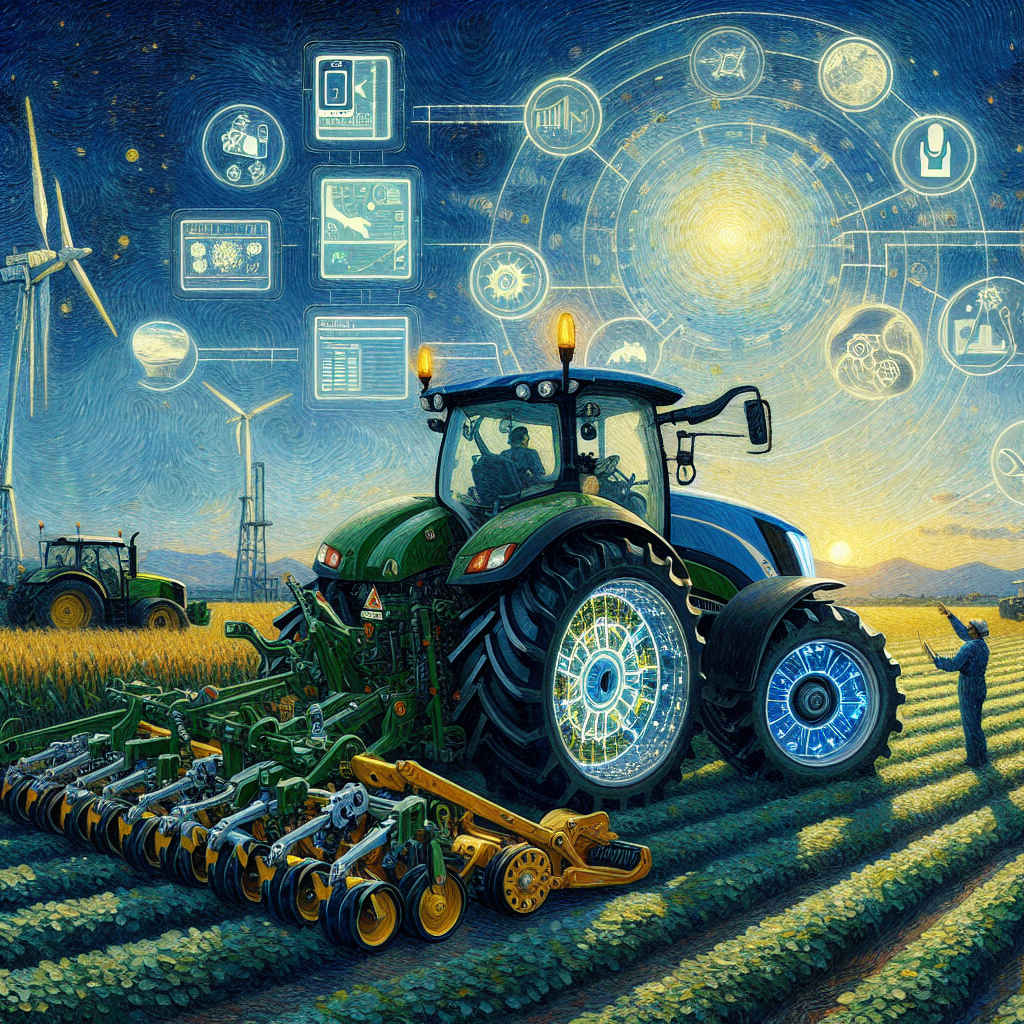
How Can an AI Enhance My Understanding Of Repairs?
What Ethical Concerns Arise When Using AI for Technical Tasks?
In a world where artificial intelligence steps into roles traditionally held by skilled hands, we’re left pondering: what does this mean for our trades, our values, and our humanity? Picture a farmer, standing at the wheel of a tractor, feeling the vibration of the engine beneath them. This connection is more than mechanical; it’s a bond forged through years of toil, weather patterns, and a cycle of seasons that speaks to the heart. When we replace that tactile experience with AI, we risk losing not just a job, but a deep-rooted relationship with our craft.
Let’s get real—AI brings efficiency and precision to the table. Yet, in the glow of innovation, ethical cracks begin to show. When technicians develop algorithms to manage everything from tractor adjustments to crop yield predictions, we must ask: who’s making the decisions? Algorithms, being products of their data, carry biases that can inadvertently lead to outcomes not supporting the very farmers they aim to help. Imagine implementing a new system that suggests turning your fields into monocultures for maximum yield—great for profit, perhaps, but detrimental to soil health and biodiversity. The consequences extend far beyond a simple decision; they resonate through communities, impacting livelihoods and local economies.
It’s more than numbers and outputs; it’s about the people behind the processes. Take, for instance, a small-town mechanic who grows up in the repair shop, learning the ins and outs of every tractor clutch and electrical circuit. The pride in crafting solutions personally tailored for a customer’s needs nurtures loyalty and trust. What happens when a software update overrides his expertise? There’s a palpable loss, an unsettling disconnect between human intuition and machine logic.
Furthermore, we need to consider the emotional toll of AI integration. The mechanics and farmers tied to their trades often find solace in the grind, the smell of fresh oil and mud beneath their boots. Replacing these rituals with automated processes can feel like robbing them of identity. The challenge lies in ensuring AI serves as a tool that enhances—not replaces—our capabilities.
Let’s leverage these technologies as companions, not competitors. By prioritizing ethical frameworks, transparency in algorithms, and preserving the human connection to our work, we can navigate this frontier together, ensuring the promise of AI becomes a partnership rather than a replacement. After all, innovation should honor our hands and our hearts.

What Ethical Concerns Arise When Using AI for Technical Tasks?
What Ethical Concerns Arise When Using AI for Technical Tasks?
- AI’s introduction into skilled trades raises questions about its impact on values and humanity.
- Farmers experience a vital connection to their work, which may be lost with AI’s mechanical reliance.
- AI enhances efficiency but may introduce biases that affect farmers negatively.
- Decisions made by algorithms could harm soil health and biodiversity, impacting local economies.
- The emotional toll of AI integration can disconnect skilled workers from their crafts and identities.
- Ensuring AI complements rather than replaces human skills is crucial for maintaining trades.
- Ethical frameworks and transparency in AI are necessary to foster a partnership between technology and humanity.

What Ethical Concerns Arise When Using AI for Technical Tasks?
How Does AI Change the Way I Approach Maintenance Challenges?
Maintenance challenges used to feel like a relentless game of whack-a-mole, where every mole that popped up was a pool of frustration, time, and often money. But now, with the help of artificial intelligence, that game has dramatically transformed. Imagine walking through a vast, dusty barn, where a trusted tractor stands with its tired paint and worn-out tires, waiting for your attentive care. AI has become that extra set of eyes, a partner that helps you not only see the problems before they escalate but understand them deeply.
Consider this: suppose the tractor starts showing signs of wear—strange noises, inconsistent performance. In the past, you would have relied on experience and guesswork, perhaps changing out parts based on hunches. But today, AI can analyze data from the tractor’s performance, predicting failures before they occur. It’s like having a seasoned mechanic whispering in your ear, telling you, “Check the oil seal; it’s showing signs of stress.” This predictive capability saves you not just time, but it also safeguards your trust in the machinery that drives your work.
Emotionally, we often attach stories to our tools. Every scratch on that tractor tells a tale of hard work, of harvests past, and dreams nurtured through sweat and grit. When maintenance challenges arise, there’s a mix of anxiety and attachment; you want to preserve that history. AI helps you honor those stories. By providing insights that extend the life of your trusted equipment, it reinforces your commitment to preserving the legacy of every job you’ve tackled.
Rationally, investing in AI-driven maintenance solutions isn’t just smart; it’s essential. Just like a well-oiled tractor enhances efficiency, an intelligent maintenance approach translates to significant cost savings and improved productivity. Fewer breakdowns mean more time spent doing what you love and less stress managing emergencies.
Ethically, we must consider the responsibility that comes with ownership. Utilizing AI in maintenance encourages a preventive mindset rather than reactive repairs, ensuring we respect the resources and roles we play in our communities. It’s about doing right by our equipment and by those who depend on it.
In this evolving landscape, AI becomes more than just a tool; it’s a partner in the trenches, understanding our challenges and walking alongside us as we navigate maintenance hurdles. By blending technology with our grit and determination, we can cultivate not just better machines, but a more resilient spirit for facing whatever comes our way. Embracing AI in maintenance hints at a future where we honor both our heritage and our progress, driving us to greater heights.

How Does AI Change the Way I Approach Maintenance Challenges?
How Does AI Change the Way I Approach Maintenance Challenges?
- Maintenance challenges previously felt overwhelming, akin to a game of whack-a-mole.
- Artificial intelligence now acts as a partner, helping identify potential issues before they escalate.
- AI predicts equipment failures by analyzing performance data, reducing reliance on guesswork.
- Emotionally, tools like tractors carry personal stories, and AI helps preserve their legacy through proactive maintenance.
- Investing in AI-driven solutions is essential for efficiency, cost savings, and reduced downtime.
- Utilizing AI fosters a preventive mindset, promoting ethical ownership and responsibility.
- AI transforms maintenance into a partnership, enhancing resilience and honoring both heritage and progress.

How Does AI Change the Way I Approach Maintenance Challenges?
Are AI Recommendations As Reliable As Expert Advice?
In an age where information flows faster than a tractor plowing through a field, we’re faced with a pressing question: can we really trust the recommendations generated by artificial intelligence? Just as that tractor, with its powerful engine and reliable mechanics, transforms daunting tasks into manageable feats, so too does AI promise to simplify our decision-making processes. But the real challenge arises when we compare the whirring algorithms of machines with the seasoned instincts of human experts.
On one hand, the raw efficiency of AI offers a kind of precision that can be appealing. Imagine a skilled farmer who understands the land, weather patterns, and crop cycles; their recommendations are often rooted in years of experience, an intimate understanding that no algorithm can replicate. While AI can analyze data trends and produce insightful recommendations in a blink, it sometimes lacks the nuanced intuition of a human being, that gut feeling born from trial and error.
Consider a story from my own life: I once sought advice on fixing an old tractor that just wouldn’t start. I could have turned to an online forum that claimed to analyze issues based purely on user-submitted data. Instead, I called an old friend, a mechanic whose hands were calloused from years of repair work. He didn’t need a database to identify the issue; his instincts kicked in, guiding him straight to the problem. While AI may provide lists of potential problems, it’s the human touch that can truly discern what’s wrong.
This brings us to the ethical dimension of relying solely on AI guidance. Trust is built not just on data, but on relationships. When we seek advice from a person, we tap into their journey, their failures, and their triumphs, and that fundamentally shapes the wisdom they offer. It’s the difference between receiving a grocery list of suggestions and engaging in a meaningful dialogue that respects your unique situation.
Moreover, in our increasingly digital world, where social connections can sometimes feel sparse, the importance of human interaction in decision-making cannot be overstated. When we lean on AI, we risk detaching ourselves from an essential part of being human: shared knowledge and experiences.
So, as we weave our way through this landscape of technology and expertise, it’s worth asking: Are we prepared to trust machines for the intimate and complex decisions in our lives? While AI can be a valuable tool, it’s vital to remember that there are moments when it’s the wisdom of the heart that truly counts.

Are AI Recommendations As Reliable As Expert Advice?
Are AI Recommendations As Reliable As Expert Advice?
- AI offers efficiency in decision-making but lacks the nuanced intuition of human experts.
- Human recommendations stem from years of experience, which algorithms cannot replicate.
- Personal stories demonstrate the importance of human insight over AI-generated advice.
- Trust is built on relationships and shared experiences, not solely on data.
- Engaging in meaningful dialogue is more beneficial than receiving a simple list of suggestions.
- Human interaction is crucial in decision-making, especially in a digital age.
- While AI is a valuable tool, there are instances where human wisdom is essential.

Are AI Recommendations As Reliable As Expert Advice?
What Stories Do Users Have About Their Experiences with Ai?
What Stories Do Users Have About Their Experiences with AI?
In the vast landscape of technology, artificial intelligence stands out as both a marvel and a mystery. Across the country, folks are sharing stories about how AI has touched their lives—sometimes with a gentle nudge, other times with a powerful shove. Take, for instance, the story of a farmer who’s owned the same tractor for decades. This isn’t just any tractor; it’s a machine that’s weathered storms, tilled fertile soil, and harvested crops that feed families. Yet, when this farmer introduced AI into his routine, something remarkable happened. His old tractor, equipped with smart sensors and a new AI brain, became a partner rather than just a tool. Suddenly, it wasn’t just about plowing fields. It was about precision. The farmer could predict crop yields, optimize fertilizer usage, and even monitor soil health—all from a device in his pocket. This shift transformed the way he farmed, allowing him to work smarter, not harder, while creating a more sustainable ecosystem for generations to come.
But AI doesn’t just live in the fields. It resonates within urban landscapes too. Consider a teacher who embraced AI to enhance her classroom. Amidst the chatter of young minds, she found a companion in AI that personalized learning. For students struggling to grasp complex subjects, AI served as a tutor, tailoring lessons to their individual needs. The exhaustion and frustration often felt by both students and teachers slowly began to dissipate. Instead of just being a “teacher,” she became a mentor, feeding her students’ curiosity and fostering a love for learning.
What binds these stories is a common thread: connection. Users are not just adopting AI; they are cultivating relationships with it. The ethics of this relationship—trusting a machine to assist in critical tasks—may raise eyebrows. Yet, as stories unfold, it’s clear that when used wisely, AI isn’t just an addition to our lives; it enriches them. It’s a catalyst for creativity, a partner in productivity, and a tool for better living.
As we navigate this brave new world of AI, let’s remember that while it’s a powerful ally, it’s the human experience—the heart, the sweat, and the stories—that ultimately shapes its impact. Every tractor in the field, every AI in the classroom, tells a story of hope and transformation, urging us to embrace innovation while retaining the soul of our shared humanity.

What Stories Do Users Have About Their Experiences with Ai?
What Stories Do Users Have About Their Experiences with Ai?
- AI positively impacts users’ lives, transforming experiences in both rural and urban settings.
- A farmer improved his agricultural practices by integrating AI with his old tractor, enhancing precision and efficiency.
- The use of AI allowed the farmer to predict yields, optimize fertilizers, and monitor soil health easily.
- A teacher utilized AI to personalize learning experiences, supporting students struggling with complex subjects.
- AI facilitated a shift in the teacher’s role from a traditional instructor to a mentor, fostering curiosity in her students.
- Common stories reflect a relationship between users and AI, emphasizing trust and collaboration.
- AI serves as a catalyst for creativity and productivity, enhancing the human experience while maintaining our shared humanity.

What Stories Do Users Have About Their Experiences with Ai?
Conclusion
In a world where technology and tradition often collide, the transition from a dusty shop manual to an AI-driven assistant can stir a nuanced blend of emotions. Picture this for a moment: your garage filled with the warmth of familiarity, every scratch and stain on your tools a testament to countless hours spent repairing machines. It’s a relationship steeped in history, much like the old tractor that has weathered storms and etched memories into our lives. But as we welcome AI into our workshops, a new chapter unfolds, one that can redefine our understanding of craftsmanship.
Initially, skepticism is a natural response. After all, how can a digital platform truly grasp the intricacies of hands-on work? Yet, the allure of a smart tool that can provide real-time solutions is compelling. Many have discovered that this app doesn’t just offer mechanical advice; it engages us on a deeper level, speaking our language and respecting our experiences. In moments when frustration mounts, the app provides clarity, transforming chaotic repairs into manageable tasks, demystifying complex issues that once seemed insurmountable.
This shift isn’t merely about convenience; it signals a collective journey toward progress. Embracing AI means more than augmenting our skill sets; it creates a shared community among tradespeople. We’re connecting with one another through learned insights and storytelling, fostering camaraderie akin to sitting around a fire, where tips and tricks are exchanged in the spirit of solidarity.
But there’s a profound ethical dimension to consider. As we lean into these advances, it’s crucial to ensure that the essence of our craftsmanship isn’t lost. Trusting algorithms for repairs might feel like relinquishing control; yet, when these systems serve as tools—rather than replacements—they empower us to harness technology’s strengths while maintaining our identity as makers and fixers. In this partnership, we challenge the traditions of the past and invite innovation to enhance our practices.
For many, this integration of AI represents not a threat, but a celebration of human ingenuity. We can embrace the duality of our existence: the tactile connection to tools and machines, coupled with the analytical prowess of intelligent technology. As we take this leap, the narrative shifts from one of fear to one of possibility. It’s not merely about fixing equipment; it’s about honoring the legacy of our work while stepping into a future where creativity and efficiency coexist. In this new landscape, every repair crafted and every machine restored becomes a beacon of hope—a reminder that as we grow alongside technology, we preserve the spirit that makes us human.

Conclusion
Conclusion:
- The transition from traditional tools to AI-driven assistants evokes a mix of emotions for tradespeople.
- Skepticism is a common initial response regarding AI’s understanding of hands-on work.
- The app not only offers mechanical advice but also resonates with users, enhancing their experiences.
- This shift fosters a communal spirit among tradespeople, promoting knowledge sharing and camaraderie.
- There are ethical concerns about maintaining craftsmanship while integrating AI into repair processes.
- Acknowledging AI as a tool rather than a replacement preserves the identity of makers and fixers.
- The integration of AI celebrates human ingenuity, blending tactile skills with intelligent technology for future possibilities.

Conclusion
Other Resources

Other Resources
Here is a list of other resources you can review online to learn more:
- Komatsu
- Massey-Harris
- NorTrac
- Sonalika Tractor
- Farm Collector Show Directory
- Rumely
- RK Tractors
- Agriculture Heritage Center & Museum
- Bristol
- Farmall
- IngersollRand
- David Brown
- Belarus
- Kirovets
- TwinCity
- Saukville
- Ivel Agricultural Motors
- Louisville Tractor and Truck Pull
- Woods & Copeland
Use This Prompt To Get More Resources With Your Favorite Online AI Tool: Please provide me with a list of online articles with their URLs in a bulleted list that I can read regarding The AI App That Replaced My Shop Manual

Other Resources
Glossary Terms
The AI App That Replaced My Shop Manual – Glossary Of Terms
1. AI Shop Manual: A digital replacement for paper manuals that uses artificial intelligence to present repair procedures, specs, and diagnostics dynamically.
2. Digital Twin: A virtual model of a vehicle that mirrors its real-time state for simulation, fault replication, and procedure validation.
3. Diagnostic Trouble Code (DTC): Standardized error codes generated by vehicle systems that indicate specific malfunctions or sensor failures.
4. OBD-II Interface: The standardized onboard diagnostics port and protocol used to read vehicle telematics and DTCs.
5. Telemetry: Continuous or periodic data streams from vehicle sensors used for live diagnostics, trend analysis, and remote support.
6. Firmware Update: Software patches for vehicle ECUs or the app itself that modify behavior, fix bugs, or add features.
7. Over-the-Air (OTA) Delivery: Wireless distribution of software or data updates to vehicles and the app without physical access.
8. Augmented Reality (AR) Overlay: Visual layer that superimposes instructions, part locations, and measurements on live camera views to guide technicians.
9. Computer Vision: AI techniques that interpret images or video from cameras to identify components, wear, or assembly errors.
10. Natural Language Processing (NLP): Language models that parse user queries, convert colloquial requests into procedures, and generate readable instructions.
11. Knowledge Base: Structured collection of procedures, bulletins, part data, and past repair cases the AI consults to produce guidance.
12. Contextual Search: Search that uses vehicle VIN, fault codes, and current sensor data to prioritize the most relevant documents and procedures.
13. Troubleshooting Tree: A decision flow that maps symptoms to diagnostic steps and possible causes, optimized by AI from historical repairs.
14. Predictive Maintenance: Machine-learning models that forecast component degradation and recommend service before failure occurs.
15. Root Cause Analysis: Process and algorithms used to trace a symptom back to its underlying failure mode or systemic cause.
16. Parts Cross-Reference: Database mapping OEM part numbers to aftermarket equivalents and compatible alternatives.
17. Service Bulletin: Official manufacturer advisories integrated into the app to update procedures, fixes, or inspection criteria.
18. Recall Alert: Automated notification tied to VIN data that warns technicians of open recalls affecting a vehicle.
19. Secure Authentication: Identity verification methods (passwords, SSO, MFA) that control access to the app and sensitive vehicle data.
20. Role-Based Access Control (RBAC): Permission system that grants features and data access based on technician role and certification level.
21. Audit Log: Immutable record of actions taken in the app—diagnostics accessed, procedures followed, code cleared—for compliance and review.
22. Version Control: Management of document and procedure revisions so technicians use the correct, up-to-date instructions.
23. Offline Mode: Local cached procedures and diagnostics functionality that allows work when connectivity is unavailable.
24. Edge Computing: On-device processing that runs AI inference near the vehicle to reduce latency and preserve bandwidth.
25. Sensor Fusion: Combining multiple sensor inputs (CAN data, IMU, cameras) to create a coherent vehicle state used for diagnosis.
26. Calibration Routine: Procedure and parameters required to recalibrate sensors, actuators, or alignment after repair or replacement.
27. Torque Specification: Manufacturer-prescribed fastener torque values provided contextually for reassembly steps.
28. Service Interval: Scheduled maintenance milestones derived from mileage, engine hours, or condition-based monitoring.
29. Human-in-the-loop: Workflow design that routes ambiguous or high-risk decisions to a qualified technician for review and approval.
30. Explainability: Features that present the AI’s reasoning and confidence for a recommended procedure or diagnosis so technicians can validate actions.

Glossary Of Terms
Other Questions
The AI App That Replaced My Shop Manual – Other Questions
If you wish to explore and discover more, consider looking for answers to these questions:
- How does the AI app actually work behind the scenes?
- What data sources and manuals were used to train the AI?
- How accurate are the AI’s diagnostics and repair suggestions?
- Can the app handle vintage or heavily modified equipment with no digital specs?
- Does it provide step‑by‑step instructions with diagrams, photos, or video?
- Are recommendations tailored to my exact model, year, and configuration?
- How does the AI communicate uncertainty or confidence in its advice?
- Is there a way to see the reasoning or evidence behind a recommendation?
- How does the app update when manufacturers release new technical information?
- What hardware or sensors are required for the app to provide real‑time diagnostics?
- Can the app work offline or in remote locations with limited connectivity?
- How does it integrate with existing diagnostic tools, OBD systems, or shop software?
- Can it order or recommend specific replacement parts and suppliers?
- What are the app’s known limitations and common failure modes?
- Has the app been independently tested, validated, or certified for safety?
- What legal liability exists if a repair done following the AI causes damage or injury?
- How does using the app affect equipment warranties or service agreements?
- Does reliance on the app risk degrading a mechanic’s hands‑on skills over time?
- What training or learning resources does the app provide to build user skills?
- How transparent is the app about biases in its recommendations (e.g., favoring certain parts or suppliers)?
- Who owns the data generated by my repairs and diagnostics?
- What privacy protections and security measures are in place for my data?
- Can users contribute corrections, tips, or community knowledge to the app?
- How is user‑generated content moderated or verified for accuracy?
- What is the app’s pricing model: free, subscription, pay‑per‑use, or enterprise licensing?
- Is the app open source, proprietary, or a hybrid?
- Are there different subscription tiers and what features do they include?
- Who developed the app and what are the team’s credentials or industry partnerships?
- Are there case studies or user stories demonstrating measurable benefits (time saved, fewer failures)?
- How does the app handle safety‑critical procedures and regulatory compliance?
- Can repair steps be exported, printed, or saved for offline use and records?
- Does the app support multiple languages and regional technical standards?
- What customer support and troubleshooting help does the vendor offer?
- How customizable is the app for a specific shop’s workflows and documentation standards?
- How frequently are software updates released and how disruptive are they to shop operations?

Other Questions
Haiku
The AI App That Replaced My Shop Manual – A Haiku
Old manuals now fade,
AI guides with wisdom’s light,
Crafting trust in hands.

Haiku
Poem
The AI App That Replaced My Shop Manual – A Poem
In a world where tradition meets the new,
A manual, once trusted, is now askew.
With grease-stained pages, it told stories old,
But an AI app arrived, daring and bold.
Skepticism lingered, a heart unsure,
Could a screen hold the wisdom of years before?
Yet curiosity sparked, with each tap and click,
It became a companion, smooth, and slick.
Not just a machine, but a friend in the fray,
Guiding hands young and old, lighting the way.
The hum of the tractor echoed past toil,
As AI breathed life into the soil.
Data and insight danced hand in hand,
Transforming mechanics, redefining the land.
It spoke in a language that was clear and profound,
Offering solutions where confusion was found.
Community blossomed like crops in the sun,
Tradespeople united, learning as one.
Stories exchanged ‘round a digital flame,
Trusting technology, reshaping the game.
Yet ethical whispers remind us to pause,
To steer clear of over-reliance and flaws.
For heart and intuition are the craftsman’s soul,
And wisdom, not just algorithms, makes us whole.
As we blend human grit with calculated might,
We forge a new future, both hopeful and bright.
Let every repair echo tales that we tell,
In this dance of man and machine, we thrive and excel.

Poem
Checklist
The AI App That Replaced My Shop Manual – A Checklist
Emotional Appeals
✅______ Reflect on personal stories and experiences that connect you to your tools.
✅______ Consider the satisfaction and joy of mastering repairs and enhancing self-reliance.
✅______ Acknowledge emotional transitions from traditional methods to modern innovations.
Rational Appeals
✅______ Analyze the efficiency and predictive capabilities of AI in diagnostics and repairs.
✅______ Review data-driven insights provided by AI that simplify troubleshooting.
✅______ Assess time and cost savings associated with proactive maintenance through AI.
Ethical Appeals
✅______ Contemplate the responsibility of integrating AI while preserving traditional skills.
✅______ Ensure transparency in AI algorithms to avoid biases that could affect outcomes.
✅______ Promote a culture of community learning and support as AI becomes part of the process.
Authority Appeals
✅______ Explore expert opinions on the benefits and reliability of AI in diagnostics.
✅______ Trust industry veterans who have successfully integrated AI tools into their workflows.
✅______ Seek advice from those with experience in balancing human intuition and AI insights.
Narrative Appeals
✅______ Engage with stories of others who have successfully embraced AI in their repairs.
✅______ Share personal narratives highlighting transformative experiences with AI.
✅______ Create a community dialogue around the evolution of technology in traditional trades.
Social Appeals
✅______ Connect with peers who share experiences and insights about AI technologies.
✅______ Participate in forums or groups that discuss best practices for integrating AI in repairs.
✅______ Celebrate successes together as a community, reinforcing trust and collaboration with AI.

Checklist
At ClassicTractorNews, we help tractor lovers keep up with the latest news for classic and vintage tractors.
Please share this post with your friends, family, or business associates who may like old classic or vintage tractors.