


Empowering Change: Farmers Overcoming Digital Barriers Together
By Tom Seest
At ClassicTractorNews, we help tractor lovers keep up with the latest news for classic and vintage tractors.
Please share this post with your friends, family, or business associates who may like old classic or vintage tractors.
Real Stories Of Farmers Defeating Software Restrictions
In the heart of America’s rural landscape, where fields stretch endless like a painter’s canvas, there lives a group of quiet heroes: farmers. They rise each morning, hands calloused from years of toil, ready to confront not just the elements, but increasingly complex digital landscapes. The rise of software in agriculture has brought about efficiency but also an unforeseen challenge—restrictive software that can sometimes feel more like a chain than a tool.
Consider the story of a sixth-generation farmer named Tom. His family has cultivated their land for over a century, relying on both instinct and innovation. Recently, Tom invested in an advanced tractor equipped with the latest software to optimize planting. However, shortly after hitting the field, he found himself locked out of vital functions because of arbitrary software restrictions. Frustration bubbled within him, transforming a tool meant for liberation into a barrier.
But here’s the twist: Tom, fueled by the sweat of his brow and a fierce spirit, decided to take matters into his own hands. He rallied his fellow farmers—individuals who have faced the same digital maze—and together they launched an initiative. They pooled their knowledge to crack through the barriers, exploring alternative software solutions and advocating for open-source platforms that could empower rather than limit.
Tom’s journey illustrates a key truth: community makes us stronger. When individual farmers unite, they wield power greater than any software corporation. Their collective wisdom not only defies the restrictions imposed by faceless code but champions a movement for autonomy and innovation in agriculture. This isn’t just about tractors and technology. It’s about reclaiming control over the very tools that sustain our food systems and, ultimately, our way of life.
Now, the driving force behind these stories isn’t only about defeating obstacles; it’s about inspiring future generations. When young people hear their stories—of triumph over challenges, of farmers banding together to push back against the digital tide—they will see a future where they can shape their destiny. They learn that challenges are not just hurdles, but opportunities for growth.
In this evolving landscape of farming—where technology and tradition clash—there is a powerful call to action. Change is in the air, but it takes courage, unity, and the relentless pursuit of innovation. Tom, with his trusty tractor, is not just tilling the soil; he is planting the seeds of a movement that will redefine what it means to be a farmer in the 21st century.

Real Stories Of Farmers Defeating Software Restrictions
Real Stories Of Farmers Defeating Software Restrictions
- Farmers in rural America face challenges from restrictive agricultural software.
- Tom, a sixth-generation farmer, experiences software lockouts on his new tractor.
- Frustrated, Tom unites with other farmers to advocate for open-source solutions.
- The collective effort emphasizes the strength of community among farmers.
- Farmers’ collaboration aims to reclaim control over tools vital for food systems.
- The movement inspires future generations to view challenges as growth opportunities.
- Change in farming requires courage, unity, and innovation in the face of technology.
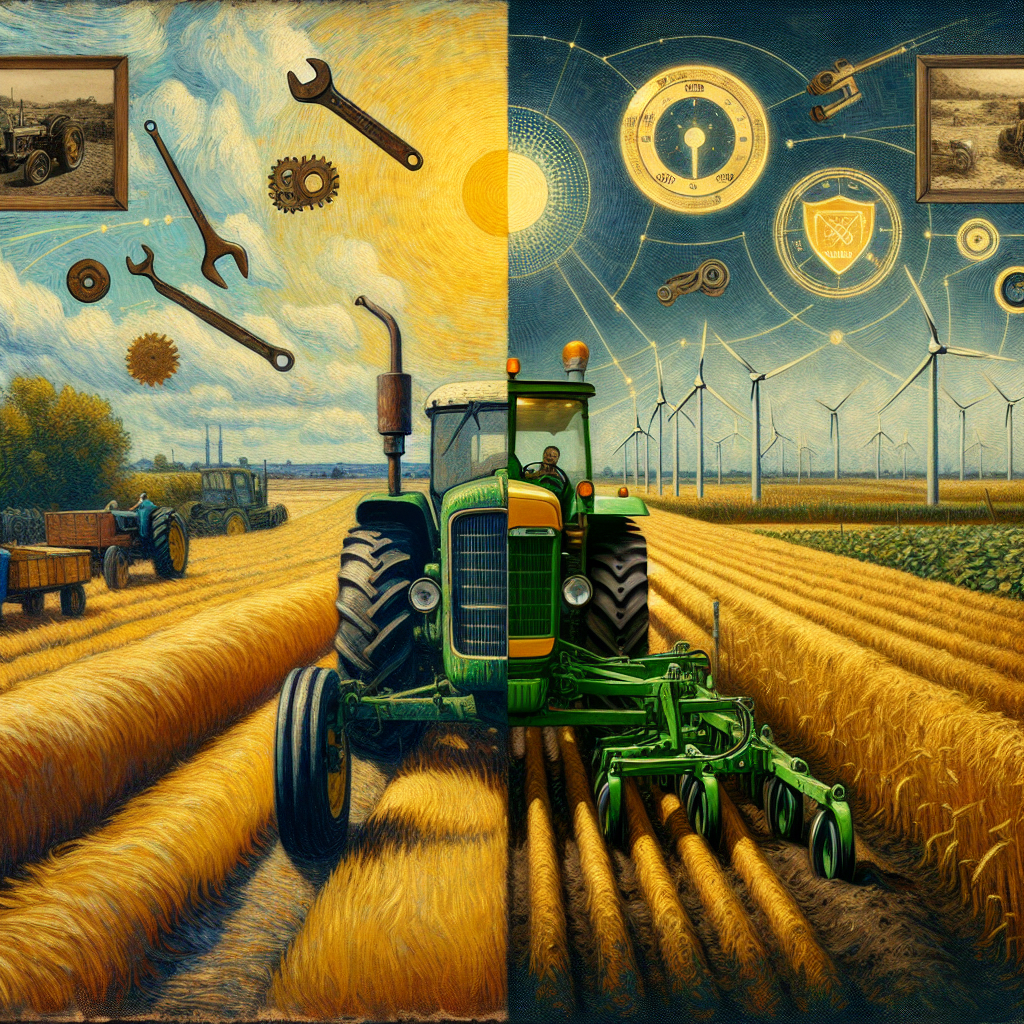
Real Stories Of Farmers Defeating Software Restrictions
Table Of Contents
- Real Stories Of Farmers Defeating Software Restrictions
- What Drives Farmers to Challenge Software Regulations?
- What Ethical Dilemmas Arise From Software Restrictions on Agriculture?
- How Do Farmers Balance Tradition and Technology In Their Practices?
- What Role Do Regulations Play In Shaping the Future Of Farming?
- Can Innovation Thrive When Software Barriers Are Lifted?
- What Sacrifices Do Farmers Make to Overcome These Digital Challenges?
- Conclusion
- Other Resources
- Glossary Of Terms
- Other Questions
- Haiku
- Poem
- Checklist
What Drives Farmers to Challenge Software Regulations?
In the heart of America’s pastures and fields, a deep-rooted connection to the land shapes the very essence of farming life. Picture a rugged farmer, the sun etched into their weathered face, standing beside a trusty tractor—an extension of their will to cultivate. For generations, farming has represented hard work, innovation, and a sacred trust in the cycles of nature. However, as technology weaves its way into this age-old industry, farmers find themselves at a crossroads, challenging software regulations that feel more like obstacles than aids.
One farmer, let’s call him John, shared a story that echoes many in the agriculture community. He invested in cutting-edge software designed to optimize yield. Initially, it seemed promising, giving him insights into every inch of his land. Yet, as he tried to navigate the ever-evolving regulations mandated by tech companies, he felt like he was navigating a minefield. Each update brought new rules that often prioritized corporate interests over the practical realities of farming. John’s struggle mirrors a profound truth: software should serve the farmer, not dictate their every move.
At the heart of this challenge lies an ethical dilemma. Who truly understands the needs of the land and the labor that goes into it? Farmers are experts in their craft, nurturing the soil and adapting to the whims of weather and market trends. They don’t just manage crops; they create sustainability and feed families. When software regulations are developed without the farmer’s voice, the systems become less about support and more about control. It’s a narrative many know too well—good intentions can lead to suffocating bureaucracy.
Moreover, farmers face an emotional battle. Their livelihoods hinge on decisions made in brightly lit boardrooms, far removed from the tilled earth they call home. Each challenge to these regulations evokes a primal response, a gut reaction fueled by passion and purpose. It’s about more than just crops; it’s about community, history, and the day-to-day sweat that builds their legacy.
Thus, as farmers confront these outdated software regulations, it transforms from a professional issue to a deeply personal crusade. The tractor becomes symbolic, representing not just machinery but resilience against a tide that threatens their way of life. By banding together, sharing stories like John’s, and advocating for regulatory change, farmers harness the power of collective voice. In this journey, they find assurance, knowing they stand as both guardians of the land and pioneers of the future. Together, they can forge a path where technology enhances their craft rather than constraining it.

What Drives Farmers to Challenge Software Regulations?
What Drives Farmers to Challenge Software Regulations?
- A deep-rooted connection to the land is central to farming life in America.
- Farmers, exemplified by John, invest in technology to optimize yields but face complex regulations.
- Software updates often prioritize corporate interests over the practical needs of farming.
- Farmers are experts in nurturing the land but feel neglected in software development discussions.
- Emotional struggles arise as regulations are determined by those disconnected from agricultural realities.
- The challenge against outdated software regulations becomes a personal crusade for farmers.
- By uniting and advocating for change, farmers aim to enhance their practices with technology.

What Drives Farmers to Challenge Software Regulations?
What Ethical Dilemmas Arise From Software Restrictions on Agriculture?
In the world of agriculture, the heart of our food system, software restrictions are becoming a growing concern. Imagine a farmer, the backbone of our sustenance, sitting behind the wheel of a high-tech tractor. This isn’t just machinery; it’s a lifeline to the land, an investment of sweat and soul. But what happens when the very tools designed to help him are shackled by software restrictions that limit access and control?
These digital chains can lead to ethical dilemmas that ripple through our communities, affecting not just the farmer, but every table laden with food. When software prevents a farmer from making the best possible decisions for his crops—whether it’s about when to plant or how to respond to a pest threat—we don’t just harm the individual; we impact the entire food supply chain. This isn’t merely a matter of convenience; it’s an existential challenge. Farmers are often left wrestling with the dichotomy of relying on technology that’s meant to empower them yet decides on their behalf.
Take, for instance, the story of a smallholder farmer named Clara. Clara invested in state-of-the-art equipment, believing that precision agriculture would transform her grain production. Yet, when her tractor was rendered useless due to a software update that she couldn’t control, her hopes collapsed. Days turned into sleepless nights as she grappled with financial pressures, her family’s future hanging in the balance. This personal story echoes the broader narrative of countless farmers feeling sidelined by the very advancements designed to aid them.
From an ethical standpoint, this presents a significant moral quandary. Should the tech companies wield such power over the livelihoods of individuals who cultivate our soil? We must ask ourselves, who holds the authority in the agricultural landscape—the farmer, or the corporation that dictates terms through restrictive software?
Further complicating this issue is the question of sustainability. As farmers are compelled to adhere to proprietary systems, they may inadvertently contribute to an agricultural model that prioritizes profit over preservation, undermining the very ecological systems that sustain us.
These dilemmas demand our attention and action. We must advocate for transparency and fair practices in agricultural technology to protect not only the hands that sow our seeds but also the integrity of our entire food system. It’s about ensuring that the labor of love from farmers like Clara isn’t diminished by restrictions beyond their control, allowing them to thrive rather than merely survive. Let’s cultivate a future where technology is a partner, not a gatekeeper, in the pursuit of food security.

What Ethical Dilemmas Arise From Software Restrictions on Agriculture?
What Ethical Dilemmas Arise From Software Restrictions on Agriculture?
- Software restrictions in agriculture are increasingly impacting farmers’ abilities and decision-making.
- These limitations can lead to ethical dilemmas affecting the entire food supply chain.
- Farmers face challenges when technology, meant to assist them, limits their control and autonomy.
- The story of a farmer named Clara illustrates the financial and emotional toll of unmanageable software constraints.
- The power dynamics between farmers and tech companies raise moral questions about authority in agriculture.
- Sustainability is compromised as proprietary systems may prioritize profit over ecological preservation.
- Advocacy for transparency and fair practices in agricultural technology is essential for protecting farmers and food security.

What Ethical Dilemmas Arise From Software Restrictions on Agriculture?
How Do Farmers Balance Tradition and Technology In Their Practices?
Farmers today stand at a crossroads where tradition meets technology, and their journey reflects a delicate balancing act. Picture a farmer—let’s call him John—sitting on his tractor, a machine that epitomizes modern progress. But beneath the hum of the engine lies a heart steeped in tradition. John inherited this land from generations past, where the rhythms of planting and harvest echo family stories. Each furrow turned with that tractor isn’t just about producing food; it’s an act of honoring a legacy.
As the world rushes, technology offers solutions that promise efficiency and increased yields. Drones scan fields for crop health, sensors monitor soil moisture, and AI optimizes planting schedules. Yet, John knows that numbers alone can’t feed the soul. In a time when convenience often trumps connection, he fiercely holds on to age-old practices—like knowing the weather by the feel of the wind or understanding his soil like an artist knows their canvas. This is where tradition keeps its grip. Technology offers speed, but tradition nurtures the roots that bind a community.
Consider the ethical dimension. Farmers like John bear the weight of feeding a growing population while preserving the land for future generations. Here, technology serves a higher purpose—when used responsibly, it can enhance sustainability. Precision agriculture minimizes waste, reducing both input costs and environmental impact. John might use a soil sensor to determine the exact amount of water needed, ensuring every drop counts. In this way, he’s not just farming; he’s safeguarding the planet for his children and their children.
Storytelling plays a remarkable role here, creating a tapestry of shared experiences that resonate deeply with the community. Imagine the local farmers’ market, where John stands beside his biodynamically grown produce, engaging with consumers eager to hear the stories behind their food. The combination of high-tech farming and heartfelt storytelling fosters trust, bridging the gap between the farm and the dinner table. Consumers are not just buying carrots; they’re investing in a commitment to ethical farming practices.
Ultimately, the balance isn’t just about incorporating the latest gadgets—it’s an invitation to cultivate a deeper relationship with the land and the people who populate it. By embracing innovations while honoring tradition, farmers like John exemplify a new narrative: one where head, heart, and gut coexist harmoniously, ensuring that the future of agriculture is as rich as the history that precedes it.

How Do Farmers Balance Tradition and Technology In Their Practices?
How Do Farmers Balance Tradition and Technology In Their Practices?
- Farmers today blend tradition with technology, exemplified by John, who operates a modern tractor rooted in familial legacy.
- Technological advancements like drones and AI promise efficiency but cannot replace the deep connection to the land.
- John values age-old practices that foster community bonds and respect for nature.
- Farmers face ethical challenges of feeding a growing population while ensuring sustainability for future generations.
- Responsible use of technology, such as precision agriculture, minimizes waste and environmental impact.
- Storytelling at local markets creates trust between consumers and producers, emphasizing ethical farming practices.
- The integration of innovation and tradition aims to deepen relationships with the land and community.

How Do Farmers Balance Tradition and Technology In Their Practices?
What Role Do Regulations Play In Shaping the Future Of Farming?
In a world more interconnected than ever, the role of regulations in farming transcends mere compliance; it evolves into a guiding compass for the agricultural journey ahead. Imagine a farmer, boots thick with mud, standing beside a gleaming tractor. That tractor isn’t just machinery; it’s a testament to innovation, but it’s also tethered to a web of regulations that ensure its operation benefits not just the farmer but the community and the planet as a whole.
These regulations often spark debate. Some farmers see them as obstacles, restricting their methods or adding layers of red tape. But think deeper: regulations exist not merely to limit, but to create a level playing field where sustainable practices can flourish. They encourage farmers to innovate while safeguarding our resources. When regulations push farmers towards environmentally friendly practices, we find ourselves nurturing land that yields healthy crops and clean water for generations to come. This is a narrative worth sharing, one where compliance becomes a shared mission rather than a burden.
Consider a small-town community where several families rely on a single water source. Without regulations, that source could easily be compromised, leading to dire consequences. A farmer adhering to guidelines may implement crop rotation or cover cropping practices that keep the water clean and the soil rich. Suddenly, a regulation transforms from a rule into a lifeline, connecting the farmer’s fate with that of the broader community.
Let’s bring this to life. Picture an older farmer, his hands weathered but wise. He recalls the days when pesticides ruled the fields like an invisible hand, turning vibrant land into barren wastelands. Today, thanks to stringent regulations, his grandchildren roam those fields, collecting veggies organically grown, unconcerned about harmful chemicals. They don’t just inherit a farm; they inherit a vision—a chance to cultivate responsibly while enjoying the bounty of the earth, enriched by minds focused on sustainability.
Regulations also serve as a mirror, reflecting our collective values. They remind us that agriculture doesn’t live in isolation; it reverberates through society. By giving farmers the tools and guidelines they need, we’re investing in a future where food is grown ethically. The tractor, wielded with purpose under the watchful eye of regulatory frameworks, becomes not just a tool of production but a vehicle for change—a symbol of hope for the environment and for future farmers who will sit down to enjoy the fruits of these efforts. When we embrace regulations, we embrace not just a better farming strategy, but a better future for everyone.

What Role Do Regulations Play In Shaping the Future Of Farming?
What Role Do Regulations Play In Shaping the Future Of Farming?
- The role of regulations in farming serves as a guiding compass for sustainable agricultural practices.
- Regulations help create a level playing field, encouraging innovation while protecting resources.
- Farmers implementing eco-friendly practices contribute to the health of land and water for future generations.
- Adherence to regulations can protect vital resources, such as community water sources.
- Regulations reflect societal values and promote ethical food production.
- Stricter regulations have led to safer farming practices, benefiting future farmers and consumers.
- Embracing regulations fosters a shared mission for a sustainable future in agriculture.

What Role Do Regulations Play In Shaping the Future Of Farming?
Can Innovation Thrive When Software Barriers Are Lifted?
Imagine a farmer, boots caked in mud, standing next to a gleaming tractor. This isn’t just a machine; it’s a portal to possibility. In today’s fast-paced tech landscape, the barriers that once locked innovation behind high walls of software limitations are crumbling, opening vast fields of opportunity for those who dare to drive forward. When we lift these barriers, we invite a new era where every idea, no matter how small, can find fertile ground to grow.
Innovation thrives on collaboration, much like a well-timed harvest. Take a moment to envision how that tractor, with its powerful engine and cutting-edge features, transforms a routine chore into a strategic venture. The same principle applies to software. When developers and consumers join forces without barriers, the potential for groundbreaking solutions emerges—ideas that could redefine industries and empower communities. It’s about harnessing the collective ingenuity of every individual, making them part of the engine that drives progress. Every person has a story, a piece of the puzzle that, when shared, adds richness and depth to our collective narrative.
Consider the story of a small-town engineer who created an app that monitors soil health, allowing farmers to optimize their crop yields. Initially, the engineer faced roadblocks—software licenses and data access limitations stifled creativity. But once the barriers were removed, collaboration flowed freely. His innovation didn’t just revolutionize farming practices; it reignited hope in a community that had been struggling for years. Just like that tractor made farming more efficient, lifted barriers can empower every individual to become an innovator, whether they’re in a bustling city or a quiet rural town.
The ethical imperative here is clear. By dismantling restrictions, we ensure that innovation isn’t reserved for a select few but is accessible to all, leveling the playing field. The strength of our society lies in its diversity and the unique perspectives each individual brings. When software barriers fall, we foster a culture of trust, collaboration, and action—an ecosystem where creativity flourishes.
True innovation doesn’t just happen in tech hubs. It sprouts from the everyday experiences and dreams of individuals ready to embrace new possibilities. So let’s clear the path, lift the barriers, and take the wheel together, driving into a future fueled by shared ambition and imagination. Just like that tractor, we’re built to move forward, and it’s time to embrace the journey.

Can Innovation Thrive When Software Barriers Are Lifted?
Can Innovation Thrive When Software Barriers Are Lifted?
- A farmer symbolizes innovation and opportunity beside a tractor, representing software advancements.
- Removing software barriers fosters collaboration and allows ideas to flourish.
- Collaboration between developers and consumers leads to groundbreaking solutions.
- A small-town engineer’s app for soil health exemplifies the impact of lifted barriers on innovation.
- Innovation should be accessible to all, ensuring a level playing field.
- Diversity and unique perspectives strengthen society and drive creativity.
- True innovation arises from everyday experiences, urging collective ambition towards the future.

Can Innovation Thrive When Software Barriers Are Lifted?
What Sacrifices Do Farmers Make to Overcome These Digital Challenges?
Farmers stand at the crossroads of tradition and technology, making sacrifices daily that many of us may never fully comprehend. Picture a farmer, tired yet resolute, with the sun dipping below the horizon. This isn’t just a job; it’s a way of life rooted in generations of sweat and toil. Yet, as digital challenges arise, the choices they face can feel monumental.
Take, for instance, the tractor—their steadfast companion in the grueling dance with the elements. But now, that trusty machine has a new role: it’s not just about plowing fields; it must integrate with software, satellite feeds, and sensors. Farmers spend countless hours learning how to operate this technology, sacrificing precious time that could be spent with family, at community events, or simply resting. The emotional cost is high; the joy of watching a child grow or enjoying a supper at sundown can be overshadowed by the glow of a screen as they decipher digital data.
Moreover, there’s an ethical weight in shifting from established methods to advanced technologies. The commitment to sustainable practices often clashes with the urgency of adopting new systems. A farmer may debate whether to invest in costly software that claims to optimize yields or stick to their tried-and-true methods that respect the land. It’s a battle between preserving the essence of farming and embracing innovation. Yet, many lean toward the latter, driven by a profound responsibility to provide food for the future.
The sense of community that farmers forge remains undeniable. In a world bustling with rapid changes, many still band together under the stars, sharing stories of triumph and hardship—discussing the best digital strategies in candid circles at local gatherings. They recognize that while technology can isolate, it can also unite. When one farmer shares a success that stemmed from a digital investment, it sparks hope and encourages others to take that leap of faith.
Yet, sacrifice doesn’t end there. The personal stories of farmers pushing limits inspire us all. Consider the one who forgoes a family vacation to attend a workshop on precision farming, realizing that every hour spent honing their skills is an hour invested in their community’s future. It’s through these sacrifices that we witness the resilience and courage of farmers, reminding us that their commitment goes far beyond just tilling fields; they are sowing seeds for generations to come. In the face of challenges, their strength becomes a beacon, urging us to appreciate the hands that feed us and the digital tools that help them thrive in an ever-evolving landscape.

What Sacrifices Do Farmers Make to Overcome These Digital Challenges?
What Sacrifices Do Farmers Make to Overcome These Digital Challenges?
- Farmers navigate the balance between tradition and technology, making significant daily sacrifices.
- Modern tractors serve dual roles, requiring integration with advanced technology like software and sensors.
- Technology demands time, impacting family life and community engagement for farmers.
- Farmers face ethical dilemmas when choosing between sustainable practices and advanced technological investments.
- Community bonds remain strong as farmers share experiences and digital strategies at local gatherings.
- Personal sacrifices, such as skipping vacations for workshops, highlight farmers’ commitment to their communities.
- The resilience of farmers emphasizes the importance of appreciating their role in food production and the aids they use.

What Sacrifices Do Farmers Make to Overcome These Digital Challenges?
Conclusion
Farmers, emblematic of resilience and tenacity, find themselves grappling with a dual challenge: honoring tradition while navigating the complexities of modern technology. In the vast, sun-drenched fields that shape their lives, these individuals are confronted with a digital age that often feels more like a barrier than a boon. But through their struggles, they reveal an undeniable truth: community is a powerful force. Take the story of Tom, a sixth-generation farmer whose spirit refuses to be shackled by restrictive software. When faced with the frustration of being locked out of critical tractor functions, he rallied fellow farmers, igniting a movement that champions autonomy over technology. This isn’t merely about tractors or software—it’s about reclaiming control over their lives and futures.
The ethical dilemmas at play are profound. When software dictates a farmer’s decisions, it raises questions about who truly understands the land and its needs. Farmers like John recount how navigating updates feels perilous, their livelihoods affected by regulations that prioritize corporate interests over personal expertise. Their emotional battles highlight the intersection of passion and duty, where the stakes are nothing less than the preservation of their way of life.
Yet, within this struggle lies a narrative of hope and empowerment. By uniting, farmers not only defy the restrictions imposed by distant tech companies but also foster an environment where innovation can flourish. They mirror our collective values, as regulations become a framework for sustainable practices, ensuring future generations inherit a land cared for with intention and integrity.
Consider the impact of shared stories—of Clara, who found her cutting-edge machinery rendered useless, or John’s struggle against the invasive regulations that limit his freedom. These narratives resonate deeply, revealing the emotional landscape of agriculture and reminding society of the pivotal roles farmers play in securing our food systems.
As farmers balance the weight of tradition with the push of technology, they also challenge us to rethink our relationship with innovation. The lifting of software barriers cultivates an ecosystem where ideas can sprout freely, resulting in genuine collaboration and shared success. The vision of tomorrow is one where farmers thrive, empowered by tools that complement their knowledge rather than constrain it.
In this unfolding story, the stakes have never been higher—farmers are not just growing crops; they are cultivating a future. Their sacrifices, their victories, and their unyielding spirit echo through the fields, urging us to support a movement that honors both the land and the digital tools that empower those who work it.

Conclusion
Conclusion:
- Farmers face the challenge of blending tradition with modern technology.
- Community plays a crucial role in empowering farmers to reclaim control over their operations.
- Tom, a sixth-generation farmer, exemplifies this movement by resisting restrictive software.
- Ethical dilemmas arise when software dictates farming practices, impacting farmers’ autonomy.
- Shared stories from farmers highlight their emotional struggles and dedication to preserving their way of life.
- Unified farmers can foster innovation and sustainable practices to benefit future generations.
- The future envisions farmers thriving with technology that supports rather than restricts their expertise.

Conclusion
Other Resources

Other Resources
Here is a list of other resources you can review online to learn more:
- Parrett
- Simplicity
- Centaur
- The AgriCultural Museum & Arts Center
- The Magicof Old Tractors
- Earth Force
- Tytan
- Mastodon
- Newark Vintage Tractor & Heritage Show
- AgTrac
- Erkunt
- General Ordnance
- Best
- Long
- Northeast Nebraska Farm & Equipment Show
- John Deere Tractor & Engine Museum
- Ferguson
- Rome
Use This Prompt To Get More Resources With Your Favorite Online AI Tool: Please provide me with a list of online articles with their URLs in a bulleted list that I can read regarding Real Stories Of Farmers Defeating Software Restrictions

Other Resources
Glossary Terms
Real Stories Of Farmers Defeating Software Restrictions – Glossary Of Terms
1. Digital Rights Management (DRM) — Technical and legal measures embedded in software or hardware to control access, copying, or modification of digital content and device functions.
2. Right to Repair — Consumer and advocacy movement arguing for legal and practical access to repair information, parts, and tools for owned products.
3. End-User License Agreement (EULA) — Contract between a vendor and a user that sets terms for software use, often addressing modification, transfer, and warranty conditions.
4. Firmware — Low-level software programmed into a device’s hardware that controls core functions and is often subject to vendor restrictions.
5. Telematics — Remote data collection and communication systems in agricultural machinery used for diagnostics, monitoring, and fleet management.
6. CAN bus — Controller Area Network protocol used in vehicle electronics to allow microcontrollers and devices to communicate without a host computer.
7. Diagnostic interface — Manufacturer-provided or standardized connector and protocol for reading device status, error codes, and configuration data.
8. Code signing — Cryptographic method vendors use to verify the authenticity and integrity of software or firmware before it runs on a device.
9. Bootloader — Initial program that loads an operating system or firmware on device startup; often targeted for modification in stories of firmware change.
10. Reverse engineering — Analytical process of examining a product’s software or hardware to understand its design and operation, often discussed in legal and ethical contexts.
11. Jailbreaking — Removing vendor-imposed restrictions on a device to enable unauthorized software or changes; used as a descriptive term in narratives rather than instruction.
12. Modchip — Hardware modification installed to alter the behavior of a device’s firmware or to bypass restrictions; referenced in historical and contemporary accounts.
13. Exploit (non-actionable) — A software or hardware weakness used to gain unintended access or behavior; discussed as a factor in incidents without procedural detail.
14. Firmware flashing — The process of replacing or updating firmware on a device; appears in accounts of legitimate updates and contested alterations.
15. Open-source firmware — Community-maintained firmware whose source code is publicly available, used as an alternative in some repair and modification stories.
16. Aftermarket part — Non-OEM hardware or software replacement components that may restore or extend functionality independently of a vendor.
17. Software escrow — A legal arrangement where source code or technical information is held by a third party to protect users if a vendor cannot support a product.
18. Class action — Collective legal action by a group of affected individuals against a vendor, commonly appearing in disputes over restrictive software practices.
19. DMCA (anti-circumvention) — Legal framework (in certain jurisdictions) that includes provisions restricting circumvention of technological protection measures; central to many legal debates.
20. Anti-circumvention provision — Statutory or contractual clauses that prohibit bypassing technological protection or access controls.
21. Fair use / fair dealing — Legal doctrines that permit limited use of copyrighted material under certain circumstances; relevant to debates over modification and copying.
22. Vendor lock-in — Situation where a customer is dependent on a single vendor’s products or services due to technical, contractual, or economic barriers.
23. Interoperability — The ability of different systems, devices, or software to work together without special adaptation, often a goal of repair and advocacy efforts.
24. Repair community — Networks of farmers, technicians, and hobbyists sharing knowledge, tools, and strategies for maintaining equipment.
25. Peer-to-peer support — Informal exchange of experience and troubleshooting among users, often central to grassroots stories of overcoming restrictions.
26. Evidence preservation — Practices for keeping logs, photographs, and records that document software behavior, useful in legal claims and public reporting.
27. Class-action settlement — Agreed resolution in group litigation that can include monetary relief, changes in vendor practices, or disclosure of technical information.
28. Public interest litigation — Legal action taken to enforce broader consumer or societal rights rather than only individual remedies.
29. Open hardware — Hardware designed with publicly available specifications to enable repair, modification, and third-party development.
30. Precedent-setting case — A legal decision from real disputes that establishes principles later used in other cases involving software restrictions and user rights. Glossary Of Terms
Other Questions
Real Stories Of Farmers Defeating Software Restrictions – Other Questions
If you wish to explore and discover more, consider looking for answers to these questions:
- What exactly are “software restrictions” on agricultural equipment?
- Which manufacturers or vendors most commonly impose these restrictions?
- Are these restrictions legal, and what does the regulatory landscape look like?
- Who owns the data generated by tractors and other farm equipment?
- How often do software updates lock out features or change functionality?
- What lawful strategies did Tom and other farmers use to regain control over their equipment?
- What open-source alternatives exist for farm machinery software?
- How do open-source solutions compare with proprietary systems in reliability and support?
- What are the upfront and ongoing costs of switching to open-source or unlocked systems?
- What training and technical skills do farmers need to manage and maintain alternative software?
- What role can cooperatives or farmer collectives play in overcoming digital barriers?
- How can farmers advocate effectively for policy or legislative change (right-to-repair, data rights)?
- Are there ongoing lawsuits, legal precedents, or regulatory actions related to these restrictions?
- What are the safety and liability risks of modifying or replacing factory software?
- How do software restrictions disproportionately affect smallholder farms versus large-scale operations?
- How do these restrictions impact the resilience and security of the food supply chain?
- What community resources, forums, or networks exist where farmers share solutions?
- How can farmers protect the privacy and security of their farm data?
- Are grants, subsidies, or public programs available to help farmers adopt interoperable or open systems?
- How can interoperability between different brands and generations of equipment be achieved?
- What ethical questions arise around corporate control of essential farm tools?
- Could manufacturers retaliate against users who alter or bypass proprietary software?
- How can consumers and supply-chain partners support farmers’ digital autonomy?
- What metrics should be used to measure the success of farmer-led initiatives to remove barriers?
- Are there certification standards or best-practice frameworks for agricultural software?
- How do regulations and norms differ internationally on equipment software and data ownership?
- What are the main technical challenges in deploying open-source solutions at scale?
- How should a farm plan a phased transition to new software without disrupting production?
- What are the potential unintended consequences of lifting software barriers?
- How does improved software autonomy affect sustainability and environmental outcomes?
- Who are the key stakeholders to contact (lawmakers, NGOs, industry groups) to push for change?
- What real-world case studies show long-term outcomes after removing software restrictions?
- How can young farmers and new entrants be trained and encouraged to adopt open, ethical tech?
- What timelines are realistic for meaningful policy or industry shifts in agricultural software?

Other Questions
Haiku
Real Stories Of Farmers Defeating Software Restrictions – A Haiku
Farmers rise each dawn,
Bound by toil, yet breaking chains—
Tech’s grip loosens, hope.

Haiku
Poem
Real Stories Of Farmers Defeating Software Restrictions – A Poem
In fields where rich stories intertwine,
Quiet heroes rise at the break of dawn,
Farmers toil with hands weathered by time,
Yet grapple with chains of software’s scorn.
Tom, a steward of generations past,
Invests in a tractor, a tool now confined,
Lost in the labyrinth of codes that can’t last,
A struggle ignites, a heart redefined.
Unyielding, he rallies a band of the brave,
Together they weave a tapestry bold,
Challenging systems that seek to enslave,
Their unity’s power, a tale to be told.
For in this embrace of tradition and tech,
Where ethics and futures entwine at the seams,
They forge a new path, refuse to be wrecked,
In every challenge, resilience redeems.
Through sleepless nights and decisions profound,
With spirits uplifted, they sow seeds of change,
From boardrooms to fields, a battle unbound,
They claim their own fate, as futures arrange.
A dance of innovation, of hearts and of minds,
Breaking barriers built on profit and fear,
Pioneers of a movement, their purpose aligns,
A legacy crafted where all voices steer.
So listen, dear world, to their stories of fight,
For farmers rise strong, with dreams in their sight,
In the heart of the soil, enlightenment’s call,
Together, empowered, they’ll conquer it all.

Poem
Checklist
Real Stories Of Farmers Defeating Software Restrictions – A Checklist
Emotional Appeals
✅______ Share your own farming challenges with community members.
✅______ Attend local meetings to discuss experiences with software restrictions.
✅______ Celebrate small victories in overcoming barriers with fellow farmers.
Rational Appeals
✅______ Research alternative software solutions that enhance farming efficiency.
✅______ Analyze the cost-benefit of investing in technology versus traditional methods.
✅______ Understand the regulatory landscape affecting agricultural innovation.
Ethical Appeals
✅______ Advocate for farmer representation in technology development discussions.
✅______ Promote open-source software platforms that prioritize farmer autonomy.
✅______ Share stories of the ethical impact of software restrictions on agriculture.
Authority Appeals
✅______ Seek insights from industry experts on best practices for overcoming digital challenges.
✅______ Collaborate with agricultural organizations advocating for fair regulations.
✅______ Utilize research data to support arguments for more accessible technology.
Narrative Appeals
✅______ Collect and share stories of farmers successfully navigating technology.
✅______ Create a community blog or video series highlighting individual farmer journeys.
✅______ Develop case studies that show the impact of collaboration on overcoming barriers.
Social Appeals
✅______ Join local farmer groups focused on technology training and education.
✅______ Leverage social media to raise awareness about the challenges in agriculture.
✅______ Host workshops to encourage community problem-solving around software issues.

Checklist
At ClassicTractorNews, we help tractor lovers keep up with the latest news for classic and vintage tractors.
Please share this post with your friends, family, or business associates who may like old classic or vintage tractors.