


Reviving Tradition: The Timeless Connection Of Man And Machine
By Tom Seest
At ClassicTractorNews, we help tractor lovers keep up with the latest news for classic and vintage tractors.
Please share this post with your friends, family, or business associates who may like old classic or vintage tractors.
No Computer Required – the Beauty Of Pre-Software Tractors
In a world where technology reigns supreme, it’s easy to overlook the beauty of simplicity—especially when it comes to pre-software tractors. These machines, with their raw power and unrefined elegance, connect us to a way of life that is deeply rooted in practicality and humanity. It’s not just about tilling the land; it’s about understanding the soil, the seasons, and the very essence of hard work.
Picture the early mornings, mist rising off the fields, the unmistakable scent of earth awakening to the touch of a well-worn tractor. These tractors don’t require complex wiring or code. Instead, they demand a relationship—a dialogue between man and machine, fueled by sweat and determination. It’s here, in the simplicity of a hand crank or a sturdy gear shift, that we find the thread of tradition weaving through our lives.
Consider the farmer who climbs onto his tractor, not because he has to, but because he loves the tactile sensation of steering the beast through the furrows. He knows each bump and jolt like an old friend, each turn feels like a dance—his body moving in rhythm with the slow, powerful rumble beneath. There’s a story in each scratch on that tractor, a testament to seasons past, to long hours and hard-fought days when the only software that mattered was the one encoded in his own experience.
Ethically, the beauty of these pre-software tractors is intertwined with sustainability. They are often more repairable and less dependent on disposable technology. When a piece breaks, it can be replaced or fixed with a simple toolbox rather than a tech support hotline. This invites a sense of responsibility, of stewardship for not just the land but the tools we use to cultivate it. Growing food becomes as much about respect for the machine as it is for the crop.
But let’s not romanticize too much; these tractors, with their roaring engines and vigorous appetites for diesel, were also built for grit. They embody a sense of community and neighborly support, where sharing tools and time fosters bonds that run deep. When the tractor rolls out to help a neighbor in need, it’s not just about the mechanics; it’s about connection.
At their heart, pre-software tractors ignite a passion that transcends mere functionality. They remind us that the journey into the fields—whether plowing, planting, or harvesting—is a sacred act, rooted in our collective humanity. In embracing these magnificent beasts, we rediscover our place in the great cycle of growth, not as mere operators, but as custodians of legacy and tradition.

No Computer Required – the Beauty Of Pre-Software Tractors
No Computer Required – the Beauty Of Pre-Software Tractors
- Pre-software tractors symbolize simplicity, connecting us to a practical and human-centered way of life.
- These machines foster a unique relationship between man and machine, emphasizing sweat and determination over technology.
- Farmers experience a tactile connection with their tractors, recognizing each bump and scratch as part of their journey.
- Pre-software tractors promote sustainability, being repairable and less reliant on disposable technology.
- They encourage stewardship for both the land and the tools used for cultivation, emphasizing respect for the machine.
- These tractors are built for grit and embody community support through shared resources and cooperation.
- Ultimately, they inspire a bond to the land, reinforcing our role as custodians of tradition in the cycle of growth.

No Computer Required – the Beauty Of Pre-Software Tractors
Table Of Contents
- No Computer Required – the Beauty Of Pre-Software Tractors
- What Stories Do Old Tractors Tell Us About Hard Work and Resilience?
- How Can Pre-Software Tractors Simplify Our Farming Practices?
- What Ethical Implications Arise From Relying on Technology In Farming?
- What Emotional Connection Do Farmers Have with Their Equipment?
- How Can We Ensure Modern Farmers Respect the Past While Innovating?
- What Role Do Pre-Software Tractors Play In Sustainable Farming?
- Conclusion
- Other Resources
- Glossary Of Terms
- Other Questions
- Haiku
- Poem
- Checklist
What Stories Do Old Tractors Tell Us About Hard Work and Resilience?
Old tractors stand as the embodiment of hard work and resilience, each rusted panel and worn-out tire telling tales of toil, triumph, and tenacity. Consider the life of a farmer who rolls out of bed before dawn, the exhaustion of the day worn like a second skin. Every morning begins with the growl of the engine, a sound that has echoed through generations, marking the rhythm of rural life. This is more than machinery; it’s a trusted companion in the struggle against nature’s capriciousness.
Picture a vintage Ford 8N, its paint fading but spirit undiminished. It’s a reminder of a time when farming was not just a livelihood, but a way of life, steeped in commitment and grit. As it lumbers through fields, leaving behind a trail of fresh-turned earth, it narrates stories of droughts weathered, crops saved, and families fed. Each dent and scratch tells of battles fought against the elements and the weight of dreams carried on its sturdy frame. It’s in these moments we find the essence of resilience—a steadfast refusal to yield.
The narrative of the tractor connects us to something deeper—a shared struggle that resonates across ages and lives. It symbolizes the age-old truth that hard work often comes with no guarantees. Just as an engine overheats or a starter falters, life often presents obstacles that tempt us to give up. Yet, like those who climb atop their tractors day after day, victories often arise from determination and unwavering faith in what we are pursuing.
Think of the stories passed down from father to child, the wisdom wrapped in the lessons learned on that old, creaky seat. It’s about understanding that failure is not the end, but part of a longer journey. A well-aged tractor reminds us that resilience is cultivated over time, bearing the scars of challenges met and overcome.
In a culture that often prioritizes instant success, these machines challenge us to embrace patience and persistence. They demand that we not only work hard but show up, day after day, resilient as ever. They teach us that hard work is not just about the physical labor put in, but also the spirit we embody in the face of hardship. Let the stories of these old tractors inspire us to reclaim that ethos of endurance in our own lives, reinforcing our connection to each other and the land that sustains us. Through their unwavering presence, they invite us to reflect on our own journeys, reminding us that every dent carries a lesson and every journey, no matter how arduous, is worth taking.

What Stories Do Old Tractors Tell Us About Hard Work and Resilience?
What Stories Do Old Tractors Tell Us About Hard Work and Resilience?
- Old tractors symbolize hard work and resilience, embodying stories of toil and tenacity.
- Farmers, rising before dawn, rely on their tractors as trusted companions in their daily struggles against nature.
- The vintage Ford 8N serves as a reminder of farming’s deep-rooted history and commitment.
- Every dent and scratch on a tractor reflects battles against the elements and dreams carried through hardships.
- The tractor’s narrative connects generations, highlighting that hard work comes with no guarantees.
- Resilience, learned over time, teaches that failure is a part of the journey, not the end.
- Old tractors inspire patience and persistence, reminding us that true endurance is essential in life’s challenges.

What Stories Do Old Tractors Tell Us About Hard Work and Resilience?
How Can Pre-Software Tractors Simplify Our Farming Practices?
Farming has always been a labor of love, deeply rooted in tradition and passed down through generations. Yet, as we face modern challenges—climate change, food security, and the need for sustainable practices—it’s time to revisit the fundamentals of how we cultivate our lands. Enter the pre-software tractor, a machine that may lack the bells and whistles of its high-tech counterparts but stands tall as a beacon of simplicity and reliability.
Imagine your grandparents’ farm, where the hum of a sturdy tractor filled the air. That rhythmic sound wasn’t just noise; it represented years of hard work and the promise of a bountiful harvest. These pre-software tractors, often regarded as the unsung heroes of agriculture, evoke a nostalgia that speaks not only to the heart but also to our heads. Simple mechanics make them accessible, allowing farmers to fix them in the field with their own hands. This autonomy fosters a deep connection between farmer and machine, building confidence in their ability to tackle whatever challenges may arise.
From an ethical standpoint, the embrace of these tractors symbolizes a return to responsible farming practices. By relying on machines without complex software, farmers reduce dependence on technology that can often malfunction at the most inconvenient times. This choice aligns with sustainable practices, promoting a farming ethos grounded in reliability and resilience. It’s about making mindful decisions that preserve the integrity of the land and respect the labor that goes into farming.
Let’s paint a picture: Picture a farmer standing in a field, the sun setting behind them as they guide a pre-software tractor through rows of crops. This moment isn’t just about tilling soil; it’s about legacy. It’s about the memories forged amid the laughter and sweat of past harvests, while passing down lessons to future generations. The simplicity of this machine enables new farmers to begin their journey with confidence, knowing that complexity isn’t required for success.
At the heart of farming lies community. The pre-software tractor fosters connection among farmers, encouraging them to share stories and tips, building camaraderie in local agricultural circles. It reminds us that while technology can facilitate progress, the foundation of farming is rooted in relationships, trust, and shared purpose.
So, as we look forward, let’s remember that sometimes the simplest solutions can not only simplify our farming practices but also enrich our lives. Embracing pre-software tractors isn’t just about efficiency; it’s about honoring our past while nurturing our future.

How Can Pre-Software Tractors Simplify Our Farming Practices?
How Can Pre-Software Tractors Simplify Our Farming Practices?
- Farming is rooted in tradition, but faces modern challenges like climate change and food security.
- Pre-software tractors symbolize simplicity and reliability in agriculture.
- These tractors create a strong connection between farmers and their machines, fostering autonomy.
- Using simple mechanics reduces dependence on complex technology that may malfunction.
- Pre-software tractors support sustainable practices and ethical farming decisions.
- They facilitate a sense of legacy, passing down agricultural knowledge through generations.
- The use of these tractors strengthens community ties among farmers, encouraging collaboration and shared experiences.

How Can Pre-Software Tractors Simplify Our Farming Practices?
What Ethical Implications Arise From Relying on Technology In Farming?
In the heart of America’s farmland, the roar of a tractor is not just a sound; it’s a symbol of hard work, heritage, and the age-old connection between people and the land. Yet, as we increasingly lean on technology to cultivate our fields, we tread a delicate line between innovation and the erosion of our fundamental values. The ease that comes from GPS-guided tractors and automated irrigation systems is undeniable, but a deeper question looms: at what cost?
Imagine a farmer who has spent decades learning the land’s rhythms, a custodian of the soil passed down through generations. Now, with the flick of a switch, that intimate knowledge could be sidelined by data-driven algorithms. Sure, technology enhances efficiency. But does it undermine the soul of farming? There’s a real risk that in our quest for productivity, we lose touch with what farming has always been about—the connection to our roots and the care we give to Mother Nature.
Relying on advances in farming technology raises ethical questions about sustainability and accountability. When tractors are automated and drones monitor crops, who is really in control? Will we trust machines to make decisions that could affect whole communities? This shift can create a rift not only between farmers and their work but also among society, as we become more distanced from the source of our food. The very act of eating becomes abstracted, stripped of its visceral connection to the land and labor it requires.
Moreover, the reliance on technology in farming risks widening the gap between the agricultural elite and smaller, family-owned farms. Corporations often dominate the tech landscape, making it harder for those who lack the resources to harness these tools. This isn’t just an economic issue; it threatens the social fabric that binds rural communities together. By prioritizing efficiency over access, we run the risk of leaving our neighbors behind, creating an unseen divide that grows wider with each technological leap.
In this balancing act between progress and tradition, we must ask ourselves what kind of legacy we want to leave. The tractor, while a symbol of modern farming, should not replace the deeper understanding of our land. It’s time to advocate for a future where technology supports farmers without disconnecting us from the essence of farming. Only then can we cultivate not just crops, but also a thriving, interconnected community.

What Ethical Implications Arise From Relying on Technology In Farming?
What Ethical Implications Arise From Relying on Technology In Farming?
- The roar of tractors symbolizes hard work, heritage, and the connection between people and land.
- Advancements in farming technology raise questions about the erosion of fundamental farming values.
- Efficiency gained from technology may undermine the intimate knowledge farmers have of their land.
- Automation in farming creates ethical concerns regarding control and decision-making impacts on communities.
- Reliance on technology risks widening the gap between agricultural elites and small family-owned farms.
- Economic issues stemming from technological advances threaten the social fabric of rural communities.
- A future approach should balance technology with the essence of farming to strengthen community connections.

What Ethical Implications Arise From Relying on Technology In Farming?
What Emotional Connection Do Farmers Have with Their Equipment?
Farmers share a profound emotional connection with their equipment, particularly their tractors. These machines are not just tools; they are trusted companions on the journey of cultivation. Picture a farmer, rising before dawn, the first light casting a golden hue over endless fields. The tractor stands ready, a steadfast partner in the daily rhythm of life. For many, it symbolizes hard work, perseverance, and an intricate relationship with the land.
This equipment embodies stories of triumph and trials. Each scratch and dent tells a tale; the weathered paint reflects years of loyalty. Behind every plow, there’s a story of a bountiful harvest or a season of struggle, but also of lessons learned. Farmers recall the first time they climbed into the cab, the same way they remember their first love. They feel the vibration of the engine beneath them, a hum that resonates in their bones, providing not just a means to an end, but a sense of purpose.
Rationally, this connection extends beyond affection. A well-maintained tractor represents a significant investment, a pivotal factor in a farm’s productivity. Farmers understand the intricate mechanics and technology of their equipment, forging a bond rooted in knowledge. This relationship is one of respect; they recognize that without caring for their machinery, the land cannot thrive. An old tractor may be less efficient, and yet, that aging steel is infused with memories—of long days, shared laughter, and even tears after unexpected challenges.
Ethically, there’s a shared understanding among farmers about the responsibility they hold, not just to their families and communities, but also to the earth itself. Their equipment is an extension of their commitment to sustainability, managing resources wisely as stewards of the land. This dedication fosters trust—not only within themselves but also within the broader agricultural community.
Moreover, the social aspects of farming reveal the importance of connection through equipment. Neighbors gather to lend a hand, often swapping tractors for specific tasks, fostering camaraderie and mutual support. The tractor serves as a bridge between generations; stories are passed down, techniques shared. A father teaching his child to drive the tractor teaches more than just mechanics; it’s about pride, legacy, and continuity.
Ultimately, the emotional connection farmers have with their tractors is a vivid tapestry woven from experience, responsibility, and love for the land. It reflects a life spent in rhythm with nature, where machinery is more than metal; it’s a partner in the journey of growth and resilience.

What Emotional Connection Do Farmers Have with Their Equipment?
What Emotional Connection Do Farmers Have with Their Equipment?
- Farmers have a deep emotional connection with their tractors, viewing them as trusted companions in cultivation.
- The tractor symbolizes hard work, perseverance, and a strong relationship with the land.
- Each dent and scratch on the tractor tells a story of triumph, struggle, and lessons learned over the years.
- A well-maintained tractor is a significant investment that directly impacts farm productivity.
- Farmers’ bond with their equipment is rooted in knowledge, respect, and the recognition of its role in land care.
- There is a shared ethical responsibility among farmers towards sustainability and effective resource management.
- The tractor fosters social connections, bridging generations and facilitating community support through shared experiences.

What Emotional Connection Do Farmers Have with Their Equipment?
How Can We Ensure Modern Farmers Respect the Past While Innovating?
Farming, at its core, is a narrative woven from tradition, innovation, and the toil of those who came before us. Today’s farmers stand at a crossroads, where the hum of a powerful tractor often drowns out whispers of the past. Yet, within this blend of the old and the new lies an extraordinary opportunity for farmers to honor their heritage while steering towards a sustainable future.
Imagine a farmer, weathered hands gripping the wheel of a modern tractor. Each turn reminds him of the plow his grandfather once wielded, carving lines in the earth with grit and determination. The tractor symbolizes progress, yet it is also a connection to generations of farmers who labored under the same sun. As these farmers navigate advanced technologies—GPS-guided tractors, drone monitoring, and precision agriculture—they must not forget the lessons learned from the past. The stories of resilience, hard work, and symbiosis with the land are timeless, offering wisdom that no algorithm can replace.
To ensure that modern farmers respect their roots while innovating, we must foster an environment where tradition and technology coexist. This calls for dialogue between old-timers and new-age agriculturists, creating a two-way street of knowledge sharing. Picture community workshops where veterans share histories of crop rotation and resourcefulness, side by side with young farmers who demonstrate how data analytics can enhance yields and reduce waste. Here, personal stories resonate deeply, as the tales of struggle and success forge a bond that transcends age and experience.
Moreover, as farmers embrace innovation, ethical considerations must go hand in hand. The push for efficiency should never overshadow the responsibility we bear toward the earth and our communities. Sustainable practices, such as regenerative farming, can be a direct homage to the respect for land that our ancestors championed. In this light, modern farmers become stewards of progress, bridging gaps between past wisdom and future potential.
Trust is built in the field, where collaboration yields not only crops but also a sense of shared purpose. By cultivating strong relationships with local consumers, farmers can unite communities around their food sources. This vital connection reinforces the idea that farming is not just a business but a legacy—a continuous story worth telling and retelling.
By inviting modern farmers to cherish their roots while boldly innovating, we inspire confidence in a future that honors the past. Each tractor on the field is a symbol of this journey—driving forward while keeping an eye on where we’ve come from.

How Can We Ensure Modern Farmers Respect the Past While Innovating?
How Can We Ensure Modern Farmers Respect the Past While Innovating?
- Farming combines tradition, innovation, and the efforts of past generations.
- Modern farmers have the opportunity to honor their heritage while pursuing sustainability.
- Advanced technologies like GPS and drones are reshaping farming practices, but lessons from the past remain vital.
- Collaboration between experienced and new farmers fosters knowledge sharing and community bonding.
- Ethical considerations and sustainable practices are essential alongside efficiency in farming.
- Building strong relationships with local consumers creates unity and reinforces farming as a legacy.
- Modern farming symbolizes a journey that respects the past while striving for future advancements.

How Can We Ensure Modern Farmers Respect the Past While Innovating?
What Role Do Pre-Software Tractors Play In Sustainable Farming?
In the quiet hum of a field, a tractor—one that doesn’t rely on the flashy bells and whistles of modern software—stands as a testament to a simpler, more connected way of farming. Picture a sun-drenched morning where generations of farmers have passed down knowledge, and these pre-software tractors become not just machines, but extensions of their very soul. They symbolize a bond to the land, offering a direct connection to the earth that modern technology often obscures.
These machines, built on solid mechanics rather than complex algorithms, work with the rhythm of nature. They are sturdy, dependable, and uncomplicated, reminding us that sometimes, less is more. Farmers who rely on these robust tractors often share tales of resilience; stories of struggling against the elements, and how they learned to hear the whispers of the soil. It’s in these exchanges—an elder teaching a young farmer to listen for the telltale sounds of a healthy engine or the subtle vibrations that signal a plow is at just the right depth—where the heart of sustainable farming beats strongest.
From a rational standpoint, pre-software tractors offer distinctive advantages in sustainability. Their simplicity translates into lower costs, maintenance ease, and longevity. Unlike their digital counterparts, these machines can often be repaired with basic tools, ensuring that farmers aren’t dependent on complex diagnostics. This not only fosters independence but also emphasizes a sustainable cycle. By investing in durable equipment, farmers reduce waste and their carbon footprint, proving that sometimes, the old ways still hold powerful secrets.
Ethically, there’s a profound narrative woven into the fabric of these tractors. They support family-run businesses, heightening community ties and championing local economies. Each turn of the wheel on these machines fosters a deeper understanding of stewardship—an ethical commitment to the land that feeds us.
What stands out is the sense of belonging that comes with operating a pre-software tractor. It’s not merely about agriculture; it’s about a way of life, where farmers gather, share experiences, and cultivate not just crops but camaraderie. Imagine a pulled-together harvest dinner, neighbors celebrating a hard-won bounty, united through shared labor and respect for the land.
In a world racing towards automation, these tractors serve as a grounding force, reminding us that sustainable farming is as much about nurturing relationships as it is about crop yields. They cultivate hope, sustain legacies, and reaffirm the belief that the essence of farming lies in the hands of those who understand that heart, head, and gut must all work in harmony.

What Role Do Pre-Software Tractors Play In Sustainable Farming?
What Role Do Pre-Software Tractors Play In Sustainable Farming?
- Pre-software tractors symbolize a simpler, more connected approach to farming.
- They serve as extensions of farmers’ identities, fostering a bond to the land.
- Built on solid mechanics, these tractors align with the rhythm of nature and emphasize the philosophy of “less is more.”.
- They offer sustainability benefits such as lower costs, easier maintenance, and longevity.
- These tractors promote community ties by supporting family-run businesses and local economies.
- Operating these machines cultivates camaraderie among farmers and encourages shared experiences.
- In a rapidly automating world, they reinforce the importance of relationships in sustainable farming.

What Role Do Pre-Software Tractors Play In Sustainable Farming?
Conclusion
In today’s world driven by rapid technology, we often overlook the simplicity and beauty of pre-software tractors. These machines encapsulate a profound connection between man and machine, evoking nostalgia for a time when farming was rooted in hard work and intimate knowledge of the land. They symbolize not just a means of cultivation but a dialogue between farmers and their tools, a relationship built on sweat, skill, and time-honored tradition.
As you stand next to an old tractor, you feel its spirit—the dents and scratches are stories of resilience, of seasons filled with backbreaking labor and triumph against nature’s whims. Each roar of the engine carries echoes of early mornings and long days, where farmers forged bonds not only with their equipment but also with their community. These tractors demand respect; they teach reliance on one’s own hands, nurturing not just crops but a sense of stewardship towards the land.
Moreover, pre-software tractors represent a crucial pivot towards sustainability. They foster repairability and independence, eschewing disposable technology for a model based on responsibility and enduring strength. When a part breaks, the farmer can fix it rather than relying on a convoluted digital support line. This fosters a culture of care not only for the machinery but also for the earth itself.
The essence of pre-software tractors transcends mere functionality. They remind us that farming is a sacred act imbued with history and humanity. It’s about understanding the intricate rhythms of the natural world and embracing the lessons that come from resilience and hard work.
In a landscape increasingly dominated by technological advancements, the allure of these simple machines beckons us to reflect. They invite modern farmers to uphold their legacy while innovating mindfully; to marry the wisdom of tradition with the pragmatism of contemporary challenges. Communities built around farming thrive on relationships, and these tractors serve as vessels for storytelling and sharing, knitting together generations with rich tapestries of experience.
Ultimately, in our quest for progress, we must not forget our roots. The pre-software tractor stands as a powerful symbol of connection—to our heritage, our land, and to one another. Embracing these machines is not just about harnessing productivity; it’s about honoring a way of life that champions cohesion, sustainability, and the indomitable spirit of hard work. In every ride across the fields, we rediscover our place in this timeless narrative—a vital thread in the ongoing story of agriculture.
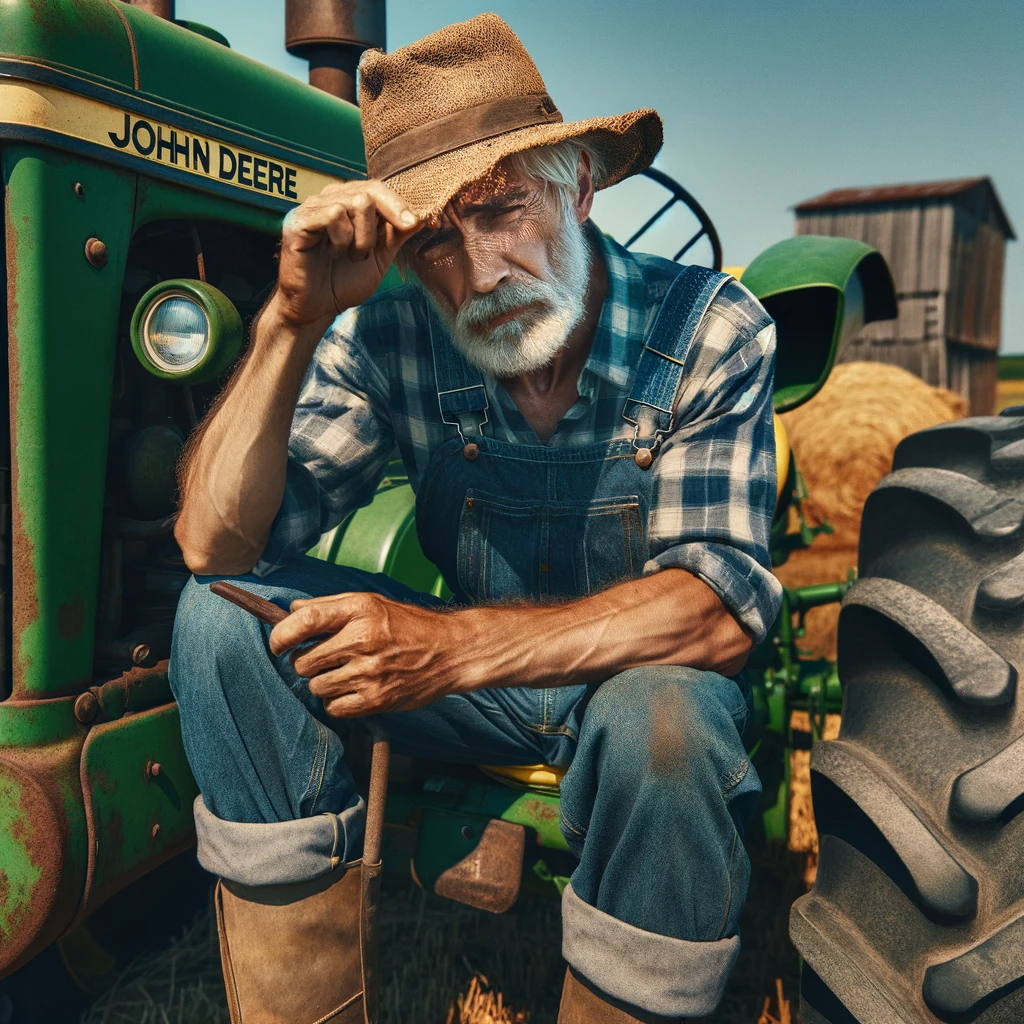
Conclusion
Conclusion:
- Pre-software tractors embody a deep connection between farmers and their tools.
- They invoke nostalgia for a time of hard work and intimate knowledge of the land.
- The machines symbolize resilience and the stories of hard labor and triumph.
- These tractors promote sustainability through repairability and independence.
- They foster a culture of care for both machinery and the earth.
- Pre-software tractors remind us of the sacred act of farming intertwined with history.
- They encourage modern farmers to balance tradition with contemporary challenges.

Conclusion
Other Resources

Other Resources
Here is a list of other resources you can review online to learn more:
- California Antique Farm Equipment Show
- Ransomes
- South Dakota Tractor Museum
- Jacobsen
- Bima
- Apollo
- Antique Engine & Tractor Association
- Schramm
- Pioneer Farm Days
- Jeep
- The National Farm Machinery Show
- Kirovets
- Zanello
- Kubota
- Lamborghini
- TwinCity
- Mastodon
- County
- Bolinder-Munktell
Use This Prompt To Get More Resources With Your Favorite Online AI Tool: Please provide me with a list of online articles with their URLs in a bulleted list that I can read regarding No Computer Required – the Beauty Of Pre-Software Tractors

Other Resources
Glossary Terms
No Computer Required – the Beauty Of Pre-Software Tractors – Glossary Of Terms
1. Pre-software tractor — A tractor designed and operated entirely with mechanical, hydraulic, and electromechanical systems, without electronic control modules or software-based automation. Glossary Of Terms
2. Mechanical governor — A centrifugal or spring-loaded device that regulates engine speed by adjusting fuel or throttle mechanically to maintain set RPM under load.
3. Carburetor — A mechanical device that mixes air and fuel in the correct ratio for combustion, adjustable by manual chokes and jets.
4. Magneto ignition — A self-contained mechanical spark generator that supplies high-voltage current to spark plugs without a battery.
5. Hand crank / starting handle — A manual starting method that rotates the engine to initiate combustion before electric starters were common.
6. Compression release — A valve or lever that temporarily reduces cylinder compression during starting to make cranking easier.
7. Sliding-mesh transmission — A gearbox where gears are manually slid into mesh to select speed and direction, common on older tractors.
8. Clutch (cone/multi-plate) — A mechanical device that engages or disengages engine power to the transmission, often simple and serviceable in the field.
9. Power Take-Off (PTO) — A mechanical shaft or pulley that transmits engine power to implements, engaged via levers or clutches rather than electronic controls.
10. Belt pulley / flat belt drive — External, mechanically driven pulleys used to power stationary equipment and implements before universal PTO standards.
11. Drawbar — A rigid mechanical hitch used for towing and pulling implements, adjustable for height and position.
12. Three-point hitch — A purely mechanical linkage system that secures implements to the tractor and transfers draft forces to the tractor’s rear axle.
13. Draft control (mechanical) — A linkage or spring-based system that senses implement draft and adjusts hitch height to maintain consistent working depth.
14. Hydraulic pump (mechanical) — A mechanically driven pump supplying hydraulic force for lifts and implements, operated by levers without electronic valves.
15. Differential / differential lock — A set of gears allowing wheel-speed difference; a mechanical lock can couple axles for traction in low-grip conditions.
16. Solid axle / live axle — A rigid axle design that transmits power to wheels and provides durability and simplicity compared with independent suspensions.
17. Adjustable wheel spacing — Mechanical hubs or spacer systems allowing wheel track adjustment for different crop rows or field conditions.
18. Wheel ballast / wheel weights — Added mass (cast weights or liquid) fitted to wheels or rims to increase traction and stability.
19. Mechanical brakes — Rod-operated or band-type braking systems that slow or stop the tractor via direct mechanical linkages.
20. Manual throttle control — A hand lever or pedal that directly controls fuel or carburetor settings to set engine speed.
21. Mechanical fuel pump — A diaphragm or plunger pump driven by the engine to supply fuel to the carburetor without electronic regulation.
22. Valve lash adjustment — Manual setting of clearance between cam and valve components to ensure proper valve timing and engine performance.
23. Mechanical timing — Camshaft and ignition timing set and adjusted by physical gears, distributors, or adjustable advance mechanisms.
24. Grease fittings (zerk) — Accessible lubrication points requiring regular manual greasing to maintain bearings and pivots.
25. Sight gauges / dipsticks — Simple mechanical indicators for oil and coolant level checks, relied on for routine maintenance.
26. Hand-operated controls — Levers, rods, and pedals that directly translate operator inputs into machine actions without intermediary electronics.
27. Field repair kit — A compact set of mechanical tools and spare parts (plugs, points, belts, wrenches) kept on the tractor for roadside fixes.
28. Simplicity of design — A principle favoring few moving parts, straightforward access, and easy repairability over electronic complexity.
29. Operator feedback — The tactile, visual, and auditory cues (vibration, engine note, smoke color) that guide operation and diagnostics in a non-digital tractor.
30. Vintage restoration — The craft of returning pre-software tractors to working condition using period-correct mechanical parts, techniques, and documentation.
Other Questions
No Computer Required – the Beauty Of Pre-Software Tractors – Other Questions
If you wish to explore and discover more, consider looking for answers to these questions:
- How do purchase and long-term ownership costs of pre-software tractors compare to modern, software-driven models?
- Which makes and models of pre-software tractors are most reliable or sought after today?
- What common maintenance tasks and repairs can a farmer perform in the field versus what requires a mechanic?
- Where can owners source replacement parts for vintage tractors, and how available are parts for different brands?
- Are there safety risks associated with older tractors lacking modern safety features, and how can those risks be mitigated?
- How do fuel efficiency and emissions of pre-software tractors compare to contemporary tractors, and can older engines be upgraded for better environmental performance?
- Can pre-software tractors be retrofitted with modern technology (GPS, telemetry, precision attachments) without losing their core appeal?
- Do pre-software tractors meet the productivity needs of larger commercial farms, or are they better suited for small-scale and hobby farming?
- What skills and training are needed to operate and maintain pre-software tractors safely and effectively?
- How do pre-software tractors affect labor requirements—do they demand more physical work or different labor patterns?
- What are the legal and regulatory considerations for using vintage tractors on public roads or in regulated agricultural operations?
- How does reliance on pre-software equipment influence farm resilience in regions with limited access to tech support or parts supply chains?
- What is the typical lifespan of a well-maintained pre-software tractor, and how does restoration extend that lifespan?
- What should buyers look for when inspecting a used vintage tractor (checklist of signs of wear, structural issues, and hidden problems)?
- How do resale values and collector markets for vintage tractors behave—are they a good investment?
- Are there community organizations, clubs, or online forums dedicated to restoration, parts swapping, and knowledge sharing?
- How can small or family farms balance honoring tradition with the economic pressures to adopt modern, high-efficiency machinery?
- What ethical frameworks guide decisions about adopting technology versus preserving traditional practices on the farm?
- How do pre-software tractors contribute to local food systems, community resilience, and food sovereignty?
- What retrofitting options exist to improve worker comfort and ergonomics without undermining the tractor’s original character?
- How should owners responsibly dispose of or recycle long-retired tractor components and hazardous fluids?
- What financing, insurance, or subsidy options exist for farmers who choose to purchase or restore vintage tractors?
- How prevalent are pre-software tractors globally, especially in developing countries, and how are they used in different agricultural contexts?
- What cultural or historical resources (museums, festivals, oral histories) preserve the legacy and stories of old tractors and their operators?
- How can communities organize tool- and tractor-sharing programs to maximize access and maintain local agricultural heritage?
- What are practical tips for beginning a restoration project (budgeting, sourcing parts, timeframe, and skill requirements)?
- How do pre-software tractors influence farm education—are there apprenticeship or mentorship models that teach their use and maintenance?
- What are the biggest challenges owners face when integrating vintage tractors into modern supply chains and compliance systems?

Other Questions
Haiku
No Computer Required – the Beauty Of Pre-Software Tractors – A Haiku
Old iron roars to life,
Hands in the soil, stories grow—
Tradition’s heartbeat.

Haiku
Poem
No Computer Required – the Beauty Of Pre-Software Tractors – A Poem
In fields where silence breathes, nostalgia stirs,
Old tractors rumble, echoing life’s soft purrs.
No screens, no wires, just a bond so pure,
Between man and machine, a love that endures.
With hand-cranked mornings and earth beneath,
They speak of resilience, of sweat, and belief.
A farmers heart dances through furrows and ditches,
Crafting stories of triumph, hope, and glitches.
Each rusted panel whispers tales of old,
Of family and labor, of harvests untold.
In creaks and in gears, tradition takes form,
A moral compass guiding through the storm.
Beneath sunlit skies, they nurture the ground,
A call to community, where connections are found.
The joy of repair, lessons passed on,
Crafted by hands, their legacy drawn.
With grit and with grace, they nurture the earth,
A promise of ethics—each moment a birth.
Embracing the past while crafting anew,
For in every journey, the heart’s echo grew.
The tractors remind us, in tough times ahead,
Of stewardship, patience, the paths we are led.
So let us unite, hand in hand, side by side,
In the rhythm of growth, let our spirits abide.

Poem
Checklist
No Computer Required – the Beauty Of Pre-Software Tractors – A Checklist
Checklist for Embracing Pre-Software Tractors
✅______ Reflect on your own experiences with farming or machinery. What stories do your tools carry?
✅______ Consider the emotional connection to the land and the machinery you use; how do they shape your identity as a farmer?
Rational Appeals
✅______ Evaluate the simplicity and ease of maintenance of pre-software tractors. Have you assessed their cost-effectiveness?
✅______ Investigate how the absence of complex technology can lead to increased reliability and longevity for farming equipment.
Ethical Appeals
✅______ Assess the sustainability implications of using pre-software tractors. Are they more environmentally friendly compared to modern counterparts?
✅______ Reflect on the responsibility farmers have to the community and the environment. How do your equipment choices impact this?
Authority Appeals
✅______ Seek wisdom from experienced farmers who have worked with pre-software tractors. What advice do they offer for maintaining a connection to traditional farming?
✅______ Understand the historical significance of these tractors in agricultural practices. How have they shaped modern farming techniques?
Narrative Appeals
✅______ Share your stories or those of others about the enduring legacy of farming with pre-software tractors. What moments stand out?
✅______ Create a visual or written narrative that captures the journey and relationship between farmers and their machines.
Social Appeals
✅______ Foster community connections by hosting workshops or discussions about traditional farming methods and the role of pre-software tractors.
✅______ Encourage the sharing of experiences and knowledge among local farmers to build camaraderie and support networks centered around these machines.

Checklist
At ClassicTractorNews, we help tractor lovers keep up with the latest news for classic and vintage tractors.
Please share this post with your friends, family, or business associates who may like old classic or vintage tractors.