


Reviving Tradition: The Power Of Vintage Tractors In Community Building
By Tom Seest
At ClassicTractorNews, we help tractor lovers keep up with the latest news for classic and vintage tractors.
Please share this post with your friends, family, or business associates who may like old classic or vintage tractors.
Is Relying on Vintage Tractors a Bold Way to Build Community
In a world that races forward at breakneck speed, there’s something incredibly grounding about the sturdy, dependable hum of a vintage tractor. These machines aren’t just tools; they’re symbols of resilience and shared history. As we populate our lives with sleek devices that promise connection, we sometimes overlook the power of authentic community — a power that is often embodied in these venerable workhorses.
When folks gather around a vintage tractor at a local event, there’s an unspoken acknowledgment that goes beyond the machinery. It’s like a portal to simpler times, an invitation to reminisce about the labor, the sweat, and the triumphs of days gone by. Memories resurface as people exchange stories about their grandparents plowing fields or the first time they drove a tractor themselves. This nostalgia taps into the emotional core of a community, forging connections that stem from shared experiences and values, reminding us that our roots anchor us, even when the world spins wildly.
But let’s not ignore the head — the rational side of our being. Vintage tractors stand as a testament to sustainable practices and local stewardship. While shiny new machines may promise efficiency, they often come at an environmental cost. These older models have endured the test of time and represent a commitment to preserving agricultural heritage. Using them is not just an act of reverence; it’s an ethical stance that champions craftsmanship over convenience, quality over quantity. By relying on vintage tractors, communities harness not only the power of tradition but also the wisdom of responsible resource management.
Now, let’s connect it to the gut. Picture this: a local farmer revving up a vintage tractor during a community event, the smell of freshly turned earth wafting through the air. Children laugh and chase after the rumbling force of the machine, while parents exchange ideas about sustainable practices. You can almost feel the pulse of camaraderie — a reminder that building community isn’t about flashy ads or social media followers. It’s about real connections formed at the intersection of shared labor and enduring legacy.
So, as we consider the role of vintage tractors in modern society, let’s embrace the chance to foster that sense of belonging. Let’s inspire action, not just by reviving old machines, but by nurturing relationships steeped in history, sustainability, and collective purpose. The way forward may be bold, but it’s the kind of bold that roots deep into the soil of our communities.

Is Relying on Vintage Tractors a Bold Way to Build Community
Is Relying on Vintage Tractors a Bold Way to Build Community
- Vintage tractors symbolize resilience and shared history amidst modern technology.
- Gatherings around vintage tractors evoke nostalgia, reminding us of labor and triumphs of the past.
- Stories exchanged at these events forge deeper connections within communities.
- They represent sustainable practices and local stewardship, prioritizing preservation over convenience.
- Using vintage tractors is an ethical choice that champions craftsmanship and resource management.
- Community events featuring vintage tractors foster real connections beyond technology and social media.
- Embracing vintage tractors can inspire relationships grounded in history, sustainability, and shared purpose.

Is Relying on Vintage Tractors a Bold Way to Build Community
Table Of Contents
- Is Relying on Vintage Tractors a Bold Way to Build Community
- Is Relying On Vintage Tractors A Heartfelt Way To Connect With Others?
- How Do Vintage Tractors Enhance Our Understanding Of Sustainability?
- What Ethical Responsibilities Arise From Using Vintage Tractors Today?
- How Can Vintage Tractors Foster Collaboration Among Local Farmers?
- Are Vintage Tractors A Symbol Of Resilience In Modern Agriculture?
- How Might Vintage Tractors Inspire Innovation In Rural Economies?
- Conclusion
- Other Resources
- Glossary Of Terms
- Other Questions
- Haiku
- Poem
- Checklist
Is Relying On Vintage Tractors A Heartfelt Way To Connect With Others?
In a world where technology races ahead, leaving many folks feeling a little lost in the dust, there’s something beautifully grounding about a vintage tractor. Picture this: weathered, rusty, but forever steadfast, these machines are more than mere relics of the past. They embody stories, struggles, and triumphs—much like the people who lovingly restore and nurture them. When you see that tractor parked in a neighbor’s field, it’s an invitation to connect, to share a moment, to hear a tale that might just resonate in your own heart.
You see, relying on vintage tractors isn’t just a nostalgic hobby—it’s a heartfelt way to cultivate community. There’s an undeniable rhythm to the whir of an old engine, a sound that beckons memories of family gatherings, harvest festivals, and the smell of fresh hay. For many, it’s a bridge to the past, reminding us of simpler times when life revolved around hard work and shared experiences. Think about it: when was the last time you chatted with a stranger while admiring a beautiful old tractor? You ventured beyond small talk into a rich exchange of lives and lessons, creating connections where none existed before.
From a rational perspective, vintage tractors represent sustainability. They remind us of a time when machines were built to last, designed with care and consideration for their purpose. In an age of planned obsolescence, they stand as a testament to craftsmanship and durability. Choosing to restore and maintain these tractors fosters a mindset that values quality over quantity, connection over isolation. It’s a conscious decision to embrace an ethos that resonates with our shared humanity, urging us all to slow down and appreciate the fruits of our labor.
Ethically speaking, there’s a certain responsibility in preserving these tractors. They hold histories and memories, often passing down from generation to generation. By investing time and resources into keeping them alive, we honor the past while weaving new narratives for future generations. It’s a commitment to maintaining traditions while fostering shared values in our communities.
Vintage tractors not only symbolize hard work but also cultivate relationships, reminding us that we are all interconnected in our journeys. So, the next time you find yourself near one, take a moment. Start a conversation, share a laugh, and let that connection inspire you to forge new bonds—because in the end, it’s about the stories we share and the people we meet along the way.

Is Relying On Vintage Tractors A Heartfelt Way To Connect With Others?
Is Relying On Vintage Tractors A Heartfelt Way To Connect With Others?
- Vintage tractors represent a grounding presence in a fast-paced technological world.
- They embody stories and shared experiences, fostering community connections.
- Old engines evoke memories of family gatherings and simpler times.
- Relying on vintage tractors promotes sustainability and values craftsmanship.
- Restoration fosters a mindset prioritizing quality and human connection.
- Preserving vintage tractors honors histories and traditions for future generations.
- These machines remind us of our interconnectedness and the importance of shared stories.

Is Relying On Vintage Tractors A Heartfelt Way To Connect With Others?
How Do Vintage Tractors Enhance Our Understanding Of Sustainability?
How Do Vintage Tractors Enhance Our Understanding of Sustainability?
When you think of a vintage tractor, what comes to mind? Perhaps it’s the image of rusted metal, untouched fields, or a time when things were simpler. But peel back the layers of nostalgia, and you’ll discover a wealth of lessons that resonate with today’s sustainability efforts. Vintage tractors embody a rich history of human ingenuity—machines that were built to last, reflect a careful relationship between man and nature, and ultimately serve a purpose beyond mere utility.
Let’s start with the heart. Picture a farmer, her hands stained with soil, her sweat mingling with the elements as she maneuvers a timeless piece of machinery across the land. This is more than just farming; it’s a connection to the earth, to tradition, and to an ethic of stewardship that’s vital in our modern age. Vintage tractors symbolize resilience. Many of them, with their simple designs and rugged craftsmanship, have survived decades of changing agricultural practices because they were made with care and utility in mind. The emotional engagement here is profound—we’re talking about a legacy passed down through generations.
Now, for the head. As we face climate change and dwindling resources, the lesson here is one of durability. Vintage tractors remind us that simplicity can sometimes trump complexity. They were designed to do one thing and do it well, which evokes a rational approach to sustainability. Think about it: reducing waste, recycling parts, and promoting longevity are principles we’re starting to adopt in our technology-driven lives. By studying these old machines, we uncover insights that challenge the very notion of disposable culture and prompt us to reassess what we truly need to thrive.
Then there’s the gut feeling—the ethics that burst forth from every dented fender and faded paint job. Owning and operating a vintage tractor isn’t just about nostalgia; it’s a statement. It fosters a community of passionate individuals committed to preserving the earth through sustainable practices. It’s about sharing stories, exchanging knowledge, and building connections that transcend generations.
In embracing these vintage wonders, we embark on a journey of reflection about our consumption habits. They remind us of our role as caretakers of both our land and our heritage. So the next time you hear that deep rumble of an engine, recognize it as a call to action—a reminder that we can reclaim a healthier, more sustainable relationship with the earth by honoring the past while forging a responsible future. Let’s invest in understanding, preserving, and applying these lessons so that both people and the planet can grow together.

How Do Vintage Tractors Enhance Our Understanding Of Sustainability?
How Do Vintage Tractors Enhance Our Understanding Of Sustainability?
- Vintage tractors symbolize a rich history of human ingenuity and a careful relationship between man and nature.
- They represent resilience with their simple designs and rugged craftsmanship that have endured changing agricultural practices.
- The emotional connection to vintage tractors highlights a legacy passed down through generations.
- They promote the idea of durability and simplicity, essential principles in modern sustainability efforts.
- Studying vintage tractors challenges disposable culture and encourages reassessment of our consumption habits.
- Owning a vintage tractor fosters a community committed to sustainable practices and knowledge-sharing.
- Embracing vintage tractors inspires a reflection on our roles as caretakers of the land and heritage for a sustainable future.

How Do Vintage Tractors Enhance Our Understanding Of Sustainability?
What Ethical Responsibilities Arise From Using Vintage Tractors Today?
When you think of vintage tractors, you might picture a rusting relic standing proudly in a field, symbolizing a lost era of farming. But as we embrace these machines today, it’s crucial to reflect on the ethical responsibilities that come with ownership and usage. These tractors are more than just machines; they are pieces of our history, embodiments of hard work, craftsmanship, and community. Each scratch and dent tells a story—stories of farmers who trusted their sturdy tractors to see them through the harshest of seasons.
As modern enthusiasts, we tap into the nostalgia for simpler times while wielding the power to impact our environment and society. Sure, a vintage tractor offers a sense of connection to the past, but it also brings with it questions about sustainability and stewardship. When we restore and operate these machines, we must do so with a mindful awareness of their ecological footprint. The mechanics may be timeless, but our commitment to preserving the land and resources is a modern necessity.
Furthermore, we have an ethical duty to honor the legacy of the craftsmen who designed and built these tractors. By offering our upcycled machines a second life, we must also ensure we’re not just preserving their history but furthering their purpose. This calls for responsible maintenance practices and adherence to safety standards—not merely out of respect for our predecessors but for the local communities and farms we share the earth with.
Engaging with vintage tractors also acts as a bridge in our social fabric, connecting generations. Whether it’s a local tractor show bringing folks together or educating young minds about farming’s roots, our journey with these vehicles is imbued with a collective responsibility to share knowledge. We have a chance to inspire a new generation to value craftsmanship and honor the toil of the past.
As you stand behind the wheel of a vintage tractor, recognize that you carry the weight of history upon your shoulders—a responsibility to protect the land, to honor those who came before, and to pass down the lessons learned to those who will come after. In doing so, you cultivate not just fields, but a deeper understanding of community and purpose, planting seeds of ethical action for future farming endeavors. Embrace the call to responsibility, and your vintage tractor won’t just be a piece of machinery; it will be a testament to a legacy carried forward.

What Ethical Responsibilities Arise From Using Vintage Tractors Today?
What Ethical Responsibilities Arise From Using Vintage Tractors Today?
- Vintage tractors represent pieces of history, hard work, craftsmanship, and community.
- Ownership comes with ethical responsibilities related to sustainability and ecological impact.
- Restoration and operation of vintage tractors require mindful awareness of their environmental footprint.
- There is a duty to honor the legacy of the craftsmen who built these tractors through responsible maintenance.
- Engaging with vintage tractors fosters connections between generations and promotes the sharing of knowledge.
- Driving a vintage tractor carries the weight of history and the responsibility to protect the land and honor the past.
- Embracing responsibility transforms vintage tractors into testaments of legacy and ethical action for future farming.

What Ethical Responsibilities Arise From Using Vintage Tractors Today?
How Can Vintage Tractors Foster Collaboration Among Local Farmers?
Imagine a field at dawn, the air crisp with anticipation, where the landscape is dotted with a patchwork of vintage tractors. These machines, relics of a bygone era, serve more than just a functional purpose; they embody stories, traditions, and shared dreams. It’s this deep-rooted history that can inspire modern farmers to come together, forging bonds that transcend the boundaries of their individual farms.
When you see a vintage tractor, it’s hard not to feel a connection. These machines have weathered storms, tilled soil, and harvested crops alongside countless generations. There’s an undeniable camaraderie in their rusty charm, sparking conversations among local farmers who gather to share tips, tricks, and tales of the long days spent in the fields. Each scratch and dent tells a story—a gentle reminder that farming is not just about the harvest, but about the hearts and hands that cultivate the land. This shared appreciation can motivate farmers to collaborate more closely, pooling resources, knowledge, and even labor for the common good.
Rationally, the benefits of collaboration are clear. Sharing vintage tractors and their maintenance costs, for instance, can alleviate the financial burdens that often weigh heavily on farmers. By teaming up, farmers can access better equipment, improve productivity, and ultimately increase their profit margins. Imagine a neighborly network where those vintage machines are used not just for personal gain, but as community assets—fostering a sense of responsibility and collective stewardship over the land.
On an ethical level, collaborating around these cherished tractors nurtures sustainable practices. Vintage tractors often represent the ethos of farming before the era of industrialization. They encourage farmers to return to their roots, embracing techniques that respect the earth and promote biodiversity. When farmers unite, sharing their insights and methods, they cultivate not just crops but community.
And let’s not forget the social aspect. As farmers gather to work together, whether to restore a classic tractor or share ways to improve their harvest, they’re building a network of support. This is where trust is forged—through shared labor, mutual respect, and the simple act of helping one another. By fostering these connections, local farmers not only uplift each other but create a resilient agricultural community, facing the challenges of today’s economy with unity.
So, next time you spot a vintage tractor parked under the sun, remember it’s more than just a piece of machinery. It’s a bridge to collaboration, a catalyst for connection, and, ultimately, a pathway to a more sustainable future for all.
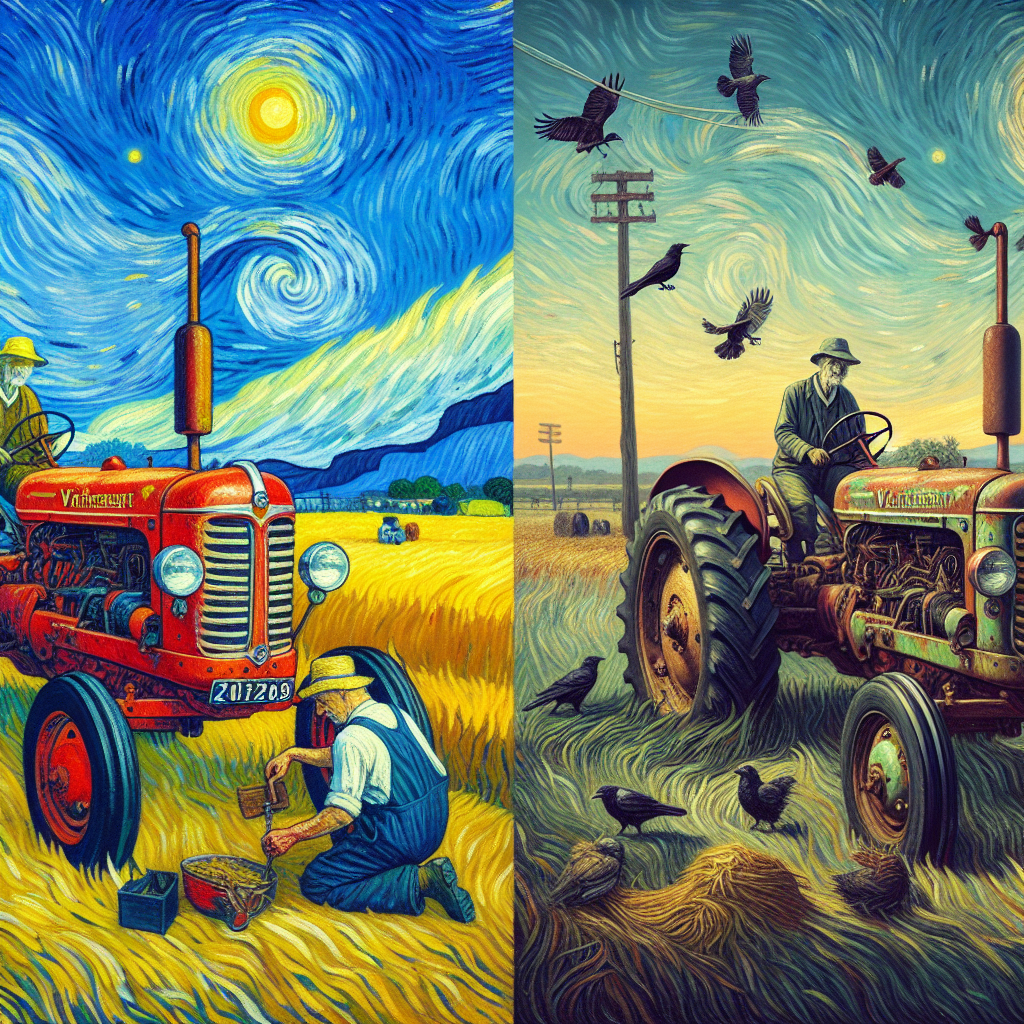
How Can Vintage Tractors Foster Collaboration Among Local Farmers?
How Can Vintage Tractors Foster Collaboration Among Local Farmers?
- The scene of vintage tractors in a dawn field symbolizes history and shared dreams among farmers.
- Vintage tractors evoke a sense of connection, fostering camaraderie and conversation among local farmers.
- Sharing resources like vintage tractors can alleviate financial burdens and improve productivity.
- Collaboration encourages farmers to use community assets for the common good rather than individual gain.
- Ethically, working together promotes sustainable farming practices and respect for the earth.
- Social interactions during collaboration build trust and support among farmers, enhancing community resilience.
- Vintage tractors represent not just machinery, but opportunities for connection and sustainability in agriculture.

How Can Vintage Tractors Foster Collaboration Among Local Farmers?
Are Vintage Tractors A Symbol Of Resilience In Modern Agriculture?
When you hear the rumble of a vintage tractor, it’s hard not to feel a jolt of nostalgia. That classic hum, paired with the sight of its aged paint and timeworn structure, speaks to a time when farming wasn’t just about commodities or technology; it was about grit, connection, and soul. These machines are more than just a means to till the earth; they are symbols of resilience and perseverance in a world that often worships the new but neglects the tried and true.
Let’s face it—modern agriculture can feel like a high-stakes game, dictated by market fluctuations and technological advances. Yet, amidst this chaos, the vintage tractor stands as a testament to days gone by, reminding us of the heart and humanity behind farming. The farmers who still cultivate their land with these sturdy beasts understand that the soul of agriculture isn’t measured in profit margins but in nurturing life and sustaining communities.
Rationally speaking, it’s clear that these robust machines, crafted to last, offer lessons in durability and reliability that transcend their mechanical abilities. There’s an ethical importance to maintaining these old tractors, a nod to sustainability and craftsmanship that holds value well beyond the surface. Vintage tractors exemplify a commitment to preserving tradition in an era that often prioritizes cloning over creativity.
There is a narrative of hard work, resilience, and deep roots—a lineage of farmers who passed down not just machinery but values of sweat equity and honesty. When you look at a vintage tractor, you’re not just seeing a vehicle; you’re seeing a bridge to the past—connecting generations together with stories of struggle, triumph, and community.
Now, imagine standing at the helm of one of these timeless tractors, feeling the vibrations of power coursing through you as you re-engage with the land. You’re not just using a tool; you are linking yourself to a rich heritage and taking part in a legacy that challenges the fast-paced, disposable culture.
To embrace vintage tractors in modern agriculture is to say “yes” to resilience, to sustainability, and to the heart of farming itself. So let’s honor these machines. Let’s remind ourselves that while the world may change, the principles of hard work and dedication remain timeless. In doing so, we forge connections that not only inspire trust but also foster a deeper appreciation for the roots of our food and the farmers who keep that spirit alive.

Are Vintage Tractors A Symbol Of Resilience In Modern Agriculture?
Are Vintage Tractors A Symbol Of Resilience In Modern Agriculture?
- Vintage tractors evoke nostalgia, symbolizing grit, connection, and soul in farming.
- They represent resilience, standing against the backdrop of modern agriculture’s high-stakes environment.
- Farmers using vintage tractors value nurturing life and sustaining communities over profit margins.
- These machines embody lessons in durability, reliability, and the importance of craftsmanship.
- They preserve tradition and ethical sustainability in a culture that often favors the new.
- Vintage tractors connect generations, passing down values of hard work and community spirit.
- Embracing these tractors in agriculture promotes resilience, sustainability, and respect for farming’s heritage.

Are Vintage Tractors A Symbol Of Resilience In Modern Agriculture?
How Might Vintage Tractors Inspire Innovation In Rural Economies?
In the heart of rural America, vintage tractors stand as monuments to a bygone era—rusty reminders of hard work and determination. Yet, these mechanical marvels offer more than just nostalgia; they may well be the keys to unlocking innovation in our rural landscapes. Picture a weathered old tractor, its paint chipped and engine sputtering, still capable of igniting a spark of creativity within a community.
When we see these tractors, we’re reminded of the sweat that went into the soil, the stories that shaped family legacies, and the relentless spirit of those who tilled the earth long before us. This emotional resonance isn’t just sentimental; it serves as a catalyst for action. What if we harnessed that raw passion for progress, taking the essence of these time-tested machines and infusing them with new technology? Think about it: converting old tractors into electric-powered community initiatives could reduce our carbon footprint while preserving the heritage that defines rural life.
Rationally speaking, innovation in agriculture is not merely a fancy trend; it’s a necessity. Farmers are constantly grappling with challenges like diminishing resources and unpredictable climates. By marrying the old with the new, we can create sustainable methods that respect the land and boost local economies. Imagine retrofitting vintage tractors to run on renewable energy, reducing costs for farmers and reinvesting savings into their communities.
On an ethical level, we owe it to future generations to embrace the lessons of the past while forging ahead into uncharted territories. The humble tractor isn’t just a machine; it symbolizes resilience, adaptability, and unity. When we share these stories of innovation, we connect as a community, igniting the very spirit that has historically drawn us together.
Moreover, let’s consider the authority of experience. Those who’ve spent countless hours in the fields have wisdom that transcends textbooks. Engaging local artisans and engineers who understand these machines can breathe new life into our rural economies, showcasing the ingenuity already present within our communities.
Ultimately, vintage tractors are more than relics—they’re blueprints for an enduring future. When we choose to see them as vessels of potential rather than remnants of the past, we equip ourselves to inspire and enact real change in rural economies. It isn’t just about maintaining a legacy; it’s about innovating for generations to come. Let’s roll up our sleeves and get to work. The engine of opportunity is already running.

How Might Vintage Tractors Inspire Innovation In Rural Economies?
How Might Vintage Tractors Inspire Innovation In Rural Economies?
- Vintage tractors serve as monuments to a bygone era, representing hard work and determination in rural America.
- These machines can inspire innovation by blending the essence of tradition with modern technology.
- Transforming old tractors into electric-powered initiatives can lower carbon footprints and preserve rural heritage.
- Innovation in agriculture is vital to address challenges like resource depletion and climate unpredictability.
- Retrofitting tractors to utilize renewable energy can reduce costs and benefit local economies.
- Embracing history and forward-thinking can strengthen community bonds and empower future generations.
- Engaging local artisans and engineers can showcase community ingenuity and revitalize rural economies.

How Might Vintage Tractors Inspire Innovation In Rural Economies?
Conclusion
As we wrap up our exploration of the enduring allure of vintage tractors, it’s important to recognize that these machines do far more than just till the soil. They serve as poignant connections to our past and catalysts for community building in a fast-paced world that often feels impersonal. It’s not just about nostalgia; it’s about forging relationships grounded in shared history, hard work, and sustainability. Picture a gathering of neighbors around a vintage tractor at a local event. You’ll hear laughter, storytelling, and an exchange of experiences that bind people together. This isn’t merely warm sentiment; it’s the heartbeat of a community reminding us that we are all part of a larger narrative.
On a rational level, vintage tractors also symbolize a commitment to sustainability and ethical stewardship. Unlike their sleek modern counterparts, these machines were built to last—a testament to craftsmanship that respects the earth. By choosing to revive and maintain them, we honor the legacy of those who came before us while promoting practices that prioritize quality over convenience. These tractors embody a culture of resilience that resonates deeply as we face contemporary challenges like climate change and resource depletion.
There’s a gut connection as well; when we see a vintage tractor rumble to life, we can’t help but feel a sense of camaraderie. It sparks memories of family farms, summer fairs, and the hard-earned rewards of sweat and toil. The sight and sound of these machines remind us that community isn’t built on digital likes or fleeting trends; it’s rooted in honest labor and collective effort. It’s about the stories we exchange, reminding us that the bonds we form around those dusty wheels can lead to meaningful collaborations and relentless support among local farmers.
In essence, embracing vintage tractors means embracing a movement toward a more sustainable future, where we honor the lessons of the past while innovating for generations to come. So, as you step away from this discussion, consider how these robust old machines inspire connection, collaboration, and ethical responsibility. They are not relics of a bygone era but vehicles loaded with potential. Let’s carry that potential forward, cultivating deeper relationships and stronger communities. As we do so, we don’t just drive forward in our tractors; we drive together—toward a future that pays homage to our roots while breaking new ground in innovation and sustainability. Now, that’s a journey worth taking.

Conclusion
Conclusion:
- Vintage tractors connect us to our past and foster community bonds in an impersonal world.
- They facilitate gatherings centered around shared history, hard work, and sustainability.
- These machines represent a commitment to ethical stewardship and quality craftsmanship.
- Reviving vintage tractors promotes resilience in the face of climate change and resource depletion.
- The sight and sound of vintage tractors evoke memories of community, labor, and collaboration.
- Embracing vintage tractors supports a sustainable future while respecting past lessons.
- Driving vintage tractors symbolizes a collective journey towards innovation and stronger communities.

Conclusion
Other Resources

Other Resources
Here is a list of other resources you can review online to learn more:
- Marshall
- Ventrac
- Rhino
- Somerset Vintage & Classic Tractor Show
- Vintage Tractor Digest
- Branson
- Keck-Gonnerman
- Antique Tractor Supply
- Unitrak
- Pasquali
Use This Prompt To Get More Resources With Your Favorite Online AI Tool: Please provide me with a list of online articles with their URLs in a bulleted list that I can read regarding Is Relying on Vintage Tractors a Bold Way to Build Community

Other Resources
Glossary Terms
Is Relying on Vintage Tractors a Bold Way to Build Community – Glossary Of Terms
1. Vintage Tractors: Refers to older tractor models, typically those manufactured before the 1980s, valued for their design and historical significance.
2. Community Building: The process of creating strong relationships and networks among individuals within a specific area or group, fostering a sense of belonging.
3. Heritage: The legacy of physical artifacts and intangible attributes of a group or society, passing down traditions, values, and practices through generations.
4. Sustainability: Development that meets present needs without compromising the ability of future generations to meet their own, often emphasized in agriculture and community practices.
5. Restoration: The process of returning a vintage tractor or other historical artifact to a good or original condition, often involving repair or refurbishment.
6. Agriculture: The practice of cultivating soil, growing crops, and raising livestock for food, fiber, and other products.
7. Collaboration: Working together with community members or organizations to achieve common goals, especially in preserving agriculture heritage.
8. Networking: Creating and nurturing relationships with others who share similar interests, often beneficial in community engagement and support.
9. Cultural Identity: The sense of belonging to a group influenced by shared characteristics such as history, language, traditions, and values, often reflected in community initiatives.
10. Local Economy: Economic activities that occur within a specific community or region, often bolstered by local farming practices and businesses.
11. Preservation: The act of maintaining and protecting cultural and historical artifacts or practices for future generations, including vintage tractors.
12. Intergenerational Learning: Educational interactions between different generations, fostering knowledge sharing about farming practices and vintage machinery.
13. Restorative Practices: Approaches aimed at improving community wellbeing and relationships, often beneficial when restoring vintage tractors as a communal activity.
14. Social Engagement: Active participation in communal activities that strengthen community bonds, especially through events related to vintage tractors.
15. Themed Events: Organized gatherings centered around specific interests, such as tractor shows or agricultural fairs, promoting community involvement.
16. Rural Living: Lifestyle associated with living in the countryside, often relying on traditional methods such as using vintage tractors for farming.
17. Mechanics: The branch of engineering or technology dealing with the design, construction, and use of machines, important for vintage tractor restoration.
18. Community Workshops: Organized sessions that focus on skills training, like tractor maintenance, fostering a spirit of collaboration and learning.
19. Folk Traditions: Customs and practices of a community passed down through generations, which can include farming methods and celebrating agricultural heritage.
20. Environmental Stewardship: The responsible planning and management of resources, advocating for sustainable practices in agriculture, often enhanced by using vintage equipment.
21. Networking Events: Gatherings designed to build connections among individuals and organizations within a community, focusing on shared interests like vintage tractors.
22. Skill Sharing: The practice of exchanging knowledge and abilities between community members, particularly relevant in maintaining and using vintage tractors.
23. Agricultural Education: Programs and initiatives aimed at teaching farming practices, including the use and significance of vintage tractors, to younger generations.
24. Collective Memory: Shared pool of knowledge and information within a community, often focused on historical practices and technologies, such as vintage tractors.
25. Rural Crafts: Traditional skills and artistic practices related to rural life and agriculture, often showcased in community events involving vintage tractors.
26. Volunteerism: The practice of offering time and services to help a community, significant in maintaining community resources like vintage tractors.
27. Civic Responsibility: The duties and tasks associated with being an active participant in a community, which can include participating in agricultural and community events.
28. Grassroots Movements: Movements driven by local communities advocating for change or preservation of cultural heritage, often involving vintage farming methods.
29. Stimulating Conversations: Creating dialogues among community members about heritage, agriculture, and sustainability, particularly through the lens of vintage tractors.
30. Legacy: The long-lasting impact of a community’s practices, values, and historical significance, heavily influenced by shared experiences like farming with vintage tractors.

Glossary Of Terms
Other Questions
Is Relying on Vintage Tractors a Bold Way to Build Community – Other Questions
If you wish to explore and discover more, consider looking for answers to these questions:
- What specific community events highlight the use of vintage tractors?
- How can vintage tractors be integrated into modern farming practices?
- What are the environmental impacts of using vintage tractors compared to modern machinery?
- What resources are available for restoring vintage tractors?
- Are there any local or national organizations dedicated to vintage tractor preservation?
- What stories do individuals have about their relationships with vintage tractors?
- How do vintage tractors support local economies in rural areas?
- What technological innovations can be implemented in vintage tractors for better sustainability?
- How do vintage tractors play a role in educating younger generations about agriculture?
- What challenges do communities face in maintaining vintage tractors?
- Are there workshops or communities focused on learning about vintage tractor mechanics?
- How is the culture of vintage tractor enthusiasts represented in media or literature?

Other Questions
Haiku
Is Relying on Vintage Tractors a Bold Way to Build Community – A Haiku
Old tractors stand proud,
Echoes of strength and old soils,
Hearts and hands united.

Haiku
Poem
Is Relying on Vintage Tractors a Bold Way to Build Community – A Poem
Ode to the Vintage Tractor: A Pulse of Community
In a world where progress gallops at breakneck speed,
Stands a humble hero, grounded — a steadfast steed.
A rusted relic, with stories etched in its frame,
Each dent and scratch whispers history’s name.
Gather round, my friends, where the old engines hum,
A vintage tractor beckons, where nostalgia’s roots run.
It’s more than mere machinery, it’s a bridge to our past,
A reminder of toil, where friendships are cast.
Hear that rumble, feel the soil’s warm embrace,
A heartfelt connection, a familiar face.
Children laugh as they chase the earth’s gentle grace,
In shared labor—the heart of our place.
Rational minds may echo, with concerns of the earth,
These machines speak of wisdom, of simplicity’s worth.
Crafted to last, they teach us to slow,
In a world of disposables, they’re a steadfast flow.
An ethical call rings out through the field,
To honor their legacy, to the earth, we must yield.
For in each restoration, in each mindful repair,
Lies the promise of sustainability, the breath of fresh air.
Collaboration forms, bonds stitched tight,
Farmers unite through shared labor and light.
Pooling their knowledge, as tractors roll by,
It’s community spirit that helps us reach the sky.
Oh, vintage tractor! With your timeless design,
A symbol of resilience, a thread that aligns
Generations together — a farming’s heartbeat,
In fields we cultivate, our dreams intertwine.
Let’s embrace this bold path, with roots deep in the soil,
In the hum of the engine, let’s find our toil.
For crafting a future, with love and intent,
Is the truest legacy, of time well spent.
So next time you see one, on that rustic trail,
Remember, dear friend, let those connections not pale.
For in every old tractor, there’s a community’s art,
A legacy woven with the threads of the heart.

Poem
Checklist
Is Relying on Vintage Tractors a Bold Way to Build Community – A Checklist
Checklist for Building Community Through Vintage Tractors
Heart
_____ Reconnect with Tradition: Attend local events featuring vintage tractors to experience shared nostalgia.
_____ Share Stories: Initiate conversations with neighbors about their experiences with vintage tractors and farming.
_____ Celebrate Community Events: Participate in or organize tractor shows, harvest festivals, or restoration workshops to foster bonds with others.
_____ Honor Heritage: Reflect on the stories and struggles of those who came before you and find ways to honor them in your community.
Head
_____ Evaluate Sustainability: Research the sustainable practices associated with vintage tractors, emphasizing their longevity and durability.
_____ Advocate for Collaboration: Encourage local farmers to share resources and knowledge about maintaining vintage tractors to reduce costs and improve efficiency.
_____ Support Local Stewardship: Participate in or propose initiatives that promote responsible land use and vintage tractor preservation.
_____ Learn from the Past: Consider how old farming techniques can improve modern agricultural practices and contribute to sustainability.
Gut
_____ Engage your Senses: Attend a community event and immerse yourself in the experience of seeing, hearing, and feeling the power of vintage tractors in action.
_____ Build Relationships: Take the initiative to engage with fellow community members at these events, fostering a spirit of camaraderie.
_____ Participate in Collaborative Projects: Get involved in group efforts to restore or showcase vintage tractors, reinforcing connections through shared labor.
_____ Instill Pride: Share your experiences and lessons learned from engaging with vintage tractors, inspiring others to appreciate and preserve their community’s history.
Emotional Appeals
_____ Moments of Connection: Find opportunities to reconnect with family and friends through shared experiences related to vintage tractors.
_____ Foster Community Spirit: Identify ways to create opportunities for dialogue about the importance of agricultural heritage in your community.
Rational Appeals
_____ Promote Local Economies: Craft a plan to utilize vintage tractors as a means of enhancing local agricultural economies through collaborative efforts.
_____ Create Educational Resources: Develop workshops or materials that educate others on the advantages of vintage tractors and sustainable practices.
Ethical Appeals
_____ Preservation of History: Engage in conversations about the ethical responsibilities of maintaining vintage tractors for future generations.
_____ Encourage Responsible Usage: Advocate for mindful practices in preserving these machines that respect both the environment and the legacies they hold.
Authority Appeals
_____ Engage with Experts: Connect with local historians, mechanics, and vintage tractor enthusiasts to gain insights and guidance.
_____ Join Networks: Become part of associations or clubs that focus on preserving and celebrating vintage tractors to enhance learning and collaboration.
Narrative Appeals
_____ Share Your Journey: Document and share your experiences in restoring or working with vintage tractors to inspire others to explore their agricultural roots.
_____ Collect Collective Stories: Create a community archive or blog that gathers stories of individuals and families connected to vintage tractors and their impact on local communities.
By utilizing this checklist, you can cultivate a deeper sense of community while honoring the rich history and significance of vintage tractors in our lives.

Checklist
At ClassicTractorNews, we help tractor lovers keep up with the latest news for classic and vintage tractors.
Please share this post with your friends, family, or business associates who may like old classic or vintage tractors.