


Bridging Tradition And Technology: Farmers’ Journey With Ai Insights
By Tom Seest
At ClassicTractorNews, we help tractor lovers keep up with the latest news for classic and vintage tractors.
Please share this post with your friends, family, or business associates who may like old classic or vintage tractors.
How Farmers Are Combining AI with Hands-On Knowledge
Farmers today are experiencing a transformative shift as they combine traditional know-how with cutting-edge Artificial Intelligence. Picture this: a farmer, deep in thought, standing on a sun-drenched field, the hum of his trusty tractor in the background. It’s not just machinery; it’s an extension of his instincts, a partner in the age-old dance of cultivation. But with AI at his side, that dance evolves into a symphony of precision, data, and intuition.
Imagine a scenario where our farmer, let’s call him Joe, has spent decades nurturing the same piece of land. He knows every rise, dip, and patch of stubborn soil like the back of his hand. Yet, a recent drought has made him rethink strategies that worked for generations. Enter AI, a tool that sifts through mountains of data, predicting weather patterns and crop yields with uncanny accuracy. With these insights, Joe can make informed decisions that safeguard his livelihood and foster sustainability.
The beauty of this collaboration lies in its depth. AI does not replace Joe’s instinct; it amplifies it. When Joe receives data suggesting the optimal time to plant corn, he can trust it because he knows his field better than anyone else. This is where the heart of farming merges with the head of technology—an unbreakable bond forged through experience and innovation.
This blend of old and new is not merely about efficiency; it’s about ethics too. Sustainable agriculture is essential in ensuring we feed future generations. By using AI to minimize water waste or reduce pesticide use, farmers like Joe are taking a stand, championing the very values that connect us all. They care for the land not just for profit, but for the legacy it leaves behind—a concept that resonates deeply within us all.
The narrative doesn’t end there. There’s a community aspect to this evolution. Farmers are sharing their stories, tips, and results through social media, creating a network that feels more like a support group than a marketplace. Each post, every photo of their fields thriving with the help of technology, builds trust and inspires action within their circles.
In this journey, AI becomes more than just a machine; it’s part of a movement. It’s a call to arms for those who believe in nurturing our planet responsibly. As we step toward the future, farmers like Joe are leading the charge, reminding us that merging hands-on knowledge with AI isn’t just practical—it’s a profound path to preserving our world.

How Farmers Are Combining AI with Hands-On Knowledge
How Farmers Are Combining AI with Hands-On Knowledge
- Farmers are integrating traditional techniques with advanced Artificial Intelligence.
- AI aids farmers like Joe in analyzing data, predicting weather, and optimizing crop yields.
- This collaboration enhances, rather than replaces, a farmer’s instinct and experience.
- Sustainable agriculture practices supported by AI minimize resource waste and prioritize ethical farming.
- Farmers use social media to share insights and foster a supportive community.
- AI is viewed as part of a movement towards responsible environmental stewardship.
- The integration of AI in farming represents a commitment to preserving agricultural legacies for future generations.

How Farmers Are Combining AI with Hands-On Knowledge
Table Of Contents
- How Farmers Are Combining AI with Hands-On Knowledge
- What Inspires Farmers to Merge AI with Traditional Methods?
- How Does AI Enhance Decision-Making for Farmers Today?
- What Ethical Dilemmas Arise From Using AI In Agriculture?
- How Can Farmers Trust AI Technology to Guide Their Practices?
- In What Ways Can AI Improve the Sustainability Of Farming?
- How Do Communities Benefit From AI-Driven Agricultural Solutions?
- Conclusion
- Other Resources
- Glossary Of Terms
- Other Questions
- Haiku
- Poem
- Checklist
What Inspires Farmers to Merge AI with Traditional Methods?
In a world where fields stretch out under vast skies and the hum of tractors fills the air, there’s a quiet revolution taking place. Farmers, rooted in generations of tradition, are embracing artificial intelligence, not as a replacement, but as a partner in stewardship of their land. They’re not just driving forward technology; they’re merging it with a deep-seated respect for the crops that nourish us all.
Consider the story of a third-generation farmer named Jack. He remembers his grandfather plowing the fields by hand, a grueling but essential ritual. Today, Jack still rises before dawn, but now he pairs that iconic tractor with drones overhead and sensors buried in the soil. This isn’t just about efficiency; it’s about enhancing what’s been built over decades. Jack looks into the fields and sees the future—the potential to grow more with less, to reduce waste, and improve sustainability. Through AI, he finds not just a way to increase yield but a means to honor the past.
This blend of old and new resonates on multiple levels. Emotionally, it’s about legacy and love for the land. Rationally, it’s about numbers—fewer resources spent, smart planting decisions based on data, and the promise of resilience against climate change. Ethically, farmers recognize their responsibility not only to their families but to the environment and community at large. They’re the backbone of society, and merging AI with traditional methods shines a light on their role as caretakers of the Earth.
Socially, there’s a camaraderie among farmers. They share stories on the porch, where the wisdom of experience meets the excitement of innovation. This narrative isn’t just Jack’s; it’s collective—a movement towards a sustainable future. Farmers connect over their challenges and triumphs, inspiring each other to adopt technology as a tool that empowers rather than threatens their way of life.
One original aspect of this transformation lies in a simple yet profound realization: technology isn’t the enemy; it can be the ultimate ally. It’s like having a trusted companion in the cab of a tractor, guiding decisions and optimizing processes. By embracing AI, farmers open doors to collaboration that strengthens their resolve and enhances the beauty of traditional farming. This unique partnership redefines the agricultural landscape, making room for both heritage and innovation to thrive side by side. In this inspiring journey, farmers are not merely adapting; they are redefining what it means to be a steward of the land in modern times.
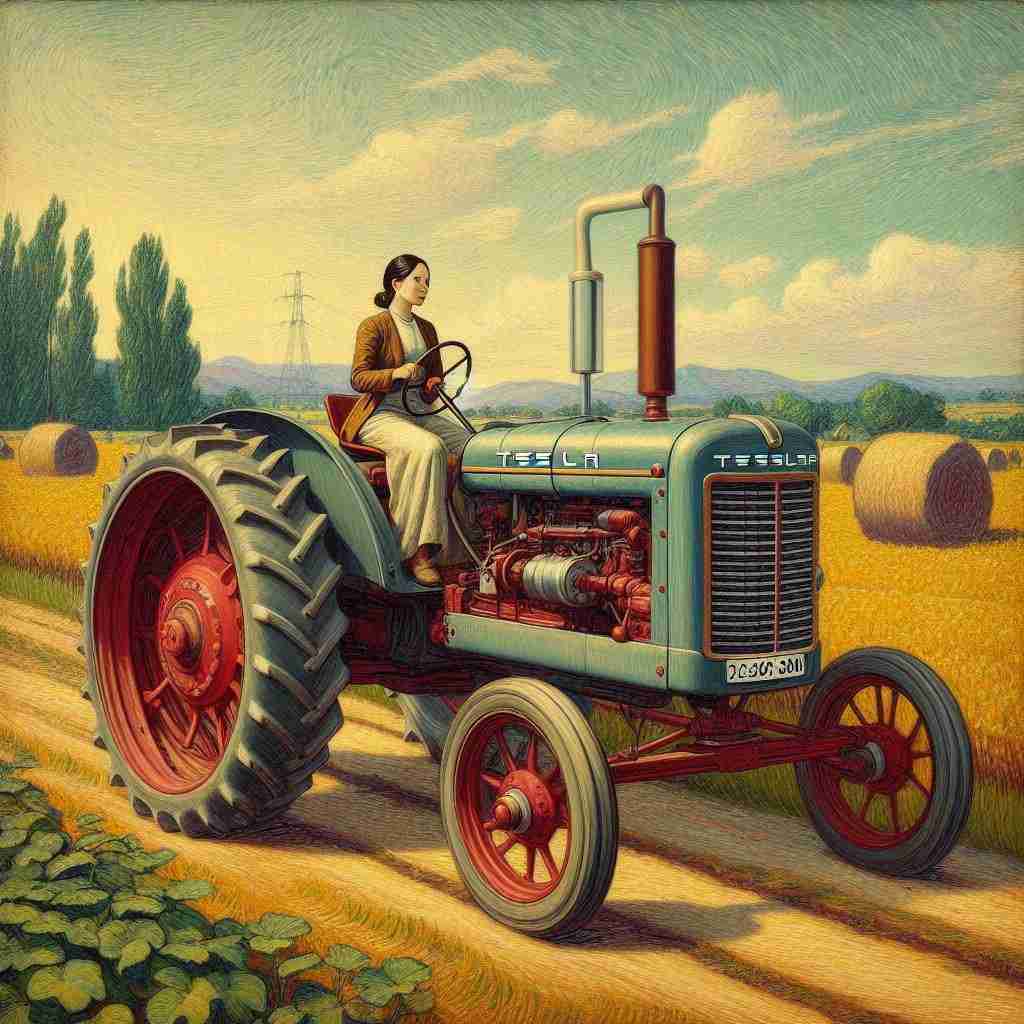
What Inspires Farmers to Merge AI with Traditional Methods?
What Inspires Farmers to Merge AI with Traditional Methods?
- Farmers are integrating artificial intelligence as a partner in land stewardship, honoring both tradition and innovation.
- A third-generation farmer, Jack, combines traditional farming with modern technology like drones and soil sensors.
- The blend of old and new allows for improved sustainability and reduced waste while increasing crop yields.
- Farmers balance emotional ties to their land with rational decisions based on data-driven practices.
- There is a strong ethical commitment among farmers to their families, communities, and the environment.
- Camaraderie among farmers fosters the sharing of experiences and the encouragement of technology adoption.
- Embracing AI redefines farming, allowing technology to become a trusted ally rather than an adversary.

What Inspires Farmers to Merge AI with Traditional Methods?
How Does AI Enhance Decision-Making for Farmers Today?
Picture a farmer, deep in the fields, the sun painting golden hues on rows of crops. This farmer, a steward of the land, has spent years developing an intuition for what works and what doesn’t. However, in today’s world, intuition alone isn’t enough. Enter artificial intelligence, or AI—a powerful ally that’s revolutionizing the way farmers make decisions.
Imagine the moment when a tractor starts its engine, vibrating with potential. That same energy is now harnessed by AI, which processes vast amounts of data at lightning speed. From predicting weather patterns to analyzing soil health and crop yields, AI transforms the unpredictable nature of farming into a field of opportunities. Farmers once relied on gut feelings; now they have data-driven insights that help them make more informed decisions.
Take the story of a farmer named Sam. Every growing season, he faced the daunting task of deciding what crops to plant. In the past, he would rely on his memories of seasons past, but this often left him at the mercy of chance. After integrating AI tools into his workflow, Sam could analyze data that revealed trends he had never noticed. With recommendations based on soil nutrients, historical climate data, and market dynamics, he was able to plant crops with a clear strategy. This not only maximized his yield but also brought peace of mind—an assurance that he was not just farming blind.
Ethically, AI fosters sustainability. By optimizing inputs and reducing resources like water and pesticides, farmers can not only increase their productivity but also care for the land entrusted to them. It’s a win-win: healthier profits lead to healthier ecosystems. The beauty of AI in agriculture is that it embodies the collective knowledge of countless farmers, researchers, and scientists, creating a community where everyone benefits.
Moreover, consider the emotional ties. Farming isn’t just a job; it’s a legacy, often passed down through generations. When farmers embrace AI, they’re not only increasing yields—they are safeguarding their communities and traditions. They’re ensuring that their children can inherit a vibrant and sustainable environment.
In a world swirling with uncertainty, AI stands as a beacon of hope for farmers, providing clarity in chaos. By blending heart, head, and gut, technology is not just enhancing decision-making; it’s helping to preserve the very fabric of agriculture, one decision at a time. The tractor roars, and behind it is a farmer armed not just with sweat and determination, but with the power of insight.

How Does AI Enhance Decision-Making for Farmers Today?
How Does AI Enhance Decision-Making for Farmers Today?
- Farmers combine years of intuition with AI technology to enhance decision-making.
- AI processes vast data for insights on weather, soil health, and crop yields.
- Example of farmer Sam highlights how AI tools improve crop selection strategies.
- AI fosters sustainability by optimizing resources and reducing environmental impact.
- AI embodies collective knowledge from farmers and researchers, benefiting the community.
- Embracing AI supports farming legacies and ensures sustainable environments for future generations.
- AI provides clarity and hope in uncertain agricultural landscapes, enhancing productivity and preserving agricultural traditions.

How Does AI Enhance Decision-Making for Farmers Today?
What Ethical Dilemmas Arise From Using AI In Agriculture?
In the world of agriculture, the hum of a tractor cutting through the morning air is more than just the sound of machinery; it’s a melody of labor, tradition, and connection to the earth. Yet, as we invite artificial intelligence into our farming practices, the song changes, introducing dissonance that leaves us grappling with profound ethical dilemmas.
Imagine the farmer, weathered hands on the tractor wheel, made wise by years of toil under the sun. Now imagine AI, stark and analytical, stepping in with data and algorithms that promise to increase yields and efficiency. This new partnership holds promise, yet it raises questions about reliance versus intuition. Are we abandoning the gut instincts honed from generations of farming for the sterile calculations of a machine? The risk lies not just in losing touch with our roots but in letting machines dictate what we plant, where we plant it, and ultimately, what we eat.
Moreover, the ethical landscape becomes even more complex when considering the livelihoods at stake. Farmers may find themselves pitted against AI-driven corporations that wield technology with an iron grip. The small family farm, once a bastion of community and tradition, could be overshadowed by big agribusinesses that deploy AI to dominate the market. This creates a narrative of survival against a backdrop of inequality. How do we ensure that AI serves as a tractor—a tool liberating farmers to innovate—rather than a force that consolidates power and marginalizes voices?
There’s also the ethical imperative to consider environmental impact. Yes, AI can optimize water usage and reduce pesticide application, but at what cost? The potential for over-reliance on a technology that might miscalculate ecological needs raises real concerns. Here lies the challenge: how do we harness AI’s power without losing sight of the land that sustains us?
The heartbeat of agriculture lies in community and stewardship. By fostering a discourse surrounding the implications of AI, we create an opportunity for collaboration. Farmers, technologists, and consumers can come together to advocate for responsible practices that respect tradition while embracing innovation. Transparency and ethical guidelines must steer AI development, ensuring that technology complements the human touch rather than eclipses it.
As we stand at this crossroads, the choice before us is clear. We can allow AI to reshape agriculture in ways that serve the few, or we can craft a future that honors the sweat, dedication, and heart of farming. It’s time to drive the conversation forward, much like the tractor that drives us all toward a sustainable future.

What Ethical Dilemmas Arise From Using AI In Agriculture?
What Ethical Dilemmas Arise From Using AI In Agriculture?
- The integration of AI in agriculture introduces ethical dilemmas, altering the traditional farming landscape.
- Dependence on AI raises concerns about losing farmers’ intuition and the ability to make decisions based on experience.
- Small family farms risk being overshadowed by large corporations that utilize AI, impacting community and tradition.
- AI’s potential benefits, such as optimizing resources, must be weighed against environmental risks and reliability.
- Collaboration among farmers, technologists, and consumers is essential for advocating responsible agricultural practices.
- Transparency and ethical guidelines are crucial in developing AI technology that supports rather than replaces human efforts.
- The future of agriculture depends on choices that honor tradition while embracing innovation and sustainability.

What Ethical Dilemmas Arise From Using AI In Agriculture?
How Can Farmers Trust AI Technology to Guide Their Practices?
Farmers stand at the crossroads of tradition and technology, and in this rapidly changing landscape, trust in AI technology to guide their practices becomes paramount. Picture a farmer, early in the morning, climbing onto their trusty tractor, worn and familiar, its engine roaring to life like a steadfast companion. That tractor, much like the modern AI tools emerging on the scene, has been optimized over decades—each part calibrated for precision, each gear shift echoing the lessons learned from generations of toil. Here’s where the heart of the matter lies: farmers instinctively understand that trust is built on proven performance and shared values.
Imagine Rachel, a third-generation farmer who faced declining yields due to climate variability. Skepticism toward AI crept in, rooted in the fear of losing the long-standing relationship between the land and the farmer. However, after hearing the success stories of fellow farmers who embraced AI-driven technologies for predicting environmental changes and crop health, she began to reconsider. The numbers did not lie; data showed improvements in both efficiency and yield. It’s not just about algorithms; it’s about real people achieving real results through collaboration with technology.
From a rational perspective, the data-driven insights provided by AI can analyze complex variables that might overwhelm even the most experienced farmer. It’s like having a wise mentor at your side, one who has sifted through mountains of data to deliver precise recommendations tailored to individual farms. This analytical edge doesn’t just increase productivity; it enhances decision-making, allowing farmers like Rachel to better allocate resources, save time, and protect the environment.
Ethically, the integration of AI reflects a commitment to sustainability. When farmers harness technology that promotes efficient water usage or reduces chemical runoff, they don’t just grow their own business—they contribute to a thriving ecosystem. This collective effort can build a strong community of stewards, inspiring others to adopt sustainable practices as well.
It’s easy to see why some may hesitate, but trust grows with shared experiences. Just as that tractor has helped cultivate not just crops but connections with the land, AI can foster a new kind of partnership. Farmers could gather in local co-ops, sharing insights and supporting one another in this technological transition. Engaging stories, like Rachel’s journey from skepticism to stewardship, can illuminate paths forward for others.
In this narrative, AI isn’t merely a tool; it’s a partner, an ally, and together with farmers, it can drive progress, ensuring that the sweat and effort invested in agriculture yield a fruitful, sustainable future.

How Can Farmers Trust AI Technology to Guide Their Practices?
How Can Farmers Trust AI Technology to Guide Their Practices?
- Farmers navigate the intersection of tradition and technology, with trust in AI becoming crucial.
- A third-generation farmer, Rachel, initially skeptical of AI, faced declining yields due to climate variability.
- Success stories from fellow farmers using AI for environmental and crop health predictions shifted her perspective.
- AI offers rational, data-driven insights that enhance decision-making and resource allocation for farmers.
- Integrating AI supports sustainability by promoting efficient water usage and reducing chemical runoff.
- Sharing experiences within farming communities builds trust in AI and encourages technological adoption.
- AI is portrayed not merely as a tool but as a partner that drives progress in sustainable agriculture.

How Can Farmers Trust AI Technology to Guide Their Practices?
In What Ways Can AI Improve the Sustainability Of Farming?
In the vast landscape of farming, where tradition meets innovation, the integration of artificial intelligence is poised to redefine our understanding of sustainability. Imagine standing in a field, the sun glinting off the metallic sheen of a tractor. This isn’t just any tractor; it’s equipped with smart technology that helps farmers make decisions not just for today, but for generations to come.
At its core, AI offers precision agriculture—a method that doesn’t just ask how much to water or fertilize, but rather understands the unique needs of each square inch of soil. Think about that for a moment. A farmer can use data to ensure every drop of water counts, conserving precious resources while boosting yield. This isn’t merely a technological upgrade; it’s a commitment to stewardship—a promise to the earth and to the community that supports it.
Picture a young farmer, perhaps the fifth generation on that land, wrestling with the pressures of climate change, shrinking resources, and economic uncertainty. This is a common story, yet AI creates a lifeline. By utilizing drone technology and machine learning, farmers can monitor crop health and soil moisture levels in real time, allowing for informed decisions that reduce waste and enhance productivity. It’s about working smarter, blending age-old practices with cutting-edge tools, and ensuring that family farms have a place in the future.
On an emotional level, AI fosters connections. As farmers share data and insights through social platforms tailored for agriculture, they build a community—one that thrives on shared knowledge and inspiration. A farmer in Iowa might connect with one in India, exchanging stories of resilience and determination. Together, they create a tapestry of innovation that transcends borders, cultures, and challenges.
AI isn’t just a buzzword; it’s an ethical imperative. The modern farmer can be an ally in combating climate change rather than a contributor. With the right tools, farming becomes a conscious practice, ensuring that we harvest our resources responsibly. This shift not only appeals to our rational side but touches our hearts, reminding us that we are all part of a larger ecosystem.
As we stand on the cusp of a new agricultural era, let’s embrace the potential of AI. It’s not about replacing the farmer; it’s about enhancing their role, turning every farmer into a guardian of the land. So, next time you see that tractor rolling through the field, think of it as a vessel of hope and a reminder that innovation can lead us to a sustainable future.

In What Ways Can AI Improve the Sustainability Of Farming?
In What Ways Can AI Improve the Sustainability Of Farming?
- Integration of artificial intelligence is transforming farming practices towards sustainability.
- AI enhances precision agriculture, tailoring water and fertilization to specific soil needs.
- Farmers can conserve resources and increase yields through data-driven decisions.
- Drone technology and machine learning enable real-time monitoring of crop health and soil moisture.
- AI fosters community among farmers through shared data and experiences across borders.
- The modern farmer can play a crucial role in combating climate change with responsible practices.
- AI complements traditional farming, empowering farmers as guardians of the land and promoting hope for a sustainable future.

In What Ways Can AI Improve the Sustainability Of Farming?
How Do Communities Benefit From AI-Driven Agricultural Solutions?
In the heart of America’s farming communities, the traditional image of the sturdy tractor plowing the fields often hides the transformative power of technology. Picture a farmer, weary from endless hours in the sun, facing unpredictable weather and fluctuating prices. Now, imagine that same farmer accessing real-time data, predictive analytics, and AI-driven insights, all from a device that fits in their pocket. These aren’t just tools; they’re lifelines that reshape the agricultural landscape.
When communities integrate AI-driven solutions, the benefits ripple outward. Crops yield more, and the quality improves, leading to a surplus that keeps local markets stocked. Gone are the days when farmers relied solely on gut instinct. They now have at their disposal an expansive toolkit filled with information about soil health, pest outbreaks, and weather patterns. It’s a transformation akin to switching from a horse and plow to a tractor—more efficient, less strenuous, and with a promise of sustenance for years to come.
But it’s not just about numbers or efficiency. Consider a small town that grows its identity around farming. Each vegetable harvested, each bushel transported creates jobs and stimulates community pride. Children, whose parents now thrive thanks to tech-enhanced agriculture, dream of returning to their hometowns, bringing with them new ideas and energy that foster growth and innovation. This connection to the land deepens, bridged by trust in the technology that propels it forward.
Moreover, AI in agriculture doesn’t just protect the bottom line; it respects the environment, addressing ethical concerns about sustainability. Imagine a field where every drop of water is utilized efficiently, every pesticide carefully targeted, minimizing the ecological footprint. These practices not only guard the soil for future generations but also create an ethical obligation to foster a healthier planet.
However, what’s crucial is the human element. An elder farmer recalls the hardships of previous decades, sharing tales of toil and small triumphs with the younger generation. A narrative of resilience. When AI assists in reducing labor and amplifying yields, it allows for stories to be told, families to gather, and traditions to flourish. Each innovation carries with it the weight of history and the promise of future legacies.
Ultimately, embracing AI-driven agricultural solutions isn’t just a forward leap for productivity; it’s a reaffirmation of the values that bind communities together. The connection between tradition and innovation is what cultivates trust and inspires action. Just like a trusted tractor, it’s about moving forward while keeping a steady hand on the wheel of community life.

How Do Communities Benefit From AI-Driven Agricultural Solutions?
How Do Communities Benefit From AI-Driven Agricultural Solutions?
- Technology in agriculture transforms traditional farming, providing real-time data and AI-driven insights.
- Integration of AI solutions increases crop yields and quality, benefiting local markets.
- Farmers now rely on data regarding soil health, pest outbreaks, and weather, moving beyond intuition.
- Technological advances create jobs and foster community pride in farming towns.
- AI promotes sustainable practices, minimizing ecological footprints and addressing ethical concerns.
- Human stories and traditions thrive as technology reduces labor and enhances productivity.
- Embracing AI in agriculture strengthens community values and the connection between tradition and innovation.

How Do Communities Benefit From AI-Driven Agricultural Solutions?
Conclusion
Farmers are embarking on a transformative journey, merging generations of tradition with the insights offered by artificial intelligence (AI). This partnership is not about replacing the skilled farmer; it’s about enhancing the age-old practices that have sustained families and communities for centuries. Visualize a farmer like Joe, who knows every inch of his land intimately. His familiarity with the soil, shaped by countless seasons, is now bolstered by AI. With technology analyzing weather patterns and predicting yields, farmers are able to make informed decisions that alleviate risks brought on by climate change, ensuring not just their survival, but a promise of sustainability.
This paradigm shift underscores a blend of sentiment and reason—the emotional ties to the land, the rational analysis of data, and the ethical commitment to future generations. Farmers are not just businesspeople; they’re stewards of the earth, embracing AI not merely for efficiency but as an ethical imperative to minimize resources and optimize output sustainably. This ethical dimension resonates powerfully in communities as farmers unite through shared stories and experiences, utilizing social media not as a marketplace but as a forum for collaboration and support.
Every farmer’s story is part of a larger narrative. Picture Jack, who complements his grandfather’s hand-plowing techniques with drones and soil sensors, seeking not just to adapt but to honor the past while securing a legacy for future generations. Together, these farmers create a community, blending heart and mind to foster a culture of innovation and care for the land.
Yet, the challenges accompanying AI adoption can create friction. The balance of intuition honed through experience against the allure of the precise calculations offered by machines raises ethical questions. Can technology be an ally without overshadowing the farmer’s instinct? It’s a delicate dance, ensuring that technologies serve all farmers—especially the small family operations that embody the spirit of local agriculture.
As farmers redefine their roles in a tech-driven landscape, trust in AI emerges as vital. Transparency and shared experiences build confidence as farmers realize that technology can amplify their agricultural mission without supplanting their deep-rooted connection to the soil. The act of farming evolves into a cooperative venture, where data emerges not as a cold set of numbers, but as an extension of the farmer’s insight, guiding each decision made on the field.
Ultimately, the integration of AI into agriculture symbolizes hope. Farmers who embrace this collaboration demonstrate a commitment to not just their livelihoods, but to their communities and the environment. This journey toward responsible cultivation reminds us all that while the tractors may hum with technological prowess, the heart of farming beats with tradition and care for the earth. Together, let’s support this movement toward a sustainable future—one decision at a time.

Conclusion
Conclusion:
- Farmers are blending traditional practices with artificial intelligence (AI) to enhance agricultural methods.
- This partnership aims to bolster farmers’ knowledge of the land, helping them make informed decisions against climate change threats.
- Farmers view AI as an ethical tool for sustainability, optimizing resources while preserving family legacies.
- Community support and collaboration are fostered through shared farmer experiences and social media interactions.
- The integration of technology raises questions about balancing human intuition with machine precision.
- Trust in AI is crucial, as transparency and shared experiences enhance confidence among farmers.
- The journey toward AI in agriculture symbolizes hope, supporting communities and the environment while honoring tradition.

Conclusion
Other Resources

Other Resources
Here is a list of other resources you can review online to learn more:
- Fortuna Redwood Auto Xpo Antique Tractors
- Haas
- Centaur
- Ageless Iron
- Benye
- Deutz-Fahr
- Thieman Harvester
- Idaho Farmand Ranch Museum
- Agria Hispania
- Buhler Versatile
- CAAntique Farm Equipment Show
- Northern Neck Farm Museum
- Challenger
- Case IH
- Bombardier
- Fiber Max Center for Discovery
- National Farm Toy Museum
- Atlantic Farm Mechanization Show
- Wuzheng
Use This Prompt To Get More Resources With Your Favorite Online AI Tool: Please provide me with a list of online articles with their URLs in a bulleted list that I can read regarding How Farmers Are Combining AI with Hands-On Knowledge

Other Resources
Glossary Terms
How Farmers Are Combining AI with Hands-On Knowledge – Glossary Of Terms
1. Precision agriculture — Use of data-driven tools and analytics to apply inputs (seed, fertilizer, water) at variable rates across fields, guided by farmer experience to optimize yield and reduce waste.
2. Decision support system (DSS) — Software that combines models, data, and farmer input to recommend actions, allowing hands-on knowledge to adjust or override automated suggestions.
3. Internet of Things (IoT) sensors — Networked field and equipment sensors (soil moisture, nutrient, weather) that supply real-time data for AI models while farmers validate and interpret sensor signals.
4. Edge computing — Local data processing on farm devices that runs AI algorithms near sensors or machines, enabling immediate feedback integrated with a farmer’s in-field observations.
5. Remote sensing — Satellite or aerial imagery analyzed by AI to detect crop stress, pest outbreaks, or growth patterns, which farmers confirm through scouting and local knowledge.
6. UAVs/drones — Aerial platforms that collect high-resolution imagery and multispectral data used by AI for diagnosis; farmers use their observations to prioritize drone missions and validate findings.
7. Computer vision — AI techniques that identify plants, pests, or diseases from images, improved by farmer-labeled photos and in-field corrections.
8. Yield mapping — Spatial recording of harvest yields analyzed with algorithmic tools; farmers interpret patterns to adjust management zones and cultural practices.
9. Variable rate application (VRA) — Automated systems that change input rates across the field based on AI-generated prescriptions and farmer-set constraints or preferences.
10. Digital twin — A virtual model of a farm created from sensor and historical data, used for simulation and planning, refined with farmers’ experiential adjustments.
11. Predictive modeling — Algorithms forecasting yields, pest risk, or irrigation needs; farmers blend predictions with tacit knowledge (soil feel, crop history) to make decisions.
12. Machine learning (ML) — Statistical models that learn patterns from farm data; their outputs are made actionable by farmer interpretation and contextual correction.
13. Deep learning — Complex neural-network models for image and signal interpretation in agriculture, trained using farmer-curated datasets to reflect real-world variability.
14. Transfer learning — Reusing AI models trained elsewhere and adapting them with local farm data and farmer input to improve local relevance.
15. Federated learning — Collaborative ML where models improve using data from multiple farms without sharing raw data, with farmers validating model updates locally.
16. Human-in-the-loop — Systems designed so farmers provide ongoing feedback and corrections to AI outputs, improving accuracy and trust over time.
17. Explainable AI (XAI) — Techniques that make model decisions transparent, enabling farmers to understand why a recommendation was made and to incorporate their judgment.
18. Active learning — AI strategy that asks farmers to label the most informative samples, reducing labeling effort while embedding farmer expertise in models.
19. Phenotyping — Measurement of plant traits (height, vigor) using sensors and AI, cross-referenced with farmers’ visual assessments to identify desirable varieties or management needs.
20. Crop scouting augmentation — Mobile tools that combine AI image recognition with farmer notes to create richer, actionable field records.
21. Spatial analytics / GIS — Geospatial analysis of field variability with maps and layers; farmers interpret maps against field history and on-the-ground knowledge.
22. Autonomous machinery — Self-guided tractors and implements that execute AI-planned tasks, supervised and tuned by operators who bring practical constraints and preferences.
23. Robotics — Ground robots for weeding, monitoring, or sampling that rely on AI for navigation and tasking, deployed and adjusted by farm teams.
24. Data fusion — Combining multiple data sources (sensors, weather, imagery, farmer records) into coherent inputs for AI, with farmers resolving inconsistencies using ground truth.
25. Sensor calibration — Process of aligning sensor outputs to real conditions; farmers provide physical samples and observations to ensure AI receives accurate signals.
26. Microclimate modeling — High-resolution weather and microclimate predictions using AI, used by farmers to fine-tune irrigation, spraying, and planting decisions.
27. Agroecosystem modeling — Systems-level models combining crop, soil, water, and pest dynamics, informed by both algorithmic simulations and farmer ecosystem knowledge.
28. Knowledge transfer — Methods for turning farmer experience into teachable inputs for AI (labeling, rule encoding) and for sharing AI insights back to farm teams.
29. Participatory design — Co-design approach where farmers guide the development of AI tools so systems reflect practical workflows and on-farm realities.
30. Socio-technical integration — Holistic fusion of AI tools with social, economic, and cultural aspects of farming, ensuring technology complements hands-on expertise and management decisions. Glossary Of Terms
Other Questions
How Farmers Are Combining AI with Hands-On Knowledge – Other Questions
If you wish to explore and discover more, consider looking for answers to these questions:
- How do specific AI tools integrate with existing farm equipment and workflows?
- What is the upfront and ongoing cost of adopting AI technologies on a farm?
- What measurable return on investment (ROI) can farmers expect, and over what timeframe?
- How reliable and accurate are AI predictions for weather, yields, pests, and diseases?
- How are AI models validated and tested in real-world farming conditions?
- Who owns the farm data collected by sensors, drones, and AI platforms?
- How is farmer privacy protected when data is shared or stored in the cloud?
- What legal or liability issues arise if an AI recommendation causes crop loss or harm?
- How do farmers choose between proprietary, commercial AI systems and open-source alternatives?
- What standards or certifications exist to ensure AI tools are ethical, transparent, and safe?
- How transparent and explainable are AI recommendations to nontechnical farmers?
- How do AI tools account for local knowledge, microclimates, and unique field conditions?
- What training or technical support is available to help farmers adopt and maintain AI tools?
- How much digital literacy is required, and how can older or less tech-savvy farmers be supported?
- How do AI systems handle incomplete, noisy, or biased data typical of small farms?
- What are the cybersecurity risks to farm systems and data, and how are they mitigated?
- How do AI-driven practices impact farm labor—do they reduce jobs, change skill needs, or create new roles?
- What funding, grants, or incentives are available to help small and family farms adopt AI?
- How scalable are AI solutions for very small plots versus large commercial operations?
- How do AI tools perform under extreme climate events and rapidly changing conditions?
- What interoperability exists between different vendors’ sensors, farm-management systems, and platforms?
- How is sensor and drone hardware maintained, calibrated, and replaced over time?
- Do farmers need reliable broadband or can tools run offline/at the edge?
- How do AI tools factor in environmental tradeoffs, such as biodiversity and long-term soil health?
- Can AI adoption be done incrementally, and which first steps provide the most immediate value?
- How do cooperative models or data-sharing agreements work among farmers to improve AI outcomes?
- Are there proven case studies or local examples that show successful deployments and lessons learned?
- How do AI recommendations align with organic, regenerative, or other specialty farming practices?
- What happens if an AI vendor goes out of business—how is continuity and access to historic data ensured?
- How are algorithmic biases identified and corrected to avoid disadvantaging certain crops, regions, or farm types?
- How do AI systems integrate market data and price signals into planting and harvest decisions?
- What are the regulatory or compliance implications of using AI for pesticide application and other interventions?
- How does AI support sustainability metrics, carbon accounting, or participation in carbon-credit programs?
- How do consumers perceive AI-grown or AI-managed produce, and does it affect marketability?
- What insurance or warranty products exist to cover technology failures or AI-driven errors?
- How can farmers compare vendors—what checklist or evaluation criteria should they use?
- How localized are AI models—do they require regional retraining or customization?
- What ethical governance frameworks should communities put in place for fair access to AI benefits?
- How do farmers balance reliance on AI with preserving hands-on skills and traditional knowledge?

Other Questions
Haiku
How Farmers Are Combining AI with Hands-On Knowledge – A Haiku
Fields blend old and new,
Hands and AI grow as one,
Sowing hope with care.

Haiku
Poem
How Farmers Are Combining AI with Hands-On Knowledge – A Poem
In fields where tradition sings,
Farmers tread, with wisdom in their wings.
Underneath the vast, embracing sky,
They meld age-old craft with AI’s eye.
Picture Joe, with soil in his veins,
Reading the land; it whispers, it pains.
The drought once threatened his every yield,
But now smart tech shapes the fertile field.
With data as a guide, he plants with care,
Every seed holds the promise, nurtured fair.
It’s not just tech; it’s heart, it’s the lore,
A legacy shared, as the old ways implore.
Sustainability’s call in each decision made,
Farmers rise together, a community laid.
Through social threads, their journeys unfold,
Stories of harvests, both new and bold.
Jack remembers a past where harrows were trailed,
Now drones dance above, while the harvest prevails.
They lean on each other, rooted and strong,
In this blend of the past, a harmonious song.
Yet with this progress comes a chance to reflect,
As machines lend a hand, we must protect
The essence of farming—the human thread,
Ensuring the future isn’t ruled by dread.
Trust burgeons in fields where data flows free,
Farmers unite, embracing technology.
Ethics weave tightly through every new tool,
Reminding the world—that nature’s our rule.
AI, a partner, not foe to resist,
In this evolving story, it’s hope we insist.
Let the tractors roll on, let innovation ignite,
For with every turn of the earth, shines our light.

Poem
Checklist
How Farmers Are Combining AI with Hands-On Knowledge – A Checklist
Heart
✅______ Connect with narratives: Share personal stories of farmers successfully integrating AI.
✅______ Honor traditions: Acknowledge the importance of farming heritage while embracing modern technology.
✅______ Foster community: Build networks for farmers to share experiences and support each other in technological transitions.
Head
✅______ Evaluate data accuracy: Ensure that AI tools provide reliable and precise information.
✅______ Analyze cost-benefit: Consider the financial implications versus the potential increased yield from AI integration.
✅______ Benchmark performance: Track improvements in efficiency and productivity to measure the success of AI adoption.
Gut
✅______ Trust your instincts: Balance data-driven decisions with intuitive knowledge gained from years of farming.
✅______ Emphasize ethics: Reflect on the ethical responsibility to protect the land and future generations while using AI.
✅______ Stay informed: Keep abreast of technological advancements and their implications for farming practices.
Emotional Appeal
✅______ Legacy of stewardship: Highlight the farmer’s role as a caretaker of the land, ensuring its health for future generations.
✅______ Collective resilience: Draw on community strength and shared challenges to inspire action towards sustainable practices.
Rational Appeal
✅______ Practical benefits: Clearly outline how AI can optimize resource use, reduce waste, and increase yield.
✅______ Evidence-based insights: Present data showing the success of AI-driven practices in improving crop health and sustainability.
Ethical Appeal
✅______ Commitment to sustainability: Advocate for practices that minimize environmental impact, reinforcing the land stewardship ethos.
✅______ Equity in technology: Address potential inequities in access to AI technologies to ensure that small farmers are not overshadowed by large corporations.
Authority Appeal
✅______ Support from experts: Share endorsements and insights from agricultural scientists and AI technologists.
✅______ Case studies: Include successful examples from peers in the farming community who have benefited from AI integration.
Social Appeal
✅______ Community stories: Promote testimonials from farmers discussing how AI has transformed their practices and community impact.
✅______ Networking opportunities: Encourage participation in local co-ops or groups focused on AI in agriculture to build trust and share knowledge.

Checklist
At ClassicTractorNews, we help tractor lovers keep up with the latest news for classic and vintage tractors.
Please share this post with your friends, family, or business associates who may like old classic or vintage tractors.