


Reviving Tradition: The Heartfelt Fusion Of Ai And Classic Tractors
By Tom Seest
At ClassicTractorNews, we help tractor lovers keep up with the latest news for classic and vintage tractors.
Please share this post with your friends, family, or business associates who may like old classic or vintage tractors.
How Artificial Intelligence Is Making Vintage Tractors Smarter
How Artificial Intelligence Is Making Vintage Tractors Smarter
There’s something timeless about vintage tractors. They stand as symbols of labor and perseverance, echoing the stories of families who have toiled away on farms for generations. Yet, as we stand at the intersection of nostalgia and innovation, artificial intelligence is breathing new life into these classic machines, transforming them into something extraordinary.
Picture a farmer in a weather-beaten hat, eyeing his beloved, rusted tractor. This isn’t just a piece of machinery; it’s a trusted companion, a witness to sweat and soil. Now, imagine this same tractor supercharged with AI. It’s not just plowing fields; it’s learning the land. Equipped with sensors and software, these tractors can now analyze soil health, monitor crop growth, and even predict plowing needs based on weather patterns. It’s like giving this iron giant a brain, turning it into a partner in the field rather than a mere tool.
This innovation appeals to the heart, head, and gut because it connects the past with the possibilities of the future. Farmers are not just preserving tractors; they are preserving a way of life while embracing technology that can solve age-old problems. The ethics of this evolution lie in sustainability. By using AI, farmers can maximize outputs without overexploiting their land, ensuring that they honor their heritage while caring for the earth for the next generation.
The narrative of a vintage tractor sees a revival, much like a beloved family story passed down through the years. When we hear about a farmer whose tractor now alerts him to irrigation needs or warns him of pest outbreaks, it’s a reminder that tradition and technology can coexist beautifully. The world is changing, and so is the way we work the land.
Socially, this shift fosters a community of innovative farmers who gather to share their experiences. Discussions about AI-enhanced tractors create a shared language among them, enabling them to learn from each other and support one another as they adapt to this new landscape. It sparks confidence, making the idea of old tractors as reliable partners in today’s high-tech world relatable.
Ultimately, the fusion of AI and vintage tractors inspires action—the action of embracing new tools to do the work better while honoring the sweat and stories that built our agricultural foundation. It’s a leap forward, yes, but one that keeps the heart and soul of farming firmly in place.

How Artificial Intelligence Is Making Vintage Tractors Smarter
How Artificial Intelligence Is Making Vintage Tractors Smarter
- Vintage tractors symbolize labor and perseverance, connecting to agricultural heritage.
- Artificial intelligence transforms these classic machines into intelligent partners for farmers.
- AI-equipped tractors can analyze soil health, monitor crop growth, and predict plowing needs.
- This innovation blends tradition with modern technology, helping preserve farming practices.
- Sustainability is emphasized, allowing farmers to maximize outputs without overexploiting the land.
- The shift fosters a community of farmers sharing experiences and supporting each other in adopting new technology.
- The integration of AI inspires action towards improved farming while honoring agricultural history.

How Artificial Intelligence Is Making Vintage Tractors Smarter
Table Of Contents
- How Artificial Intelligence Is Making Vintage Tractors Smarter
- What Emotions Do Vintage Tractors Evoke for You?
- How Can AI Enhance Tractor Efficiency?
- What Ethical Concerns Arise From AI In Agriculture?
- Could Smarter Tractors Revolutionize Farming Traditions?
- How Can AI Preserve the Legacy Of Vintage Tractors?
- What Role Does Technology Play In Farming Community Bonds?
- Conclusion
- Other Resources
- Glossary Of Terms
- Other Questions
- Haiku
- Poem
- Checklist
What Emotions Do Vintage Tractors Evoke for You?
There’s something about a vintage tractor that draws us in, a deep-rooted connection that goes beyond its rusting metal and worn leather seats. Picture a field at dawn, the sun peeking over the horizon, illuminating a forgotten barn where an old tractor stands. This machine, a relic of a bygone era, tells stories of hard work, perseverance, and the simple life. It’s not just a tool; it’s a testament to human effort, a piece of history imbued with emotion.
In today’s fast-paced world, we often crave authenticity. Vintage tractors embody a time when life was slower, perhaps tougher, but undeniably more connected to the earth. They remind us of our roots, our heritage. When I was a kid, my grandfather would take me on trips around his farm, and the roar of that old engine was more than just noise—it resonated with the values of self-sufficiency and sweat equity. Each ride was a lesson in gratitude and humility, qualities that feel all too rare today.
Rationally, we can appreciate the engineering marvels these machines represent. The craftsmanship speaks to a dedication that sometimes feels lost in modern manufacturing. We can analyze the mechanics, but the soul of a vintage tractor thrives in the moments it creates—a family gathering for the harvest, kids playing in the fields, and neighbors lending a hand. It’s a narrative woven through generations, connecting past, present, and future.
On an ethical level, these tractors symbolize a lifestyle choice. They invite us to rethink our relationship with consumption and what it means to use something built to last. In a world where the latest gadget is often discarded before its time, there’s an ethical pull towards valuing what has endured. Embracing vintage tractors can inspire us to nurture a sense of responsibility towards our environment and heritage.
Socially, vintage tractors serve as a common ground, uniting enthusiasts from all walks of life. Whether at a county fair or a local tractor show, people gather to share stories, swapping tales of family farms or restoration projects. This camaraderie fosters a sense of belonging that transcends age and background.
Ultimately, vintage tractors evoke a tapestry of emotions—nostalgia, pride, and hope. They urge us to cherish the past while inviting us to forge connections in the present. Every time we engage with these robust machines, we are reminded that some things just don’t fade; they grow richer with time, just like the stories they hold.

What Emotions Do Vintage Tractors Evoke for You?
What Emotions Do Vintage Tractors Evoke for You?
- Vintage tractors evoke deep emotional connections through their history and craftsmanship.
- They symbolize a slower, more authentic lifestyle, reflecting human perseverance and hard work.
- Childhood memories tied to vintage tractors highlight values of self-sufficiency and humility.
- The engineering and craftsmanship of vintage tractors represent dedication often absent in modern manufacturing.
- They challenge contemporary consumption behaviors, emphasizing the importance of durable goods.
- Vintage tractors create a sense of community among enthusiasts across various backgrounds and ages.
- They inspire nostalgia while promoting connections to heritage and the environment.

What Emotions Do Vintage Tractors Evoke for You?
How Can AI Enhance Tractor Efficiency?
In the heart of rural America, you’ll find a powerful symbol of resilience and hard work: the tractor. For generations, these machines have been the backbone of agriculture, helping farmers turn the soil and cultivate the land. But imagine coupling that iconic power with cutting-edge technology—enter artificial intelligence. This isn’t just an upgrade; it’s a revolution that can transform how we think about efficiency on the farm.
Picture a farmer, waking before dawn, the world still cloaked in darkness, the only sound the distant hum of machinery. This farmer depends on their trusty tractor, but now, with AI-enhanced systems, that dependable workhorse is evolving. Instead of mere muscle, it can analyze soil conditions, track weather patterns, and even predict crop yields. This is no ordinary machine; it’s a partner in the fields, equipped with sensors and data analytics that empower farmers to make informed decisions, optimizing every inch of their land.
But let’s not just crunch numbers here. The emotional connection runs deep. Farmers pour their hearts and souls into their work, feeding families and communities. When technology like AI is integrated into tractors, it brings along the promise of less stress and more success. It’s not just about data; it’s about peace of mind. The AI algorithms help in reducing waste, whether it’s time, fuel, or resources, feeding not just the crop but the spirit of the people who tend it.
The ethical aspect can’t be overlooked either. As demands for sustainable practices rise, AI in agriculture can bolster these efforts. By efficiently utilizing resources and lowering the carbon footprint, tractors become champions of sustainability. We’re moving beyond simply farming to nurturing the earth—this is about stewardship, preserving what we have for future generations.
Let’s not forget the community. Farms are hubs of connection, where neighbors share advice, stories, and sometimes the fruits of their labor. AI-enhanced tractors serve as bridges—connecting farmers with real-time data and best practices, creating a web of knowledge and support in the agricultural community.
Ultimately, integrating AI into tractors isn’t just about technology for technology’s sake; it’s about honoring tradition while embracing the future. The allure of these advancements lies in their ability to enrich lives, foster connections, and ensure that the hard work invested in the fields reaps rewards for years to come. The tractor, once just a tool, becomes a testament to human ingenuity and resilience, steering us toward a brighter, more efficient tomorrow.

How Can AI Enhance Tractor Efficiency?
How Can AI Enhance Tractor Efficiency?
- Tractors symbolize resilience and hard work in rural America, crucial for agriculture.
- Integration of artificial intelligence represents a revolutionary upgrade in farming efficiency.
- AI-enhanced tractors analyze soil conditions, track weather, and predict crop yields.
- Emotional connection exists as farmers invest their passion in agriculture, benefiting from reduced stress and increased success.
- AI promotes sustainable practices by optimizing resource use and lowering carbon footprints.
- Farms foster community connections, with AI providing real-time data and shared best practices.
- AI in tractors honors tradition while embracing advancements that enhance lives and agricultural productivity.

How Can AI Enhance Tractor Efficiency?
What Ethical Concerns Arise From AI In Agriculture?
When we think about the world of agriculture, many of us picture a rich landscape, a good old-fashioned tractor plowing through the golden fields. It’s an image that connects us to the earth, to tradition, and to the hard work of feeding our society. But in this modern age, as artificial intelligence begins to creep into these fields, ethical concerns sprout up alongside the crops, demanding our attention.
Take a moment to consider the farmer, someone who embodies resilience and resourcefulness, toiling away under the sun to provide for their community. Now imagine them relying on AI-driven technologies that promise efficiency, precision, and higher yields. It sounds like a dream, right? Yet, behind this dream lies a troubling conundrum. As farmers make the leap to embrace AI, they may inadvertently step into a reliance on algorithms and data that prioritize profit over people.
This technological embrace raises critical ethical questions: Who controls the data? Who profits from the insights harvested by these advanced systems? Picture a small family farm, once the heart of the community, slowly losing its autonomy to corporate giants wielding powerful AI tools. Here, the narrative moves from human touch to cold calculation, and the soul of agriculture—a tradition built on trust, care, and stewardship—risks being overshadowed by corporate interests.
Moreover, consider the implications of AI on labor. With automation, many agricultural jobs may vanish, leaving behind a community where hard-working hands once tilled the soil. This isn’t just about dollars and cents; it’s about the fabric of society fraying as fewer people engage directly with the land. We must ask ourselves: Are we willing to sacrifice our connection to the earth and each other for a faster, more efficient harvest?
But let’s not just dwell in fear. We can find a path forward by embracing ethical AI practices that restore agency to farmers. Imagine developing technology that empowers local growers, enhancing their methods without replacing their connection to the land. This innovation not only preserves jobs but also fosters a sense of community, allowing farmers to share knowledge and techniques, creating a technologically advanced ecosystem steeped in heritage.
As we navigate this new frontier, we have an opportunity to cultivate a future where AI and agriculture work hand-in-hand. It’s a chance to ensure that our love for the land remains at the forefront, building trust and connection, not just harvesting crops but nurturing a sustainable legacy for generations to come.

What Ethical Concerns Arise From AI In Agriculture?
What Ethical Concerns Arise From AI In Agriculture?
- Traditional agriculture is often associated with rich landscapes and hard work.
- The introduction of AI in farming raises ethical concerns about data control and profit.
- Small family farms may lose autonomy to corporate entities using AI technologies.
- Automation through AI could lead to job losses in the agricultural sector.
- The connection between people and the land risks being diminished for efficiency.
- Embracing ethical AI can empower farmers and enhance traditional practices.
- A collaborative future of AI and agriculture can strengthen community ties and sustainability.

What Ethical Concerns Arise From AI In Agriculture?
Could Smarter Tractors Revolutionize Farming Traditions?
In the heart of America’s agricultural landscape, where the sun rises over sprawling fields and the air carries the earthy scent of soil, farming is more than just a way to make a living; it’s a way of life. The humble tractor, a symbol of hard work and resilience, has long been the backbone of this lifestyle. Yet, as technology advances, the question looms: could smarter tractors revolutionize farming traditions?
Picture a farmer named Sam, a man who inherited his family’s land, a patchwork of memories stitched together by generations of toil. He knows each inch of his fields, every rock and weed, as intimately as he knows his family. Yet, like many farmers today, Sam faces challenges that seem insurmountable: unpredictable weather, market fluctuations, and labor shortages. Enter the new breed of intelligent tractors that are not just machines but partners in agriculture. These smart tractors, equipped with AI and advanced sensors, can analyze soil health, monitor crop growth, and optimize planting patterns—all while reducing resource wastage.
This isn’t just about technology; it’s about the ethical imperative to innovate while honoring tradition. Farmers like Sam aren’t simply stewards of their land; they are guardians of the environment, balancing the demands of production with the need for sustainability. By embracing smarter tractors, they can enhance their productivity while minimizing their ecological footprint. Imagine driving a machine that not only helps you plant a seed but also tells you the exact conditions needed for that seed to thrive. The heart swells with the potential of yielding a bumper crop, the head reassures us of the data-driven decisions, and the gut feels the satisfaction of heritage preserved through modern ingenuity.
Moreover, the social fabric of farming communities stands to benefit. As innovations lead to increased yields, farmers can collaborate, share insights, and cultivate not just crops but connections. The sharing of experiences with smart technology fosters a sense of belonging, reinforcing the notion that, at their core, farmers are part of a larger narrative—one that values the wisdom of the past while looking to the future.
Sam’s story embodies a broader truth: embracing smarter tractors is not about replacing tradition; it’s about enhancing it. The revolution isn’t just mechanical; it’s a heartfelt evolution, a journey driven by both necessity and opportunity that invites everyone in the farming community to reap the rewards of a smarter, more sustainable practice. With every turn of the wheel, trust is built—not just in technology but in the resilience of farmers ready to pioneer a new chapter in their legacy.

Could Smarter Tractors Revolutionize Farming Traditions?
Could Smarter Tractors Revolutionize Farming Traditions?
- Farming in America is characterized by deep-rooted traditions and resilience, symbolized by the humble tractor.
- Farmers like Sam face significant challenges such as unpredictable weather, market fluctuations, and labor shortages.
- Intelligent tractors equipped with AI and sensors can analyze soil health, monitor crop growth, and optimize planting patterns.
- Using smarter tractors supports the ethical imperative to innovate while honoring agricultural traditions.
- These advancements enhance productivity and minimize the ecological footprint of farming practices.
- The adoption of smart technology fosters collaboration and a sense of community among farmers.
- Embracing innovation in farming is a journey of enhancing tradition and sustainability, reinforcing trust and resilience within the agricultural community.

Could Smarter Tractors Revolutionize Farming Traditions?
How Can AI Preserve the Legacy Of Vintage Tractors?
Picture a sun-drenched field, the scent of fresh earth mingling with the crisp air. There’s something undeniably magical about vintage tractors, those iron beasts that have toiled through generations. They’re not just machinery; they’re embodiments of hard work and resilience, stories etched into every scratch and dent. As we look to the future, the question arises: how can artificial intelligence serve as a steward for these remarkable relics of agriculture?
Imagine a world where AI doesn’t just dissect data but honors the stories behind every tractor. Let’s consider the tale of a farmer named Jack, whose family has owned a 1947 Farmall for decades. To Jack, that tractor represents more than just a tool; it’s a testament to countless memories with his father in those fields. Through AI, enthusiasts like Jack can document these narratives, transforming them into engaging content that resonates with both local communities and broader audiences. It’s about capturing the heart of agriculture—the people, their struggles, and their triumphs.
AI can analyze massive datasets to identify patterns in vintage tractor usage, guiding restorers not only on technical aspects but on the emotional value these machines still hold today. By providing insights into common restoration practices or preserving authentic parts, AI becomes an ally in the fight against time. Each restored tractor, equipped with a digital history accessible by enthusiasts worldwide, reinforces a robust social network. This community of aficionados can share tips, swap stories, and even organize local showcases, allowing these machines to take center stage once more.
Ethically, preserving vintage tractors with AI inspires us to honor our agricultural roots while embracing technological advancements. It reinforces the idea that as society evolves, we must not forget the foundations that built it. When we view vintage tractors as heritage assets, AI helps ensure they’re not merely museum pieces but living parts of our cultural fabric.
Finally, AI can streamline the process of creating forums and platforms where enthusiasts can collaborate. Imagine sharing your restoration journey with thousands, receiving advice, and hopefully, serendipitously learning about that elusive part you thought didn’t exist. This interwoven narrative fosters trust and inspires future generations to keep the legacy of vintage tractors alive.
In this way, AI is more than a tool; it’s a bridge from our past to the future, ensuring the roar of vintage tractors continues to echo in fields countless miles down the road.

How Can AI Preserve the Legacy Of Vintage Tractors?
How Can AI Preserve the Legacy Of Vintage Tractors?
- Vintage tractors embody hard work and resilience, representing generational stories.
- AI can document personal narratives, like that of farmer Jack and his 1947 Farmall, capturing the emotional significance of these machines.
- AI analyzes data on vintage tractor usage, guiding restorers on technical and emotional aspects of restoration.
- Each restored tractor can have a digital history, strengthening the community of enthusiasts through shared stories and tips.
- Preserving vintage tractors with AI honors agricultural roots while integrating modern technology.
- AI facilitates collaboration among enthusiasts through forums and platforms for sharing restoration journeys.
- AI acts as a bridge between the past and future, ensuring the legacy of vintage tractors is maintained.
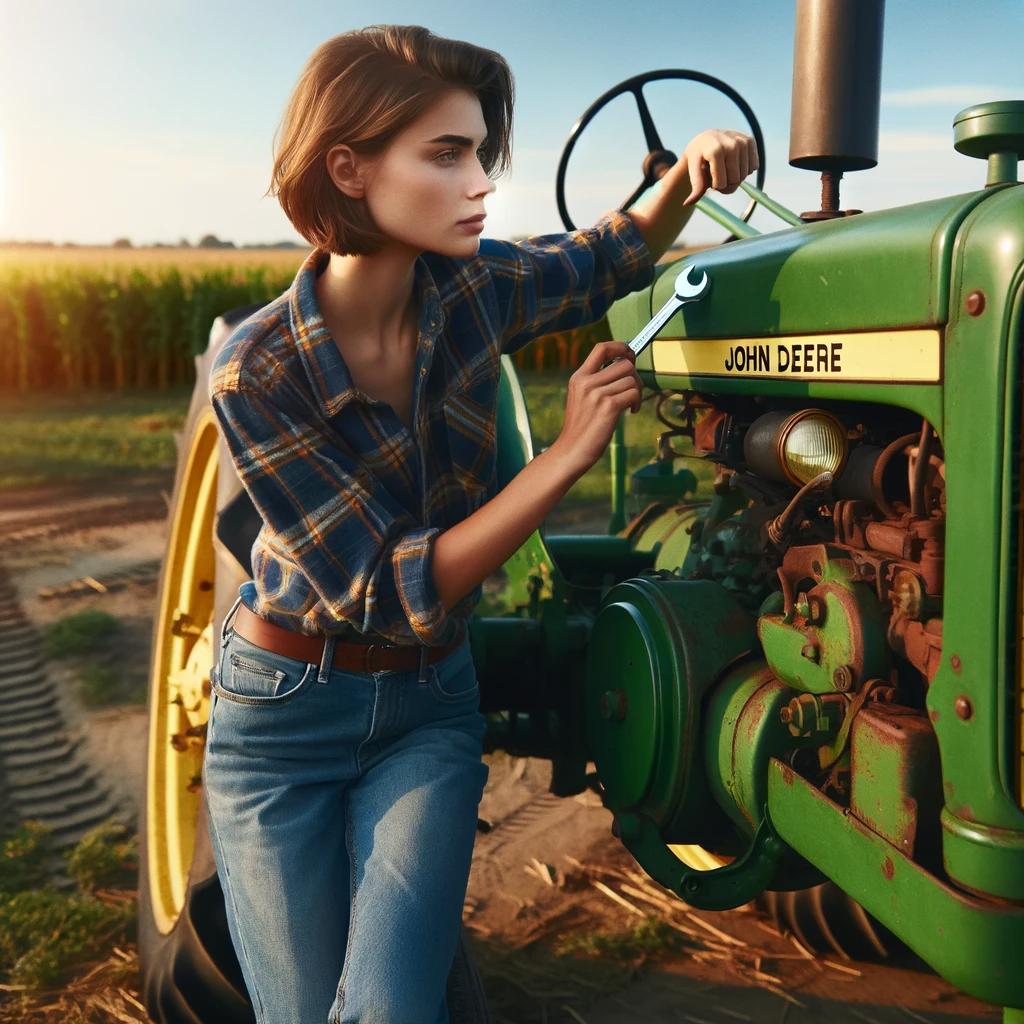
How Can AI Preserve the Legacy Of Vintage Tractors?
What Role Does Technology Play In Farming Community Bonds?
In the heart of America’s rural landscape, where the sun rises over cornfields like a golden promise, technology is reshaping the very fabric of farming communities. It’s not just about the latest model of a tractor zipping through fields; it’s about how these machines serve as modern-day lifelines, binding families and neighbors together, while nurturing both the land and relationships.
Picture a humble farming community, where friendships are forged over shared struggles and triumphs. The powerful hum of a tractor cutting through the soil isn’t merely the sound of work; it resonates with aspirations. It symbolizes resilience and hope. As farmers leverage precision agriculture—using drones and data analytics to maximize yield—they’re not just enhancing productivity. They’re creating a narrative that links tradition with innovation. When the neighbor’s crop thrives due to data shared during a morning coffee, the bonds deepen, and the sense of community strengthens.
Consider the story of a local farmer named Joe. He invested in a new data management app that transformed how he connected with his fellow farmers. By sharing insights about crop health and weather-related challenges, Joe wasn’t just helping himself; he created a dynamic support network. On days filled with uncertainty—when storms threatened or prices fluctuated—these digital platforms became modern agoras, where knowledge flowed freely. Farmers rallied around each other, strengthened by a collective resolve that technology had catalyzed. It’s the very essence of community: people helping people, driven by the same shared goals.
However, there’s a deeper resonance in technology’s role—its ethical backbone. As younger generations step into farming, they carry with them a vision of sustainability and environmental stewardship. The technology that helps them cultivate the land responsibly is rooted in a commitment to their heritage and future. It fosters a sense of shared purpose that transcends individual ambitions, sparking conversations around regenerative practices and cooperative ventures.
In these connections lies a profound opportunity. By embracing technology, farming communities can foster not just economic resilience but also a tapestry of human relationships that thrive on empathy and collaboration. The tractor, a symbol of labor, now stands as a testament to unity, showing that together we can cultivate more than just fields; we cultivate trust, knowledge, and enduring bonds that are vital for a vibrant future. The heartbeat of the community strengthens with every click and share, proving that amidst the rise of machines, the human spirit remains the strongest thread in the fabric of agriculture.

What Role Does Technology Play In Farming Community Bonds?
What Role Does Technology Play In Farming Community Bonds?
- Technology is transforming farming communities, connecting families and neighbors while nurturing the land.
- Farmers utilize precision agriculture to enhance productivity and connect tradition with innovation.
- Data sharing among farmers fosters stronger community bonds and collaborative efforts.
- Local farmers create support networks through digital platforms, enhancing resilience during challenges.
- Younger generations prioritize sustainability and environmental stewardship in farming practices.
- Technology promotes empathy and collaboration, enhancing both economic resilience and human relationships.
- The tractor symbolizes unity, illustrating how technology can cultivate trust and enduring community bonds.

What Role Does Technology Play In Farming Community Bonds?
Conclusion
Artificial intelligence is not just reshaping how we farm; it’s restoring the heart of agriculture in a way that honors our past while bolstering our future. Imagine vintage tractors, those iconic symbols of grit and hard work, now enhanced with cutting-edge technology. These machines, once mere tools in a farmer’s arsenal, are evolving into partners—intelligent companions that learn, adapt, and optimize farming practices. This blend of nostalgia and innovation forms a compelling narrative that resonates deeply, appealing to our emotions while addressing practical needs.
At the core of this transformation lies a commitment to sustainability. By integrating AI, farmers are reclaiming efficiency without compromising the integrity of the land they love. They’re maximizing output while ensuring that the soil remains nutrient-rich and viable for generations. This ethical responsibility to protect the environment marries seamlessly with their heritage, creating a legacy rooted in stewardship rather than exploitation.
The stories of farmers who have revived their vintage tractors with AI are striking. They illustrate a powerful trend: embracing change doesn’t mean abandoning tradition. Instead, it highlights the beauty in blending the old with the new. Consider the farmer who uses an AI-equipped tractor to predict irrigation needs, addressing specific challenges with precision—a process that used to rely solely on instinct and experience. This evolution fosters a mindset shift within communities, encouraging knowledge sharing and collaboration, weaving tighter connections among those who toil in the fields.
Moreover, the social implications of this fusion extend beyond individual farms. As farmers gather, sharing the triumphs and trials of integrating AI technology, they cultivate a sense of belonging that transcends age and experience. The local gatherings, whether at county fairs or online forums, become rich spaces for storytelling, where the past and future intersect.
Ultimately, the infusion of AI into vintage tractors isn’t merely a technological advancement; it’s a call to action. It challenges farmers to embrace the possibilities it presents while maintaining the essence of what made farming so revered in the first place: trust, hard work, and community. In this compelling narrative, we see that by integrating intelligence into these iron giants, farmers are not just preserving machinery—they’re revitalizing traditions and securing a more sustainable and connected future for the generations that follow.

Conclusion
Conclusion:
- AI is transforming agriculture by integrating technology with traditional farming practices.
- Vintage tractors are evolving into intelligent partners that enhance farming efficiency.
- This transformation promotes sustainability while honoring agricultural heritage.
- Farmers are maximizing output while preserving soil health for future generations.
- AI-equipped tractors enable precision in farming, shifting reliance from instinct to data.
- Farmers share experiences and foster community through local gatherings and online forums.
- The integration of AI challenges farmers to balance innovation with core values in agriculture.

Conclusion
Other Resources

Other Resources
Here is a list of other resources you can review online to learn more:
- Jeep
- Idaho Farmand Ranch Museum
- AG Museum
- Ebro
- Yanmar
- Gibson
- C.O.D. Tractor Company
- TwinCity
- Lamborghini
- Steiger
- Greenville Farm Power
- Mahindra Gujarat
- Fortuna Redwood Auto Xpo Antique Tractors
- Eicher Tractors
- Tractor Models
- Acremaster
- Carraro
- Earth Force
- Lindner
Use This Prompt To Get More Resources With Your Favorite Online AI Tool: Please provide me with a list of online articles with their URLs in a bulleted list that I can read regarding How Artificial Intelligence Is Making Vintage Tractors Smarter

Other Resources
Glossary Terms
How Artificial Intelligence Is Making Vintage Tractors Smarter – Glossary Of Terms
1. Retrofitting — Installing modern sensors, controllers, and actuators on vintage tractors to enable digital monitoring and AI-driven features.
2. Telematics — Remote collection and transmission of vehicle telemetry (location, engine data, runtime) for monitoring, analytics, and fleet management.
3. Sensor fusion — Combining inputs from multiple sensors (GPS, IMU, cameras, LiDAR) to produce a reliable understanding of the tractor’s state and surroundings.
4. Edge computing — Onboard processing of sensor data and AI inference close to the tractor to reduce latency and dependence on connectivity.
5. Computer vision — Neural-network–based interpretation of camera images for row detection, obstacle recognition, crop and terrain analysis.
6. Predictive maintenance — AI models that forecast component wear and failures using historical and real-time sensor data to schedule servicing before breakdowns.
7. Anomaly detection — Algorithms that identify abnormal behavior in engine, hydraulics, or sensors to flag faults or unsafe conditions.
8. CAN bus integration — Interfacing retrofit electronics with the tractor’s Controller Area Network to read diagnostics and send control commands where available.
9. Microcontroller unit (MCU) — Embedded processors that run low-level control, sensor interfacing, and real-time AI tasks on retrofitted systems.
10. Actuator control — AI-enabled modulation of steering, throttle, brakes, PTO, and hydraulic valves via electronic or electro-hydraulic actuators.
11. Autonomy levels — Spectrum of automation from driver assistance (steering aids) to fully autonomous field operations adapted for tractors.
12. Path planning — Algorithms that compute efficient, collision-free routes and coverage patterns for fieldwork and transport tasks.
13. RTK GPS — Real-Time Kinematic positioning providing centimeter-level accuracy for precise guidance and alignment in the field.
14. Geofencing — Virtual GPS boundaries that constrain tractor operation or automatically trigger behaviors when crossing predefined areas.
15. Precision agriculture — Use of AI and sensing to optimize input application (seed, fertilizer, chemicals) and cultivation decisions spatially and temporally.
16. Variable-rate application — AI-driven control that adjusts seeding, fertilizer, or spray rates on the fly based on maps and sensor feedback.
17. Yield mapping — Spatial records of harvested yield used to train models and inform future variable-rate strategies and field management.
18. LiDAR — Laser-based distance sensing that creates 3D point clouds for terrain, obstacle mapping, and row structure analysis.
19. Radar sensing — Radio-based sensors for robust ground-speed measurement and obstacle detection under dust, fog, or low light.
20. Over-the-air updates (OTA) — Wireless delivery of firmware and AI model updates to retrofit hardware to improve performance and fix issues.
21. Digital twin — Virtual simulation of a tractor and its systems for testing AI strategies, troubleshooting, and predictive analytics.
22. Human–machine interface (HMI) — Displays, touchscreens, and controls that present AI recommendations and allow operator interaction with autonomous systems.
23. Teleoperation — Remote human control of a tractor over networks using camera feeds and input devices for tasks beyond autonomous capability.
24. Power and electrical management — Systems and AI that manage energy distribution for added electronics, actuators, and electrified components on retrofits.
25. Legacy system abstraction — Software layers that translate mechanical and analog signals of vintage tractors into standardized digital inputs for AI systems.
26. Transfer learning — Adapting pretrained AI models to the unique conditions of a farm or an older tractor using limited local data.
27. Federated learning — Collaborative training across multiple tractors or farms that improves models while keeping raw data decentralized.
28. Explainable AI (XAI) — Techniques that provide interpretable reasons for AI decisions to build operator trust and aid debugging.
29. Cybersecurity hardening — Authentication, encryption, and secure update practices to protect connected retrofit systems and telemetry from tampering.
30. Safety interlocks — Hardware and software fail-safes that override AI commands to prevent hazardous actions and ensure operator and bystander safety. Glossary Of Terms
Other Questions
How Artificial Intelligence Is Making Vintage Tractors Smarter – Other Questions
If you wish to explore and discover more, consider looking for answers to these questions:
- How much does it cost to retrofit a vintage tractor with AI and sensors?
- Which vintage tractor models are compatible with modern AI upgrades?
- What specific sensors and hardware are required to make a tractor “smart”?
- Can AI systems be installed without altering the tractor’s original appearance or mechanics?
- How invasive is the installation process—will it change or damage original parts?
- Are there DIY kits or open-source solutions for retrofitting vintage tractors?
- What companies or vendors offer AI retrofit packages for older tractors?
- How reliable are AI systems in remote or connectivity-poor rural areas?
- Can smart tractors operate fully offline, or do they depend on cloud connectivity?
- How is data collected by smart tractors stored, and who owns that data?
- What privacy concerns arise from collecting farm and usage data?
- How secure are these AI systems against hacking or cyberattacks?
- What safeguards exist for manual override if the AI malfunctions?
- How does AI integration affect maintenance schedules and repair needs?
- Will mechanics and restorers need new certifications or training to service AI-equipped vintage tractors?
- How does AI impact fuel consumption, emissions, and overall sustainability?
- Can AI reduce soil degradation and pesticide/fertilizer overuse effectively?
- What metrics prove ROI—how long until upgrades pay for themselves?
- Do smart tractors require subscription fees, software licenses, or ongoing data costs?
- Is there a risk of vendor lock-in with proprietary AI systems?
- How will AI affect labor—will it displace farmworkers or create new roles?
- What legal or regulatory issues govern AI use in agriculture and machinery?
- Who is liable if an AI-controlled tractor causes property damage or injury?
- Can AI systems be calibrated to preserve traditional farming techniques and local knowledge?
- How can small, family-run farms access or afford these technologies?
- Are there grants, subsidies, or government programs that support AI retrofits for vintage equipment?
- How does adding AI affect the resale or collector value of a vintage tractor?
- Can AI help find or fabricate rare replacement parts for restorations?
- What kind of user interfaces are provided—are they intuitive for non-technical farmers?
- What training resources exist to help farmers learn to use AI-enhanced tractors?
- How do smart tractors integrate with existing farm management systems and software?
- Can AI be used to document and preserve the oral histories and stories tied to vintage tractors?
- How accurate are AI predictions for yields, pest outbreaks, and irrigation timing?
- What are the environmental trade-offs of adding electronic components to older machinery?
- How long will AI hardware and software be supported—what happens when vendors stop updates?
- Are there standards or certifications for AI systems in agricultural retrofits?
- How do communities and tractor clubs respond to AI-enhanced restorations—are they accepted or resisted?
- What are real-world examples or case studies of vintage tractors successfully upgraded with AI?
- How does AI handle unpredictable conditions like extreme weather, field obstacles, or unusual terrain?
- Can AI support mixed fleets of tractors from different eras and manufacturers?

Other Questions
Haiku
How Artificial Intelligence Is Making Vintage Tractors Smarter – A Haiku
Rusty giants arise,
Hearts and tech intertwine,
Fields of dreams revived.

Haiku
Poem
How Artificial Intelligence Is Making Vintage Tractors Smarter – A Poem
In fields of gold where memories are spun,
Stand vintage tractors, under the sun,
Echoes of labor, of sweat and pride,
Guardians of history, by farmers’ side.
With AI’s embrace, they rise once more,
Not just tools, but allies at the core,
Learning the soil, predicting the rain,
A partnership born from tradition and gain.
Each rusted machine, a tale to share,
Of family bonds and a farmer’s care,
As data flows through each seasoned part,
We honor the past while forging a start.
The heart beats stronger in communities near,
Where tech unites, erasing the fear,
Farmers gather, their stories entwined,
Courage in action, new paths defined.
Yet shadows linger with ethics to weigh,
Balancing progress with nature’s way,
Preserve the legacy, cherish the land,
Empower each farmer, a future we’ll stand.
So let tractors roar, let the harvest rise,
With every advancement, let trust be the prize,
In the dance of machines, find the human thread,
Where heart meets the head, and the gut is fed.

Poem
Checklist
How Artificial Intelligence Is Making Vintage Tractors Smarter – A Checklist
Heart Appeal
✅______ Reflect on the emotional connection you have with vintage tractors.
✅______ Share a personal story about a favorite family tractor or farming memory.
✅______ Engage with local farming communities to discuss the sentimental value of preserving agricultural heritage.
✅______ Consider the role of vintage tractors in fostering family traditions and community ties.
Head Appeal
✅______ Research the technological advancements in AI that enhance tractor efficiency and functionality.
✅______ Analyze case studies of farmers who have successfully integrated AI into their farming practices.
✅______ Evaluate the cost-benefit ratio of adopting AI technologies in terms of productivity and sustainability.
✅______ Stay informed about the latest innovations in AI that can aid in agricultural practices.
Gut Appeal
✅______ Examine your instincts about the balance between tradition and technology in farming.
✅______ Assess how AI solutions can reduce stress and improve decision-making for farmers.
✅______ Consider the ethical implications of AI in agriculture and its impact on job security within farming communities.
Ethical Appeal
✅______ Promote sustainable farming practices through the use of AI technologies.
✅______ Advocate for transparency in data usage and ownership among farmers deploying AI tools.
✅______ Discuss how AI can support environmental stewardship and long-term agricultural sustainability.
Authority Appeal
✅______ Follow expert opinions, articles, and studies on AI and agricultural advancements.
✅______ Attend workshops or conferences focusing on technology in agriculture to learn from industry leaders.
✅______ Connect with agricultural extension services for credible advice and guidance on AI implementation.
Narrative Appeal
✅______ Share stories from farmers who have embraced AI-enhanced tractors, highlighting their challenges and successes.
✅______ Create a narrative around the journey of a vintage tractor being revitalized with AI technology.
✅______ Collect testimonials from community members about the impact of technology on their farming practices and relationships.
Social Appeal
✅______ Join or form groups of vintage tractor enthusiasts and technology adopters to exchange experiences.
✅______ Participate in local agricultural fairs or exhibitions showcasing AI-enhanced vintage tractors.
✅______ Encourage discussions on social media about the blend of technology with traditional farming practices.
✅______ Foster a sense of belonging by organizing community events centered around vintage tractor restoration and technology demonstrations.

Checklist
At ClassicTractorNews, we help tractor lovers keep up with the latest news for classic and vintage tractors.
Please share this post with your friends, family, or business associates who may like old classic or vintage tractors.