

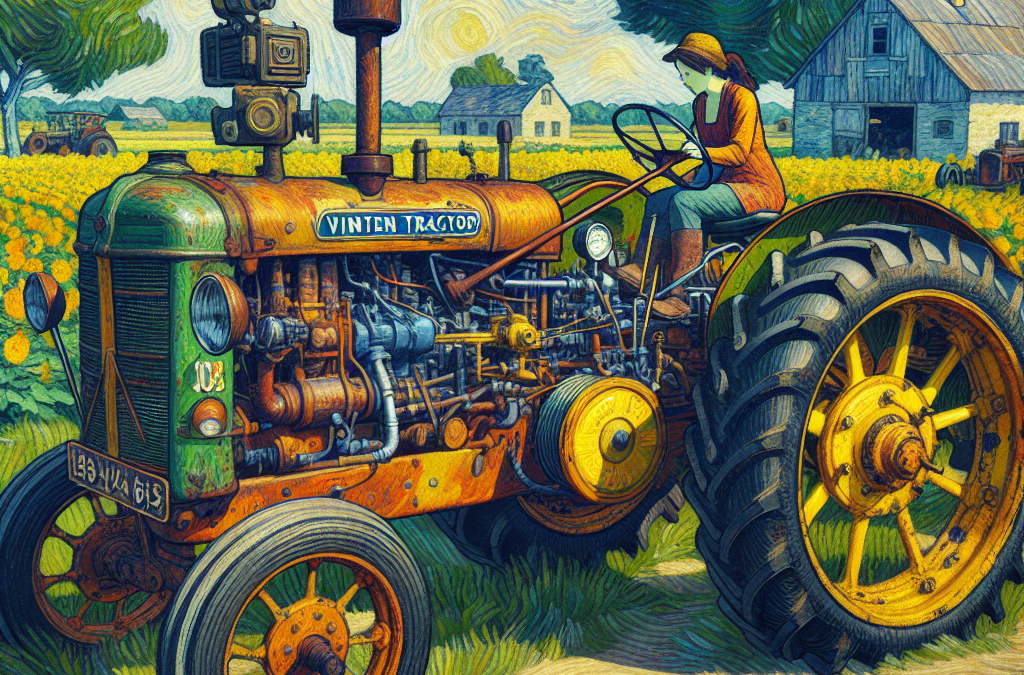
Unearthing Peace: The Surprising Connection Between Old Tractors And Mindfulness
By Tom Seest
At ClassicTractorNews, we help tractor lovers keep up with the latest news for classic and vintage tractors.
Please share this post with your friends, family, or business associates who may like old classic or vintage tractors.
Do Old Tractors Hold The Key to Mindfulness?
In a world buzzing with distractions, where the primary interface between humans and machines often involves tapping screens and scrolling mindlessly, there exists an unassuming relic—the old tractor. These hulking pieces of iron and steel, often left to rust in fields forgotten by time, carry with them stories and rhythms that can teach us volumes about mindfulness.
Picture yourself on a sun-soaked afternoon, standing beside a vintage tractor. The paint may be chipped, and the engine may rumble a little louder than it used to, but there’s a character here that modern machines simply can’t compete with. As you slide into the weathered seat, take a moment to absorb the textures, the smells, and the sounds around you. Your fingers might brush against cold metal, and you’ll inhale the faint scent of old oil and fertilizer—a nostalgic reminder of seasons past.
As you turn the ignition, the rumbling begins, a throaty roar that is oddly comforting. It’s a sound that demands respect and attention, pulling you into the present moment. With each pull on the throttle, you’re not just engaging with machinery; you’re participating in a ritual. The tractor becomes an extension of your body, a beast that needs understanding and care. This is where mindfulness reveals itself—not in the act of driving, but in the sheer act of being.
With its lethargic pace, an old tractor encourages you to sync your movements with the land. As you plow or harvest, you can’t help but notice the textures of the soil, the sway of the crops, and the vast expanse of the sky above. Each turn of the wheel becomes a meditation, a deliberate interaction with the earth beneath. You find yourself acutely aware of time; there’s no rush here. The act of farming, just like mindfulness, is about presence, patience, and appreciation for the now.
In many ways, these tractors are like living monuments—symbols of a simpler time when the connection between man and machine wasn’t defined by speed or efficiency, but by purpose. Embracing this slow, tactile interaction can provide a grounding experience that many of us desperately seek in our fast-paced lives.
So, before you swipe to the next mindless distraction, consider trading your screen for a seat on an old tractor. You might just discover that amid the noise of the world, the key to mindfulness is waiting, rusting, and ready for a revival out in those sun-drenched fields.

Do Old Tractors Hold The Key to Mindfulness?
Do Old Tractors Hold The Key to Mindfulness?
- Old tractors serve as relics of mindfulness in a distracted world.
- These vintage machines have character and history, contrasting with modern technology.
- The sensory experiences of old tractors—textures, smells, and sounds—encourage presence.
- Engaging with a tractor involves care and understanding, emphasizing a meditative connection.
- Farming with a tractor promotes awareness of the land and a slower, more deliberate pace.
- Tractors symbolize a time when human-machine interactions focused on purpose over efficiency.
- Choosing an old tractor over digital distractions may enhance mindfulness and appreciation for the present.

Do Old Tractors Hold The Key to Mindfulness?
Table Of Contents
- Do Old Tractors Hold The Key to Mindfulness?
- Do Old Tractors Promote A Slower Pace Of Life?
- How Can Vintage Machinery Inspire Mindfulness?
- What Lessons Can We Learn From Maintaining Old Tractors?
- Are There Mindfulness Practices Associated With Farming?
- How Does Working On Tractors Enhance Focus And Presence?
- Can Restoring Tractors Be A Form Of Meditation?
- What Is The Connection Between Nostalgia And Mindfulness?
- Conclusion
- Other Resources
- Glossary Of Terms
- Other Questions
- Haiku
- Poem
- Checklist
Do Old Tractors Promote A Slower Pace Of Life?
In a world that’s perpetually accelerating, one might wonder whether old tractors serve as unexpected symbols of a slower, more deliberate pace of life. Picture this: sun-soaked fields stretching toward the horizon, the distinct rumble of a vintage tractor meandering through the landscape, and the scent of freshly turned earth wafting through the air. It’s a rhythm that’s hard to replicate, even with the most advanced technology at our fingertips.
These timeworn machines aren’t just relics of the past; they embody a lifestyle and a mindset that contradicts our fast-paced existence. When you climb aboard an old tractor, you’re not just operating machinery; you’re stepping into a world where every turn of the wheel and every puff of diesel smoke carries with it a sense of connection to the earth and the process of growing. The slow churn of the engine becomes a heartbeat—a steady reminder that life isn’t a race, but rather a journey best savored, one nourishing crop at a time.
For many, maintaining and using an old tractor involves a kind of hands-on engagement that encourages patience and presence. Adjusting a carburetor or fixing a stubborn starter requires not only mechanical aptitude but also time—a commodity often in short supply these days. Every repair, every tweak, demands a certain mindfulness. Unlike the sleek, digital tractors of today, with their bells and whistles, old tractors bring forth a different kind of interaction, where every crack and creak tells a story of resilience and hard work.
Beyond the mechanics, there’s also a communal aspect that comes with these trusty old machines. Neighbors gather to share tips or lend a hand with repairs, reinforcing bonds that often get overshadowed by our hurried lives. Whether it’s recalling the age-old tradition of plowing with a team, or simply sharing a meal after a long day in the field, there’s a connection forged not only with the land but with each other—an essential piece of that slower pace.
So, do old tractors promote a slower pace of life? Well, perhaps they’re more than mere machines. They are symbols of an era that prioritized the value of hard work, community, and appreciation for the simple things. In a world racing ahead, these steadfast embodiments of agricultural history remind us to slow down, stay grounded, and embrace the beauty of the here and now.

Do Old Tractors Promote A Slower Pace Of Life?
Do Old Tractors Promote A Slower Pace Of Life?
- Old tractors symbolize a slower, more deliberate pace of life in a fast-paced world.
- They create a connection to the earth and the process of growing, reminding us that life is a journey to be savored.
- Operating an old tractor requires hands-on engagement and fosters patience and presence.
- Maintenance tasks, such as repairing engines, demand time and mindfulness, contrasting with modern technology.
- Old tractors encourage community bonding through shared repairs and traditions, enhancing connections among neighbors.
- They symbolize a lifestyle that values hard work, community, and appreciation for simple pleasures.
- In a rapidly advancing world, old tractors remind us to slow down and embrace the beauty of the present moment.

Do Old Tractors Promote A Slower Pace Of Life?
How Can Vintage Machinery Inspire Mindfulness?
When you think about mindfulness, images of tranquil gardens, gentle meditation practices, or peaceful retreats may spring to mind. But have you ever considered that a vintage tractor can serve as a powerful tool for inspiration? There’s something profoundly grounding about these machines, a connection to a time when craftsmanship and hard work were woven into the fabric of everyday life.
Picture yourself in a vast field, the sun painting the horizon with hues of orange and pink, a vintage tractor sitting proudly in the foreground. As you approach it, you can’t help but notice the rich history etched in its rusted frame. This machine is not just a relic; it’s a testament to years of diligent labor and the cycles of life that accompany it. Each scratch and dent tells a story—the struggles of farmers, the changing seasons, and the relentless march of progress.
Engaging with vintage machinery like a tractor invites you to slow down, to appreciate the mechanics of how things work. Think about it: operating a machine that was once at the very heart of agriculture requires focus and intention. You aren’t just jumping in and turning the key. You have to understand the rhythms of the engine, how to navigate the dials, and how to feel the weight of the task at hand. It’s a meditation in motion, a reminder that even the simplest actions can be executed with mindfulness.
Moreover, using a vintage tractor requires you to be present in your surroundings. When you’re driving that old machine over the bumps of an unpaved road, your attention is drawn to the texture of the earth beneath the tires and the sounds of nature surrounding you. Each vibration reverberates not just through the tractor, but through you—connecting mind and body.
This simple act encourages reflection on our relationship with the past and the environment. Through the lens of vintage machinery, we can learn to appreciate the beauty in the blend of history and utility, fostering a sense of gratitude. The mindfulness that arises from this connection can seep into our daily lives, teaching us to be present in even the most mundane tasks.
So, the next time you find yourself near a vintage tractor, take a moment. Picture its history, feel its power, and let it guide you toward a deeper sense of mindfulness. These machines remind us of where we’ve come from, encouraging us to remain rooted in the moment, and to savor the journey ahead.

How Can Vintage Machinery Inspire Mindfulness?
How Can Vintage Machinery Inspire Mindfulness?
- Mindfulness is often associated with tranquil settings, but vintage tractors can inspire the same serene focus.
- These machines symbolize hard work and craftsmanship from a bygone era, connecting us to history.
- A vintage tractor’s rusted frame tells stories of labor, changing seasons, and progress.
- Operating a vintage tractor requires focus, intention, and understanding of its mechanics, fostering mindfulness.
- Driving a vintage tractor brings attention to the environment and deepens the connection between mind and body.
- Engaging with vintage machinery encourages reflection on our relationship with history and the environment.
- Taking a moment to appreciate a vintage tractor can enhance our mindfulness and present-moment awareness.

How Can Vintage Machinery Inspire Mindfulness?
What Lessons Can We Learn From Maintaining Old Tractors?
When you think about a tractor, what comes to mind? For many, it’s a rusting behemoth parked in a field, a relic of days gone by. But for those who understand their value, old tractors are reservoirs of lessons just waiting to be accessed. These machines, often built before the rise of the computer, demand a certain respect, and with that respect comes an opportunity to learn some important life lessons.
First and foremost, an old tractor teaches us the importance of maintenance. Just like people, machines wear down over time. A cracked belt, a leaking gasket, or an engine that just won’t start can spell doom for an aging piece of equipment. But with patience and a little elbow grease, you can often breathe new life into something long considered a lost cause. This is a timely reminder that neglect often begets failure, whether we’re talking about machinery or our own health and relationships. Regular check-ups, a good tune-up, and a bit of preventive care can go a long way in keeping things running smoothly.
Next, there is pride in craftsmanship. Many old tractors were built by hand, with care and skill that today’s mass-production lines struggle to replicate. They remind us of a time when the world was simpler, and quality trumped quantity. By working on an old tractor, you become part of a legacy that values hard work and attention to detail. The satisfaction of hearing that engine roar to life after hours spent tinkering is a feeling that transcends generations.
Moreover, old tractors serve as a reminder of resilience. They’ve weathered storms, sat idle for years, and yet with a little effort, they roar back to life. This mirrors our own struggles in life. We all go through tough times, and like those machines, we have to find ways to revitalize ourselves. The key is understanding that every dent and scratch tells a story of perseverance and survival.
Lastly, there’s community in maintaining old tractors. Whether it’s neighbors gathering for a restoration project or sharing tips at a local show, the act of working on these machines fosters a sense of camaraderie. That collective spirit reinforces the notion that we are better together, relying on each other’s expertise and enthusiasm to breathe life into our passions.
So, the next time you see an old tractor, don’t just see history; see the lessons it holds—about maintenance, craftsmanship, resilience, and community. Embrace them, and you might just find your own engine purring along a little more reliably.

What Lessons Can We Learn From Maintaining Old Tractors?
What Lessons Can We Learn From Maintaining Old Tractors?
- Old tractors are valuable sources of life lessons, not just relics of the past.
- They teach the importance of maintenance, highlighting that neglect can lead to failure in both machines and personal lives.
- Pride in craftsmanship is emphasized, as many old tractors were carefully built by hand.
- Working on old tractors instills satisfaction and appreciation for hard work and attention to detail.
- Old tractors symbolize resilience, showing how they can be revitalized after years of neglect, similar to personal struggles.
- Maintaining these tractors fosters a sense of community, encouraging collaboration and shared passions.
- Seeing old tractors can inspire reflection on maintenance, craftsmanship, resilience, and community values.

What Lessons Can We Learn From Maintaining Old Tractors?
Are There Mindfulness Practices Associated With Farming?
When you think about farming, your mind might conjure images of sunrises over sprawling fields, the rhythmic rumble of a tractor in the distance, and the earthy aroma of freshly turned soil. But there’s more to this lifestyle than meets the eye. At its core, farming can be a fulfilling mindfulness practice, offering a chance to reconnect with the land and the here-and-now, all while tending to the rhythms of nature.
Picture yourself behind the wheel of a tractor, its engine humming as you navigate the contours of a field. It’s more than just a job; it’s an exercise in presence. Each turn of the wheel requires focus, an acute awareness of both your surroundings and the machine you’re operating. In those moments, you’re not just a farmer; you become part of the landscape, immersed in the task at hand. The world outside fades, and it’s just you, the earth, and the task before you.
Mindfulness in farming extends beyond the tractor seat. Consider the quiet moments spent planting seeds. As fingers delve into the soil, there’s a grounding sensation, a visceral connection to nature’s cycles. The act of carefully placing each seed invokes gratitude and patience, reminding us that growth requires time. No one is rushing the process; the seed doesn’t sprout overnight, and that’s the beauty of it. It’s a lesson in trust—trusting nature’s rhythm and your ability to nurture it.
And then there are the seasons. Each transition invites a new set of mindfulness practices. Spring, with its promise of new beginnings, encourages hopefulness. Summer demands vigilance as you monitor the vitality of your crops. Autumn offers a bountiful harvest—a celebration of hard work and preparation. Winter, with its stillness, provides a chance for reflection, a period to assess what went well and what could be improved for the next cycle.
The mindfulness practices associated with farming may not fit into neatly labeled boxes, but they are all around us. It’s in the way you feel the soil between your fingers, the sights and sounds that surround you, and the lessons learned with every planting season. So, the next time you imagine farming, think beyond the field and the machine; consider the profound mindfulness woven into every moment spent cultivating the land.

Are There Mindfulness Practices Associated With Farming?
Are There Mindfulness Practices Associated With Farming?
- Farming is more than just agricultural work; it serves as a fulfilling mindfulness practice.
- Driving a tractor engages you in the present moment, creating a deep connection to the land.
- Each task in farming requires focus and awareness, transforming the farmer into part of the landscape.
- Planting seeds fosters a visceral connection to nature, reminding us of the importance of patience and trust.
- Seasonal transitions in farming introduce different mindfulness practices and reflections.
- Spring symbolizes hope, summer requires vigilance, autumn celebrates harvest, and winter invites reflection.
- Mindfulness in farming is found in sensory experiences and lessons learned throughout every planting season.

Are There Mindfulness Practices Associated With Farming?
How Does Working On Tractors Enhance Focus And Presence?
When you dive into the guts of a tractor, you’re not just tinkering with a piece of machinery; you’re engaging in a time-honored tradition that demands attention, patience, and a certain level of grit. Tractors, those heavy-duty workhorses of farms and fields, represent so much more than mere machines. They are an invitation to be fully present in the moment, to engage with both the physical world and your own sense of self.
Working on tractors hones your focus in a way few other activities can. Picture this: you’re elbow deep in grease, surrounded by the hum of engines and the smell of diesel. Each component is a puzzle. From tightening bolts to adjusting the carburetor, every action requires your undivided attention. Miss a detail and you may find yourself facing an uphill battle later on. This immediate need for focus pulls you away from the distractions of life, freeing you to immerse yourself in the task at hand.
This isn’t just about fixing what’s broken; it’s about the process of doing. The tractor becomes a canvas, with the act of maintenance allowing you to hone your skills. You learn to listen—not just to the engine’s hum, but to the subtle nuances of your own thoughts. In a world that often seems to encourage a scatterbrained approach to existence, there’s something refreshingly grounding about kneeling before a machine, determining its needs, and responding with precision.
Moreover, working on tractors instills a sense of purpose. You’re not just engaged in a fleeting pastime; you’re contributing to the operation of something essential. This connection to a larger system—be it a family farm or a community project—gives weight to your work. It enhances your sense of presence, reminding you that every action has consequences, both immediate and lasting.
Lastly, there’s a sense of reward that comes from the tangible results of your labor. Whether it’s a tractor that roars back to life or a smooth-running engine revved up and ready to plow through fields, the satisfaction derived from working on these machines transcends simple accomplishment. You leave the tractor not just with grease under your nails, but with a renewed sense of focus, presence, and understanding of what it means to truly engage in your work.

How Does Working On Tractors Enhance Focus And Presence?
How Does Working On Tractors Enhance Focus And Presence?
- Diving into tractor maintenance is a time-honored tradition requiring attention, patience, and grit.
- Tractors symbolize more than machinery; they invite engagement with both the physical world and self-awareness.
- Working on tractors sharpens focus, necessitating undivided attention to detailed tasks.
- The process of maintenance serves as a canvas for skill development and self-reflection.
- Engaging in tractor work fosters a sense of purpose and connection to essential operations.
- This work emphasizes that each action has immediate and lasting consequences.
- The tangible results of labor provide satisfaction, enhancing focus and understanding of meaningful work.

How Does Working On Tractors Enhance Focus And Presence?
Can Restoring Tractors Be A Form Of Meditation?
In a world buzzing with smartphones and endless notifications, it’s easy to overlook the grounding power of tangible work. Imagine stepping into a garage, the air thick with the smell of grease and aged metal. You face a hefty, rust-riddled tractor — perhaps your grandfather’s old workhorse, now sitting in the corner collecting dust. Many might see an eyesore; others see an opportunity. Restoring tractors isn’t just about mechanical parts; it can be a meditative experience that promotes mindfulness and connection to our roots.
The moment you fire up your tools and dive into dismantling a tractor’s engine, you enter a state of flow. Your hands follow a path of labor as your mind quiets itself, focusing only on the task at hand. The clink of wrenches and the hiss of air compressors become your soundtrack. In this focused zone, problems fade, and the stress from outside falls away. There’s a beauty to working with machines that reminds you of the cycle of creativity and restoration — a cycle that can echo through your life.
As you scrub away decades of grime, you’re not just polishing metal; you’re polishing your mind. Each step, from replacing worn-out parts to repainting the exterior, is an exercise in patience and precision. Just you, the tractor, and the undivided time you’ve carved out for this ritual. Each choice you make — whether to refurbish the original components or swap them out for new pieces — reflects a personal philosophy about what it means to restore.
There’s also the simple joy of craftsmanship. When you fine-tune that stubborn engine back to life, it’s a triumph not just over metal but over the uncertainties of life itself. You’ve transformed a relic into a finely-tuned machine. That sense of accomplishment can resonate deeply, anchoring you amid chaos.
Moreover, as you restore tractors, you link yourself with generations before you, who relied on these dependable machines to scrape a living from the earth. Each scrape of a wrench or each hiss of compressed air becomes a connection to your past and the land — meditative in its cyclical nature.
It’s about finding solace in the simple and the mechanical, where mindfulness meets the grit of tangible work. Restoring tractors is not just a hobby; it’s a practice that invites clarity amid noise, reminding us that sometimes, the best path to mindfulness is found in the grease beneath your fingernails.

Can Restoring Tractors Be A Form Of Meditation?
Can Restoring Tractors Be A Form Of Meditation?
- In a fast-paced digital world, tangible work offers grounding experiences.
- Restoring old tractors can be seen as both an opportunity and a meditative experience.
- Engaging in hands-on labor promotes mindfulness and focuses the mind away from stress.
- The process of restoration serves as a personal philosophy about creativity and patience.
- Craftsmanship in repairs provides a sense of accomplishment that counters life’s uncertainties.
- Restoring tractors creates a connection to past generations and their reliance on these machines.
- This practice combines solace, mindfulness, and mechanical work, highlighting the value of tangible tasks.

Can Restoring Tractors Be A Form Of Meditation?
What Is The Connection Between Nostalgia And Mindfulness?
In a world spinning faster than a well-oiled tractor, it’s easy to overlook the simple joys of the past. Nostalgia and mindfulness, however, have a remarkable way of pulling us back, grounding us in the present while providing a bridge back to our fond memories. This connection isn’t just coincidental—it’s deeply woven into the fabric of being human.
Nostalgia often dances with us like sunlight glinting off a rusty tractor in an open field, inviting us to reminisce about days gone by. It’s that warm, compelling feeling we get when we think about our first bike ride, family gatherings, or even the smell of fresh grass being cut in the summer. These memories can evoke bittersweet emotions, pulling at our heartstrings while reminding us of simpler times. They let us see past the chaos of daily life and momentarily escape into cherished moments that shaped who we are.
On the other hand, mindfulness anchors us in the present, encouraging us to observe the world around us without judgment. It’s about breathing in the cool, fresh air, hearing the rustling leaves, and being fully aware of our surroundings. When we practice mindfulness, we’re not just racing towards the next item on our to-do list; instead, we slow down, connecting with our senses and the moment we’re in. This heightened awareness can even cultivate gratitude for the little things we often take for granted.
But how do nostalgia and mindfulness intertwine? When we engage in mindful reflection, we have the opportunity to revisit those nostalgic moments without getting lost in the haze of the past. We can savor the memories and feel their impact while still remaining present. When we recollect the feeling of riding that tractor through golden fields—butterflies dancing in the warm sun—we immerse ourselves in that joy, allowing it to enrich our current experience rather than distract from it.
In many ways, nostalgia serves as a powerful touchstone for mindfulness. By allowing ourselves to remember and appreciate these past experiences, we create a sense of continuity that enriches our lives now. The connection leads us to a fuller understanding of ourselves and a deeper appreciation for the present moment. So, whether you’re on a tractor, reminiscing about youthful summers, or simply stopping to take in the world around you, embracing both nostalgia and mindfulness can offer a bit of clarity in a chaotic life.

What Is The Connection Between Nostalgia And Mindfulness?
What Is The Connection Between Nostalgia And Mindfulness?
- Nostalgia and mindfulness help us connect to the present while reminiscing about fond memories.
- Nostalgia evokes warm feelings associated with past experiences like family gatherings and simple joys.
- These memories provide an escape from daily chaos, allowing us to reflect on simpler times.
- Mindfulness encourages us to be present, observe our surroundings, and appreciate the moment.
- Practicing mindfulness can cultivate gratitude for the small things often taken for granted.
- Nostalgia and mindfulness intertwine by enabling mindful reflection on past moments without losing the present focus.
- Embracing both concepts enriches our understanding of ourselves and enhances our appreciation of the present.

What Is The Connection Between Nostalgia And Mindfulness?
Conclusion
So here we are. In a bustling world where our fingers dance across glossy screens, the simple act of reconnecting with an old tractor can reignite a sense of mindfulness that many of us have long forgotten. These hulking machines, often viewed as mere relics of the past, hold a surprisingly profound lesson: slowing down can lead to a rich tapestry of present experiences. Imagine standing next to a vintage tractor, letting the sun warm your skin while you breathe in the earthy aroma of turned soil. This tactile moment invites you to engage fully with your surroundings—not as a hurried observer, but as an active participant in that very moment.
Old tractors offer a therapeutic rhythm; each rumble of the engine tells a story of patience, connection, and the cyclical nature of life. Climbing aboard is not just about initiating a machine; it’s a call to mindfulness, urging you to feel the textures beneath your fingers and the vibrations that connect you to the land. With each turn of the wheel, you become acutely aware of every nuance—the sway of the crops, the unwavering sky above, and the comforting weight of time. You realize that in farming, as in life, there are no shortcuts; growth requires patience, presence, and a healthy respect for the process.
Let’s not forget the community aspect. The conversations that spark during tractor repairs or barn gatherings weave a support network that runs deeper than mere nostalgia. Friends and neighbors come together, sharing stories, wisdom, and laughter, reminding us that community is a vital component of mindfulness. In those moments, we can reflect on resilience—not just of tractors, but of ourselves.
Restoring these machines can be akin to a meditative practice, where the harmony of sweat, grease, and concentration brings us back to a centered state of being. Each dent tells a story; each rust spot is a mark of character. These interactions break through the chaos of modern life, inviting us to put down our devices and pick up a wrench.
So next time you find yourself overwhelmed by the busy pace of life, consider the wisdom waiting in those sun-drenched fields and rusty tractors. Embrace the nostalgia, the community, and the simple joy of tactile experiences. Because sometimes, the key to mindfulness isn’t found in flowery retreats or guided meditations but in a sturdy, timeworn piece of machinery that asks us to engage with life, one slow wheel turn at a time.

Conclusion
Conclusion:
- Reconnecting with old tractors fosters a sense of mindfulness often forgotten in modern life.
- These vintage machines invite active participation, enhancing awareness of the present moment.
- The rhythm of an old tractor’s engine symbolizes patience, connection, and the cycles of life.
- Farming emphasizes that growth requires patience, presence, and respect for the process.
- Community interactions during tractor repairs create a support network essential for mindfulness.
- Restoring tractors can be a meditative practice that helps recenter and ground individuals.
- Mindfulness can be found in simple, tactile experiences rather than structured retreats or meditations.

Conclusion
Other Resources

Other Resources
Here is a list of other resources you can review online to learn more:
- B.F. Avery
- Deutz-Allis
- Legacy of the Plains Museum
- Agrinar
- International Harvestor
- Eastern Carolina Vintage Farm Equipment Club
- FTMTA
- Fortschritt
- ATC
Use This Prompt To Get More Resources With Your Favorite Online AI Tool: Please provide me with a list of online articles with their URLs in a bulleted list that I can read regarding Do Old Tractors Hold The Key to Mindfulness?

Other Resources
Glossary Terms
Do Old Tractors Hold The Key to Mindfulness? – Glossary Of Terms
1. Mindfulness: A mental practice that involves focusing on the present moment, acknowledging thoughts and feelings without judgment.
2. Tractor: A powerful motor vehicle designed primarily for agricultural tasks, often associated with rural settings and farming.
3. Nostalgia: A sentimental longing for the past, often evoked by objects such as vintage tractors that remind us of simpler times.
4. Simplicity: The quality of being easy to understand or do; in mindfulness, it refers to focusing on the basics of being present and aware.
5. Connection: The relationship one has with people, nature, and objects; old tractors can symbolize connections to agricultural heritage and family.
6. Presence: The state of being fully engaged and aware in the current moment, a central aspect of mindfulness.
7. Nature: The natural world, including plants, animals, and landscapes; engaging with nature promotes mindfulness.
8. Heritage: The cultural background and traditions passed down through generations, which can inform one’s mindfulness journey.
9. Mechanical: Relating to machinery or tools; the intricate workings of tractors can be a meditative focus for those interested in mechanics.
10. Craftsmanship: Skill in a particular craft; old tractors often exemplify quality craftsmanship that evokes appreciation and presence.
11. Meditation: A practice that involves focusing the mind for a period to achieve a mentally clear and emotionally calm state.
12. Grounding: Techniques used to connect oneself to the present moment, often through physical sensations and sensations from the environment.
13. Routine: A regular or habitual pattern of activity; engaging in mindful tasks can transform mundane routines into moments of awareness.
14. Rural: Related to the countryside rather than the city; rural settings can evoke feelings of peace and mindfulness.
15. Reflection: The act of thinking deeply or carefully about something; mindfulness encourages self-reflection to enhance awareness.
16. Herbalism: The study of plant-based remedies; being in touch with the land can foster a mindfulness connection to nature.
17. Slow Living: An approach that emphasizes a slower pace and simplicity in life, often associated with mindfulness practices.
18. Rustic: Relating to the countryside; can evoke a sense of simplicity and connection that is mindful.
19. Calmness: A state of tranquility; mindfulness practices often lead to feelings of calm and peace.
20. Environment: The surroundings or conditions in which a person lives and works; being in a nurturing environment can enhance mindfulness.
21. Sustainable: Practices that maintain ecological balance; mindfulness encourages awareness of sustainable practices in farming and living.
22. Patina: A sheen or appearance that develops on surfaces, often seen on old machinery, symbolizing the beauty of aging.
23. Focus: The concentration of attention on a particular task or thought; mindfulness relies on the ability to focus effectively.
24. Intentionality: The quality of being deliberate or purposeful; mindfulness involves intentional actions and thoughts.
25. Balance: A state in which different elements are equal or in the correct proportions; mindfulness promotes emotional and mental balance.
26. Routine Maintenance: Regular care and checking of equipment; this task can be performed mindfully, appreciating each step in the process.
27. Emotional Resonance: The ability of something to evoke strong feelings; old tractors might trigger emotions associated with memory and family.
28. Practitioner: A person who actively engages in a discipline; in this context, one who practices mindfulness and self-awareness.
29. Analog: Non-digital; referring to the tactile connection to old, mechanical devices like tractors that can enhance mindfulness.
30. Community: A group of individuals sharing common interests; community engagement can foster mindfulness through shared activities and rituals related to heritage and farming.

Glossary Of Terms
Other Questions
Do Old Tractors Hold The Key to Mindfulness? – Other Questions
If you wish to explore and discover more, consider looking for answers to these questions:
- What specific mindfulness techniques can be practiced while using old tractors?
- How can modern technology coexist with the mindfulness experiences offered by old tractors?
- Are there specific benefits to spending time on old tractors for mental health?
- How do different cultures view the relationship between farming and mindfulness?
- What are some practical ways to integrate mindfulness into everyday life using old machinery?
- Can the restoration of other vintage machinery provide similar mindfulness benefits?
- What are common challenges faced when working with old tractors in a mindfulness context?
- How can community events centered around tractors enhance mindfulness and social connections?
- Are there studies or research that support the connection between vintage machinery and mindfulness?
- What other activities may promote mindfulness similar to working with tractors?
- How does engaging with old machinery differ from other forms of meditation?

Other Questions
Haiku
Do Old Tractors Hold The Key to Mindfulness? – A Haiku
Old tractors whisper,
In rusted stillness they teach,
Mindful hearts find peace.

Haiku
Poem
Do Old Tractors Hold The Key to Mindfulness? – A Poem
Amidst the hum of life’s swift race,
An old tractor stands, a steady embrace.
Rusty, revered, in the sun’s golden glow,
A symbol of peace in a world that won’t slow.
Its metal heart beats with stories untold,
Of seasons, of toil, of hands rough and old.
Sitting upon it, we feel time unwind,
With each gentle rumble, our thoughts we align.
Here, patience is crafted in soil and in care,
The rhythm of farming, a dance laid bare.
A contemplative journey where presence is king,
Each turn of the wheel, a meditative swing.
Engaging with engines, we become more in tune,
With the sound of the tractor beneath the bright moon.
Restoring life’s lessons, with each wrench and each part,
We polish our minds as we engage with our heart.
Nostalgia whispers like wind through the leaves,
Connecting our memories, the solace they weave.
In the dance of the present, the past softly sighs,
A blend of pure mindfulness, where gratitude lies.
So, when the world beckons with frantic appeal,
Seek the old tractor, let the moment reveal,
That among iron and earth, we may just find,
The key to a life anchored, simple, and kind.

Poem
Checklist
Do Old Tractors Hold The Key to Mindfulness? – A Checklist
1. Experience Sensory Engagement
_____ Spend time near a vintage tractor and take mental notes of:
_____ Sounds (engine rumble, ambient nature noises).
_____ Textures (cold metal, worn seat).
_____ Scents (old oil, fresh soil).
2. Practice Presence
_____ As you operate an old tractor, focus on:
_____ The rhythm of the machinery.
_____ The connection between your movements and the landscape.
_____ The experience of being in the moment without distractions.
3. Embrace Slow Work
_____ Allocate time to:
_____ Adjust and maintain your tractor.
_____ Observe the mechanical components and their functions.
_____ Enjoy the slow, deliberate pace of working on the tractor.
4. Reflect on Life Lessons
_____ Consider what maintaining or restoring a tractor teaches you about:
_____ Patience and perseverance.
_____ The importance of regular maintenance in both machines and personal life.
_____ Pride in craftsmanship and attention to detail.
5. Engage with Community
_____ Connect with neighbors or friends:
_____ Share restoration tips and stories.
_____ Collaborate on projects or participate in local tractor shows.
_____ Foster friendships based on shared interests and experiences.
6. Cultivate Gratitude
_____ Reflect on the history of the tractor and its significance:
_____ Recognize the craftsmanship of past generations.
_____ Appreciate the hard work that went into maintaining these machines.
_____ Connect emotionally with memories associated with farming and family.
7. Engage in Mindful Farming Practices
_____ When farming, practice mindfulness by:
_____ Noticing the feel of soil and the growth of plants.
_____ Taking your time during planting and harvesting.
_____ Being aware of the changing seasons and what they teach you.
8. Utilize Restoration as a Meditative Process
_____ Treat the act of restoring a tractor as a form of meditation:
_____ Focus solely on the task at hand.
_____ Find joy in the repetitive actions involved in renovation.
_____ Allow each stage of restoration to calm your mind and promote clarity.
9. Explore the Connection Between Nostalgia and Mindfulness
_____ Reflect on personal memories associated with tractors:
_____ Recall fond moments spent with family or friends around machinery.
_____ Use these memories to cultivate mindfulness and appreciation for the present.
10. Document Your Experiences
_____ Keep a journal or record of:
_____ Your thoughts and feelings while engaging with old tractors.
_____ Lessons learned through the process of maintenance and restoration.
_____ How these activities enhance your mindfulness practice and quality of life.
By following this checklist, you can enhance your understanding of mindfulness through the lens of old tractors, enriching both your personal experience and connection to the world around you.

Checklist
At ClassicTractorNews, we help tractor lovers keep up with the latest news for classic and vintage tractors.
Please share this post with your friends, family, or business associates who may like old classic or vintage tractors.