


Timeless Trust Meets Visionary Wisdom For A Better Tomorrow
By Tom Seest
At ClassicTractorNews, we help tractor lovers keep up with the latest news for classic and vintage tractors.
Please share this post with your friends, family, or business associates who may like old classic or vintage tractors.
Combining Classic Reliability with Modern Insight
In a world where innovation often overshadows tradition, the marriage of classic reliability with modern insight offers a refreshing perspective. Think of a well-worn tractor, its sturdy frame a testament to generations of hard work. It doesn’t just plow fields; it plows through the history of those who came before, carrying the weight of their labor and dreams. This kind of reliability isn’t just found in the machinery; it echoes in the lifestyle it represents—a commitment to doing things right, to valuing the sweat and toil that goes into building something lasting.
Now, imagine that same tractor, retrofitted with the latest technology. It’s equipped with sensors that monitor soil health and advanced GPS systems guiding the way. This isn’t just a blend of old and new; it’s a revolution rooted in respect for the past. With every turn of the wheel, the operator isn’t just driving a vehicle; they are part of a narrative that honors tradition while boldly stepping into the future. That’s the heart of combining classic reliability with modern insight—embracing change without losing sight of where we’ve come from.
This synergy can be seen across industries, from farming to manufacturing. It’s about anchoring innovation in the values that have built our communities and our families. Each tool, each process, carries a story, and when we invest in modern interpretations of reliable methods, we invite those stories to flourish anew. It’s as if we’re saying: “We recognize the hustle, the grit, and the relentless pursuit of excellence. Now let’s enhance that experience with the tools of today.”
Ethically, this approach bridges generations, allowing older, seasoned workers to share their wisdom with younger, tech-savvy counterparts. It fosters an environment where knowledge flows freely between age groups, encouraging collaboration rather than competition. You can almost hear the engine of community revving up, drawing strength from the combined experiences of those who’ve walked similar paths.
In essence, combining classic reliability with modern insight is like tending a garden where the roots are deep, and the branches reach into the sky. It’s about cultivating a culture of trust, where innovation is guided by respect for tradition, and where every new advance is a celebration of those who laid the groundwork. So, the next time you see that old tractor rumbling down a dirt road, remember—it’s not just a machine. It’s a link between the past and the future, embodying the spirit of resilience that continues to shape our world.

Combining Classic Reliability with Modern Insight
Combining Classic Reliability with Modern Insight
- The integration of classic reliability and modern insight provides a unique perspective in various industries.
- A well-worn tractor symbolizes the history and hard work of previous generations.
- The tractor’s retrofitting with modern technology represents a respectful evolution of tradition.
- This approach fosters synergy between old and new, maintaining respect for the past while embracing change.
- Innovation grounded in traditional values enriches community stories and the experiences behind them.
- Bridging generational gaps encourages collaboration and knowledge sharing between seasoned and tech-savvy workers.
- This philosophy cultivates a culture of trust, celebrating advancements that honor the foundational efforts of the past.

Combining Classic Reliability with Modern Insight
Table Of Contents
- Combining Classic Reliability with Modern Insight
- How Can We Trust Age-Old Wisdom In Modern Times?
- In What Ways Do Classic Strategies Enhance Current Practices?
- Are We Losing Something Valuable By Ignoring Traditional Methods?
- How Do We Balance Innovation with Proven Strategies?
- What Ethical Considerations Arise When Updating Classic Approaches?
- Can Authority Figures Effectively Guide Us In Modern Reliability?
- Conclusion
- Other Resources
- Glossary Of Terms
- Other Questions
- Haiku
- Poem
- Checklist
How Can We Trust Age-Old Wisdom In Modern Times?
In an era dominated by rapid technological advancement, it’s easy to dismiss the wisdom of past generations as relics of a bygone age. Yet, there’s a reason we often find ourselves drawn back to the time-tested principles that have shaped our ancestors’ lives. Think about the strength of a tractor, a machine built on designs and concepts handed down through decades, cultivated in the fields by those who came before us. The lessons gleaned from these age-old practices can often provide clarity in navigating today’s complexities.
Consider stories told by the farmers who used to rise with the sun. Each dawn brought a lesson about perseverance and a grounded understanding of cycles—planting, nurturing, harvesting. These narratives—the heart of age-old wisdom—feel timeless, echoing in our own struggles and success. They remind us that patience yields rewards, a principle just as valid in our hustle to secure a promotion or in our quest for a happier life.
Rationally, we can see the value in this wisdom through peer-reviewed studies that demonstrate the power of community and experience. People thrive when they connect with their roots, learning from the mistakes and triumphs of previous generations. A farmer’s approach to land management isn’t just about crop yield; it’s about fostering relationships with the soil and respecting its history. When we apply this ethos to our lives, we acknowledge that the lessons learned are as relevant as ever, guiding our actions in personal and professional landscapes.
Ethically, we must consider the responsibility we hold to uphold these traditions. By recognizing the authority of those who have walked the path before us, we not only honor their experiences but safeguard crucial knowledge for future generations. This reciprocal relationship is akin to a tractor working the fields—efficient yet respectful of the terrain it navigates.
Ultimately, trusting age-old wisdom in modern times is about finding common ground between the past and our present. It’s about understanding that every decision we make today resonates beyond our immediate context, touching lives in ways we might not see. When we embrace this wisdom, we equip ourselves with a roadmap to better lives—one that honors the resilient heartbeat of those who have come before us, much like the persistent chug of a reliable tractor working tirelessly in the fields. We stand on the shoulders of giants, and there’s profound strength in that connection.

How Can We Trust Age-Old Wisdom In Modern Times?
How Can We Trust Age-Old Wisdom In Modern Times?
- Rapid technological advancement makes it easy to overlook the wisdom of past generations.
- Time-tested principles from ancestors provide clarity in today’s complexities.
- Stories from farmers illustrate lessons of perseverance and understanding natural cycles.
- Age-old wisdom emphasizes the importance of patience in achieving personal and professional goals.
- Peer-reviewed studies show that community connections and learning from history enhance well-being.
- Upholding traditions honors the experiences of those before us and preserves knowledge for future generations.
- Embracing past wisdom aids in making informed decisions that have lasting impacts.

How Can We Trust Age-Old Wisdom In Modern Times?
In What Ways Do Classic Strategies Enhance Current Practices?
In a world where everything seems to rush forward at breakneck speed, there’s something to be said about the timeless principles that have withstood the test of time. Classic strategies—those deeply-rooted practices that our ancestors relied on—can provide an invaluable compass as we navigate today’s complex landscape. Think of it like driving a well-worn tractor across a field of uncertainty; those sturdy, tried-and-true methods give us the stability we need to cultivate success, even in the roughest terrain.
Consider the old farmer who rises at dawn to plow his fields. He doesn’t simply hop into the seat of a modern tractor and hit the throttle without thought. He understands the land—its rhythms, its needs, and the importance of nurturing it over time. This approach resonates with the idea that classic strategies, grounded in experience and wisdom, can inform our modern practices. They remind us that while innovation is essential, it should never overshadow the foundational truths that help us thrive.
One original point here is the concept of “Slow Strategy.” Today, we often feel pressure to make quick decisions, to leap into action with whatever the latest trend might be. Yet, like that farmer who knows when to plant and when to harvest, we need to recognize the value of pacing ourselves. By integrating agility with patience, we can achieve sustainable progress. A measured approach allows for reflection, assures that our actions align with our core values, and builds trust—not just in our decisions but in ourselves.
On a practical level, this means looking at case studies from the past. Take the perseverance of small businesses that survived the market crashes, relying on long-term relationships and community support. Their success hasn’t just been about strategy; it’s been about connection, ethics, and the unwavering belief that sticking to one’s principles is ultimately more rewarding than chasing every shiny new object.
Emotionally, we find common ground in stories. Whether it’s the tract of land that has been passed down through generations or the modern entrepreneur who honors their heritage while innovating, these narratives remind us that success is rarely a solo endeavor. We are part of a larger tapestry, where the threads of history and the fabric of current practices intertwine.
In embracing classic strategies, we generate a sense of belonging, a shared understanding that transcends time. So, as we traverse the landscape of modernity, let’s not disregard the tractors of tradition. They can guide us home, steering us toward the fulfillment of our collective potential.

In What Ways Do Classic Strategies Enhance Current Practices?
In What Ways Do Classic Strategies Enhance Current Practices?
- Timeless principles provide guidance in a fast-paced world.
- Classic strategies rooted in experience help navigate complexity.
- The “Slow Strategy” emphasizes the importance of pacing decision-making.
- Integrating agility with patience leads to sustainable progress.
- Success is grounded in long-term relationships and community support.
- Stories of heritage and innovation highlight the collaborative nature of success.
- Embracing traditional strategies fosters a sense of belonging and shared understanding.

In What Ways Do Classic Strategies Enhance Current Practices?
Are We Losing Something Valuable By Ignoring Traditional Methods?
Are we losing something valuable by ignoring traditional methods? In a world that races toward innovation, it’s easy to overlook the wisdom embedded in the practices of yesteryears. Picture a farmer tending to fields with a trusty tractor—a machine that marries technology with tradition. There’s something profoundly grounding about those rolling fields, the way they connect us to the earth and the cycles of life. Yet, as we pursue advancement, we risk dismissing the powerful lessons those methods impart.
Traditional methods, whether in agriculture or other disciplines, offer a unique perspective on resilience and resourcefulness. They remind us of the importance of patience—there’s no instant gratification when you’re waiting for crops to mature or skill to develop. It’s a gradual process, often requiring the kind of grit that modern conveniences can’t cultivate. When was the last time a smartphone helped you learn the nuances of planting? Yet, it’s through those delicate trials, through the sweat and resilience, that we find growth—not just in crops, but in character.
Consider how mechanization has altered our relationship with food. Local markets once showcased the fruits of our labor, each tomato and melon a testament to long hours under the sun. Today, we often bypass that personal connection, opting instead for grocery aisles filled with produce that has traveled thousands of miles. By ignoring traditional methods, we’re losing touch with the narratives that give our food meaning. Those stories connect us—emotionally and socially—to the land and each other.
What about the ethical implications? Communities formed around these practices foster accountability, transparency, and a shared responsibility for the environment. Knowledge passed down from generation to generation teaches respect for the planet and encourages sustainable practices that modern techniques sometimes overlook. When we ignore those traditions, we risk prioritizing profit over preservation.
Imagine a workshop where kids learn to build model tractors from scrap wood, understanding how machinery works while also appreciating the craftsmanship behind it. This isn’t just a lesson in mechanics; it’s about instilling values. When we celebrate these traditional methods, we’re not merely indulging in nostalgia. We’re building foundational skills that encourage self-reliance and cultivate a sense of community.
In embracing traditional methods, we reclaim important aspects of our identity. We learn that progress doesn’t necessitate a complete severance from the past. Instead, it can be a bridge, connecting the tried-and-true with the unknown, inviting us to each become stewards of a shared future. The tractor isn’t just a machine—it’s a symbol of connection, hard work, and enduring knowledge we need to cherish.

Are We Losing Something Valuable By Ignoring Traditional Methods?
Are We Losing Something Valuable By Ignoring Traditional Methods?
- Traditional methods hold valuable wisdom that can be overlooked in pursuit of innovation.
- They emphasize resilience, resourcefulness, and the importance of patience in processes like agriculture.
- Mechanization has changed our relationship with food, disconnecting us from local markets and the stories behind our food.
- Communities around traditional practices foster accountability and sustainable practices often ignored by modern techniques.
- Educational activities, such as building model tractors, teach valuable skills and instill values of craftsmanship and self-reliance.
- Embracing traditional methods helps reclaim aspects of identity and connection to the past.
- Progress can blend traditional wisdom with innovation, promoting stewardship for a shared future.

Are We Losing Something Valuable By Ignoring Traditional Methods?
How Do We Balance Innovation with Proven Strategies?
Balancing innovation with proven strategies is akin to driving a well-worn tractor through both familiar fields and uncharted terrain. Picture this: the old tractor, its paint chipped and its engine a testament to years of hard work, still plows efficiently. It’s not just a machine; it’s a symbol of the values we hold dear—hard work, persistence, and craftsmanship. This balance requires not only respect for what has always been effective but also a willingness to tweak the engine, so to speak, when new challenges arise.
Innovation can feel daunting, like steering that tractor toward unknown lands. But here’s the catch: it doesn’t have to be a radical departure. Sometimes, a simple enhancement is all it takes. Think of the farmer who integrates a GPS system into their routine. This technology doesn’t replace the familiar; it amplifies it. The farmer’s intuition, honed over years, guides the tractor through the fields, while the GPS offers real-time data to make informed decisions. This harmony fosters confidence, displaying that innovation can elevate proven strategies rather than diminish them.
By examining the heart of innovation, we must recognize that it’s not simply about creating something brand new; it’s also about embracing change in a meaningful way. This ties back to our roots—those trusted methods that got us here—in both business and life. When we nurture that blend, we create a compelling narrative. Imagine sharing your journey of trial and error with a community—embracing failure, celebrating small victories, and learning together. That story not only builds trust but acts as a steering compass for others.
Furthermore, innovation draws from diverse perspectives. Engage your neighbors, industry leaders, or even that tech-savvy young adult. Invite them to contribute their insights, fostering a collective approach that respects tradition while exploring modern solutions. This social aspect deepens connections, reminding us that in a world where rapid change can alienate, we are anchored by shared experiences and values.
Ultimately, the balance between innovation and tradition is not a tightrope but a continuum, shifting to suit the landscape we navigate. By valuing the strength of the past, adapting intelligently, and fostering community, we ensure that our tractor not only forges ahead but does so with a purpose, striking the right balance between enduring wisdom and transformative ideas.

How Do We Balance Innovation with Proven Strategies?
How Do We Balance Innovation with Proven Strategies?
- Innovation and proven strategies coexist like a well-worn tractor in familiar and new terrains.
- The tractor symbolizes hard work, persistence, and craftsmanship, representing values important to success.
- Balancing the two requires respect for effective methods and the adaptability to embrace new challenges.
- Small enhancements, such as using GPS technology, can amplify traditional practices without replacing them.
- Innovation is not just about creating new things; it’s about meaningful change rooted in trusted methods.
- Sharing experiences and learning from failures fosters community trust and guidance for others.
- Engaging diverse perspectives enhances the approach to innovation, anchoring us in shared values amidst change.

How Do We Balance Innovation with Proven Strategies?
What Ethical Considerations Arise When Updating Classic Approaches?
Updating classic approaches, whether in education, industry, or community practices, brings forth a whirlwind of ethical considerations that tug at the heart, engage the head, and squeeze the gut. Imagine a farmer driving a well-worn tractor, its engine sputtering yet reliable, embodying years of hard work and tradition. As advancements creep in, the idea of replacing that tractor with cutting-edge machinery becomes tempting. But at what cost?
The emotional weight of change is palpable. Those old tractors aren’t just machines; they’re memories, stories, and connections to generations past. Each scratch on the paint tells a tale of early mornings and late nights, of rain-soaked fields and triumphant harvests. When contemplating an update, we must consider not just efficiency but the emotional legacy tied to these approaches. We often overlook the human stories embedded within these practices, focusing instead on cold data and metrics.
Rationally, one could argue for the benefits of modernization—greater efficiency, less environmental impact, and enhanced productivity. These points are compelling, much like the promise of shiny, new equipment. Yet, without a critical ethical lens, we risk alienating those who rely on traditional methods, those whose very identities are intertwined with these approaches. The latest technology can feel like a betrayal, a turning away from hard-earned wisdom.
Ethically, we face questions of equity. Upgrading methods may favor those with access to resources, leaving behind communities that lack the means to adapt. The disparity emerges clearly: what happens to those who can’t afford a new tractor? This consideration invites a call to action—making sure we lift others as we rise. Bridging the gap between old and new requires not just sharing knowledge but ensuring that the transition is inclusive and sustainable.
One could think of it this way: updating classic approaches isn’t merely about replacing tools; it’s about evolving our values. The heart of this transformation lies in the stories we choose to honor. For instance, during an overhaul, creating a program that involves veteran farmers in the training of newcomers can preserve these ties, fostering community. This narrative not only pays homage to the past but also charts a course for a shared future.
The challenge lies in maintaining the balance between innovation and tradition. By respecting the old while boldly stepping into the new, we create pathways that honor our past, connect our present, and inspire our future. It’s a journey worth taking together.

What Ethical Considerations Arise When Updating Classic Approaches?
What Ethical Considerations Arise When Updating Classic Approaches?
- Updating traditional approaches in various sectors raises important ethical considerations.
- Farmers’ attachments to old tractors symbolize memories and connections to the past.
- The emotional legacy of practices often outweighs cold data in decision-making.
- Modernization promises efficiency but risks alienating those tied to traditional methods.
- Equity issues may arise, leaving disadvantaged communities behind during upgrades.
- Transitioning to new methods should involve community participation and respect for history.
- Balancing innovation with tradition can create meaningful pathways for the future.

What Ethical Considerations Arise When Updating Classic Approaches?
Can Authority Figures Effectively Guide Us In Modern Reliability?
Authority figures wield significant influence in our lives, particularly when it comes to guiding us through the complexities of modern reliability. They often stand like a tractor in a field—steady and reliable, designed to cultivate and nurture growth in a world that can sometimes feel chaotic. Whether those figures are teachers, community leaders, or even trusted family members, their lessons often shape our values and decisions, just as a tractor shapes the land it plows.
Picture this: a seasoned farmer, with years of experience etched into the lines on his face, shares stories of the land with a young apprentice. He talks about how understanding the nuances of soil and weather can lead to a successful harvest. This relationship, built on trust and respect, demonstrates the power of guidance. Just as the apprentice learns to rely on the farmer’s expertise, we, too, find ourselves seeking out authority figures who embody that same level of knowledge and reliability in our own journeys.
In an age overwhelmed by misinformation and incessant noise, the clarity provided by trusted authority can help us navigate the complexities of modern life. It’s not about blind obedience; it’s about filtering through the noise and learning from those who have walked the path before us. Like the sturdy tractor that pulls through tough terrain, authority figures can guide us, helping us tackle difficult challenges with confidence. They ground us, offering a steady hand when uncertainty looms large.
Yet, for this guidance to be effective, there must be a genuine connection. Authority figures need humility and authenticity, qualities that resonate deeply with us. An authentic leader, relatable and grounded in everyday experiences, fosters an environment where dialogue flourishes, enabling us to trust their wisdom even more. This trust is essential; it transforms mere guidance into a partnership, where learning takes place both ways.
Consider the stories we hear from those who have overcome challenges with the help of such figures—be it a mentor who helped someone find their voice or a coach who pushed an athlete beyond self-imposed limits. These narratives are compelling blueprints for understanding the value of reliable authority. They remind us that at the heart of effective guidance is a promise: to empower, educate, and inspire action in ourselves and those around us.
By embracing these connections with authority figures, we anchor ourselves in a shared experience, transforming how we perceive reliability in a world that constantly shifts beneath our feet. Just as a dependable tractor becomes indispensable on a farm, so too can authority figures serve as beacons of hope and direction in our modern lives.

Can Authority Figures Effectively Guide Us In Modern Reliability?
Can Authority Figures Effectively Guide Us In Modern Reliability?
- Authority figures significantly influence our lives by guiding us through complexities.
- They serve as reliable and steady presences, akin to tractors in a chaotic world.
- Trust and respect are essential in the relationships between authority figures and those they guide.
- In a landscape filled with misinformation, trusted authority provides clarity and direction.
- Effective guidance requires humility and authenticity from authority figures.
- The narratives of those helped by mentors or coaches highlight the value of reliable authority.
- Embracing connections with authority figures transforms our perception of reliability in a changing world.

Can Authority Figures Effectively Guide Us In Modern Reliability?
Conclusion
In today’s fast-paced world, where the allure of innovation often blinds us to the wisdom of tradition, the concept of combining classic reliability with modern insight stands as a powerful reminder of our roots. Imagine a trusty, time-tested tractor—its engine a testament to hard work and perseverance—navigating both familiar fields and new territories. This imagery represents more than just machinery; it embodies resilience, a legacy of toil, and the seamless blending of past and future.
The strength of this approach lies in its ability to reverberate through generations. The seasoned farmer, a symbol of wisdom, passes knowledge down to younger minds, reminding us of the values embedded in hard-earned lessons. These age-old narratives—a blend of grit and patience—reinforce our quest for success, guiding us through life’s complexities. By connecting with our roots, we uncover insights that remain relevant and potent, lighting the path in a world cluttered with distractions.
The psychological benefits of embracing tradition are profound. When we ground ourselves in proven strategies, we find stability amidst uncertainty. This isn’t just a nostalgic nod to the past; it’s a conscious engagement with our heritage. Classic methods married to modern technology, like GPS enhancing a farmer’s instincts, illustrate how change can amplify our traditional practices rather than erase them. A slow, deliberate approach fosters sustainability—reminding us that true growth requires patience, much like nurturing a fragile seed into a sturdy plant.
Ethically, we face vital questions as we evolve our practices. As we modernize, do we risk alienating those whose identities are interwoven with traditional methods? The challenge lies in ensuring that transitions remain inclusive, allowing all voices to be heard and respected. By integrating veterans into modern training programs, we weave a narrative that not only honors the past but also paves the way for a shared future.
Authority figures, like that dependable old tractor, play a crucial role in this journey. They act as guides, grounding us in clarity amidst chaos. Their authentic connection fosters trust, transforming guidance into a partnership where learning flourishes from both ends. Their narratives—filled with struggle and triumph—serve as blueprints for our own aspirations, illustrating the power of reliable mentorship.
In essence, blending classic reliability with modern insight is not just about updating methods but honoring the stories behind them. It’s a celebration of resilience, a cultivated respect for tradition that helps us navigate the future. Next time you witness that old tractor rumbling down a dirt road, remember—it embodies a bridge connecting our past with the potential of tomorrow.

Conclusion
Conclusion:
- The combination of classic reliability and modern insight highlights the importance of tradition in today’s innovative world.
- A time-tested tractor symbolizes resilience and the blending of past and future experiences.
- Seasoned farmers pass down valuable knowledge, reinforcing the significance of hard-earned lessons.
- Traditional methods, enhanced by modern technology, offer stability and sustainability in uncertain times.
- Ethical considerations arise regarding the inclusion of traditional methods as we modernize practices.
- Authority figures serve as guides, fostering trust and effective mentorship through shared narratives.
- Honoring the stories behind traditional methods helps navigate future challenges and opportunities.

Conclusion
Other Resources

Other Resources
Here is a list of other resources you can review online to learn more:
- IngersollRand
- Ag King
- Fieldking
- Sonalika
- FARMSHOW Magazine
- Huber
- Rock Island
- Farm Collector Show Directory
- Rome
- Kioti Tractors
- FTMTA
- CO-OP
- Dongfeng
- Froelich Tractor Museum
- Bolinder-Munktell
- Deutz-Allis
- Antique Tractor Supply
- MX
- Fahr
Use This Prompt To Get More Resources With Your Favorite Online AI Tool: Please provide me with a list of online articles with their URLs in a bulleted list that I can read regarding Combining Classic Reliability with Modern Insight

Other Resources
Glossary Terms
Combining Classic Reliability with Modern Insight – Glossary Of Terms
1. Reliability — Probability a system performs intended function without failure over a specified time under stated conditions.
2. Maintainability — Ease and speed with which a system can be restored to operational condition after a failure.
3. Availability — Fraction of time a system is operational and capable of performing required function (often derived from MTBF and MTTR).
4. Redundancy — Duplication of critical components or functions to reduce probability of complete system failure.
5. Fault Tolerance — System design that allows continued operation despite component faults through graceful degradation or error correction.
6. Failure Mode and Effects Analysis (FMEA) — Systematic method to identify failure modes, their causes, and effects to prioritize mitigation actions.
7. Root Cause Analysis (RCA) — Structured process to determine underlying causes of failures to prevent recurrence.
8. Mean Time Between Failures (MTBF) — Average operational time between successive failures for repairable equipment.
9. Mean Time To Repair (MTTR) — Average time required to diagnose, repair, and restore a system after a failure.
10. Reliability-Centered Maintenance (RCM) — Strategy that selects maintenance tasks based on functions, failure modes, and consequences to optimize reliability and cost.
11. Condition-Based Maintenance (CBM) — Maintenance initiated by measured condition indicators rather than fixed schedules.
12. Predictive Maintenance (PdM) — Use of data analytics and models to predict remaining useful life and schedule interventions proactively.
13. Prognostics and Health Management (PHM) — Integrated techniques for monitoring health, predicting failures, and managing asset lifecycle.
14. Weibull Analysis — Statistical method for modeling time-to-failure distributions and estimating life characteristics from failure data.
15. Survival Analysis — Statistical tools for time-to-event modeling that accommodate censored and incomplete reliability data.
16. Bayesian Reliability — Probabilistic framework that updates reliability estimates with new evidence and prior information.
17. Digital Twin — Virtual replica of an asset that mirrors behavior through real-time data and physics-based models for insight and optimization.
18. Sensor Fusion — Combining data from multiple sensors to improve accuracy of condition assessments and fault detection.
19. Internet of Things (IoT) — Networked sensors and devices that enable real-time data collection for monitoring and analytics.
20. Big Data Analytics — Techniques to process and extract patterns from large, heterogeneous reliability and operational datasets.
21. Machine Learning (ML) — Data-driven algorithms that detect patterns, predict failures, and support decision-making in reliability programs.
22. Deep Learning — Neural-network-based ML approach that captures complex, nonlinear relationships in sensor and operational data.
23. Anomaly Detection — Techniques to identify deviations from normal behavior that may indicate emergent faults.
24. Physics-of-Failure (PoF) — Mechanistic modeling of the physical processes that drive degradation and failure modes.
25. Reliability Block Diagram (RBD) — Graphical representation of system component interdependencies to compute system reliability.
26. Fault Tree Analysis (FTA) — Top-down, deductive method for identifying logical combinations of failures that lead to undesired top events.
27. Accelerated Life Testing (ALT) — Experimental approach that subjects components to elevated stresses to estimate life under normal conditions.
28. Design for Reliability (DfR) — Engineering practices and design choices that proactively reduce failure probability across the product lifecycle.
29. Life Cycle Costing (LCC) — Economic analysis that balances upfront design and acquisition costs with maintenance, downtime, and end-of-life costs.
30. Resilience — Ability of a system to withstand, adapt to, and recover from disruptions while preserving critical function. Glossary Of Terms
Other Questions
Combining Classic Reliability with Modern Insight – Other Questions
If you wish to explore and discover more, consider looking for answers to these questions:
- What are concrete examples of modern technologies that effectively complement traditional methods?
- How do we measure the success of blending classic reliability with modern insight?
- What are the short-term and long-term costs and expected ROI of retrofitting traditional tools with new technology?
- How can small-scale farmers, artisans, or businesses access funding, grants, or subsidies to support upgrades?
- How do we ensure updates remain culturally respectful and do not erase heritage or local identity?
- What training or educational programs best facilitate intergenerational knowledge transfer?
- How can organizations manage resistance from workers or community members who prefer traditional methods?
- What specific ethical frameworks should guide decisions when replacing or augmenting classic approaches?
- How do we protect data privacy, ownership, and sovereignty when adding sensors, GPS, or other connected technologies?
- How do modern tools impact environmental sustainability compared with traditional practices?
- What policy, regulatory, or legal barriers might hinder integrating new technologies into traditional industries?
- How can communities ensure equitable access to innovations so disadvantaged groups are not left behind?
- Which industries or case studies demonstrate successful combinations of tradition and innovation, and what lessons do they offer?
- How do we scale pilot projects from single sites to regional or national adoption while preserving local nuance?
- What metrics capture social impacts such as community cohesion, knowledge retention, and cultural continuity?
- How can authority figures be held accountable and remain authentic while guiding modernization efforts?
- What role do local markets, supply chains, and consumer demand play in preserving traditional methods?
- How can inclusive programs be designed to involve women, youth, and marginalized groups in the transition?
- What risks arise from over-reliance on technology, and how can they be mitigated?
- How do we maintain repairability, maintainability, and longevity when modernizing older equipment?
- How should apprenticeships and mentorships be structured to effectively combine old and new skills?
- What funding models—cooperatives, microloans, public–private partnerships—work best to support transitions?
- How do intellectual property rights intersect with traditional knowledge when introducing new technologies?
- What potential cultural or emotional losses might occur, and how can communities mitigate them?
- How do we evaluate when to adopt a new technology versus improving or preserving a classic method?
- What examples show measurable productivity gains without sacrificing values or community well‑being?
- How can communities document, archive, and transmit traditional practices for future generations?
- What realistic timelines and milestones should projects set when implementing blended strategies?

Other Questions
Haiku
Combining Classic Reliability with Modern Insight – A Haiku
Ancient roots still grow,
Guided by hands of wisdom,
Fields of future bloom.

Haiku
Poem
Combining Classic Reliability with Modern Insight – A Poem
In fields where old tractors hum with grace,
Sturdy frames tell stories of each rugged face.
Through sun and storm, they plow the earth,
Their labor a pact, a testament to worth.
Innovation dances on the horizons line,
Yet, hand in hand, tradition must also shine.
A blend of past wisdom with modern might,
Guiding our steps through the darkest night.
With every turn, a legacy unfolds,
Patience and grit, like the soil it holds.
The elder’s voice whispers, rich with the past,
In sharing of knowledge, our bonds hold fast.
Amidst the rush for the latest machine,
Are we losing the ties that once bound the green?
For every seed sown whispers tales untold,
Of triumph and trial, in the soil they unfold.
Ethics remind us of the roots we must keep,
Where each generation builds, nurtures, and reaps.
Authority guides like a beacon in hand,
A partnership formed, where trust helps us stand.
So let’s nurture the dance of old with the new,
With tractors of history driving paths bold and true.
For in every wheel turn, through tradition we find,
Our future is bright when our hearts are aligned.
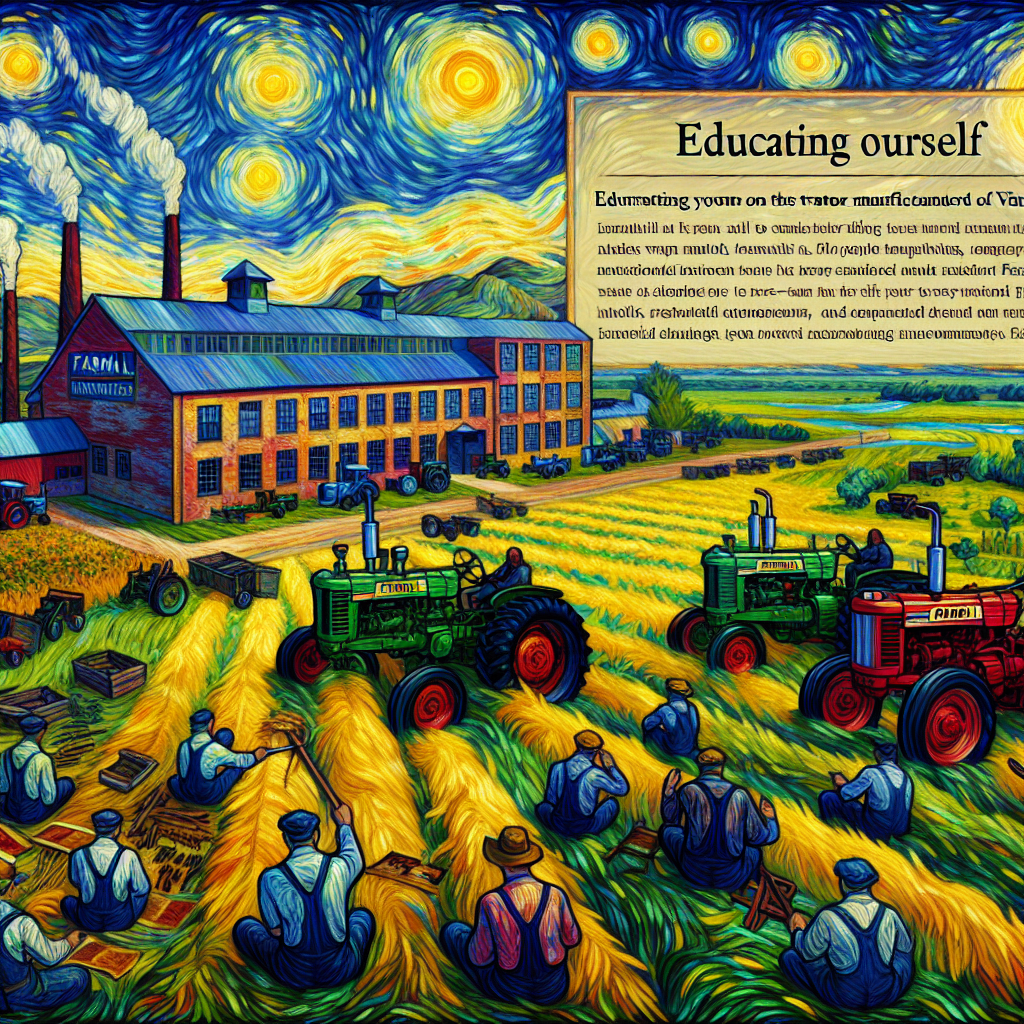
Poem
Checklist
Combining Classic Reliability with Modern Insight – A Checklist
Checklist Embracing Classic Reliability with Modern Insight
✅______ Reflect on personal stories that connect you with tradition.
✅______ Identify meaningful symbols (like tractors) in your life that represent hard work and resilience.
✅______ Consider how combining the old and new can enhance your emotional connection to your work.
Rational Appeals
✅______ Research case studies demonstrating the success of blending classic strategies with modern technology.
✅______ Analyze the benefits of traditional methods in fostering sustainable practices in your industry.
✅______ Evaluate the efficiency gains from integrating technology into established workflows.
Ethical Appeals
✅______ Discuss the importance of maintaining accountability and transparency when updating traditional practices.
✅______ Consider the inclusivity of changes — are they accessible to all community members?
✅______ Reflect on the responsibility to pass on knowledge and wisdom to future generations.
Authority Appeals
✅______ Seek guidance from experienced mentors who embody the blend of tradition and innovation.
✅______ Attend workshops or seminars led by experts to deepen your understanding of classic and modern methods.
✅______ Use the insights from authority figures to inform your decisions and practices.
Narrative Appeals
✅______ Share stories of past successes that highlight the value of perseverance and traditional methods.
✅______ Create a narrative around the evolution of your practices, showcasing how they honor the past while embracing the future.
✅______ Encourage others to contribute their narratives, fostering a sense of community and shared experience.
Social Appeals
✅______ Engage with community members to discuss how shared traditions can enhance mutual goals.
✅______ Collaborate with peers to implement both traditional and modern strategies in your work environment.
✅______ Celebrate collective achievements that honor both historical practices and innovative advancements.

Checklist
At ClassicTractorNews, we help tractor lovers keep up with the latest news for classic and vintage tractors.
Please share this post with your friends, family, or business associates who may like old classic or vintage tractors.