


Reviving Heritage: Smart Tech For Timeless Machines
By Tom Seest
At ClassicTractorNews, we help tractor lovers keep up with the latest news for classic and vintage tractors.
Please share this post with your friends, family, or business associates who may like old classic or vintage tractors.
Classic Tractor AI – Keeping Old Machines Alive Longer
Classic tractors have a way of weaving themselves into the fabric of our lives, transcending mere machinery. They represent not just engines of power but vessels of nostalgia, stories, and human ingenuity. In an age driven by rapid technological advancement, the emergence of AI in classic tractor restoration invites us to re-evaluate our relationship with these beloved machines.
Picture a quaint farm, the sun peeking over the horizon, casting golden light on rusted metal and faded paint. That’s not just a tractor in the shed; it’s the heartbeat of generations. Each scratch and dent tells a tale—a father teaching his son to plow the field, a family reunion wrapped in the warmth of shared memories, laughter, and hard work. The challenge arises: how do we keep these stories alive amidst the relentless march of modernity? Enter AI, not as a replacement but as a caretaker and curator of our history.
Amongst the clamor for the latest models and shiny gadgets, classic tractors deserve more than a one-way ticket to obsolescence. AI can revolutionize the world of classic tractor enthusiasts by creating digital twins of these machines—models that allow us to analyze their performance, address issues, and personalize maintenance plans without altering their essence. This approach isn’t about rendering a soul-less replica but nurturing the history within. It’s like treating a wise old friend with the respect they deserve while still ensuring they remain vibrant and functional.
There’s something fundamentally ethical about preserving these machines for future generations. By leveraging technology to uphold the past, we form a bridge between old and new, teaching the values of craftsmanship and sustainability. But let’s not forget: this is more than just maintenance; it’s about connection. Just as a parent shares life lessons with their child through stories and experiences, we can use AI to foster communities of enthusiasts who share tips, innovations, and heartfelt tributes to the beloved classics.
The trust we place in these tractors and the memories they embody is sacred. As we employ AI to keep these machines running longer, we’re not just preserving metal and rubber; we’re honoring legacies and connecting with our roots. This journey isn’t merely mechanical; it’s deeply human, reminding us that while tools may evolve, the heart and spirit of what they represent remain timeless. So, as we drive forward, let’s steer gently, respecting the past while embracing the future. After all, these classic tractors are more than machines; they are the stories of who we are.

Classic Tractor AI – Keeping Old Machines Alive Longer
Classic Tractor AI – Keeping Old Machines Alive Longer
- Classic tractors symbolize nostalgia, stories, and human ingenuity, transcending mere machinery.
- AI in tractor restoration calls for a reevaluation of our relationship with these machines.
- Each tractor embodies generational memories, challenging us to preserve their stories amid modernity.
- AI can create digital twins of classic tractors, enhancing maintenance without compromising their essence.
- Preserving these machines is ethically important for teaching craftsmanship and sustainability to future generations.
- AI can foster community connections among enthusiasts, sharing innovations and tributes to classic tractors.
- The journey of preserving classic tractors is deeply human, merging the old with the new while honoring legacy.

Classic Tractor AI – Keeping Old Machines Alive Longer
Table Of Contents
- Classic Tractor AI – Keeping Old Machines Alive Longer
- What Memories Do These Classic Tractors Evoke for You?
- How Can We Preserve These Machines for Future Generations?
- What Stories Do These Tractors Tell About Our History?
- How Do Classic Tractors Contribute to Sustainable Farming?
- Who Benefits Most From Maintaining These Beloved Machines?
- How Does Restoring a Classic Tractor Foster Community Connections?
- Conclusion
- Other Resources
- Glossary Of Terms
- Other Questions
- Haiku
- Poem
- Checklist
What Memories Do These Classic Tractors Evoke for You?
When I think of classic tractors, I’m immediately transported back to my childhood. There’s a unique aroma that wafts through the air—freshly cut hay mingling with the unmistakable scent of diesel. It’s a fragrance that ignites a symphony of memories, each note resonating with the rhythmic hum of a tractor as it labors on the land. These machines aren’t just steel and horsepower; they’re the backbone of countless stories, steeped in grit, love, and tenacity.
Picture a summer afternoon spent on a family farm, the sun casting a golden hue across the fields. That massive green tractor is more than a piece of equipment; it’s a storytelling companion, an instrument of labor where generations have shared laughter, struggles, and triumphs. Every worn steering wheel tells a tale, every dented fender bears witness to a hard day’s work. They remind us of our roots, the hands that shaped our existence, and the hard-fought traditions that connect us to the earth.
Beyond the nostalgia, there’s a deeper connection that these tractors symbolize—a testament to resilience. Think about it: when the world speeds forward, embracing technology and automation, these classic machines stand as reminders of simpler times. They evoke a sense of pride in craftsmanship, in doing things by hand. It’s about taking a stand against the fleeting nature of modern life, allowing us to appreciate the sweat and grit it takes to cultivate the land we rely on. In a world where values often blur, these tractors ground us, underlining the importance of hard work, family, and community.
And consider the legacy we inherit; it’s not just about the tractors, but the lessons they represent. Farmers of yesteryear dedicated their lives to the soil, nurturing it like a labor of love. That dedication instills a sense of responsibility in us—an ethical obligation to honor the land and the people who have tended it before us. Their stories encourage us to reflect on our own lives, to foster connections, and to inspire the next generation with the same dedication.
So, the next time you see a classic tractor, take a moment to appreciate what it stands for. It’s more than just a relic of the past; it’s a bridge to our history, our community, and our very identity. Let those memories wash over you, as you acknowledge not only where you’ve been, but where you’re headed, with a little help from the humble tractor that has fueled dreams for generations.

What Memories Do These Classic Tractors Evoke for You?
What Memories Do These Classic Tractors Evoke for You?
- Classic tractors evoke childhood memories and a unique aroma of freshly cut hay and diesel.
- These machines represent stories of hardship, love, and tenacity on family farms.
- Every aspect of a classic tractor, from the steering wheel to the fender, tells a tale of labor and tradition.
- They symbolize resilience and a connection to simpler times amidst modern technological advancement.
- Classic tractors underscore the values of hard work, family, and community.
- The legacy of classic tractors includes lessons of dedication and responsibility toward the land.
- They serve as reminders of our history and identity, connecting us to past generations and inspiring the future.

What Memories Do These Classic Tractors Evoke for You?
How Can We Preserve These Machines for Future Generations?
There’s something profoundly beautiful about a well-maintained tractor, humming softly in a field, a symbol of human ingenuity and hard work. Preservation isn’t just about keeping equipment functional; it’s about safeguarding the stories and experiences tied to these machines. Imagine the countless families who have cultivated the land with these tractors, passing down their wisdom along with the rust and metal. Each dent tells a story; each scratch a memory.
Preserving these machines requires more than just a toolbox and oil; it calls for a deep respect for the legacies they represent. We’ve all seen abandoned tractors left to the elements, forgotten reminders of once-vibrant farms alive with laughter and toil. They beckon us to remember the hands that guided them and the dreams that fueled their engines. Every time we restore one of these machines, we’re not just repairing metal; we’re reviving a part of our history and honoring those who labored before us.
Involve your community in this effort. Think about organizing a local “Tractor Restoration Day.” Invite neighbors, schools, and families. Share stories about how tractors changed lives, how they made the impossible possible, providing growth and sustenance. Children can learn that these machines are more than metal; they are vessels of connection, teaching them the value of hard work, teamwork, and perseverance.
Let’s take a moment to consider what it means to preserve something as straightforward yet profound as a tractor. It’s not just about maintenance; it’s about stewardship. When we invest time and resources into these machines, we express an ethical commitment to future generations. We are saying, “Yes, you too can dream. You too can cultivate.” It’s about giving them something tangible, a piece of history that speaks to the resilience of the human spirit.
Engaging with our past cultivates trust in our future. As we work together to restore these iconic machines, we build a community narrative that echoes through time. Every tire turned, every engine revved is a moment that binds us together. So, let’s take action, not just as individuals, but as a collective dedicated to nurturing our heritage and inspiring the next generation. Let’s ensure that the legends of these tractors are not just preserved in memory but celebrated with every farm they plow, every harvest they aid, and every story they tell.

How Can We Preserve These Machines for Future Generations?
How Can We Preserve These Machines for Future Generations?
- A well-maintained tractor symbolizes human ingenuity and hard work.
- Preservation safeguards the stories and experiences tied to these machines.
- Restoration is an act of honoring the legacies of those who used these tractors.
- Community involvement, such as organizing a “Tractor Restoration Day,” can foster connection and learning.
- Preserving tractors reflects an ethical commitment to future generations.
- Restoration efforts build a communal narrative and trust in our shared heritage.
- The legacy of tractors should be celebrated through their ongoing use and the stories they embody.

How Can We Preserve These Machines for Future Generations?
What Stories Do These Tractors Tell About Our History?
Tractors stand as silent witnesses to the evolution of our agrarian roots, embodying the grit and spirit that shaped communities and families. Each rusted frame and worn-out tire tells tales of toil and triumph, a mechanical heartbeat pulsing through the fields of our past. Consider the farmer, rising before dawn, the tractor his steadfast companion, a tool that transformed the landscape and fosters connection to the earth. It’s not just machinery; it’s a lifeline, the difference between a good harvest and empty silos.
In the realm of their utilitarian purpose, these machines represent a rich narrative intertwined with our societal fabric. They capture the revolutionary shift from manual labor to mechanized farming, showcasing human ingenuity. As families transitioned from horse-drawn plows to tractors, they weren’t just modernizing; they were rewriting the narrative of survival and prosperity. This innovation didn’t just enhance productivity; it symbolized hope for a better future, fostering generations to stand taller, bound by their labor and its rewards.
Yet, the story of these tractors goes beyond agriculture. They symbolize the resilience of the community—the gatherings at the local fair, the pride of showcasing your Magnum or John Deere, where each tractor tells its owner’s story. You could rightfully argue that they are more than just farming equipment; they carry the legacy of families, marking the moments of joy, hardship, and unity. Every time a tractor roars to life, it rekindles a sense of belonging.
Let’s reflect on the ethics of the agricultural revolution. As tractors replaced traditional farming methods, they agitated the very fabric of rural lifestyles. This shift raises questions about sustainability and the ethical implications of intensive farming. It invites us to consider the balance between progress and preservation, urging us to reconnect with the land and each other in mindful ways. Just as tractors transformed the fields, we too must evolve our relationship with agriculture to create a sustainable future.
So, next time you see a tractor, remember it’s not just metal and horsepower; it’s the sweat of our ancestors, the dreams of families, and the promise of what lies ahead. In understanding these stories, we can foster a deeper appreciation for our roots and look ahead with resolve, inspired to shape a narrative that honors both our past and the land we call home.

What Stories Do These Tractors Tell About Our History?
What Stories Do These Tractors Tell About Our History?
- Tractors symbolize the evolution of agrarian roots and the spirit of communities.
- Each worn tractor tells stories of labor and determination, connecting farmers to the land.
- They mark the shift from manual labor to mechanized farming, showcasing human ingenuity.
- Tractors represent resilience and unity within agricultural communities and families.
- They evoke pride and nostalgia, often becoming symbols of personal and familial legacies.
- The transition to tractors raises ethical questions about sustainability in agriculture.
- Tractors embody the hard work of ancestors while inspiring hope for a sustainable future.

What Stories Do These Tractors Tell About Our History?
How Do Classic Tractors Contribute to Sustainable Farming?
Classic tractors symbolize more than just machinery; they are a testament to farming’s past and a potential guide to its sustainable future. Picture a weathered old tractor, its paint chipped from years of hard work, yet standing proud in a field of vibrant crops. This isn’t just nostalgia; it’s a reminder of simple, time-tested methods that can lead us toward a more sustainable approach to agriculture.
In an era where farming seems dominated by corporate giants and cutting-edge technology, these classic tractors evoke a connection to the land and the community. They remind us of the farmers who cultivated their fields by hand, nurturing the soil with care and respect. This is about recognizing that sustainability isn’t always synonymous with high-tech gadgets; sometimes, it comes from honoring the wisdom of our predecessors.
Using classic tractors promotes a more eco-friendly farming practice. These machines are often built to last, designed with repair in mind rather than obsolescence. Many farmers are turning to vintage models, which often run on more straightforward mechanics and use less fuel compared to modern counterparts. This choice isn’t just a nod to tradition; it’s a way to reduce carbon footprints while maximizing efficiency. In a sense, it’s like opting for a trusty, reliable old friend over a flashy but temperamental new acquaintance.
Moreover, the stories these tractors carry—like the farmer who harvested crops during the Great Depression or the family who passed their favorite model down through generations—create a tapestry of shared values and experiences within communities. It fosters respect for the hard work involved in farming and the ethical responsibility we hold toward our environment. The emotional connection formed is palpable, inspiring a new generation of farmers to appreciate where their food comes from and the effort that goes into production.
Consider the farmer who meticulously restored their grandfather’s classic tractor, not just to keep it running but to keep alive the spirit of stewardship that defines sustainable farming. Each turn of the wheel connects current practices to ancestral roots, blending history with aspirations for a greener future. In an increasingly disconnected world, this bond resonates deeply, inviting others to reconnect with the land.
Embracing classic tractors is not just about preserving a legacy; it is about forging a forward path that champions sustainability. It’s a call to recognize the strength in simplicity, reminding us that sometimes, to move forward, we need to look back. Such tractors stand as enduring symbols of resilience, innovation, and community—a legacy worth carrying into tomorrow’s fields.

How Do Classic Tractors Contribute to Sustainable Farming?
How Do Classic Tractors Contribute to Sustainable Farming?
- Classic tractors symbolize a connection to farming’s past and guide to sustainable farming practices.
- They evoke nostalgia and remind us of the simplicity and effectiveness of traditional agricultural methods.
- Classic tractors are eco-friendly, built for repair and longevity, often using less fuel than modern models.
- The stories behind these tractors foster community values and respect for the farming profession.
- Restoring classic tractors helps preserve a spirit of stewardship and connects current farmers to their heritage.
- This embrace of classic machinery champions sustainability by recognizing the strength in simplicity.
- Classic tractors represent resilience, innovation, and community, serving as a legacy for future generations.

How Do Classic Tractors Contribute to Sustainable Farming?
Who Benefits Most From Maintaining These Beloved Machines?
In every small town, there sits a tractor—rusted but proud, a testament to the hands that built it and the fields it once roamed. These machines are more than just metal and mechanics; they are lifelines. They connect generations of farmers who have turned the soil and nurtured the land. But as we consider who benefits from maintaining these beloved machines, we must look beyond the obvious.
Take, for instance, the story of old Mr. Jenkins, a farmer known for his fierce dedication to his vintage tractor. Every Saturday, he can be found in his barn, oiling parts and fitting new belts. To an outsider, it may seem like a hobby. Yet, for Mr. Jenkins, it’s a ritual steeped in nostalgia—each bolt he tightens brings back memories of his father teaching him the ropes. Maintaining that tractor does more than keep it running; it keeps the family legacy alive.
Then there’s the community aspect. In many places, tractors serve as a source of social connection. They’re the focal point of gatherings—community harvests, fairs, and parades. When people come together to share stories or tools, the bond strengthens, fostering relationships that run deep in the roots of rural America. The preservation of these machines creates a network of support and knowledge-sharing that extends well beyond the engine’s roar.
From a rational perspective, investing time and resources into maintaining tractors also has significant implications for sustainability. These machines, when cared for, often outperform newer models in fuel efficiency and reliability. By keeping them in good shape, farmers not only save money but also reduce their carbon footprint. It’s not just about nostalgia; it’s a pragmatic approach to modern agriculture that respects the past while securing the future.
Ethically, there’s something profoundly poetic about honoring the craftsmanship of an earlier era. Each tractor has a story to tell—a silent witness to the trials and triumphs of farming life. Preserving these machines contributes to a cultural heritage that deserves respect, reinforcing an identity tied to hard work, perseverance, and integrity.
Maintaining a tractor is less about the need for machinery and more about the heartbeat of the community it serves. It’s an act of love—a connection to the land, the past, and the people who rely on it. As long as these beloved machines are kept alive, so too are the stories, values, and relationships that define us.

Who Benefits Most From Maintaining These Beloved Machines?
Who Benefits Most From Maintaining These Beloved Machines?
- Tractors serve as symbols of heritage and community in small towns.
- They connect generations of farmers and maintain family legacies.
- Mr. Jenkins exemplifies the nostalgic ritual of tractor maintenance.
- Tractors foster social connections in local gatherings and events.
- Maintaining them contributes to sustainability and reduces carbon footprints.
- Preserving tractors honors craftsmanship and reinforces cultural heritage.
- Tractor maintenance represents a deep connection to community and values.

Who Benefits Most From Maintaining These Beloved Machines?
How Does Restoring a Classic Tractor Foster Community Connections?
Restoring a classic tractor can be more than just a hobby; it’s a gateway to reconnecting with our roots and the community that surrounds us. Picture this: a rusty old tractor, once a workhorse of the farm, now gathering dust and memories in a barn. When someone steps into the world of restoration, they’re not just fixing machinery; they’re igniting stories that bridge generations. That transformation, from neglected relic to shining symbol of heritage, is akin to breathing life back into a forgotten relationship with both the soil and the people we share it with.
Consider the tale of an elderly farmer, his weathered hands skilled at mending more than just metal. As he dusts off his grandfather’s tractor, it’s not merely about the restoration itself. It’s a profound reconnection with the past—his childhood laughter mingling with the sounds of that engine roaring back to life. That tractor, in its refurbished state, feels less like an inanimate object and more like a bridge to community memory—not just his, but shared with neighbors who recall the same fields, the same harvests, the same challenges faced together. It becomes a conversation starter at county fairs, where enthusiasts gather, sharing tools, tips, and laughter, all stemming from a shared appreciation for the art of restoration.
This act of bringing a tractor back to life taps into a shared ethical responsibility—to preserve our heritage. In an age where everything is disposable, reviving something that once connected us to the land fosters a sense of purpose. It’s not just about nostalgia; it’s about standing against a culture of throwaway. When you stroke the surface of that polished metal or dig into the mechanics, you’re also digging into the community’s history, fostering partnerships and friendships that thrive on shared goals.
Engaging in restoration reinforces social ties. It’s the core of local gatherings, workshops, and rallies where passion fuels collaboration. The skills exchanged are invaluable, and with each small victory in the restoration process, confidence blossoms in the hearts of participants, new and seasoned alike. The tractor becomes a canvas for creativity—a shared project that invites participation from all walks of life.
In restoring a classic tractor, you aren’t just chasing a bygone era; you’re breathing vitality into community dynamics, creating connections, and nurturing the bonds that hold us together. Each turn of the wrench draws us closer—not just to history, but to one another. It’s a reminder that amidst our fast-paced world, we can still cultivate deep, meaningful relationships through shared endeavors.

How Does Restoring a Classic Tractor Foster Community Connections?
How Does Restoring a Classic Tractor Foster Community Connections?
- Restoring a classic tractor serves as a means to reconnect with roots and community.
- The transformation of a neglected tractor symbolizes bridging generations and fostering heritage.
- An elderly farmer’s restoration of his grandfather’s tractor reconnects him with past memories and community experiences.
- County fairs become venues for sharing stories, tools, and experiences among restoration enthusiasts.
- The act of restoration promotes ethical responsibility to preserve heritage in a disposable culture.
- Engaging in restoration strengthens social ties through collaboration in local gatherings and workshops.
- Each act of restoration nurtures community relationships, reminding us of shared values and connections.

How Does Restoring a Classic Tractor Foster Community Connections?
Conclusion
Classic tractors are not merely relics of the past; they represent the heart, soul, and spirit of agriculture. These machines have transcended their utilitarian function to become treasured icons, embodying memories, labor, and the dedication of generations. In today’s fast-paced, technology-driven society, where convenience often overshadows connection, the revival of classic tractors through AI and smart technology offers a unique opportunity to preserve our heritage while embracing modern advancements.
Every scratch and dent on a classic tractor tells a story—one of hard work, tradition, and family legacies. These tangible reminders foster a sense of identity and belonging, linking individuals to their roots and instilling values of perseverance and craftsmanship. As we navigate through an era marked by rapid change, turning to our past for guidance can illuminate paths toward sustainability and community.
Artificial intelligence, rather than replacing the essence of these classic machines, helps maintain their legacy. By creating digital twins, enthusiasts can ensure that the tractors remain operational, allowing for personalized care without compromising their historical value. This approach not only preserves the machinery itself but honors the stories and experiences woven into their fabric, fostering a deeper emotional connection to our agricultural history.
Engaging in the restoration and care of these ancient workhorses cultivates community bonds. Whether through local gatherings or hands-on workshops, restoring tractors brings people together, sharing knowledge, skills, and a collective appreciation for the craftsmanship of earlier generations. This connection reaffirms an ethical duty to honor both the land and the stories that accompanied it, aligning present efforts with future sustainability goals.
As we maintain these beloved machines, we are not just keeping engines running; we are sustaining the narratives that define us. Every tractor becomes a beacon of resilience, reminding us of the importance of hard work and dedication, principles that continue to shape our communities. In this endeavor, we celebrate not only the machines themselves but the shared values and experiences that connect us to our past and guide us toward a meaningful future.
So, when you encounter a classic tractor, take a moment to reflect on what it represents. It’s a symbol of our collective journey—each turn of the wheel reconnecting us with who we are while propelling us forward. Let’s respect the past as we embrace the future, ensuring that these machines continue to tell our stories for generations to come.
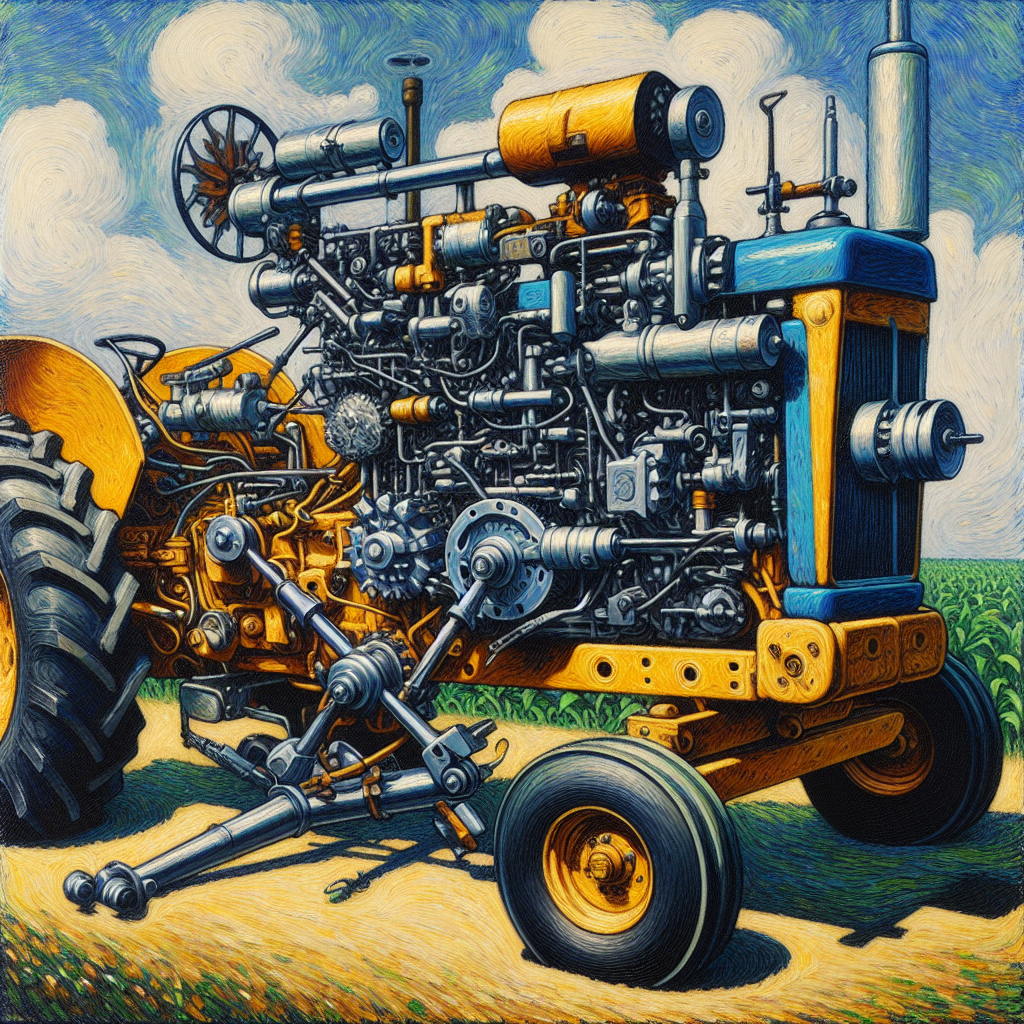
Conclusion
Conclusion:
- Classic tractors symbolize the heart and spirit of agriculture, transcending their utilitarian purpose.
- Each scratch on a classic tractor represents stories of hard work, tradition, and family legacies.
- The revival of classic tractors through AI preserves heritage while embracing modern technology.
- Digital twins created with AI maintain the historical value of tractors while ensuring operational functionality.
- Restoration efforts cultivate community bonds and appreciation for traditional craftsmanship.
- Maintaining classic tractors sustains the narratives that define our history and values.
- Classic tractors serve as symbols of resilience, connecting us to our past and guiding us toward the future.

Conclusion
Other Resources

Other Resources
Here is a list of other resources you can review online to learn more:
- Kioti Tractors
- Bima
- Bristol
- Classic Old Tractors
- Park Rapids Antique Tractor & Engine Club
- Captain
- Classic Tractor Calender
- McCormick-Deering
- Cockshutt
- Bombardier
- Deutz
- Wilke’s Classic Tractors
- Happy Farmer
- East Wind
- Ascot Universal
- Agri-Power
- Schramm
- Minnesota’s Machinery Museum
- Farmtrac
Use This Prompt To Get More Resources With Your Favorite Online AI Tool: Please provide me with a list of online articles with their URLs in a bulleted list that I can read regarding Classic Tractor AI – Keeping Old Machines Alive Longer

Other Resources
Glossary Terms
Classic Tractor AI – Keeping Old Machines Alive Longer – Glossary Of Terms
– Classic tractor — older agricultural tractors built before modern electronic controls; the primary subject for preservation, retrofitting, and AI-enabled monitoring.
– Legacy systems — original mechanical, electrical, and control components in classic tractors that lack modern interfaces and diagnostics.
– Retrofitting — adding modern sensors, controllers, or communication modules to older tractors to enable monitoring, control, and data collection.
– Telematics — remote transmission of vehicle data (location, usage, and health) for monitoring, analysis, and fleet management.
– Internet of Things (IoT) — networked sensors and devices on tractors that collect and exchange operational data for analysis and automation.
– Sensor fusion — combining data from multiple sensors (vibration, temperature, GPS, pressure) to produce a more accurate assessment of machine condition.
– Vibration analysis — evaluating vibration patterns to detect bearing wear, imbalance, misalignment, and other mechanical faults.
– Predictive maintenance — using historical and real-time data with models to predict failures and schedule repairs before breakdowns occur.
– Condition-based maintenance — performing maintenance actions when measured machine condition indicates need rather than on fixed schedules.
– Preventive maintenance — routine inspections and servicing at predetermined intervals to reduce the probability of failure.
– Anomaly detection — algorithms that identify deviations from normal operational patterns that may indicate emerging faults.
– Digital twin — a virtual replica of a tractor that mirrors its physical state for simulation, testing, and diagnostics.
– Edge computing — processing sensor data locally on the tractor or nearby gateway to reduce latency and conserve bandwidth.
– Cloud analytics — centralized collection and machine learning analysis of data from multiple tractors to generate insights and models.
– CAN bus (Controller Area Network) — a vehicle communication protocol that can be added to vintage tractors to connect sensors and controllers.
– Data logging — systematic recording of operating parameters and sensor outputs for troubleshooting and model training.
– Over-the-air (OTA) update — remotely delivering software or firmware updates to retrofitted electronics and controllers.
– Model drift — gradual loss of AI model accuracy over time as operating conditions, wear patterns, or sensor characteristics change.
– Transfer learning — adapting models trained on other machines or datasets to perform well on classic tractor data with limited labeled examples.
– Domain adaptation — methods that help AI models generalize when training data and target tractor conditions differ substantially.
– Root cause analysis — systematic investigation methods to trace observed symptoms back to their fundamental mechanical or electrical causes.
– Fault diagnosis — identifying the specific component, subsystem, or failure mode responsible for degraded performance or faults.
– Actuator — an electromechanical device (motor, solenoid, valve) used in retrofits to control mechanical functions on a tractor.
– Hydraulic system — fluid-power components (pumps, valves, cylinders) used for steering, implements, and lift functions that require monitoring.
– Powertrain — engine, transmission, clutch, and driveline components where wear and failure critically affect tractor operation.
– Carburetor — mechanical fuel-air mixing device common on older tractors, prone to clogging, wear, and tuning issues.
– Fuel injection retrofit — upgrading or augmenting carbureted engines with controlled fuel injection to improve efficiency and enable diagnostics.
– Additive manufacturing (3D printing) — producing obsolete or custom replacement parts on demand to prolong tractor service life.
– Parts obsolescence — the diminishing availability of original components, driving needs for reproduction, substitutes, or redesign.
– Augmented reality (AR) diagnostics — overlaying schematics, sensor data, and step-by-step instructions on a technician’s view to speed troubleshooting and repairs.

Glossary Of Terms
Other Questions
Classic Tractor AI – Keeping Old Machines Alive Longer – Other Questions
If you wish to explore and discover more, consider looking for answers to these questions:
- What exactly is Classic Tractor AI and how does it work?
- How can AI create a digital twin of a classic tractor?
- What types of sensors are needed to monitor a classic tractor?
- Can AI-based diagnostics work on tractors without modern electronics?
- How accurate are AI predictions for maintenance and failure prevention?
- What data does the AI require and how is that data collected?
- Who owns the data collected from my tractor and how is privacy protected?
- How much does it cost to implement AI monitoring on a classic tractor?
- Are there subscription or ongoing costs for Classic Tractor AI services?
- How invasive is the installation process for sensors and telematics?
- Will adding sensors or telemetry alter the tractor’s historical authenticity?
- Can AI recommendations be tailored to preserve originality rather than modernize?
- What are common restoration priorities suggested by AI for classic tractors?
- How can AI help source the correct parts or OEM specifications?
- Are reproduction or 3D‑printed parts compatible with AI-guided restoration?
- How do you balance modern safety upgrades with preserving historical value?
- Can AI assess the structural integrity of frames, axles, and welds remotely?
- What predictive maintenance intervals should owners follow after restoration?
- How do restoration costs compare to replacement or buying a newer tractor?
- Are there grants, tax incentives, or funding for preservation projects?
- Where can I find documentation, service manuals, and wiring diagrams for old models?
- How can a community coordinate a restoration day or volunteer program effectively?
- What skills or tools are essential for a beginner restoring a tractor?
- How long does a typical full restoration take and what factors influence timeline?
- What are best practices for photographing and documenting restoration work?
- How should provenance and serial numbers be tracked and verified?
- Can AI help estimate the resale or show value of a restored tractor?
- What insurance or liability considerations exist for restored tractors used on the road or at events?
- How can classic tractors contribute practically to sustainable farming today?
- Do vintage tractors have better or worse fuel efficiency and emissions than modern machines?
- Is it feasible to convert a classic tractor to electric power, and what are the tradeoffs?
- How do you find qualified mechanics or restoration shops experienced with vintage tractors?
- What safety upgrades are recommended without compromising historical integrity?
- How do tractor shows and judging standards treat aftermarket modifications or AI additions?
- Can AI-facilitated communities help match spare parts donors with restorers?
- What open-source tools or apps exist for classic tractor owners and restorers?
- How can schools or youth programs incorporate tractor restoration into hands-on learning?
- What are ethical concerns about digitizing and sharing historical tractor data?
- How reliable are third-party reproduction parts and how can AI help validate them?
- What preventive maintenance checklist should owners follow after restoration?
- How should rare or one-off models be conserved differently than common makes?
- What are recommended storage and climate-control methods to prevent future deterioration?
- How can owners find and verify historical paint codes, decals, and finishes?
- What case studies exist of successful AI-assisted restorations or digital twin projects?
- How does Classic Tractor AI handle software updates and long-term support?
- Are there interoperability standards so different tractors and tools work with the same AI platform?
- How do you begin—what are the first steps to assess a tractor and start preservation?

Other Questions
Haiku
Classic Tractor AI – Keeping Old Machines Alive Longer – A Haiku
Old iron whispers tales,
Rooted in earth, hearts and hands—
Preserve, connect us.

Haiku
Poem
Classic Tractor AI – Keeping Old Machines Alive Longer – A Poem
In fields where rusted giants stand,
With stories sewn into each hand,
Classic tractors, humble yet grand,
Join past and future, a timeless band.
From sunlit farms where laughter flows,
Their engines hum as memory grows,
Each dent and scratch, a tale bestows,
Of labor’s love, where heritage glows.
AI steps in, a guardian wise,
Keeping their souls while timelines rise,
Revealing the past through modern eyes,
Reviving spirits, where nostalgia lies.
Communities gather, hands intertwined,
Restoring machines that history find,
Lessons of grit and work combined,
Fostering bonds, human and kind.
Sustainability written in steel,
Craft and care remind us to feel,
Tethered to earth, as dreams reveal,
A legacy nurtured, our future’s appeal.
Celebrate tractors, our stories unfold,
In their revival, treasures retold,
With every repair, a connection bold,
Unity blossoming, a heritage gold.
So let’s steer gently, with care and pride,
Embrace the wisdom these machines provide,
For in each roar and every ride,
Lies the heart of who we are, side by side.

Poem
Checklist
Classic Tractor AI – Keeping Old Machines Alive Longer – A Checklist
Emotional Appeal
✅______ Recall a cherished memory associated with classic tractors ⠀
✅______ Share a personal story involving a family member and a tractor ⠀
✅______ Reflect on the feelings evoked by seeing a classic tractor ⠀
Rational Appeal
✅______ List the benefits of restoring classic tractors over purchasing new models ⠀
✅______ Identify local resources for parts and maintenance ⠀
✅______ Evaluate the fuel efficiency of vintage tractors compared to modern machinery ⠀
Ethical Appeal
✅______ Commit to preserving the legacy of classic tractors for future generations ⠀
✅______ Arrange or participate in community restoration events ⠀
✅______ Advocate for sustainable farming practices that respect traditional methods ⠀
Authority Appeal
✅______ Seek out experts or join forums dedicated to classic tractor restoration ⠀
✅______ Attend workshops or seminars on maintenance and restoration techniques ⠀
✅______ Read books or articles written by seasoned tractor enthusiasts ⠀
Narrative Appeal
✅______ Document and share the stories behind specific tractors in your community ⠀
✅______ Create a blog or scrapbook detailing your restoration journey ⠀
✅______ Participate in local fairs or events to showcase restored tractors and their histories ⠀
Social Appeal
✅______ Organize a monthly gathering for fellow enthusiasts to share tips and experiences ⠀
✅______ Involve local schools or youth groups in tractor restoration projects ⠀
✅______ Promote a collective community effort to maintain and celebrate classic tractors ⠀

Checklist
At ClassicTractorNews, we help tractor lovers keep up with the latest news for classic and vintage tractors.
Please share this post with your friends, family, or business associates who may like old classic or vintage tractors.