


Unleashing Independence With Lowtech Tractors
By Tom Seest
At ClassicTractorNews, we help tractor lovers keep up with the latest news for classic and vintage tractors.
Please share this post with your friends, family, or business associates who may like old classic or vintage tractors.
Are Farmers Finding Freedom In Lowtech Tractor Models?
In the vast expanse of our countryside, there’s a growing chorus of farmers putting their hands back on the soil and their hearts back into the dirt. It’s not just a nostalgic nod to the past, but a deliberate choice to embrace simplicity in an era that’s often obsessed with the latest bells and whistles. Enter the low-tech tractor—a sturdy workhorse that masterfully blends reliability with a sense of authenticity that many modern options simply can’t match.
Now, let’s be clear. The allure of a high-tech, touchscreen-enabled tractor can be intoxicating. Who wouldn’t want to sit back and let artificial intelligence do the heavy lifting? But underneath that shiny exterior lies a tangled web of complicated machinery and dependencies that can leave more seasoned farmers feeling a little lost—or worse, tied down. Low-tech models, on the other hand, invite you in. They evoke a sense of nostalgia, a connection to generations of farmers who cultivated the land with grit, determination, and a whiff of good old-fashioned grease.
Picture it: a well-worn tractor, its engine purring as you guide it across the field. It’s just you and the land, and every turn of the wheel reminds you why you fell in love with farming in the first place. Suddenly, the hustle and bustle of modern life fade away. You’re no longer chasing after the latest features; you’re forging a relationship—not only with your tools but with the very earth that nourishes your crops.
And let’s not overlook the practical perks. Low-tech tractors are often easier to maintain, less prone to breakdowns riddled with complex electronics, and, more importantly, they won’t leave you stranded waiting for a repair technician on a Sunday morning. Farmers are discovering that these machines can still pack a punch and deliver results without the anxiety that can come with high-tech dependency.
Beyond just the mechanics, choosing low-tech means embracing a lifestyle—one where self-reliance flourishes. It creates an opportunity to reconnect with the land in a way that feels grounded and genuine. You take charge, and in return, the earth rewards you with its bounty. Perhaps it’s time to ask yourself: is freedom from the modern treadmill of farming something worth considering? The answer might just lie in the simplicity of a reliable, low-tech tractor. It’s not just about cultivating crops; it’s about cultivating a life full of purpose and pride.

Are Farmers Finding Freedom In Lowtech Tractor Models?
Are Farmers Finding Freedom In Lowtech Tractor Models?
- Farmers are returning to traditional practices, embracing simplicity in a tech-obsessed era.
- Low-tech tractors offer reliability and authenticity compared to high-tech, complex machinery.
- High-tech tractors can overwhelm seasoned farmers with complicated features and dependencies.
- Using a low-tech tractor fosters a personal connection with the land and farming roots.
- Low-tech tractors are easier to maintain and less likely to break down than their high-tech counterparts.
- Choosing low-tech tractors promotes self-reliance and a grounded lifestyle in farming.
- Embracing low-tech solutions can cultivate a life full of purpose and pride in farming.

Are Farmers Finding Freedom In Lowtech Tractor Models?
Table Of Contents
- Are Farmers Finding Freedom In Lowtech Tractor Models?
- Are Low-Tech Tractors More Cost-Effective For Farmers?
- What Are The Advantages Of Low-Tech Tractors Vs. Modern Models?
- How Do Low-Tech Tractors Impact Sustainability In Farming?
- Can Low-Tech Tractors Improve Small Farm Viability?
- What Specific Features Attract Farmers To Low-Tech Tractors?
- How Do Low-Tech Tractors Affect Labor Needs On Farms?
- Are Low-Tech Tractors Easier To Repair Than High-Tech Models?
- Conclusion
- Other Resources
- Glossary Of Terms
- Other Questions
- Haiku
- Poem
- Checklist
Are Low-Tech Tractors More Cost-Effective For Farmers?
When we think about tractors, we picture those shining machines rolling across vast fields, a blend of steel and technology whirring and buzzing with precision. But what if I told you that sometimes, less is more? Low-tech tractors, often deemed obsolete, can offer a grassroots approach that’s not only budget-friendly but also deeply aligned with the roots of farming itself.
Consider for a moment the mechanics of a low-tech tractor. While it might lack all the bells and whistles of the latest models—no GPS, no fancy touchscreens—it compensates with simplicity and durability. A seasoned farmer knows that too much technology can sometimes lead to a dependence on constant upgrades and repairs. Ever been in a tight spot when your high-tech gadget decides it’s on vacation? You can’t clutch a touch screen when the crop’s waiting for harvest!
Low-tech tractors often run on straightforward mechanics, meaning that with a bit of knowledge and elbow grease, they can be repaired right in the field. Think about it: lowering your maintenance costs and avoiding the dreaded phone call to a technician shifting gears. This adds a layer of assurance that farmers crave—the ability to take matters into their own hands. For many, this isn’t a luxury; it’s a necessity.
Let’s also talk about the price tag. When you invest your hard-earned money into farming, every dollar counts. Low-tech tractors typically come with a significantly lower upfront cost compared to high-tech counterparts. With those savings, you might be able to invest more in the soil, your seed, or even a rainy-day fund—important factors that affect not just your finances, but your peace of mind.
Moreover, embracing low-tech doesn’t mean turning your back on progress. It’s about finding balance. Those who’ve taken the plunge often report a greater connection with their work, enjoying the simple pleasure of listening to a robust engine chugging along. It’s a call back to basics, where the heartbeat of the farm echoes with something real, something tangible.
So, as you ponder which tractor fits your lifestyle and your livelihood, weigh not just the bells and whistles, but the value of simplicity. A low-tech tractor could be the unsung hero of your farming journey—providing reliability, cost savings, and a deeper connection to the very land you cultivate. It’s time to get back to the roots of farming and rediscover what truly keeps the wheels turning.

Are Low-Tech Tractors More Cost-Effective For Farmers?
Are Low-Tech Tractors More Cost-Effective For Farmers?
- Low-tech tractors offer a budget-friendly, grassroots approach to farming.
- They lack advanced features but provide simplicity and durability, minimizing dependence on technology.
- Low-tech tractors can be easily repaired in the field, reducing maintenance costs and reliance on technicians.
- They typically have a lower upfront cost, allowing farmers to invest savings in other essential areas.
- Using low-tech machinery fosters a greater connection to the work and the land.
- Embracing low-tech is about finding balance, not a rejection of progress.
- A low-tech tractor could enhance reliability, cost savings, and a deeper agricultural connection.

Are Low-Tech Tractors More Cost-Effective For Farmers?
What Are The Advantages Of Low-Tech Tractors Vs. Modern Models?
When you think of a tractor, you might envision a hulking piece of machinery with shiny buttons and screens that seem to have a mind of their own. But there’s a certain charm in the world of low-tech tractors that modern models simply can’t replicate.
First off, let’s talk about ease of use. Low-tech tractors come with a straightforward design that anyone can grasp. You know the type: no fancy electronics, no complex computer systems—just good old-fashioned engineering. Whether you’re a seasoned farmer or a weekend warrior tackling a garden project, these tractors get you moving without requiring an engineering degree. Imagine hopping onto a tractor that feels like an extension of yourself. No confusing digital displays; just the purr of an engine and the satisfaction of hands-on operation. It’s like driving a classic muscle car, where the power is in your hands and the joy is palpable.
Then there’s the cost factor. Owning a modern tractor can feel like buying a luxury car—expensive, and that’s before you even think about repairs. Low-tech tractors, on the other hand, offer a budget-friendly alternative. With fewer moving parts and no high-tech components to break down, routine maintenance can be a breeze. Your wallet will thank you when you don’t need to drop a small fortune on a single repair session. Think about it: you can spend less time worrying about how to pay for repairs and more time doing what you love—working the land.
Let’s not forget about the reliability factor. Low-tech tractors are like the trusty old dog that never lets you down. They’ve been around long enough to prove their worth. When the going gets tough, you want a machine that’s been battle-tested through the years. In an era where modern machines can sometimes feel a little too… well, modern, there’s comfort in knowing you have a classic that will still be going strong when the dust settles.
Finally, using a low-tech tractor fosters a deeper connection to the land and the farming process itself. You’re not just operating a machine; you’re engaging with the very earth that sustains us. So, if you’re looking for a tractor that embodies practicality, affordability, and the joys of simpler times, maybe it’s time to consider the unsung hero of agriculture—the low-tech tractor. You just might find yourself in a relationship with your work that’s as enriching as the harvest itself.

What Are The Advantages Of Low-Tech Tractors Vs. Modern Models?
What Are The Advantages Of Low-Tech Tractors Vs. Modern Models?
- Low-tech tractors offer a charming alternative to modern, high-tech models.
- They have a straightforward design, making them easy to operate for anyone.
- Low-tech tractors are budget-friendly with fewer moving parts and lower maintenance costs.
- They provide reliability, proving their worth over time like a trusty old dog.
- Using a low-tech tractor fosters a deeper connection to the land and farming processes.
- They allow for hands-on operation with immediate feedback and satisfaction.
- Low-tech tractors represent practicality and the joys of simpler times in agriculture.

What Are The Advantages Of Low-Tech Tractors Vs. Modern Models?
How Do Low-Tech Tractors Impact Sustainability In Farming?
Let’s picture a scene: the sun just peeking over the horizon, casting a golden glow over fields as far as the eye can see. There, amidst the tranquil expanse, we find the heart of farming: the tractor. Now, don’t get me wrong—modern tech has its merits, but low-tech tractors hold a certain charm and practicality that can’t be overlooked. They remind us that sometimes, less is more.
When it comes to sustainability, these sturdy workhorses play an unassuming yet pivotal role in the narrative of farming. Instead of buzzing around with all the bells and whistles of automation, low-tech tractors prioritize efficiency and simplicity. This isn’t merely about nostalgia; it’s about returning to our roots—quite literally. Farmers who rely on these machines often find themselves deeply connected to their land, working with it rather than against it.
Consider fuel consumption. Low-tech tractors typically boast simpler engines that consume less fuel and, in many cases, can be adapted to run on alternative energy sources. That means fewer emissions, a smaller carbon footprint, and a healthier planet. Isn’t it remarkable how a machine designed decades ago can teach us a thing or two about modern sustainability? By reducing reliance on fossil fuels, these tractors exemplify a hands-on approach to stewardship that we can all admire.
Plus, let’s not forget the economic aspect. Farming is not just about what you grow; it’s about how you grow it. Low-tech tractors can be far more affordable to acquire and maintain compared to their high-tech counterparts, empowering smaller farms to compete in today’s market. Less money tied up in machinery means more funds available for other essential practices—like crop rotation, organic methods, or building community relationships.
In a world racing towards automation, using a low-tech tractor can be a conscious choice to embrace sustainability. It reminds us that farming can be about the human touch, the sweat on your brow, and the satisfaction of knowing you’re working hand-in-hand with nature. It’s not just about getting from point A to point B—it’s about the journey, the lessons learned, and the sustainable practices we adopt along the way.
So, the next time you see a low-tech tractor chugging along in the fields, take a moment to appreciate what it represents: a bridge between tradition and sustainability, embodying the very essence of responsible farming. And if you’re feeling inspired, why not get involved in supporting local farms that prioritize these sustainable methods? Trust me, every little action counts.

How Do Low-Tech Tractors Impact Sustainability In Farming?
How Do Low-Tech Tractors Impact Sustainability In Farming?
- The scene depicts sunrise over fields, symbolizing farming’s heart: the tractor.
- Low-tech tractors focus on simplicity and efficiency, enhancing the farming experience and connection to the land.
- These tractors contribute to sustainability by using less fuel and adapting to alternative energy sources, thus reducing emissions.
- They illustrate hands-on stewardship, reminding us how older machines can inform modern sustainable practices.
- Economically, low-tech tractors are more affordable, allowing smaller farms to thrive and invest in essential practices like crop rotation.
- Utilizing low-tech tractors fosters a human connection to farming, emphasizing the journey and sustainable practices over mere mechanization.
- Support for local farms using sustainable methods is encouraged, as every action contributes to responsible farming.

How Do Low-Tech Tractors Impact Sustainability In Farming?
Can Low-Tech Tractors Improve Small Farm Viability?
Let’s be honest: when you picture a farm, you might see sprawling fields, weathered barns, and, of course, a shiny blue or red tractor rumbling across the land. But what if I told you that the future of small farming might not rely on those high-powered machines? Enter the low-tech tractor—an underdog in the agricultural arena that’s beginning to show potential where you least expect it.
Imagine a tractor that’s more about practicality than prestige. These humble machines are often simpler, more efficient, and, yes, significantly less expensive. They require a fraction of the maintenance that their modern counterparts demand—think of them as the hardworking friend who never lets you down. By reducing costs and the complexity of operations, these low-tech tractors can help farmers focus on what really matters: nurturing their crops and connecting with their communities.
What appeals to many is the notion of sustainability. Low-tech tractors are usually built to last, utilizing fewer resources and resulting in a smaller environmental footprint. By turning away from the flashy features of today’s mega-tractors— GPS-guided plowing, air-conditioned cabs, and complex electronics—farmers are reminded that agriculture is, at its core, about working with the land and understanding the nuances of nature.
Consider the small farmer striving to make a living in a world filled with economic giants. Faced with rising costs and dwindling margins, the last thing they need is a hefty payment plan for a piece of equipment that boasts more tech than practicality. A low-tech tractor fosters resilience, providing a reliable means of production while empowering farmers to reclaim their independence and creativity. It’s less about flaunting high-tech innovations and more about harnessing the essentials to drive their passion.
But it isn’t just about saving money. It’s about community and collaboration. Low-tech tractors are a testament to the idea that sometimes less is more. They allow farmers to share knowledge, skills, and even machinery. A neighborly exchange could spark a revival of the local farming community, reminding us all that farming isn’t just a livelihood—it’s a shared experience.
So, if you’re a small farmer or contemplating stepping into the soil, consider the low-tech tractor option. Embrace simplicity and practicality; it just might be the key to sustaining your farm’s viability in a rapidly changing world. You might just find that these unassuming machines are the perfect partners for your journey.

Can Low-Tech Tractors Improve Small Farm Viability?
Can Low-Tech Tractors Improve Small Farm Viability?
- The future of small farming may not rely on high-powered machines, but rather on low-tech tractors.
- Low-tech tractors are simpler, more efficient, and significantly less expensive with lower maintenance requirements.
- These tractors help farmers focus on nurturing crops and connecting with communities by reducing operational complexities.
- They are built to last, utilizing fewer resources, which contributes to a smaller environmental footprint.
- Low-tech tractors empower small farmers to reclaim their independence and creativity in a challenging economic environment.
- They promote community and collaboration, allowing knowledge and machinery sharing among farmers.
- Consider low-tech tractors for practicality and sustainability as a viable option for maintaining farm operations.
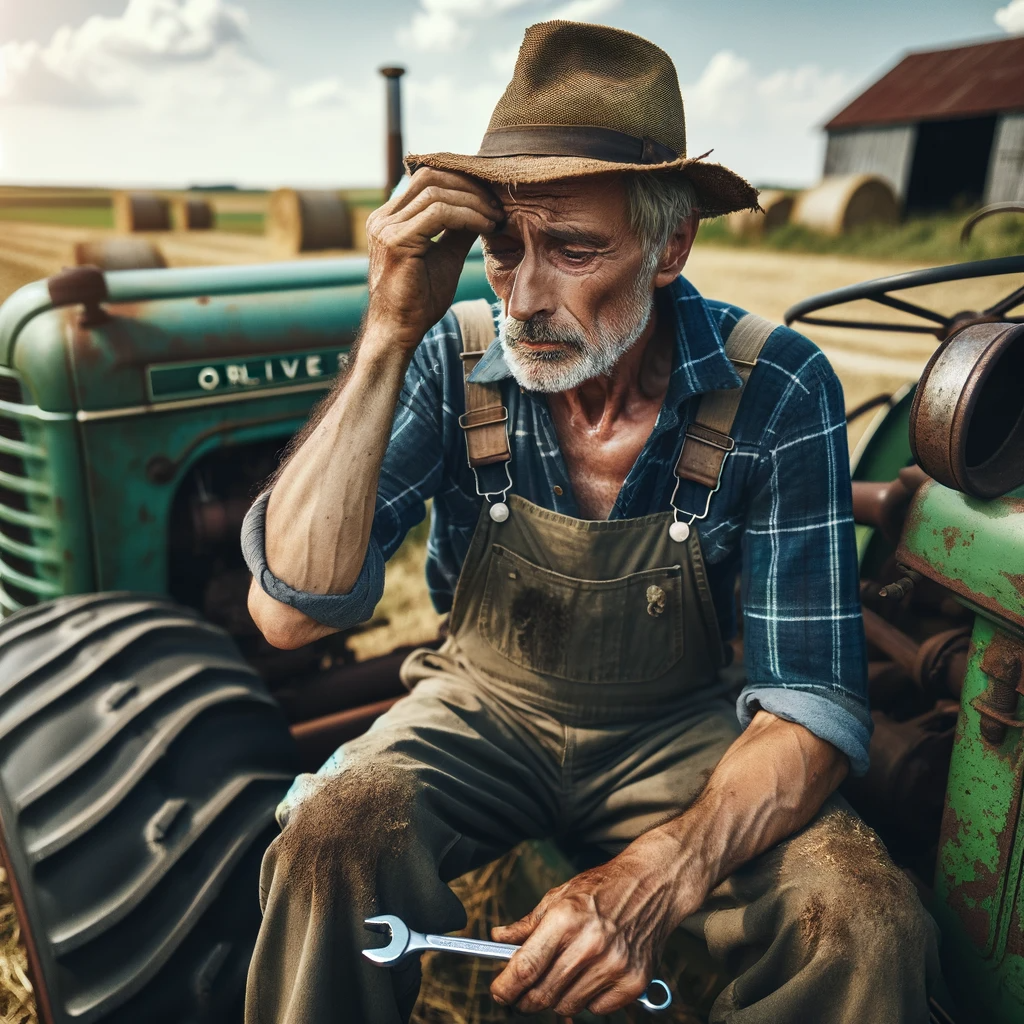
Can Low-Tech Tractors Improve Small Farm Viability?
What Specific Features Attract Farmers To Low-Tech Tractors?
When you think of a tractor, you might picture a hulking piece of machinery, something that whispers the allure of modern technology—high-tech displays, GPS navigation, and complex hydraulic systems. But for many farmers, the appeal lies in something much simpler: the low-tech tractor. Sure, they won’t make headlines at a tech expo, but they come with a charm and utility that digs deep into the soil of practicality.
First off, let’s talk about reliability. Farmers wake up before dawn, and when the sun rises over those fields, they need their tractor to start with the turn of a key—no complicated setup, no software updates, just good, honest engineering. Low-tech tractors are often built with fewer components, meaning less can go wrong. When a farmer is out in the field, the last thing they want is for a high-tech gadget to throw a wrench in their carefully orchestrated day. A reliable tractor means peace of mind, and that’s worth its weight in gold.
Next, consider ease of repair. With modern tractors, you often need a computer-savvy technician just to troubleshoot a minor issue. But low-tech tractors? They’re designed for the farmer, by people who understand the demands of farm life. Most farmers can roll up their sleeves, grab some basic tools, and get to work. When a farmer can rely on their own skills to fix a problem instead of calling in an expert, it fosters a sense of independence and trust in the machine. Plus, it keeps costs down—another essential factor as they navigate the seasonal ebbs and flows of farm finances.
Let’s not forget about the price tag. Many farmers operate on tight budgets, and investing in a low-tech tractor often means less debt and more immediate cash flow for other crucial farming activities. A solid low-tech tractor can provide the muscle needed on the farm while leaving room in the budget for something else—a new seed, fertilizers, or maybe even a well-deserved family picnic.
Lastly, there’s something undeniably nostalgic about a low-tech tractor. These machines evoke the spirit of hard work, tradition, and generations of farmers who built this country. They remind us that, at the end of the day, it’s about the soil and the satisfaction of a job well done. If you ask any farmer, they’ll tell you that it’s not just about the tech; it’s about cultivating a bond with the land and making it work for both them and future generations. So, when you see a low-tech tractor puttering through the fields, remember—there’s a lot more to it than meets the eye.

What Specific Features Attract Farmers To Low-Tech Tractors?
What Specific Features Attract Farmers To Low-Tech Tractors?
- Low-tech tractors are valued by many farmers for their simplicity and practicality over modern high-tech features.
- Reliability is key; low-tech tractors start easily and have fewer components, reducing potential breakdowns.
- Farmers can easily repair low-tech tractors themselves, fostering independence and reducing costs.
- Low-tech tractors are often more affordable, helping farmers manage budgets effectively and maintain cash flow.
- These tractors evoke nostalgia, embodying hard work and tradition in agriculture.
- Farmers appreciate the bond created with the land through the use of low-tech machinery.
- Low-tech tractors symbolize the deep roots of farming beyond just technology, emphasizing legacy and sustainability.

What Specific Features Attract Farmers To Low-Tech Tractors?
How Do Low-Tech Tractors Affect Labor Needs On Farms?
Let’s take a moment to roll up our sleeves and look at something that might not always get the spotlight it deserves: low-tech tractors. Now, I’m not talking about the shiny, high-tech machines that seem to do all but brew your morning coffee. Nope, I’m referring to those steadfast workhorses of the farm, the ones designed for durability and simplicity.
Picture this: a sun-soaked field, a low-tech tractor chugging along, the engine humming like a contented bee, as it tillers the soil, planting seeds, and preparing the land for the harvest ahead. It’s a sight that many of us recognize, evoking nostalgia for a time when farming was a community affair—hands in the dirt, sweat on the brow.
The unique charm of low-tech tractors lies in their ability to blend efficiency with human touch. They require a different skill set from the operator. Instead of relying solely on advanced tech, farmers using these machines often lean on their experience and intuition. They adjust to the terrains, weather patterns, and seasonal changes, directly contributing to labor needs on the farm.
This practical approach can actually boost labor requirements in a very meaningful way. With fewer automated systems to rely on, farmers often find themselves working alongside their employees, fostering a deeper connection with their teams. This partnership becomes essential, and everyone shares in the thrill (and the challenge) of coaxing life from the soil together.
As charming as this process might sound, let’s not sugarcoat reality. A low-tech tractor demands a different kind of commitment. It means hands-on maintenance, manual adjustments, and a bit of problem-solving in the field. For many, this can feel intimidating, but here’s the silver lining: it builds confidence. Workers can learn not just to operate machines but to understand their intricacies, fostering pride in their craftsmanship—something that transcends generations.
So, why should you care? Because that low-tech tractor isn’t just a piece of machinery; it’s a lifeline for community engagement, job development, and sustainability in farming. It’s a reminder that at the heart of agriculture lies the human spirit—employing our hands, honing our skills, and supporting a vibrant, connected workforce. When we appreciate the value of low-tech tractors, we aren’t just cultivating crops; we’re nurturing relationships, trust, and a shared future. Isn’t that something worth getting behind?

How Do Low-Tech Tractors Affect Labor Needs On Farms?
How Do Low-Tech Tractors Affect Labor Needs On Farms?
- Low-tech tractors focus on durability and simplicity rather than high-tech features.
- They evoke nostalgia for traditional farming practices and community involvement.
- Operators rely on experience and intuition, adjusting to environmental conditions.
- These tractors increase labor requirements, promoting collaboration among farmers and workers.
- Hands-on maintenance and problem-solving are essential, building confidence in operators.
- Low-tech tractors foster community engagement, job development, and sustainability in agriculture.
- They represent the human spirit in farming, emphasizing relationships and craftsmanship.

How Do Low-Tech Tractors Affect Labor Needs On Farms?
Are Low-Tech Tractors Easier To Repair Than High-Tech Models?
Are Low-Tech Tractors Easier to Repair Than High-Tech Models?
Let’s be honest: there’s something beautifully straightforward about a low-tech tractor. They’ve got grit, they’ve got soul, and they don’t require a PhD in computer science just to understand how to change a tire. When the day is long and the sun is beating down, there’s a peculiar comfort in seeing that simple package of mechanics and metals—an honest machine that just gets the job done.
Now, let’s not kid ourselves; high-tech models have their perks. With their fancy screens and GPS systems, they can transform a field of crops with the precision of a surgeon’s scalpel. But therein lies the rub: when that high-tech gizmo goes sideways, it can feel like the world has come to a grinding halt. You pop the hood, and instead of a gleaming engine, you find a labyrinth of wires and circuit boards that rival a NASA control panel. In those moments, a simple “what’s wrong” can quickly turn into an expensive guesswork or a frantic call to the dealership.
On the other hand, the low-tech tractor invites you to roll up your sleeves and dive in. Imagine standing in your barn with a cup of coffee, surrounded by a few trusty tools, staring down a problem that can be solved without a smartphone or an internet connection. A simple engine, maybe a carburetor to clean out, or a belt that needs tightening—these are tasks you can tackle with the kind of integrity that feels good. It’s a satisfaction that’s hard to match when you’ve wrestled with something and emerged victorious, covered in grease but glowing with accomplishment.
And here’s the thing: farmers and mechanics are a resilient bunch. They thrive on understanding every whir and click of their engines. Low-tech tractors offer a sense of familiarity and a level of accessibility that cultivates confidence. You’re not just farming; you’re engaging with your machine, forging a relationship built on knowledge and experience.
So, whether you’re a seasoned pro or just starting your journey, there’s something to be said for simplicity. And in a world that often leans heavily on the sophisticated, embracing the low-tech might just lead you back to what really matters: the joy of getting your hands dirty and getting the job done right. So go ahead, consider the tractor that calls to your heart—and maybe, just maybe, it’ll be the one with fewer bells and whistles.

Are Low-Tech Tractors Easier To Repair Than High-Tech Models?
Are Low-Tech Tractors Easier To Repair Than High-Tech Models?
- Low-tech tractors are straightforward and easy to understand, requiring no advanced technical knowledge for repairs.
- High-tech models offer precision farming capabilities but can present complex repair issues when technology fails.
- High-tech tractors can lead to expensive repairs and reliance on dealer support due to complicated systems.
- Low-tech tractors encourage hands-on problem-solving and personal engagement with the machine.
- Farmers and mechanics appreciate the familiarity and accessibility of low-tech tractors, building confidence through hands-on experience.
- The joy of repairing and working with low-tech tractors fosters a satisfying sense of accomplishment.
- Embracing low-tech simplicity allows farmers to connect with their work and enjoy the process of farming.

Are Low-Tech Tractors Easier To Repair Than High-Tech Models?
Conclusion
As we wrap up this exploration of low-tech tractors, it’s clear that the humble workhorse is staging a comeback in the farming world. Amid the chaos of modern technology, with its flashing screens and complicated assemblies, there’s something refreshingly straightforward about these machines. They call to farmers who yearn for a deeper connection to their work, their land, and ultimately, to their roots. With low-tech models, farmers aren’t just operating machinery—they’re crafting a relationship with their tools, as well as with the earth itself.
In a time when many are stuck in the whirlwind of constant upgrades and technical dependencies, low-tech tractors represent a breath of fresh air. They are easy to repair, incredibly reliable, and often come with a significantly lower price tag. No need for costly repairs or waiting on technicians when something goes awry; a few basic tools and some elbow grease can keep these tractors humming along like the trustworthy companions they are. The simplicity empowers farmers, allowing them to take control of their machinery and, by extension, their livelihoods.
Beyond just mechanical advantages, low-tech tractors establish a bond that transcends the mundane tasks of farming. They create opportunities for collaboration and skill-building among workers, reminding everyone involved that farming is as much about the people as it is about the produce. There’s a nostalgic charm in the sound of a familiar engine, a nod to generations before us who knew the grit and grind required to till the land. It’s not just about sowing seeds; it’s about cultivating community, independence, and a life that resonates with purpose.
So, the next time you see a low-tech tractor rolling through a field, take a moment to appreciate its significance. This isn’t just an engine on wheels; it symbolizes a movement back towards simplicity, sustainability, and the raw joy of farming. For those ready to embrace that spirit of independence and authenticity, the answer might lie in that sturdy, no-frills tractor—an unsung hero in the journey of modern agriculture. After all, in a world racing towards complexity, sometimes the simplest path leads to the greatest rewards.

Conclusion
Conclusion:
- Low-tech tractors are making a comeback in modern farming.
- They offer a straightforward alternative to complex machinery, allowing farmers to reconnect with their work and land.
- These tractors are easy to repair, reliable, and budget-friendly, reducing dependence on costly technical services.
- Farmers can maintain their tractors with basic tools, empowering them to manage their livelihoods effectively.
- Low-tech tractors foster collaboration and skill-building among workers, emphasizing the importance of community in farming.
- They evoke nostalgia and remind us of the hard work that has shaped agriculture through generations.
- Low-tech tractors symbolize a movement towards simplicity, sustainability, and the essence of joyful farming.

Conclusion
Other Resources

Other Resources
Here is a list of other resources you can review online to learn more:
- IH
- Cockshutt
- Antique Engine & Tractor Association – Working Farm Show
- M-R-S
- Apollo
- Holt
- Schramm
- Antique Engine & Tractor Association
- Greenville Farm Power
- SE Indiana F.A.R.M. Club’s Antique Machinery Show
Use This Prompt To Get More Resources With Your Favorite Online AI Tool: Please provide me with a list of online articles with their URLs in a bulleted list that I can read regarding Are Farmers Finding Freedom In Lowtech Tractor Models?

Other Resources
Glossary Terms
Are Farmers Finding Freedom In Lowtech Tractor Models? – Glossary Of Terms
1. Low-Tech Tractors: Simple agricultural vehicles that prioritize mechanical simplicity and ease of repair over advanced technology and electronics.
2. Freedom: The state of being free; in this context, it refers to the farmers’ ability to operate without dependence on complex technology or external systems.
3. Sustainability: Farming practices that meet current needs without compromising the ability of future generations to meet theirs, often emphasized with low-tech solutions.
4. Agricultural Efficiency: The ability to produce more with less by using resources effectively, which can be enhanced through reliable, low-tech machinery.
5. DIY Repair: The practice of farmers performing their own maintenance and repairs on equipment, facilitated by straightforward designs of low-tech tractors.
6. Mechanization: The process of using machinery to increase productivity in agriculture, significantly influenced by the choice between low-tech and high-tech equipment.
7. Operational Costs: Expenses associated with running farm machinery, which can be reduced by choosing low-tech tractors with fewer complex components.
8. Versatility: The capability of low-tech tractors to perform multiple functions and tasks on a farm, catering to diverse agricultural needs.
9. Accessibility: The ease of use and availability of low-tech tractors for farmers, especially in rural areas where resources might be limited.
10. Dependability: The reliability of machinery to perform consistently; low-tech tractors are often viewed as more dependable due to their straightforward designs.
11. Maintenance: The upkeep required to keep machinery in working order; low-tech tractors generally require less specialized knowledge for care.
12. Farm Customization: The ability of farmers to modify or adapt their low-tech equipment to meet specific farming requirements.
13. Soil Health: The condition of the soil, which can be positively affected by reduced reliance on heavy, technology-dependent tractors.
14. Labor Savings: The reduction in workforce needs due to machinery usage; low-tech tractors may help increase efficiency without losing the human labor factor.
15. Crop Rotation: The practice of alternating crops in a field to improve soil health, supported by low-tech farming practices that minimize disturbance.
16. Field Trials: Experiments on farms to test the effectiveness and efficiency of different cultivations, often involving low-tech tools for simplicity.
17. Tillage: The agricultural preparation of soil by mechanical agitation; low-tech tractors can perform tillage without sophisticated systems.
18. Fuel Efficiency: The measure of how well a tractor uses fuel; low-tech models can sometimes offer better fuel economy than their high-tech counterparts.
19. Scalability: The potential for a farming operation to grow in size or production; low-tech tractors often provide a more scalable option for smaller farms.
20. Community Support: The social networks and assistance among farmers, which can promote the sharing of knowledge and equipment related to low-tech farming.
21. Regenerative Agriculture: A farming practice that seeks to restore and enhance the health of soils and ecosystems, often paired with sustainable machinery choices.
22. Financial Independence: The ability of farmers to operate without loans or financial instruments that bind them to corporate equipment suppliers.
23. Government Subsidies: Financial aid provided by governments to promote certain farming practices, which can include support for low-tech farming initiatives.
24. Smallholder Farmers: Farmers who cultivate small plots of land, often benefiting from the practicality and affordability of low-tech tractors.
25. Resilience: The ability of farmers to adapt to changing conditions and challenges in agriculture, enhanced by the simplicity of low-tech tools.
26. Market Access: The ability for farmers to reach consumers, which can be improved through the efficiency of low-tech farming tools.
27. Innovation: New methods or ideas in agriculture; low-tech innovations can emerge from traditional practices adapted for modern use.
28. Biodiversity: The variety of life in a particular habitat or ecosystem; low-tech farming can help preserve diverse species by minimizing environmental impact.
29. Crop Yield: The total produce harvested from a specific area; low-tech practices can help maintain or improve yields sustainably.
30. Eco-Friendly Practices: Agricultural techniques that have a minimal negative impact on the environment, often enhanced through the use of low-tech tractors.

Glossary Of Terms
Other Questions
Are Farmers Finding Freedom In Lowtech Tractor Models? – Other Questions
If you wish to explore and discover more, consider looking for answers to these questions:
- What are the most popular low-tech tractor models available today?
- How do low-tech tractors compare to high-tech models in terms of performance?
- What maintenance practices are recommended for low-tech tractors?
- Do low-tech tractors have any drawbacks or limitations?
- How do farmers feel about transitioning back to low-tech machinery?
- What types of crops benefit most from low-tech farming methods?
- Are there any regional trends in the adoption of low-tech tractors?
- How do low-tech tractors affect overall farm productivity?
- What role do low-tech tractors play in regenerative agriculture?
- Are there financial incentives for farmers to switch to low-tech tractors?
- How can low-tech tractors enhance community engagement among farmers?
- What resources are available for farmers interested in low-tech machinery?
- How does the use of low-tech tractors contribute to food security?

Other Questions
Haiku
Are Farmers Finding Freedom In Lowtech Tractor Models? – A Haiku
In fields wide and vast,
Low-tech tractors hum with pride,
Freedom’s simple path.

Haiku
Poem
Are Farmers Finding Freedom In Lowtech Tractor Models? – A Poem
In Praise of Low-Tech Tractors
In fields where golden grains sway free,
A chorus rises ‘neath the sky’s vast sea.
Farmers lean back, with hands in the clay,
Choosing low-tech tractors to light their way.
Not with the glitz of screens that dazzle bright,
But with sturdy grace, they embody the might
Of grit and of purpose, stories of old,
A bond with the land, a treasure to hold.
No tangled wires or fancy controls,
Just simple mechanics that nourish their souls.
A sturdy engine purrs as it walks its path,
Reminding each farmer of joy in the aftermath.
With ease of repair, they gather around,
A fellowship flourishes, where friendships abound.
Less time spent waiting, more time on the ground,
A community thriving, their shared laughs profound.
Cost-effective muscles, their power profound,
Less debt on the shoulders, more joy to be found.
Sustainability flows from each laborer’s choice,
With low-tech machines, they rekindle their voice.
Fewer emissions, the earth breathing deep,
In this dance of the seasons, their harvests they reap.
Long live the machines that return to the roots,
Where farmers are poets, and peace grows in shoots.
So let us embrace these humble work friends,
For farming’s a journey where spirit transcends.
In the heart of each field, with each toil and each turn,
The lifeblood of nature, we cherish and learn.

Poem
Checklist
Are Farmers Finding Freedom In Lowtech Tractor Models? – A Checklist
Checklist for Embracing Low-Tech Tractors in Farming
Understanding the Benefits of Low-Tech Tractors
_____ *Assess your attachment to technology:* Reflect on your relationship with high-tech machinery and consider how low-tech could match your farming needs.
_____ *Identify your farming values:* Determine what aspects of farming are most important to you—simplicity, sustainability, cost-effectiveness, etc.
Evaluating Cost-Effectiveness
_____ *Calculate budget implications:* Compare the upfront costs and maintenance expenses between low-tech and high-tech tractors.
_____ *Consider financing options:* Evaluate how investing in a low-tech tractor could free up funds for other farming necessities.
Recognizing Practical Features
_____ *List essential features you need:* Note down what you expect from a tractor (reliability, ease of repair, etc. ) and see how low-tech models meet those needs.
_____ *Understand repair needs:* Familiarize yourself with the simplicity of low-tech repairs compared to high-tech machinery.
Sustainability Considerations
_____ *Evaluate fuel consumption:* Look into the fuel efficiency of low-tech tractors and their ability to run on alternative energy.
_____ *Assess environmental impact:* Consider how using low-tech tractors aligns with your sustainability goals.
Community and Collaboration
_____ *Engage with your local farming community:* Discuss the merits of low-tech tractors with fellow farmers to share insights and experiences.
_____ *Share knowledge and skills:* Promote collective learning among peers about low-tech machinery maintenance.
Labor Needs and Skill Development
_____ *Examine labor requirements:* Determine how a low-tech tractor may influence your labor needs and the skill sets required.
_____ *Encourage hands-on experience:* Foster a collaborative environment where farm team members can learn about the machinery.
Making the Decision
_____ *Test drive potential models:* If possible, experience low-tech tractors first-hand to identify which ones resonate with you.
_____ *Reflect on emotional connection:* Think about how choosing a low-tech tractor can enhance your personal connection to farming.
Implementation Strategies
_____ *Create an action plan:* Outline steps for transitioning to a low-tech tractor, including budgeting and training.
_____ *Monitor and adapt:* Keep track of your experiences with low-tech tractors and be open to making adjustments as necessary.
By following this checklist, you can thoughtfully evaluate the potential benefits of low-tech tractors and how they may align with your farming philosophy and practices.

Checklist
At ClassicTractorNews, we help tractor lovers keep up with the latest news for classic and vintage tractors.
Please share this post with your friends, family, or business associates who may like old classic or vintage tractors.