


Sustainable Farming: Reviving Tradition For A Greener Future
By Tom Seest
At ClassicTractorNews, we help tractor lovers keep up with the latest news for classic and vintage tractors.
Please share this post with your friends, family, or business associates who may like old classic or vintage tractors.
Are Classic Tractors The Key to Sustainable Farming Practices
When we think about sustainability in farming, our minds might naturally drift to high-tech solutions—drones surveying fields, precision agriculture software calculating every ounce of fertilizer needed. Yet, as we march forward, it’s crucial not to forget the humble tractor, a symbol of agricultural innovation that once revolutionized farming practices. But can these classic tractors also light the way toward a more sustainable future?
Picture a sun-drenched field, an old tractor rumbling gently in the background, its simple yet robust design a testament to the ingenuity of generations past. These vintage machines, often forgoing complex electronics in favor of straightforward mechanics, offer a treasure trove of lessons for today’s farmers. Imagine engaging with a tractor that’s easily repairable, built to last, and designed to coalesce with the land rather than dominate it. In our modern, fast-paced world, these machines invite us to slow down and consider a more thoughtful, respectful approach to farming.
Rationally, classic tractors operate on basic principles. They use less fuel, produce fewer emissions, and encourage a more hands-on relationship with the earth. For farmers, this translates into lower operating costs and less financial strain. But what does this really mean? It means more time and resources can be directed back into the soil—investing in organic practices, crop diversity, and regenerative systems that heal rather than harm.
Ethically, it’s our responsibility to preserve these tractors. When we keep them running, we honor the stories of the farmers who depended on them. Each dent and scratch tells a history of hard work, determination, and connection to the land. That is a narrative worth safeguarding—not just for nostalgia’s sake but to inspire future farmers to forge their paths in agriculture with the values of sustainability front and center.
As we stand on the precipice of an existential challenge in farming, these classic tractors act as a bridge—a way to connect the wisdom of the past with the promise of the future. By embracing their rugged simplicity, we can cultivate practices that not only nourish our crops but also protect our planet. So let’s raise a glass (or a wrench) to these mechanical marvels and consider their role in a sustainable agricultural revolution. After all, when we take action rooted in both heart and hard work, the soil—like the tractors we cherish—will reap the benefits for generations to come.

Are Classic Tractors The Key to Sustainable Farming Practices
Are Classic Tractors The Key to Sustainable Farming Practices
- The concept of sustainability in farming often focuses on high-tech solutions like drones and precision agriculture.
- Classic tractors symbolize agricultural innovation and can contribute to a sustainable future.
- These vintage machines promote simplicity, ease of repair, and a harmonious relationship with the land.
- Classic tractors use less fuel, produce fewer emissions, and help reduce operating costs for farmers.
- Maintaining these tractors honors the history and stories of farmers and fosters a connection to sustainable values.
- Classic tractors serve as a bridge between traditional wisdom and modern sustainable practices in agriculture.
- By valuing these machines, we can cultivate sustainable practices that benefit both crops and the environment.

Are Classic Tractors The Key to Sustainable Farming Practices
Table Of Contents
- Are Classic Tractors The Key to Sustainable Farming Practices
- Are Classic Tractors A Nostalgia-Driven Solution For Our Farms?
- Can Vintage Mechanics Improve Our Soil Health And Biodiversity?
- How Do Classic Tractors Reduce Our Carbon Footprint Effectively?
- What Ethical Considerations Arise From Modern Farming Versus Classic?
- Are We Overlooking The Authority Of Traditional Farming Techniques?
- How Can Classic Tractors Tell The Story Of Sustainable Farming?
- Conclusion
- Other Resources
- Glossary Of Terms
- Other Questions
- Haiku
- Poem
- Checklist
Are Classic Tractors A Nostalgia-Driven Solution For Our Farms?
When it comes to agriculture, the word “tractor” often evokes images of a simpler time. Picture a well-worn farmhouse, the sun slowly setting behind weathered barns, accompanied by the rhythmic hum of a classic tractor cutting through endless fields. It’s more than just machinery; it’s a symbol of hard work and relentless perseverance. The nostalgia attached to these machines resonates deeply, striking a chord with those of us who remember watching a parent or grandparent cultivate the land, infused with a sense of purpose only rural life can instill.
However, as we wrestle with modern innovations and the rising tide of efficiency, we must ask ourselves: Are these classic tractors merely vessels of nostalgia, or do they provide a practical solution for today’s farms? There’s a compelling case to be made for their re-emergence. Newer models certainly promise speed and efficiency, but they often come with complex systems that require specialized knowledge and hefty budgets. In contrast, classic tractors, with their simplicity and durability, invite farmers to get their hands dirty, fostering that gut-level connection to the soil and craft that transcends mere economics.
Let’s also consider the ethical perspective. In an age of disposable culture and designed obsolescence, keeping classic tractors alive champions sustainability. By reviving these machines, we celebrate the values of conservation and resourcefulness, teaching future generations that quality often outweighs quantity. It’s a powerful message, resonating with those who believe in responsible farming—where tractors become part of a harmonious cycle rather than an expense burdening the balance sheet.
The senses awaken as you climb aboard one of these tractors. The smell of aged metal and oil mixes with the fresh scent of tilled earth; the sound of the engine coughs to life as you steer it into the field. These experiences create a deeper relationship with the land, one that’s increasingly rare in our tech-driven world.
Ultimately, it’s about fostering connection—not just with the land, but with our families and communities. Classic tractors aren’t simply relics of the past; they embody our shared history, enriching the narrative of modern farming. So, next time you see a classic tractor rumbling by, take a moment to appreciate not just the nostalgia it inspires, but the sustainable legacy it brings to our farms. Let’s keep that spirit alive, one field at a time.

Are Classic Tractors A Nostalgia-Driven Solution For Our Farms?
Are Classic Tractors A Nostalgia-Driven Solution For Our Farms?
- The word “tractor” evokes nostalgia for simpler agricultural times and hard work.
- Classic tractors symbolize a deep connection to rural life and the land cultivated by past generations.
- Modern tractors offer speed and efficiency, but often require specialized knowledge and high budgets.
- Classic tractors, known for their simplicity and durability, invite hands-on farming experiences.
- Reviving classic tractors promotes sustainability, resourcefulness, and the value of quality over quantity.
- Experiencing a classic tractor enhances the relationship with the land, contrasting with today’s tech-driven farming.
- Classic tractors represent shared history and foster connections with families, communities, and the environment.

Are Classic Tractors A Nostalgia-Driven Solution For Our Farms?
Can Vintage Mechanics Improve Our Soil Health And Biodiversity?
In a world racing towards rapid technological advancement, we often overlook the beauty and wisdom found in vintage mechanics—tools and machines that shaped our agricultural landscape. Picture an old tractor, its once-bright paint faded but still carrying the weight of generations. This machine is not just a relic; it represents a philosophy—one rooted in simplicity, sustainability, and a hands-on connection to the land.
Now, when we talk about soil health and biodiversity, it’s easy to get lost in the science and statistics. But let’s get real for a moment. Imagine a thriving ecosystem where the earth is alive, teeming with worms wriggling joyfully through rich, dark soil. This isn’t a fairy tale; it’s a reality we can reclaim. Vintage tractors can help us pioneer that reality, embodying a less intrusive, more harmonious way of farming. They remind us that we don’t always need the latest tech to nurture the earth. Instead, a time-tested machine can teach us how to work with nature rather than against it.
Think ethically. It’s time we ask ourselves: What legacy do we want to leave for future generations? By adopting vintage mechanics, we stand firm against the tide of disposable culture and the relentless push for efficiency at the expense of our planet. Each time we fire up a classic tractor to plow a field, we send a message that our focus isn’t just on yield but on health—both of the land and of the diverse organisms that inhabit it. These choices echo through time, building a bridge between past and future, where stewardship becomes the cornerstone of our mission.
Don’t just take my word for it; let’s consider the community impact. There’s a certain camaraderie that forms among those who choose to restore and use vintage equipment. Local farmers sharing tips, swapping stories, and coming together to enhance soil health creates a rich social fabric. This isn’t just a bonding over mechanics; it’s a mutual commitment to cultivating a thriving ecosystem.
So, why not take a step back? Embrace the vintage mechanics that remind us of our roots. Grab the wheel of that old tractor and feel the roar of the engine as an echo of timeless wisdom. Let’s foster a world where the grit beneath our nails is accompanied by the richness of our soil, and where the hum of machinery harmonizes with the sounds of nature. Join the movement, and together let us till not just the ground, but also the heart of our communities.

Can Vintage Mechanics Improve Our Soil Health And Biodiversity?
Can Vintage Mechanics Improve Our Soil Health And Biodiversity?
- Vintage mechanics represent a philosophy of simplicity, sustainability, and connection to the land.
- Old tractors symbolize a less intrusive, more harmonious way of farming that enhances soil health and biodiversity.
- Adopting vintage tools helps combat disposable culture and prioritizes ecological health over sheer yield.
- Each use of vintage machinery sends a message about our commitment to future generations and stewardship of the land.
- Community bonding occurs among those who restore and utilize vintage equipment, fostering collective efforts for soil health.
- Embracing vintage mechanics reconnects us to our roots and promotes a mutually beneficial relationship with nature.
- Encouraging this movement nurtures both our communities and the ecosystems we depend on.

Can Vintage Mechanics Improve Our Soil Health And Biodiversity?
How Do Classic Tractors Reduce Our Carbon Footprint Effectively?
Picture this: a sun-drenched field, the earthy scent of freshly turned soil filling the air, and a classic tractor humming along, its steel frame a testament to generations of reliable farming. These timeless machines, often seen as relics, are not just nostalgic reminders of a simpler life; they play a crucial role in reducing our carbon footprint effectively.
First, let’s get a bit rational. Classic tractors, typically built to last with fewer electronic components, rely on simpler mechanics. This means their fuel efficiency can sometimes rival many modern machines laden with bells and whistles. In an age where we’re bombarded with high-tech solutions that promise sustainability, it’s refreshing to see how a piece of machinery that’s been around for decades can still hold its ground, consuming less fuel while getting the job done. This isn’t just about saving pennies on gas; it’s about understanding how effective engineering can lessen our carbon emissions. A well-maintained tractor can be more than just a workhorse; it can become a champion in the fight against climate change.
Now, let’s touch the heart. The stories that surround these classic tractors are stories of hard work, family heritage, and deep-rooted connections to the land. They remind us of the farmers who toiled through seasons past, leaving their mark not just on the land, but on the very fabric of our communities. Each scratch and dent tells a story of perseverance and dedication. When we bring these machines back to life, we’re honoring that legacy while also championing a sustainable future.
Ethically, embracing classic tractors resonates with a responsibility toward our environment. They serve as a reminder that progress doesn’t always mean abandoning what’s old in favor of what’s new. Instead, it can mean finding ways to honor the past while paving the way for a greener future. By utilizing these machines, we uphold traditions while taking a stand for a healthier planet, cultivating a community rooted in environmental stewardship.
Finally, let’s not forget the social impact. When we gather to work on these tractors or showcase them at gatherings, we’re fostering connections. We engage with fellow enthusiasts, share knowledge, and inspire the next generation to appreciate the value of hands-on work and sustainable practices. It’s a call to action not just to keep these machines running, but to foster a culture that values sustainability and community.
So, next time you see a classic tractor, remember: it’s not just about farming; it’s about nurturing our planet and embracing our shared history. It’s time we recognize these magnificent machines as vital players in the story of a sustainable future.

How Do Classic Tractors Reduce Our Carbon Footprint Effectively?
How Do Classic Tractors Reduce Our Carbon Footprint Effectively?
- Classic tractors, often viewed as nostalgic, significantly reduce our carbon footprint.
- These machines have simpler mechanics and fewer electronic components, leading to better fuel efficiency.
- Well-maintained tractors can combat climate change effectively by consuming less fuel.
- Classic tractors symbolize hard work and family heritage, connecting us to our farming history.
- Using these tractors honors past traditions while promoting a sustainable future.
- Working on and showcasing tractors fosters community connections and encourages sustainable practices.
- The appreciation of classic tractors is essential for recognizing their role in building a greener, more responsible future.

How Do Classic Tractors Reduce Our Carbon Footprint Effectively?
What Ethical Considerations Arise From Modern Farming Versus Classic?
When you think about the land, the soil, and the farmers who toil under those boundless skies, there’s a tale as old as time. It’s a rugged narrative that pits classic farming against the modern, high-tech approach that now dominates our fields and tables. The contrast isn’t just a matter of old versus new; it’s a matter of values, ethics, and what we believe sustains our very humanity. Picture the classic farmer, standing tall beside a well-worn tractor, the sun dipping low behind him. He’s a steward of the earth, nurturing crops and livestock in harmony with nature, but as technology has surged ahead, so too have the ethical conundrums.
Modern farming relies on a sophisticated ballet of machinery and science. The tractor has evolved into a digital powerhouse equipped with GPS and cutting-edge sensors, designed to maximize efficiency and yield. But at what cost? It’s not just a question of productivity—it invites us to consider the implications of genetically modified organisms, pesticides, and the increasing operational scale that can often overshadow the individual farmer’s connection to the land. Many modern operations exist under corporate umbrellas, where the personal touch of hard work and persistence can feel overshadowed by the bottom line.
Now, let’s take a step back and ask ourselves: Is a higher yield necessarily a better yield? The narrative behind modern farming is often punctuated by impressive statistics, but we must balance that with the ethical quandary of sustainability. Are we sacrificing soil health, biodiversity, and the well-being of farm animals in the race for efficiency? It goes beyond mere numbers; it’s about nurturing a legacy.
In our hearts, we thrive on stories that celebrate tradition, resilience, and the simple joy of a farmer’s market. This isn’t simply an industrial endeavor; it’s about community, shared values, and the nourishment that sustains each of us. How can we honor that while still embracing progress? It calls for an opportunity to transform our consumption and shape the future of agriculture—one that cultivates not only crops but ethical practices.
The challenge is ours: to advocate for a balance that respects the craft of agriculture while embracing innovation. We hold the power to influence the direction of modern farming—through our choices and our voices. Let’s foster a dialogue that serves the land, honors the farmers, and ultimately feeds our communities in a way that resonates deeply with our shared humanity. We can do better; we must do better. The future is in our hands.

What Ethical Considerations Arise From Modern Farming Versus Classic?
What Ethical Considerations Arise From Modern Farming Versus Classic?
- The narrative of farming contrasts traditional methods with modern high-tech approaches.
- Classic farmers embody stewardship of the land, nurturing crops and livestock in harmony with nature.
- Modern farming utilizes advanced machinery and technology, enhancing efficiency and yield.
- This technological advancement raises ethical concerns regarding genetically modified organisms and pesticide use.
- Higher yields may not equate to better agricultural practices, risking soil health and biodiversity.
- Emphasizing community and shared values is essential as we embrace innovation in agriculture.
- We have the power to advocate for a balanced approach that respects traditional practices while promoting sustainability.

What Ethical Considerations Arise From Modern Farming Versus Classic?
Are We Overlooking The Authority Of Traditional Farming Techniques?
In our fast-paced world, filled with technological marvels and digital conveniences, it’s easy to forget the simple, enduring wisdom of traditional farming techniques. These methods, often passed down through generations, tell a story of resilience and connection to the land that’s all too frequently overlooked. They’re the unsung heroes, standing firm against the tide of modern farming’s relentless push towards efficiency and uniformity.
Picture this: a farmer, hands weathered by years of tilling the soil, standing beside a rusted old tractor — not just a tool, but a vessel of experience and history. This machine represents countless hours of labor, but it also embodies knowledge that can’t be quantified by spreadsheets or algorithms. The farmer knows the nuances of their land — the way the seasons whisper secrets only they can hear. They understand that every seed planted is a promise, not just to themselves but to their community, and even to the planet.
It’s important to consider the ethical dimensions at play. As we turn our backs on traditional practices, what are we sacrificing? Are we not also turning away from age-old methods of crop rotation, companion planting, and soil health that have sustained our ancestors for centuries? These techniques nurture the land, fostering biodiversity and resilience against pests and diseases, creating a thriving ecosystem rather than a monoculture.
The narrative of farming is deeply tied to our identity and culture. When we think about the story of our families and communities, it’s often punctuated by the crunch of raw earth beneath boots, the laughter shared over harvests, and the comforting scent of home-cooked meals. These experiences ground us, literally and metaphorically, reminding us of our roots and our place in the world.
Engaging with traditional farming techniques invites us to rethink our role as stewards of the earth. It’s not merely about sowing and reaping; it’s about forging relationships with the land and its cycles. So, let’s open our eyes to this authority bestowed by generations past. Let’s embrace the wisdom etched into every furrow and the delicate dance of plants growing harmoniously together. In doing so, we can foster not just sustainable practices, but a profound connection to our food, our environment, and each other, reigniting a sense of trust and confidence in the way we nourish ourselves and our world.

Are We Overlooking The Authority Of Traditional Farming Techniques?
Are We Overlooking The Authority Of Traditional Farming Techniques?
- Traditional farming techniques embody resilience and a deep connection to the land, often overlooked in modern agriculture.
- Farmers possess unique knowledge about their land, derived from years of experience, which cannot be captured by modern technology.
- Every seed planted represents a promise to the farmer’s community and the planet, highlighting the ethical implications of farming practices.
- Traditional practices such as crop rotation and companion planting promote biodiversity and protect against pests and diseases.
- The cultural significance of farming is strong; it shapes family narratives and communal experiences tied to the land.
- Rethinking our role as stewards includes forging meaningful relationships with the land and its natural cycles.
- Embracing traditional farming can lead to sustainable practices and a deeper connection to food, environment, and community.

Are We Overlooking The Authority Of Traditional Farming Techniques?
How Can Classic Tractors Tell The Story Of Sustainable Farming?
How Classic Tractors Tell the Story of Sustainable Farming
When you look at a classic tractor, you’re not just seeing a machine; you’re gazing into the soul of agriculture itself. These workhorses of the past have a narrative etched into their very frames—one that speaks volumes about sustainable farming practices and the enduring bond between soil and humanity.
In an era dominated by rapid technological advancements and high-tech farming solutions, it’s easy to forget the lessons of the past. Yet, classic tractors, often seen rusting in fields, aren’t just relics; they’re reminders of a time when farmers worked in harmony with the land. Their sturdy frames and simple mechanics exemplify principles that resonate today: efficiency, resilience, and respect for our natural resources. Each time you start one of these machines, you’re reviving history, and with it, a methodology that places stewardship above sheer productivity.
Consider the emotional connection—these tractors are often passed down through generations, embodying family traditions and stories of endurance. The sights and sounds of a vintage tractor cultivating fields evoke nostalgia for simpler times when farming was a communal effort. Young farmers today can learn so much from the ethos that these machines represent—hard work, resilience and a commitment to sustainable practices. They didn’t just till the earth; they fostered relationships–with neighbors, the community, and the planet.
But there’s a rational underpinning to this affection. Classic tractors were designed to last, made from durable materials with ease of repair in mind. Unlike today’s disposable culture, the legacy of these machines teaches us about maintaining and caring for our equipment, which translates directly to sustainable farming. Repairing rather than replacing can lead to more sustainable practices, saving resources and reducing waste. Imagine a world where we value longevity and sustainability over planned obsolescence.
Ethically, embracing the stories behind classic tractors also connects us to broader social movements advocating for eco-friendly farming. As we share knowledge about their role in sustainable practices with each other, we strengthen our networks—whether it’s at local fairs or online forums—rallying around a common goal: nurturing our land for future generations.
So, the next time you see a classic tractor, remember—it’s more than machinery. It’s a beacon of what sustainable farming can be, a bridge connecting the past with the future, urging us all to listen, learn, and act. Each engine that roars to life is a call to respect our agricultural roots and to tread lightly on the Earth we inherit.

How Can Classic Tractors Tell The Story Of Sustainable Farming?
How Can Classic Tractors Tell The Story Of Sustainable Farming?
- Classic tractors symbolize the essence of agriculture and sustainable farming practices.
- They remind us of a time when farmers worked harmoniously with the land, highlighting efficiency, resilience, and resource respect.
- Tractors reflect emotional connections, often passed down through generations, representing family traditions and a communal farming ethos.
- Designed for longevity and repairability, classic tractors advocate for maintaining equipment rather than succumbing to disposability.
- Repairing instead of replacing promotes sustainable practices, reducing waste and conserving resources.
- Classic tractors connect us to movements advocating for eco-friendly farming, fostering knowledge sharing among communities.
- They serve as reminders to respect our agricultural roots and act sustainably to protect the Earth for future generations.

How Can Classic Tractors Tell The Story Of Sustainable Farming?
Conclusion
In the ever-evolving narrative of farming, we find ourselves at a crossroads, where the past and future collide in a most surprising way. Picture this: a classic tractor—its robust frame a testament to decades of toil and triumph—rumbling across sun-baked soil, a scene straight out of a pastoral dream. But this is not merely nostalgia; it’s a call to return to our roots, an invitation to explore how these vintage machines can usher in a new era of sustainable farming.
As we turn towards mechanics of the past, we come face to face with a philosophy rooted in simplicity and stewardship. Classic tractors exemplify the idea that less can indeed be more. They utilize fewer resources while producing lower emissions, proving that sometimes the old ways hold the answers to our most pressing environmental dilemmas. By fostering a more hands-on relationship with the land, farmers can invest in regenerative practices that enhance rather than deplete our precious resources. It’s about shifting our focus from mere yield to the true health of our land—the kind of health that supports biodiversity and soil vitality.
But let’s get to the heart of the matter: the stories entwined with these tractors portray a legacy that deserves our respect and remembrance. Every scratch and dent tells tales of farmers’ resilience, of communities rallying together to cultivate food and build shared traditions. These machines are more than farm equipment; they represent a harmonious alliance with the land and a commitment to sustainability—values that resonate more than ever in today’s quest for ethical farming practices.
Moreover, it’s not just about honoring the past; it’s about forging a collective future. Each time we fire up a classic tractor, we reaffirm our commitment to sustainable agriculture and our responsibility to honor the environment and the communities nurtured by the land. There’s power in uniting over vintage equipment, sharing knowledge, and inspiring future generations to embrace farming practices that reflect a deep care for our planet.
So, as we envision the future of agriculture, let us not overlook the weight of history. Classic tractors serve as a bridge, connecting us back to a time when farming was grounded in partnership with nature. Let’s not just remember them as symbols of nostalgia but recognize their vital role in our sustainable future. Let’s rally together to ensure that the stories behind these remarkable machines are not only upheld but are taught to future generations—crafting a legacy that respects the land we’re entrusted with. Together, let’s sow the seeds of sustainability, one vintage tractor at a time.
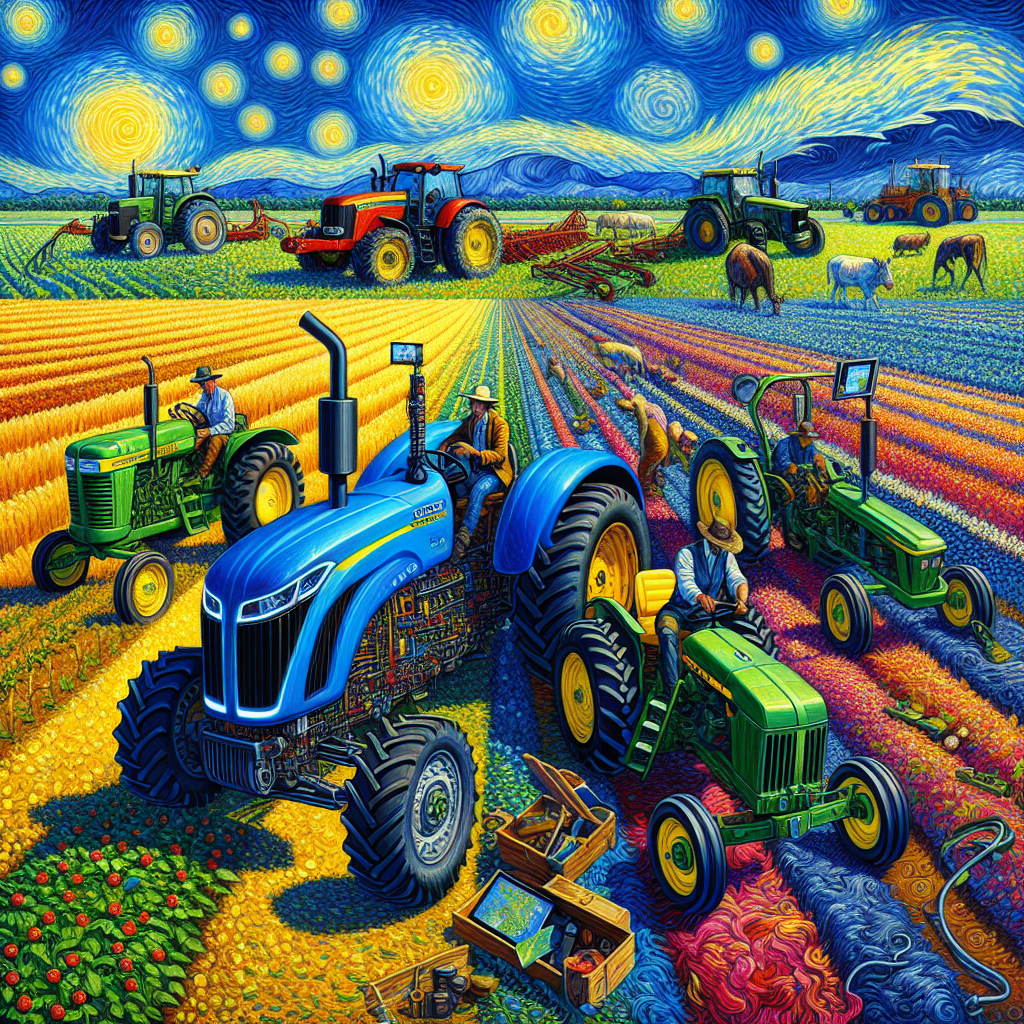
Conclusion
Conclusion:
- The narrative of farming is at a crossroads, merging past traditions with future sustainability.
- Classic tractors symbolize a return to simple, resource-efficient farming practices.
- These machines contribute to lower emissions and promote regenerative agriculture.
- Classic tractors embody stories of resilience and community in farming traditions.
- Honoring the past is vital to forging a future focused on ethical farming practices.
- Each use of a classic tractor reinforces commitment to sustainable agriculture and environmental stewardship.
- Preserving the legacy of vintage tractors is crucial for educating future generations about sustainability.

Conclusion
Other Resources

Other Resources
Here is a list of other resources you can review online to learn more:
Use This Prompt To Get More Resources With Your Favorite Online AI Tool: Please provide me with a list of online articles with their URLs in a bulleted list that I can read regarding Are Classic Tractors The Key to Sustainable Farming Practices

Other Resources
Glossary Terms
Are Classic Tractors The Key to Sustainable Farming Practices – Glossary Of Terms
1. Classic Tractor: A vintage agricultural vehicle, often manufactured before the 1980s, characterized by its mechanical simplicity and durability.
2. Sustainable Farming: Agricultural practices that prioritize environmental health, economic profitability, and social equity, aiming to meet current needs without compromising future generations.
3. Carbon Footprint: The total amount of greenhouse gases, expressed in carbon dioxide equivalents, that are emitted directly or indirectly by farming activities.
4. Biodiversity: The variety of plant and animal life in a particular habitat, significant for maintaining ecosystem health and resilience in farming.
5. Soil Health: The condition of soil determined by its physical, chemical, and biological properties, essential for sustainable crop production.
6. Organic Farming: A method of farming that avoids synthetic fertilizers and pesticides, emphasizing the use of natural processes to enhance soil and crop health.
7. Permaculture: A holistic farming approach that integrates sustainable practices in design principles, mimicking natural ecosystems to create self-sufficient agricultural systems.
8. Crop Rotation: The practice of alternating the types of crops grown in a particular area across seasons to improve soil health and reduce pest and disease prevalence.
9. Integrated Pest Management (IPM): A sustainable approach to managing pests by combining biological control, habitat manipulation, and resistant varieties, reducing reliance on chemical pesticides.
10. Conservation Tillage: A farming practice that minimizes soil disturbance, promoting soil health, and reducing erosion and runoff.
11. Agroecology: An ecological approach to agriculture that applies ecological principles to optimize the interactions between plants, animals, humans, and the environment.
12. Green Manure: Cover crops specifically grown to be plowed back into the soil to enhance fertility and organic matter content.
13. Herbicide Resistance: The ability of weeds to survive and reproduce despite the application of herbicides, posing challenges to sustainable weed management.
14. Precision Agriculture: A farming management concept that uses information technology and satellite imagery to optimize field-level management regarding crop farming.
15. Farm diversification: The practice of varying production and income sources on a farm, enhancing resilience against market fluctuations.
16. Renewable Energy: Energy sourced from natural processes that are replenished at a faster rate than they are consumed, such as solar, wind, or bioenergy.
17. Ecosystem Services: The benefits provided by ecosystems, such as pollination, nutrient cycling, and carbon sequestration, that support agricultural productivity.
18. Resilience: The ability of a farming system to withstand and recover from stresses, such as climate change, pests, and economic shifts.
19. Local Food Systems: Agricultural practices and networks aimed at producing food within local communities, reducing transportation impact, and supporting local economies.
20. Composting: The process of recycling organic matter, such as food scraps and yard waste, into nutrient-rich soil amendment.
21. Sustainable Livestock Management: Practices that ensure the well-being of livestock while minimizing environmental impacts, through rotational grazing and reduced use of antibiotics.
22. Agroforestry: The integration of trees and shrubs into agricultural landscapes, providing ecological benefits and enhancing productivity.
23. Cover Crops: Crops planted during offseason periods to cover the soil, preventing erosion, improving soil health, and suppressing weeds.
24. Seed Sovereignty: The right of farmers to save, use, exchange, and breed their seeds, promoting biodiversity and self-sufficiency.
25. Alternative Transportation: Methods of transporting agricultural products that reduce environmental impact, such as electric vehicles and non-motorized means.
26. Non-GMO: Crops that are grown without genetically modified organisms, emphasizing natural methods and diversity in farming practices.
27. Sustainable Water Management: Practices that ensure the sustainable use and protection of water resources in agriculture, including efficient irrigation techniques.
28. Farm-to-Table: A socio-economic movement that promotes direct relationships between producers and consumers, enhancing food quality and sustainability.
29. Erosion Control: Techniques used to prevent soil degradation and loss due to wind or water, essential for maintaining soil fertility in sustainable farming.
30. Field Capacity: The amount of moisture soil can hold after excess water has drained away, critical for understanding irrigation needs and soil health.

Glossary Of Terms
Other Questions
Are Classic Tractors The Key to Sustainable Farming Practices – Other Questions
If you wish to explore and discover more, consider looking for answers to these questions:
- What are the specific characteristics of classic tractors that contribute to sustainability?
- How do classic tractors compare to modern tractors in terms of fuel efficiency?
- What are the environmental impacts of using classic tractors versus new technology?
- How can farmers maintain and restore classic tractors to ensure their longevity?
- What traditional farming techniques can be integrated with the use of classic tractors?
- How can vintage mechanics influence soil health and biodiversity specifically?
- What community initiatives exist to promote the use of classic tractors in sustainable farming?
- Are there any successful case studies of farms using classic tractors for sustainable practices?
- How can nutritional practices change if farmers adopt more traditional methods with classic tractors?
- What potential challenges do farmers face when transitioning from modern to classic tractors?
- Are there specific crops or farming practices that benefit more from using classic tractors?
- How do classic tractors affect the social dynamics within farming communities?
- What are the economic implications of switching to classic tractors for modern farmers?
- How can education about classic tractors shape the future of farming?
- What role does consumer perception play in the resurgence of classic tractors in agriculture?

Other Questions
Haiku
Are Classic Tractors The Key to Sustainable Farming Practices – A Haiku
Rusty wheels turning,
Stories of earth and labor,
Roots of hope dig deep.

Haiku
Poem
Are Classic Tractors The Key to Sustainable Farming Practices – A Poem
In the Heart of the Field
In sunlit fields where stories blend,
Classic tractors hum, their engines mend,
A journey through time, with rust and grace,
Harvesting wisdom, each dent holds a trace.
Remembering hands, weathered and wise,
Once turned the soil ‘neath boundless skies.
Symbols of toil in a world fast-paced,
They echo the values that tech has replaced.
Embrace the simplicity, let the engines roar,
For these timeless machines teach us to restore,
With less fuel and fewer emissions they guide,
Toward practices grounded, where nature’s allied.
Ethically woven in their sturdy steel,
Legacies linger, the earth’s wounds to heal.
In the shadow of each classic’s frame,
Lies a call to nurture, not just to claim.
Communities gather, stories entwine,
Fostering bonds where old meets divine.
Beyond mere nostalgia, their purpose is clear:
Sustainable paths lead us, they cheer.
So let’s turn the wheels of the past with pride,
Learning from tractors where wisdom abides.
Together we cultivate, hand in hand,
Our souls with the soil, our futures unplanned.
For in every rumble, every turn of the earth,
Lies a promise of balance, of life, and rebirth.
As we tread the fields with tractors as guides,
Let’s sow seeds of care, where sustainability resides.

Poem
Checklist
Are Classic Tractors The Key to Sustainable Farming Practices – A Checklist
Classic Tractors and Sustainable Farming Checklist
Heart (Emotional Appeals)
_____ Embrace the Story: Reflect on the stories behind classic tractors—share memories of family traditions tied to farming.
_____ Cultivate Connection: Spend time engaging with others in the farming community. Attend local fairs or events featuring vintage tractors.
_____ Plant the Seeds of Legacy: Consider the impact of your farming practices on future generations and the stories they will inherit.
Head (Rational Appeals)
_____ Assess Efficiency: Calculate the fuel efficiency of your current farming equipment versus classic tractors.
_____ Evaluate Buying Choices: Research the lifecycle costs of classic tractors (maintenance and repair) compared to modern machinery.
_____ Explore Sustainable Practices: Investigate how classic tractors can enhance soil health and biodiversity on your farm.
Gut (Instinctive Appeals)
_____ Revive the Mechanics: Get hands-on with vintage tractors—experience their simplicity and durability firsthand.
_____ Reconnect with the Land: Spend a day farming with a classic tractor and notice the difference in your connection with the soil.
_____ Engage in Community Efforts: Join or support local groups dedicated to restoring and preserving classic farming equipment.
Ethical Appeals
_____ Champion Preservation: Advocate for keeping classic tractors in operation as a statement against planned obsolescence.
_____ Commit to Responsible Farming: Consider how your farming practices impact soil health, biodiversity, and local ecosystems.
_____ Share Ethical Practices: Educate fellow farmers on the benefits of classic tractors for sustainable and responsible farming.
Authority Appeals
_____ Seek Expert Advice: Consult with experienced farmers who have successfully integrated classic tractors into their operations.
_____ Learn from the Past: Study successful farming techniques that have been employed over generations and how they can be applied today.
_____ Attend Workshops: Participate in classes or webinars focusing on vintage farming techniques and their modern applications.
Narrative Appeals
_____ Document Your Journey: Create a narrative of your farming experiences, highlighting the use of classic tractors and their role in your operations.
_____ Share Success Stories: Collect stories from fellow farmers who have found success using vintage equipment and techniques.
_____ Create a Local History Project: Collaborate with your community to compile the history and stories surrounding farming and tractors in your area.
Social Appeals
_____ Build a Community Network: Connect with local farmers who use classic tractors to share tips and best practices.
_____ Support Local Initiatives: Involve yourself in community efforts that promote sustainable farming and classic equipment restoration.
_____ Celebrate Together: Organize or attend local events highlighting traditional farming methods and the importance of classic tractors.
This checklist serves as a guide to immerse yourself in the narrative of classic tractors and their potential role in sustainable farming practices. By combining emotional, rational, ethical, authority, narrative, and social appeals, you not only deepen your understanding but also cultivate a renewed passion for the land.

Checklist
At ClassicTractorNews, we help tractor lovers keep up with the latest news for classic and vintage tractors.
Please share this post with your friends, family, or business associates who may like old classic or vintage tractors.