


Reviving Heritage: How Ai Transforms Timeless Tractors For Tomorrow
By Tom Seest
At ClassicTractorNews, we help tractor lovers keep up with the latest news for classic and vintage tractors.
Please share this post with your friends, family, or business associates who may like old classic or vintage tractors.
AI Is Bringing Classic Tractors Into the Future
AI Is Bringing Classic Tractors Into the Future
In fields across America, the sound of a tractor engine once signaled hard work, grit, and the promise of a successful harvest. These classic machines, with their sturdy frames and timeless designs, are now experiencing a renaissance, thanks to the infusion of artificial intelligence. It’s more than just an upgrade; it’s a reimagining of our rural heritage, a blend of tradition and innovation that might just change how we view farming forever.
Picture an old tractor, draped in dust and stories, sitting beside a shiny new model with AI capabilities. This juxtaposition isn’t just about technology; it’s about honoring the past while embracing the future. Farmers are the backbone of our economy, and now they can harness the power of sensors and algorithms, giving them tools that work tirelessly alongside their decades-old machines. Imagine a wheat farmer, once reliant solely on experience to gauge the best time to plant. Now, with AI predicting weather patterns and soil conditions, that very same farmer can make informed decisions that can double yields—and with less effort.
Let’s take a stroll down memory lane. My granddad had a weathered tractor he’d swear by, one that had seen countless seasons and shaped his life as much as any family member. But what if that trusty machine could tell him when it needed maintenance? What if it could optimize fuel efficiency and alert him about pest infestations before they became a full-blown crisis? This is the reality that AI brings to the table: not a replacement of heritage but an enhancement that ensures wisdom carries on while innovation paves the way.
The ethical dimension of this fusion is significant. As we lean into AI, we invite trust and accountability in our farming practices. Farmers equipped with these sophisticated tools are not just working harder but smarter—conserving resources, minimizing environmental impact, and ultimately, feeding more mouths. It fosters a sense of community, where knowledge is shared like a solid handshake, and the stories of old tractors are woven into the narratives of tech-savvy farms that respect their roots.
As we witness these classic tractors evolve with intelligence, we embark on a journey—a journey that acknowledges our past while welcoming a future filled with potential. So next time you hear that familiar roar of an engine, remember: it’s not just a tractor. It’s a testament to resilience, adaptability, and the promise that with every turn of the wheel, the future is indeed bright.

AI Is Bringing Classic Tractors Into the Future
AI Is Bringing Classic Tractors Into the Future
- Classic tractors symbolize hard work and successful harvests across America.
- Artificial intelligence is reimagining these timeless machines, blending tradition with innovation.
- Farmers utilize AI for enhanced decision-making, improving yields with less effort.
- AI can provide maintenance alerts, optimize fuel efficiency, and detect pest infestations.
- The integration of AI promotes trust, accountability, and environmental conservation in farming.
- Sharing knowledge strengthens community ties, merging stories of old tractors with modern technology.
- The evolution of classic tractors highlights resilience and adaptability towards a promising future.

AI Is Bringing Classic Tractors Into the Future
Table Of Contents
- AI Is Bringing Classic Tractors Into the Future
- What Emotions Do Classic Tractors Evoke In Your Memories?
- How Can AI Enhance the Performance Of Vintage Machinery?
- Are You Worried About Preserving the Legacy Of Classic Tractors?
- What Ethical Implications Arise From Using AI In Farming?
- What Stories Do Classic Tractors Tell About Our Agricultural Past?
- Can AI-Powered Tractors Bridge the Gap Between Generations?
- Conclusion
- Other Resources
- Glossary Of Terms
- Other Questions
- Haiku
- Poem
- Checklist
What Emotions Do Classic Tractors Evoke In Your Memories?
Classic tractors are more than machines; they are vessels of nostalgia that transport us back to simpler times and cherished moments. Picture a sun-soaked field, the smell of fresh earth blending with the distinct scent of oil and metal, as you hear the familiar rumble of an old tractor approaching. This isn’t just a vehicle; it’s a storyteller, a grizzled veteran of countless seasons spent working alongside family, fostering bonds that stand the test of time.
For many, these tractors symbolize the heart of agriculture—the lifeblood of communities. Each scratch and dent tells a story, a reminder of a farmer’s countless hours spent tilling the land, trying to coax life from the soil to feed loved ones. This emotional connection goes beyond mere machinery; it evokes feelings of pride, diligence, and a deep-rooted respect for traditions that shaped our lives. When you see that aged paint peeling away, you might think of your grandfather, his hands calloused from years of hard work, guiding you as you learned to navigate fields and life.
Intellectually, the significance of classic tractors is undeniable. They embody resilience and ingenuity, reminding us of the arduous journey of progress in agriculture. Each model reflects an era, a snapshot of engineering marvels that revolutionized farming. Remember when a neighbor would roll up in their classic model, sparking conversations about how far technology has come while reminding us of the enduring value of what once was? These moments shine a light on the ethical responsibility we all share to honor our roots, to foster a connection with the land, and to appreciate the craftsmanship that got us here.
Yet, there’s a gut-level reaction that classic tractors evoke as well. They stir feelings of community and belonging. At county fairs or tractor pulls, you see friends and families come together, united by a shared appreciation for these timeless machines. Children gaze wide-eyed at the metallic giants, while older generations swap stories and nod in recognition.
Ultimately, classic tractors are a bridge to our past and a beacon for future generations. They remind us of our responsibilities—to preserve memories, to celebrate history, and to ensure the wisdom of the fields is passed down. There’s a certain urgency in recognizing this lineage; the call to action is clear: honor these machines, share the stories, and keep the memories alive. As we move forward, let us not just look to the future, but also keep alive the echoes of those classic tractors that shaped our lives in meaningful ways.

What Emotions Do Classic Tractors Evoke In Your Memories?
What Emotions Do Classic Tractors Evoke In Your Memories?
- Classic tractors are nostalgic symbols that evoke cherished memories of simpler times.
- They represent the heart of agriculture, embodying the hard work and dedication of farmers.
- Each tractor tells a story through its wear and tear, symbolizing deep-rooted respect for tradition.
- Intellectually, they highlight the progress and ingenuity in agricultural engineering.
- Classic tractors foster community and belonging during events like county fairs and tractor pulls.
- They serve as a bridge to the past while guiding future generations to honor agricultural heritage.
- Recognizing their significance urges us to preserve memories and celebrate history.

What Emotions Do Classic Tractors Evoke In Your Memories?
How Can AI Enhance the Performance Of Vintage Machinery?
The allure of vintage machinery, whether it’s a classic tractor or a timeworn engine, stretches far beyond nostalgia; it’s steeped in tradition, craftsmanship, and a shared appreciation for the sweat and ingenuity of those who came before us. Picture this: a weathered tractor, its paint chipped, yet it stands as a testament to an era of hard work and resilience. For many, it’s not just machinery; it’s a symbol of a way of life, a connection to heritage, and the stories of toil and triumph. But as we stand at the crossroads of past and future, the infusion of artificial intelligence into vintage machinery invites us to reimagine these stalwarts of strength.
Imagine that tractor, its engine purring with newfound precision, thanks to AI-driven enhancements that monitor its performance in real-time. We’re talking about smart sensors that can analyze the engine’s health, optimizing fuel efficiency, and predicting maintenance needs before they lead to a breakdown. This isn’t just about convenience; it’s about extending the life of a precious artifact. It allows us to continue telling the stories that those machines represent while ensuring they remain functional for generations to come.
AI also brings an ethical dimension to this discussion. As we adopt technology, especially in preserving our history, we face the challenge of balancing innovation with authenticity. It’s crucial that we respect the heritage of these machines while leveraging AI to enhance their utility. This admiration for the past, coupled with a commitment to smart enhancements, resonates deeply within communities, fostering pride in our shared history while making vintage machinery more accessible and relevant.
Narratively, think of the farmer, once burdened by the unpredictability of machinery, now empowered by AI. His daily grind becomes more manageable as technology assists in anticipating issues before they spiral into costly repairs. A story emerges: of renewed livelihoods, of farmers passing down not just the tractor but the wisdom to operate it intelligently and sustainably.
In this landscape, the social connection strengthens. Vintage machinery becomes a conduit for collective knowledge, skills, and experiences, shared among generations. It’s about presenting the old alongside the new, proving that tradition can coexist with innovation.
As we embrace AI’s potential, we hold an incredible opportunity: to honor the past while driving toward a sustainable future. The tractor isn’t just a relic; it’s a lifeline for the community and a table around which stories can continue to flow. Integrating AI into this world invites us to ask: How can we not just preserve these engines of history but celebrate and elevate them? The journey is just beginning.

How Can AI Enhance the Performance Of Vintage Machinery?
How Can AI Enhance the Performance Of Vintage Machinery?
- Vintage machinery embodies tradition, craftsmanship, and a connection to heritage.
- AI-enhancements can optimize performance, fuel efficiency, and maintenance predictions in classic tractors.
- Integrating AI helps extend the life of vintage machines while preserving their historical significance.
- Balancing innovation with authenticity is crucial in the preservation of these mechanical relics.
- Farmers can benefit from AI by reducing repair unpredictability and enhancing operational wisdom.
- Vintage machinery fosters social connections and knowledge sharing across generations.
- The integration of AI presents opportunities to celebrate and sustain both heritage and future advancements.

How Can AI Enhance the Performance Of Vintage Machinery?
Are You Worried About Preserving the Legacy Of Classic Tractors?
Are You Worried About Preserving the Legacy of Classic Tractors?
When you think of a tractor, it’s more than just a machine; it’s a portal to an era where hard work met ingenuity. These classic tractors tell stories embedded in their paint and rust, whispers of farmers who relied on them to cultivate the land, to foster life, and to sustain their families. Each scratch and dent is a testament to the hands that operated them, a badge of honor worn by those who toiled from dawn till dusk. Preserving the legacy of these machines isn’t merely an act of nostalgia; it’s a way of honoring the heart and soul of a rural way of life.
Consider this: every time you fire up a classic tractor, you’re igniting a connection to the past. It’s like stepping into a time machine where the engines roar with the spirit of generations. Take a moment to picture a sun-drenched field, the scent of freshly turned earth, and a sturdy tractor chugging along, embodying resilience. That tractor was at the forefront of family memories, holiday gatherings, and the simple satisfaction of a hard day’s work. These stories are woven into the fabric of our communities, connecting us through shared experiences.
But there’s an ethical dimension to preserving these tractors as well. It’s about stewardship—acknowledging our role in maintaining a legacy for those who come after us. Each classic tractor we restore and cherish can ignite a passion in the next generation, instilling a sense of pride in heritage and craftsmanship. Imagine teaching your child or grandchild how to operate one of these beauties, watching their eyes widen in awe as the engine roars to life. In that moment, you’re not just passing down a machine; you’re imparting values of hard work, responsibility, and community.
There’s also a growing social movement among enthusiasts and collectors dedicated to this cause. Clubs and gatherings are springing up everywhere, creating a network of individuals bound by a love for these classics. They share knowledge, swap stories, and restore together, fostering connections that transcend age and geography. If you’ve never attended one of these events, you’re missing out on a vibrant tapestry of humanity. You’ll find camaraderie and support, helping not just to preserve tractors but to cultivate lifelong friendships.
In our fast-paced, technology-driven world, holding onto these symbols of heritage and hard work is crucial. So, take a moment, reflect on those classic tractors that shaped our history, and consider your part in preserving their legacy. Dive into the stories, get your hands dirty, and keep the wheels turning for future generations.

Are You Worried About Preserving the Legacy Of Classic Tractors?
Are You Worried About Preserving the Legacy Of Classic Tractors?
- Classic tractors represent a connection to a historical era of hard work and ingenuity.
- Each tractor carries stories and memories of farmers who relied on them for sustenance.
- Preserving these machines honors the rural way of life and community heritage.
- Restoring classic tractors fosters pride in craftsmanship and informs future generations.
- A growing movement of enthusiasts and collectors is dedicated to preserving these tractors.
- Clubs and gatherings create community and support among collectors of classic tractors.
- Maintaining these symbols of heritage is vital in a rapidly advancing technology-driven world.

Are You Worried About Preserving the Legacy Of Classic Tractors?
What Ethical Implications Arise From Using AI In Farming?
As we drive our tractors across the fields, the sun rising in the distance, it’s hard to ignore the tension between tradition and innovation in agriculture. Farming has always been about the connection between the land, the crops, and the hands that nurture them. But as we introduce artificial intelligence into this equation, the ethical implications become a worthy discussion.
Imagine a farmer who has spent generations cultivating his land, guided by the rhythm of the seasons and the wisdom passed down through years of toil. Suddenly, an algorithm arrives, analyzing soil data, deciding when to plant, and predicting yields with near-perfect accuracy. One could argue this is progress, a way to increase efficiency and productivity. Yet, at what cost? The very heart of farming—the relationship between the farmer and the soil—is compromised. There’s a danger in letting machines dictate the future of agriculture; we risk losing not just the art of farming, but the stories, the connections, and the pride that comes from working the land.
From a rational perspective, while AI can optimize resources, reduce waste, and increase profits, we must consider the broader societal implications. What happens to the small farmer in this landscape dominated by algorithms? Will we end up with a few mega-farms monopolizing the market, leaving smallholders behind, subject to the whims of technology? This isn’t merely a numbers game; it’s about the communities that form the backbone of our agricultural landscape.
Ethically, we have to question the decision-making process inherent in these technologies. Who gets to set the parameters for AI? If a tech company prioritizes profit over sustainability, the very products designed to nourish us may do more harm than good. The narrative here could take a turn toward environmental stewardship, where AI assists in the responsible management of resources rather than exploiting them.
Consider the personal stories of farmers who have embraced AI technology while balancing the age-old practices that have served them well. They harness cutting-edge insights from their sensors and drones, yet take a moment to feel the soil beneath their hands, honoring their connection to the earth. This blend of tradition and technology can foster new forms of resilience, inspiring trust and confidence in sustainable practices.
In this rapidly evolving agricultural landscape, let’s not forget the gut feeling of what it means to be a steward of the land. Embracing AI in farming isn’t just about efficiency; it’s about crafting a future that reflects our values, respects our communities, and nurtures the very essence of what it means to be stewards of the earth. Tractors are here to stay, but the human touch remains irreplaceable.

What Ethical Implications Arise From Using AI In Farming?
What Ethical Implications Arise From Using AI In Farming?
- Tension exists between tradition and innovation in agriculture as AI is introduced.
- AI can optimize farming efficiency but risks compromising the farmer’s relationship with the land.
- The challenge of small farmers versus mega-farms in a tech-dominated landscape is significant.
- Ethical concerns arise regarding decision-making processes driven by technology.
- AI can support environmental stewardship instead of exploitation if implemented responsibly.
- Farmers who integrate AI maintain their connection to traditional practices and the soil.
- Embracing AI in agriculture should reflect values that honor communities and the essence of stewardship.
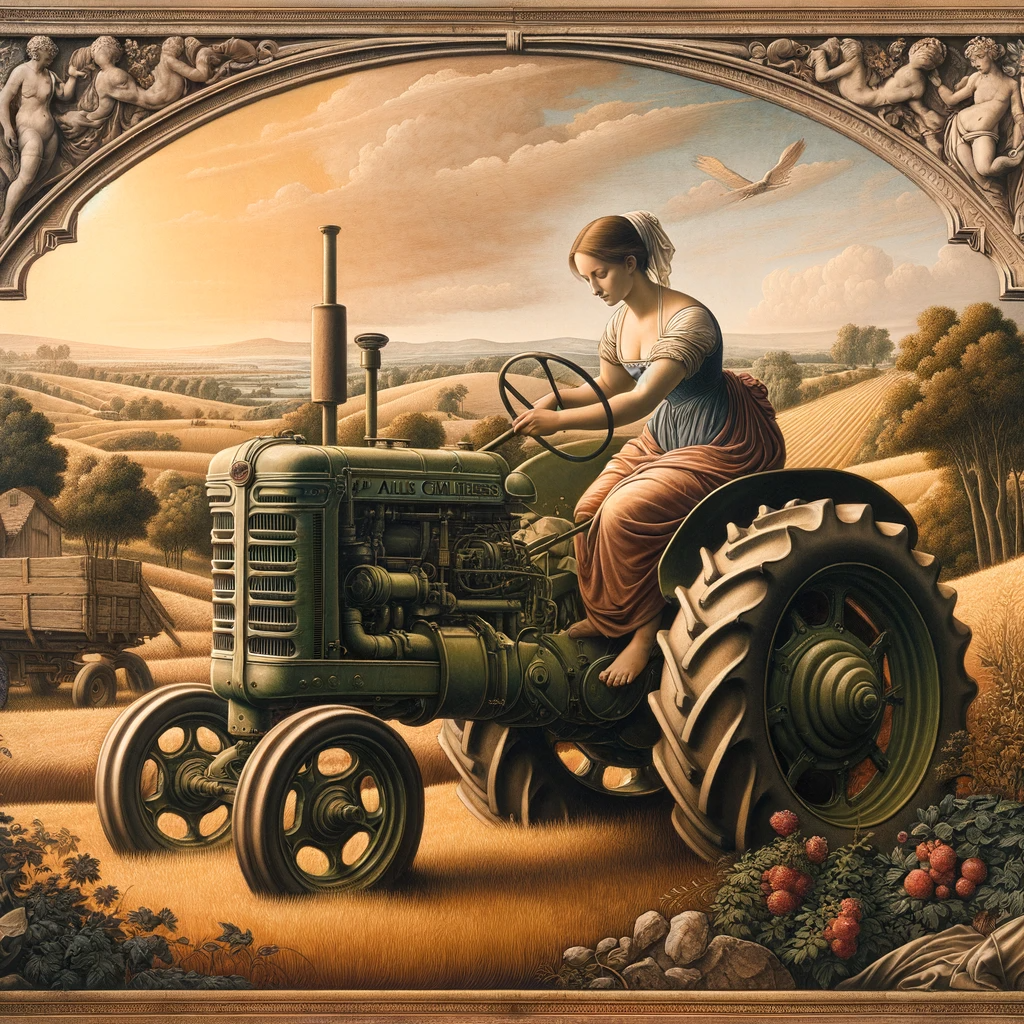
What Ethical Implications Arise From Using AI In Farming?
What Stories Do Classic Tractors Tell About Our Agricultural Past?
Classic tractors stand as silent yet powerful storytellers of our agricultural heritage, whispering tales of resilience, hard work, and community values that echo through the fields. These machines, often rusted and worn, are rich in history, embodying the grit and determination of generations who toiled from dawn until dusk. They represent a time when the connection between man and machine was more than just a functional relationship; it was a bond forged in the pursuit of survival and sustenance.
Imagine a grandfather’s deep voice sharing stories of how he navigated the land with his trusted tractor, a trusty sidekick on a journey through unpredictable seasons. The tractor wasn’t just a tool; it was a symbol of hope, the heartbeat of the farm. It churned the soil, sowed the seeds, and harvested the fruits of labor, making it indispensable in the narrative of agriculture. Each scratch, dent, and patch of paint holds a memory — from the laughter of kids riding along to the sweat-drenched struggles during harvest time.
But the story of classic tractors extends beyond individual families. They represent the fabric of rural communities, where farmers relied on each other and on their machines to face the challenges of their trade. In every small town, the local diner buzzes with conversations about these resilient machines, where tales exchanged over coffee transcend generations. Each tractor embodies the principle of neighborly support, illustrating how cooperation shaped agricultural success.
In these modern times, where technology often overshadows the past, reflecting on these tractors reminds us of the values that underpin our food systems: perseverance, connection, and respect for the land. They challenge us to remember the sweat equity behind every meal, urging us to appreciate the journey from field to fork. There’s something inherently ethical about honoring this legacy; it calls us to reconnect with our roots and to recognize the labor that feeds us.
Moreover, classic tractors inspire a sense of community among enthusiasts and collectors. Events celebrating vintage machinery bring together people who share not just a passion for these machines but a commitment to preserving agricultural history. They are platforms for sharing knowledge, fostering relationships, and instilling pride, inviting newcomers into a world where every nut and bolt has a story.
So, when you see a classic tractor, remember — it’s not just metal and mechanics. It represents a profound narrative of tenacity and tradition, reminding us that in our fast-paced world, a moment spent honoring our past can inspire confidence in our future. The stories these tractors tell about our agricultural past encourage us to value the hard work and dedication that continue to sustain our communities today.

What Stories Do Classic Tractors Tell About Our Agricultural Past?
What Stories Do Classic Tractors Tell About Our Agricultural Past?
- Classic tractors embody the resilience and hard work of agricultural heritage.
- They symbolize hope and serve as vital tools in farming, connecting generations.
- Every tractor holds memories of laughter and challenges during agricultural tasks.
- They reflect the cooperative spirit of rural communities, fostering neighborly support.
- Classic tractors remind us of the values underpinning our food systems, such as perseverance and respect for the land.
- Enthusiasts and collectors celebrate these machines, preserving agricultural history and knowledge.
- These tractors represent a narrative of tradition, urging appreciation for the labor behind our food.

What Stories Do Classic Tractors Tell About Our Agricultural Past?
Can AI-Powered Tractors Bridge the Gap Between Generations?
It’s a sight as old as farming itself: the sturdy tractor, a symbol of hard work and perseverance, rumbling through fields, tilling the earth that has nurtured generations. But beneath that rugged exterior, a technological revolution is quietly taking root, and it’s not just about horsepower; it’s about heart power. Picture a young farmer, brimming with ambition, using an AI-powered tractor to manage fields once worked by their grandparents. This isn’t just a machine; it’s a bridge connecting generations, melding tradition with innovation.
Imagine your grandfather, fingertips caked with soil, teaching you how to plow the land. That connection is invaluable. But today, as the world changes, so do the tools we use. AI-powered tractors offer precision, efficiency, and data-driven insights that can revolutionize how we approach agriculture. These machines aren’t about replacing the hard work of yesterday; they’re about enhancing it, preserving the wisdom passed down while also embracing the future. They allow young farmers to honor their heritage while pushing boundaries, turning the field into a canvas for both their dreams and their family’s legacy.
Consider the narrative: a small-town agricultural cooperative that once thrived on tradition now faces challenges from climate change and market pressures. With AI technology, they implement smart tractors that monitor crop health, predict yields, and optimize resources. This smart approach not only revitalizes their businesses but also creates shared learning experiences between older and younger farmers. Together, they troubleshoot and celebrate the victories big and small, fostering a community that values both experience and innovation.
This scenario isn’t just logically sound; it’s emotionally gripping. The image of a grandmother passing down her farming wisdom, now complemented by cutting-edge technology, paints a picture of resilience. The gut reaction to seeing a tractor powered by the collective knowledge of the past and the promise of the future pulls at our shared heritage.
In these times, when farming faces unprecedented challenges, embracing AI-powered tractors is more than a trend; it’s an ethical and social responsibility. It’s a testament to adaptability and respect for the land, blending the values of hard work with the innovations of tomorrow. Picture the possibilities: a farmer using data-driven insights to create sustainable practices that feed the world without depleting resources. It’s a call to action that resonates across generations, proving that together, we can cultivate a brighter future.

Can AI-Powered Tractors Bridge the Gap Between Generations?
Can AI-Powered Tractors Bridge the Gap Between Generations?
- The tractor symbolizes hard work and perseverance in farming.
- AI-powered tractors blend tradition with innovation, connecting generations.
- These machines enhance farming by offering precision and data-driven insights.
- They preserve agricultural wisdom while embracing modern practices.
- Smart tractors help small-town cooperatives tackle climate change and market pressures.
- This technology fosters collaboration between older and younger farmers.
- Adopting AI in farming is an ethical responsibility for creating sustainable practices.

Can AI-Powered Tractors Bridge the Gap Between Generations?
Conclusion
AI is ushering in a new chapter for classic tractors, blending time-honored traditions with cutting-edge technology in a way that’s not just transformative, but deeply meaningful. These tractors symbolize hard work, resilience, and a connection to our agricultural roots. Yet the incorporation of artificial intelligence into this landscape offers more than just shiny enhancements; it’s a dialogue between past and future, respecting a lineage while equipping today’s farmers with tools designed to amplify their efforts.
Picture a classic tractor, weathered by time, and beside it, an AI-equipped counterpart. Farmers who once relied solely on instinct now have real-time data at their fingertips—the ability to predict weather patterns, monitor soil health, and optimize yields. This marries the emotional resonance of tradition with the rational benefits of technology, preserving the legacy of those who came before us while simultaneously ushering in a new era of farming efficiency.
As these innovations integrate seamlessly, they foster a sense of community among farmers. Those stories passed down through generations aren’t just tales; they become the foundation for vibrant networks of knowledge sharing, teaching the next generation the value of stewardship alongside the benefits of innovation. This is where the ethical dimension comes into play—embracing AI responsibly can lead to sustainable practices that minimize environmental impact while maximizing output.
In a world that can often feel disconnected, AI-powered classic tractors become symbols of unity. They reflect a commitment to heritage while embodying adaptability and forward-thinking principles. When farmers adopt this technology, they’re not just keeping pace; they’re pushing back against the pressures of modern agriculture, finding new ways to collaborate and share experiences, ensuring that the heart of farming—the relationships between people and the land—endures.
So, as you hear that familiar roar of an engine, remember: it’s more than machinery; it’s a living narrative of perseverance and innovation. It represents a legacy that calls for respect and celebration, weaving together the threads of history while paving the path for a sustainable future. In every turn of the wheel, the blend of tradition and technology challenges us to honor our past while cultivating the promise of tomorrow.

Conclusion
Conclusion:
- AI is transforming classic tractors by merging tradition with modern technology.
- These tractors represent hard work, resilience, and agricultural heritage.
- Artificial intelligence provides farmers with real-time data for improved decision-making.
- The blend of tradition and technology enhances farming efficiency while preserving legacy.
- Innovations foster community among farmers, promoting knowledge sharing and stewardship.
- Responsible AI adoption encourages sustainable practices with minimal environmental impact.
- AI-powered tractors symbolize unity, adaptability, and a commitment to the future of farming.

Conclusion
Other Resources

Other Resources
Here is a list of other resources you can review online to learn more:
- Orange County Farmers Museum
- Siromer
- IH
- Bobcat
- Sheppard Diesel
- Samson
- Valtra
- Branson Auto & Farm Museum
- McCormick-Deering
- Parrett
- Agriculture Heritage Center & Museum
- Fairfield County Antique Tractor Club
- Ford
- Allis Chalmers
- Iseki
- Central Washington Agricultural Museum
- NH Farm Museum
- Century
- Farm Collector Show Directory
Use This Prompt To Get More Resources With Your Favorite Online AI Tool: Please provide me with a list of online articles with their URLs in a bulleted list that I can read regarding AI Is Bringing Classic Tractors Into the Future

Other Resources
Glossary Terms
AI Is Bringing Classic Tractors Into the Future – Glossary Of Terms
1. Retrofitting — adding sensors, controllers, and compute modules to classic tractors to enable digital features and automation.
2. Telematics — remote collection and transmission of tractor telemetry (location, hours, diagnostics) over cellular or satellite networks.
3. CAN bus — Controller Area Network protocol used for in-vehicle communication between ECUs, sensors, and retrofit modules.
4. Edge computing — on-board processing of sensor data and AI models to reduce latency and bandwidth use.
5. Computer vision — AI techniques using cameras to detect crop rows, obstacles, implements, and instrument states.
6. Sensor fusion — combining data from GPS, IMU, camera, LiDAR and other sensors to form a coherent environmental model.
7. GPS RTK — Real-Time Kinematic positioning that delivers centimeter-level accuracy for precision guidance.
8. Autonomous guidance — automated steering and path-following systems for hands-free field operations.
9. ADAS — Advanced Driver-Assistance Systems adapted for tractors (auto-steer, collision warnings, automatic braking).
10. Digital twin — a virtual replica of a tractor and its systems used for simulation, diagnostics, and optimization.
11. Predictive maintenance — AI-driven analysis of sensor and usage data to forecast component failures before they occur.
12. Anomaly detection — machine learning methods that flag unusual patterns in engine, hydraulic, or electrical behavior.
13. Machine learning — algorithms that learn from data to enable perception, control, and predictive features.
14. Reinforcement learning — training control policies via reward-driven exploration, often in simulation before field deployment.
15. Over-the-air updates (FOTA) — remote software and firmware updates for retrofit modules and ECUs.
16. Human–machine interface (HMI) — displays, controls, and touch/voice interfaces through which operators interact with AI features.
17. Geofencing — virtual boundaries that trigger or constrain autonomous actions within defined areas.
18. Precision agriculture — data-driven farming that optimizes seed, fertilizer, and chemical applications for productivity and sustainability.
19. Variable rate application (VRA) — automated adjustment of input application rates based on maps or sensor feedback.
20. Hydraulic control automation — AI-enabled control of hydraulic valves and flow for smoother implement performance.
21. PTO automation — automated engagement and speed control of the power take-off shaft for implement efficiency and safety.
22. Load-sensing hydraulics — systems that adapt flow and pressure to demand, improved by AI control strategies.
23. Teleoperation — remote piloting of a tractor from a distance using live video, haptics, and command links.
24. IMU — Inertial Measurement Unit (accelerometers and gyros) used for estimating motion, heading, and vehicle attitude.
25. LiDAR — laser-ranging sensors that produce 3D point clouds for obstacle detection and terrain mapping.
26. ECU integration — connecting and coordinating engine, transmission, and implement electronic control units with retrofit intelligence.
27. Cybersecurity — measures (encryption, authentication, intrusion detection) to protect connected tractors and data.
28. Functional safety — engineering processes and standards (e. g. , ISO 25119) ensuring control systems behave safely under fault conditions.
29. Data labeling — annotating images, point clouds, and telemetry to create training datasets for supervised AI models.
30. Fleet management — centralized monitoring, scheduling, diagnostics, and optimization of multiple tractors using telematics and AI. Glossary Of Terms
Other Questions
AI Is Bringing Classic Tractors Into the Future – Other Questions
If you wish to explore and discover more, consider looking for answers to these questions:
- How exactly is AI integrated into a vintage tractor—what hardware and software are required?
- What sensors are typically installed and where on the tractor or implements?
- How much does it cost to retrofit a classic tractor with AI capabilities?
- What is the expected return on investment (ROI) and over what timeframe?
- Can AI retrofits be removed to restore the tractor to its original condition?
- Will adding AI reduce the historical or collector value of a restored tractor?
- How does AI affect fuel efficiency, engine performance, and wear-and-tear?
- Are AI systems compatible with older mechanical implements and hydraulic systems?
- Can AI control be manually overridden and how easy is manual operation?
- What safety fail-safes and emergency stop mechanisms are required?
- What cybersecurity risks do AI-enabled tractors introduce and how are they mitigated?
- Who owns and controls the data collected by an AI-powered tractor?
- What privacy protections exist for farm data and neighboring farms?
- Are there open standards or interoperability requirements between different AI systems?
- Do AI retrofits require continuous internet connectivity or can they operate offline?
- How do rural connectivity limitations affect real-world AI tractor performance?
- What training do operators need to use and interpret AI recommendations?
- How does AI adoption impact farm labor—will it displace jobs or create new roles?
- What insurance and liability issues arise if an AI recommendation causes crop loss or property damage?
- How are ethical concerns—such as bias in algorithms or corporate control—being addressed?
- What regulatory or legal frameworks govern autonomous or AI-assisted farm equipment?
- Are there government grants, subsidies, or tax incentives for retrofitting vintage tractors?
- How does AI help reduce environmental impacts like pesticide and fertilizer overuse?
- Can AI predict pest infestations, disease outbreaks, or microclimate risks effectively for small farms?
- What real-world case studies or pilot projects demonstrate measurable benefits?
- How do software updates, maintenance, and long-term support work for retrofit systems?
- Where can farmers source reliable retrofit kits, and how do they evaluate vendors?
- Are there open-source AI retrofit projects or community-driven solutions?
- How will AI integration affect tractor resale value and collectible markets?
- What are the upfront installation steps and how long does a retrofit take?
- How are sensor calibration, diagnostics, and routine maintenance handled on vintage equipment?
- Can AI systems optimize for different crop types, soil varieties, and local farming practices?
- How do legacy mechanical systems interface with modern control electronics safely?
- What are the best practices for preserving the aesthetic and historical authenticity while adding tech?
- How can communities, clubs, or cooperatives share knowledge and resources for retrofitting?
- How is the success of AI recommendations validated and measured in farm operations?

Other Questions
Haiku
AI Is Bringing Classic Tractors Into the Future – A Haiku
Classic iron engines,
Whispers of toil and wisdom,
Future roots take hold.

Haiku
Poem
AI Is Bringing Classic Tractors Into the Future – A Poem
In fields once echoing toil, where tractors roared with pride,
Classic machines now gleam anew, with AI as their guide.
From hands once etched in labors lore, in soil their wisdom sown,
These age-old giants whisper tales, yet breathe with minds of their own.
Once mere steel against the sun, they’re now the heartbeats strong,
Redefining farmings path ahead, where heritage belongs.
Farmers armed with algorithms, insights flowing true,
Harness nature’s secrets deep, tradition weaving through.
They remember every dent and scratch, each milestone dusty told,
Tales of families, sweat, and dreams, in rust and fading gold.
As generations bridge the gap, with tech that understands,
Old tractors dance with modern grace, uniting heart and hands.
Ethics fold in every turn, a duty to preserve,
The lives entwined with each machine, the love, the grit we serve.
From whispers of the past we rise to face the days ahead,
With wheels that turn and smart minds learned, our legacy widespread.
So next you hear that rumble roar, take pause and feel the weight,
Of every story, every hand that shaped our farming fate.
Together let us nurture roots, while reaching for the skies,
Embracing AI’s promise now, where the future harmonizes.

Poem
Checklist
AI Is Bringing Classic Tractors Into the Future – A Checklist
Emotional Appeals
✅______ Reflect on your childhood memories associated with classic tractors.
✅______ Share stories of your family’s history with farming and tractors.
✅______ Participate in community events celebrating agriculture and vintage machinery.
Rational Appeals
✅______ Research benefits of AI in agriculture, such as yield optimization and resource efficiency.
✅______ Compare traditional farming methods with AI-enhanced practices.
✅______ Evaluate potential cost savings and productivity increases from AI integration.
Ethical Appeals
✅______ Consider the importance of preserving agricultural heritage and craftsmanship.
✅______ Reflect on the ethical implications of technology in farming practices.
✅______ Discuss the responsibility to ensure sustainable practices in farming that respect the land.
Authority Appeals
✅______ Seek guidance from agricultural experts on integrating AI with traditional farming.
✅______ Attend workshops or webinars on advances in agri-tech and sustainable farming.
✅______ Read authoritative publications on the future of farming and technology.
Narrative Appeals
✅______ Share the story of a local farmer who successfully combines AI with traditional practices.
✅______ Document and share your journey of learning to operate AI-powered machinery.
✅______ Create your own narrative around a classic tractor and its role in your farming story.
Social Appeals
✅______ Join farming clubs or online forums focused on classic tractors and modern technology.
✅______ Engage with local farming communities to share knowledge and experiences.
✅______ Collaborate on restoration projects for classic tractors that incorporate modern tech.

Checklist
At ClassicTractorNews, we help tractor lovers keep up with the latest news for classic and vintage tractors.
Please share this post with your friends, family, or business associates who may like old classic or vintage tractors.